a tassie love story —- part 1 — the road to hobart

tassie’s easy. she shouts ‘i love you’ from every barn and craggy hillside. for us, it was love at first light.

the sky was bitumen (pitch) black as the overnight ferry from melbourne chugged into devonport, on the north coast of tassie, or tasmania as nobody calls it.

as daylight raised the curtain on the lush countryside, we were bombarded by the “common scents” of australia’s largest island: to wit, a roadside stand offering a “deep doo-doo discount”.
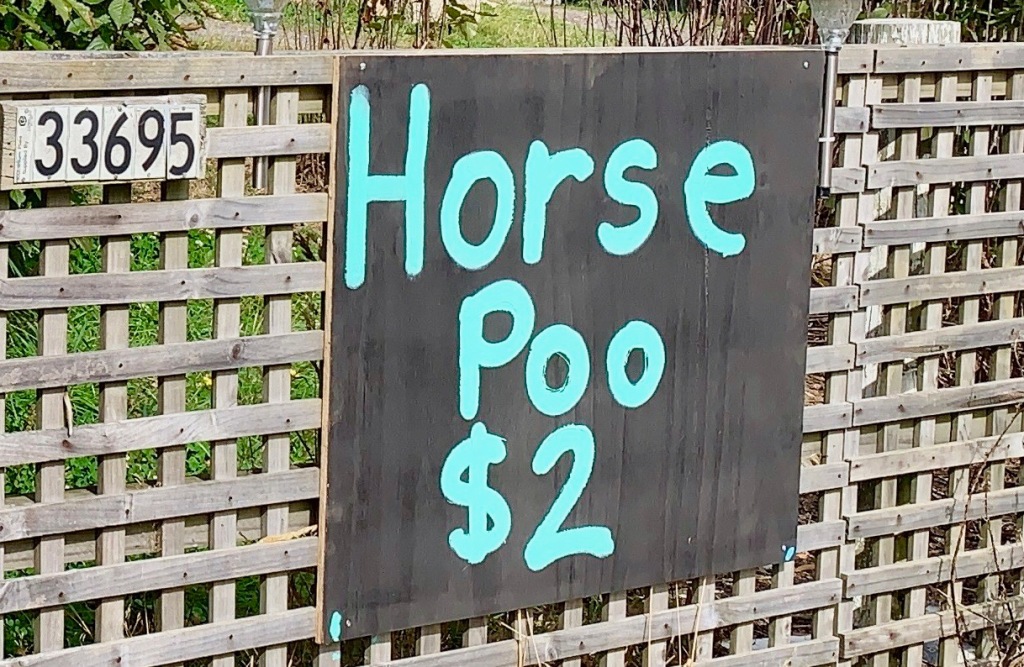
hot steaming meadow muffins – two bucks, chuck

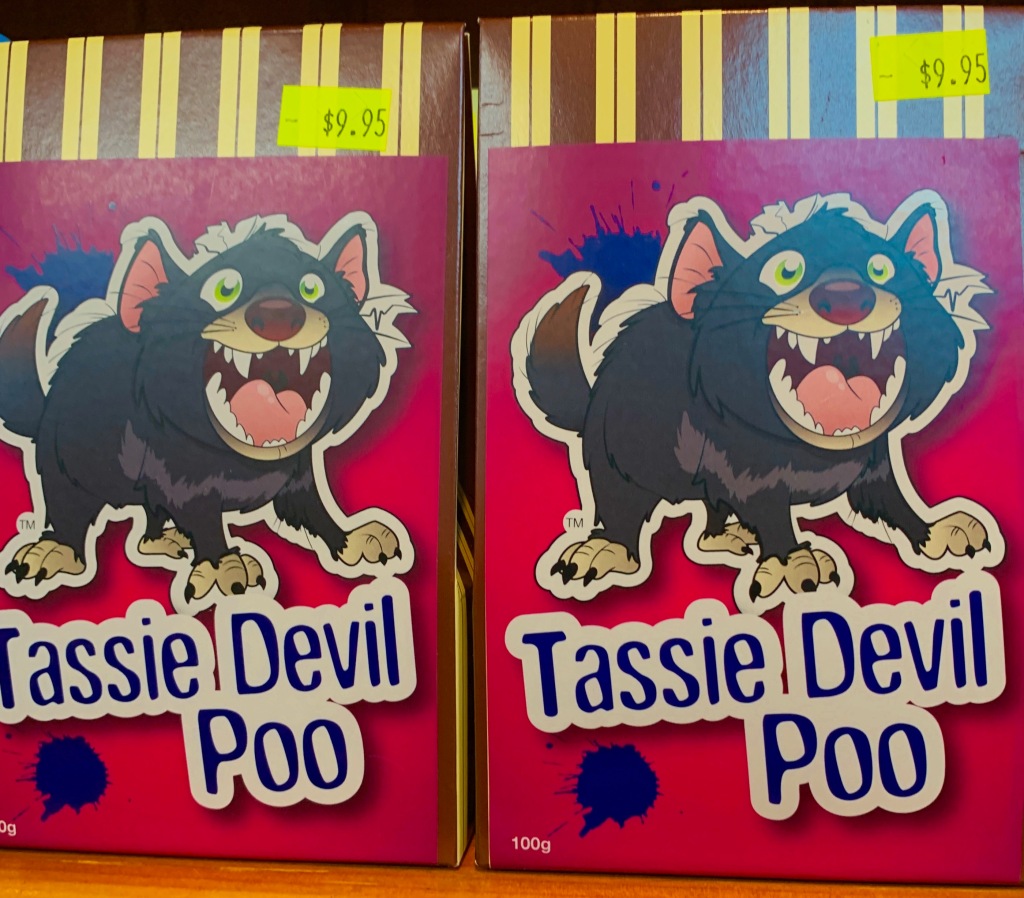
we held our noses as we drove past, but the price got our attention. in hobart, by contrast, where poo seems to be a preoccupation, they slap a clever label on it and jack up the price for tourists. we suspect that stuff might be the cheaper “bull” variety corporate media are peddling.
This image has an empty alt attribute; its file name is img_6022.jpeg
the fancy variety at a souvenir shop

after that assault on our olfactory senses, we set our compass toward hobart, tassie’s capital, largest city (pop. 200,000) and, little did we know, a burgeoning global center of the arts.

our plan was to take a dirt road shortcut through the mountains to sneak a peek at a waterfall recommended by friends.
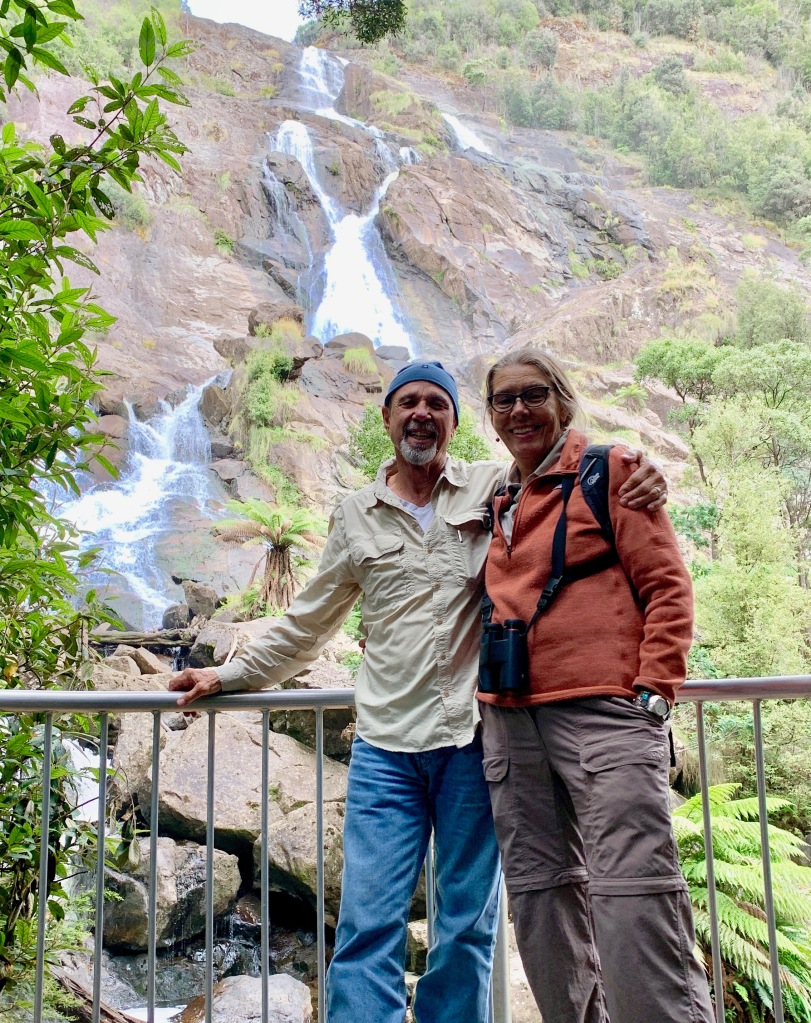
watetfall selfies are obligatory

the waterfall didn’t disappoint, but a sign at the parking lot did. “road closed ahead,” it said. bridge repair. the only option was retracing our tracks back to the bitumen highway.

we shared our anguish with a forlorn-looking couple standing with us as we contemplated our options. they had driven down from tassie’s north coast to lunch at an artesinal farm just past where the bridge was out. the road closure meant adding more than 100 kilometers to their journey. they were out.

we, on the other hand, had to go that way to get to hobart anyway, and the mouth watering prospect of cheddar straight from the udder was irresistible to a couple cheese-aholics. the detour was a minor inconvenience. we were in. they told us the name to look for: pyengana. (pop. 123)

our GPS was a little unsure about pyengana’s location, and for good reason. when we got to the place marked “pyengana” on the screen, there was nothing but fields as far as the eye could see. not a building. not a sign, not an intersection. just as our tummies were cursing the people who’d told us about pyengana, we discovered a dirt track through the fields. as we turned we saw a board among the bushes with a single word: “dairy”. sure enough, up the path a bit, (a hilariously imprecise term in oz), paydirt.

we went in, bellied up to the cheese bar, ordered what we later learned was three sampler plates (oops, we had to eat them), then wandered out to the back lawn to find a table. there we found a troupe of trained cows in the midst of a matinee performance for an assortment of young children, accompanied by their cheese-freak parents. it was modern milking, 101.

each of pyengana farm’s 220 cows wears a computer-coded ID necklace that communicates with a state-of-the-art robotic milking system. so when bessie mae (not her real name) feels the urge, she ambles over to the pen. if it’s been at least six hours since she’s been milked, the gate unlocks and she nudges it open.

once inside, she gets a treat, then sidles up to a milking machine, where suction cups attach to her teats. (the kids can’t actually see that part) afterward, bessie mae can stop at a back scratching device before returning to the paddock to fill up for her next visit. bessie and her pals each happily produce about 10 gallons (38 kilometers) of milk a day.

eventually it occurred to us that we hadn’t come to tassie to eat cheese and watch cows being milked, so we resumed our quest for hobart, which not coincidentally is the birthplace of denmark’s crown princess mary. it’s also a bustling seaport with a thriving shipbuilding industry and a rich, though checkered, heritage.

the route south to hobart was littered with tourist attractions and fine dining opportunities. imagine the culinary delights at “the pavement”. (tables optional)
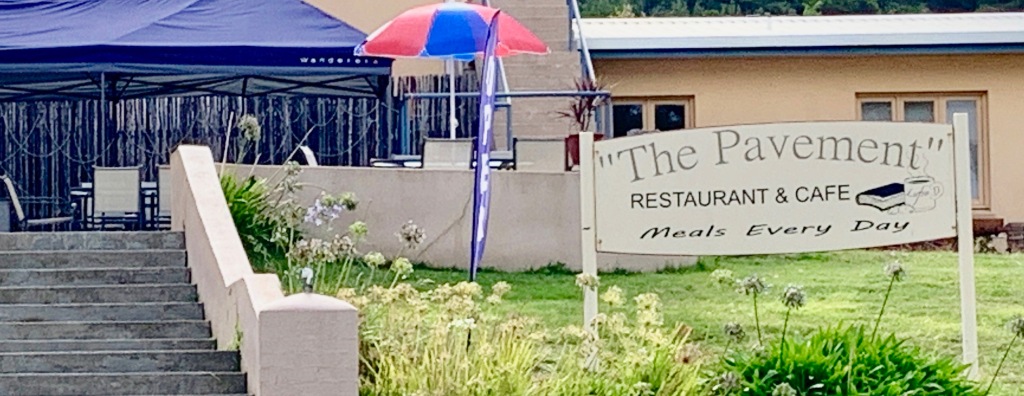
“Chez Pavement”

i was tempted to check the drinks menu to see if if might feature a “concrete mixer” on the rocks. the imagination boggles at the possibilities. but we only had time for photos.

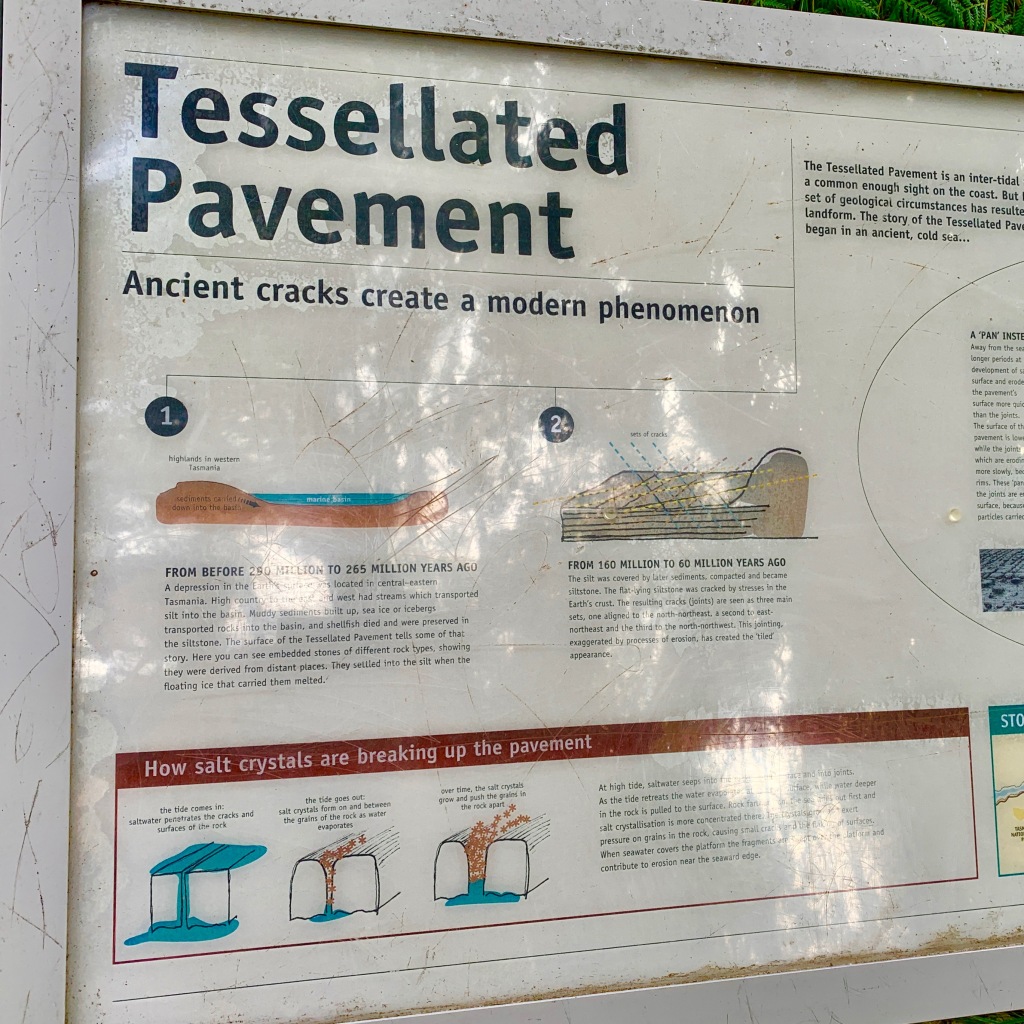
the pavement restaurant, by the way, is just across the asphalt from an actual park dedicated to ‘tessellated pavement’, a fascinating but not too photogenic natural phenomenon occurring along the coastline.

so what’s the deal? pavement vs. asphalt vs. bitumen. enquiring minds don’t care, so is this worth your valuable time? i’ve always called a paved road ‘asphalt’. aussies seem to prefer the term ‘bitumen’. technically, according to asphalt.com, bitumen is the black gooey stuff that holds the asphalt (the pebbly stuff) together. it’s also called pitch. (as in, that’s strike three on your attempt at aussie humor, mate)

“black as bitumen” is also an apt descripion of tassie’s history. the dutch explorer abel tasman was the first european to set foot there in 1642. he named it van dieman’s land to honor his boss, who had commissioned the voyage.

but then the demons took hold. soon after the british arrived, around 1803, they waged a 25-year “black war” that nearly exterminated the aboriginal people who had been there for tens of thousands of years. and partly to substantiate england’s claim to van dieman’s land, they turned it into a dumping ground for convicts, establishing penal colonies that besmirched the island’s reputation for the next half century.

when they realized this wasn’t working out so well, convict transportation was ended in 1856, and as part of an image makeover, the island’s name was changed to tasmania (after abel tasman)
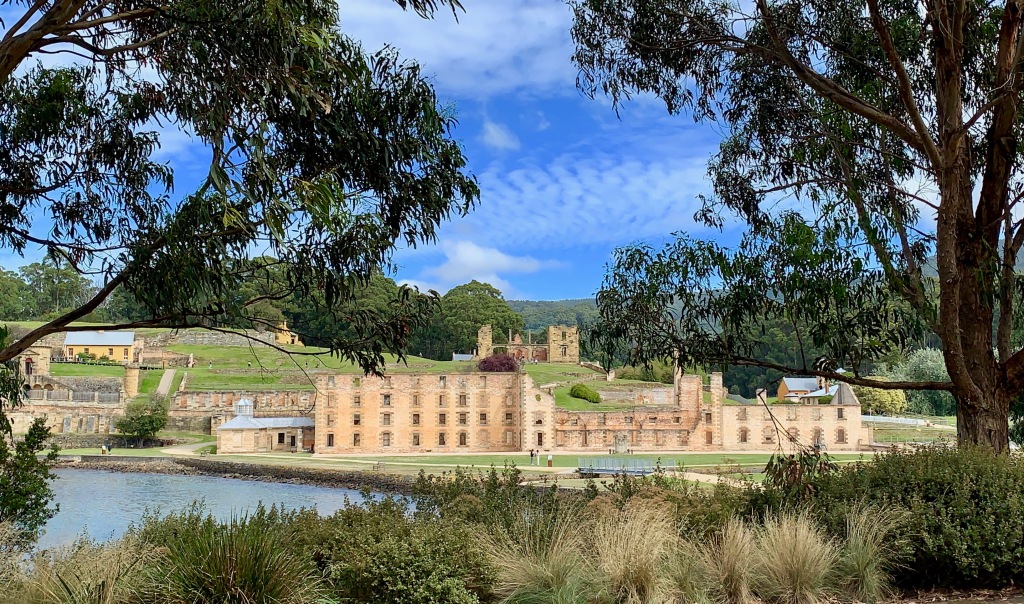
the remains of the penitentiary at port arthur

to learn a bit of the history, we drove 90 km south of hobart to port arthur, australia’s best preserved convict settlement, where repeat offenders and so-called “incorrigibles” were sent. it’s a hauntingly beautiful campus.

interestingly, port arthur employed a photographer to take pictures of inmates. those pictures are being used to memorialize many of the convicts, such as james rogers, (above) who was sentenced in birmingham, england to seven years in 1849 at the age of 24 for “stealing monies”.

rogers was transported to tassie in a convict ship, did his time, and was freed in 1856, just as port arthur was being transformed from a penal colony to an institution for aged and ill convicts. he remained in hobart, where he ran afoul of the law again twelve years later for altering a one pound note and passing it off as a fiver to pay for a pint of beer for himself and a mate.

his trial received daily front page coverage in the hobart newspaper, and word-for-word transcriptions of the court testimony are available online. they make fascinating reading. the stories of other convicts are being posted each month as research is completed.

after serving his second sentence, rogers was released in 1874 and lived out the rest of his life in hobart. he died a pauper at a charitable home in 1899, at the age of 74.

with its blighted past and remote location, hobart muddled along, a backwater on the southern edge of the populated world, for more than 150 years after the penal colonies closed.

until….in 2011…
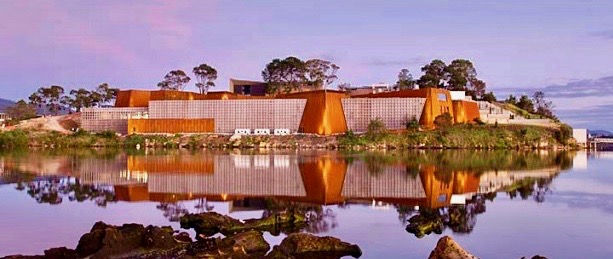
the museum of old and new art, hobart – photo: peter mathew for lonely planet

the art in hobart exploded. (leaving only an artless hob) that’s when mona, the “museum of old and new art” opened, bankrolled with the gambling fortune of native son and art collector david walsh.

the mona experience begins at the docks in hobart, from where a high-speed catamaran whisks patrons 25 minutes up the derwent river and deposits them at the base of a 99 step staircase to the museum’s entrance.

we had a minor misunderstanding at the ticket window, however. we intended to save a few bucks, and thought we’d purchased the “cheap seats”.

there was a cow there, too, apparently to demarcate “cattle class”. we’ll know better next time. on the other hand, it was a better deal than the horse poo.

mona’s entrance, a mesmerizing reflection by the late celebrated artist/designer matthew harding, is different every time you look at it. it’s a mystifying wall of stainless steel distortion mirrors such as you’d find at a carnival
every picture of the entrance wall is completely different

mona was intended as a sort of subversive anti-museum labyrinth. walsh blasted a huge hole in a sandstone peninsula overlooking the derwent river not far from the hardscrabble neighborhood where he grew up. he filled it with three subterranean levels of objets d’art, many of which he had acquired as he traveled the globe popping in at unsuspecting casinos and cleaning them out by counting cards at the blackjack tables (until he was banned). his goal was to put everyday emotions at the center of his gallery, so what better to focus on than procreation, expiration, and oh yes, defecation? (mostly sex and death)

it’s probably not surprising then that mona’s most hated, and most popular display is, can you guess? of course. what else — a poo machine.
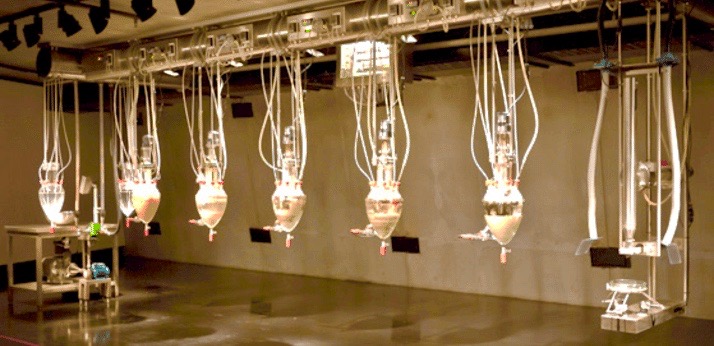
“cloaca professional” by dutch artist wim delvoye, is a row of connected bioreactors that mimic the human digestive system. the contraption is fed each day at one end, and solid waste is excreted at the other. photo borrowed with gratitude from the artist’s website.

we missed the daily dump, but people apparently time their visits to be there to see the ingestion, digestion, and particularly the excretion process, complete with the attendant sound and fury (and smell). it’s so… so low-brow.

almost overnight, mona transformed hobart into a global art capital. international critics flocked to tassie to experience walsh’s concept of art for everyone. some raved. one called it a “watershed in the way art is understood”. others ridiculed it as the end of art, or even worse in walsh’s eyes, conventional. but aussies adored it.

in the ten years since it opened , the museum has logged a quarter of a million visits in a city of fewer than 200,000. tassies get in free, of course. all others pay.

in that decade, tassie’s tourism revenue has jumped 50%. in 2013, lonely planet listed hobart among it’s go-to destinations. celebrated chefs are relocating there, and high-end hotels are springing up to meet the tastes of museum tourists.

walsh is considering his own hotel that will include his unique take on the concept of a library. he has said the shelves will be stocked largely with his own books, including a “large and growing nerd fest of bibliophilic paraphernalia courtesy of total lightweights like einstein, newton, darwin and dickens”. he also has over 300 works of isaac asimov (he’s read them all), and i suspect, a few by that other heinlein.

walsh has told interviewers one secret of his success is that he owns the gallery outright. it’s his own private collection, so he can display whatever he damn well pleases. there’s no board or governing body to overrule his decisions; no public funding. he’s single-handedly proven a small city on the edge of civilization can rewrite the rules of a game previously controlled by the art establishment in major world capitals. so who’s to tell him how to do it?

and on top of it all, standing on the rock just outside the entrance, he’s installed another wim delvoye classic; a concrete mixer fabricated from intricately patterned laser-cut steel.
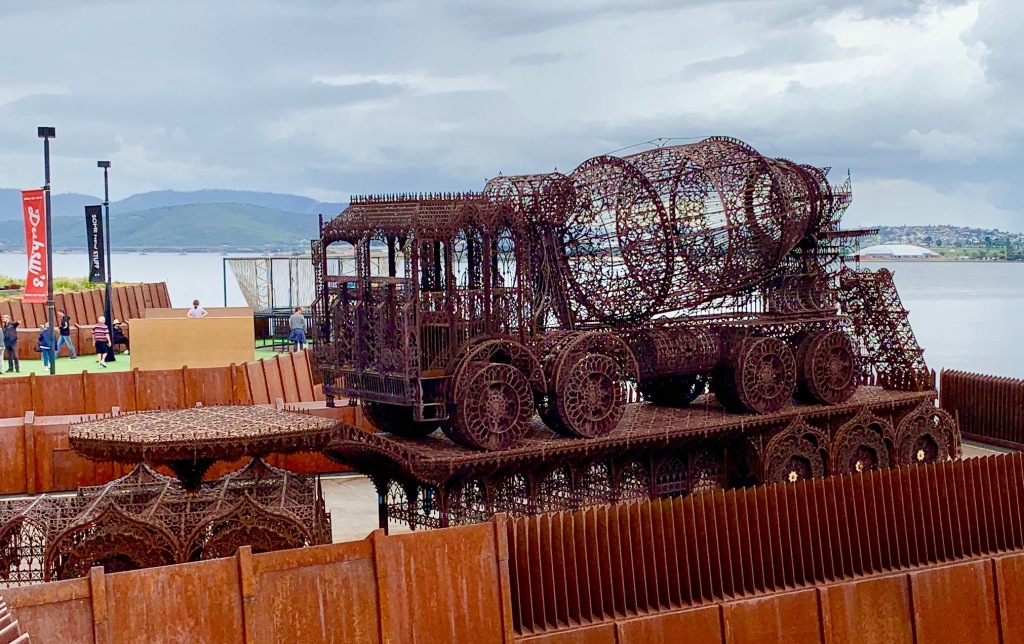
so there it is, folks. a concrete mixer on the rocks. i think i’ll have a double.

going for broke

we were cruising along toward broke on the morning of feb. 12, when pernille suggested a detour.

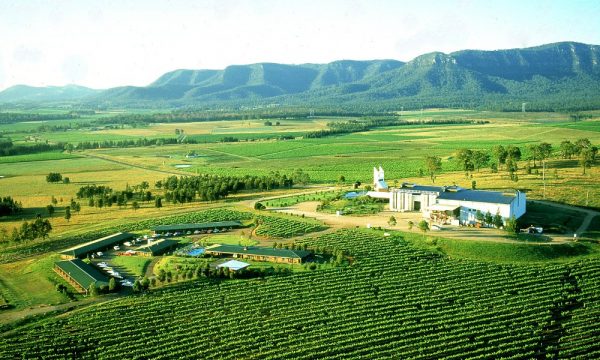
we had been invited to attend the opening of an art gallery in a danish-owned vineyard just beyond broke (pop. 292), in the hunter valley, australia’s oldest and one of its finest wine growing regions. it’s a bit northwest of sydney.

…if it is broke, should they fix it?

a colleague had told pernille if we were headed that way, it might be worth a side stop at the jenolan caves.

frankly, i hadn’t heard of jenolan caves, but what the heck. we still had some change jingling in our pockets (not broke yet), so…

recalculating our GPS, we took off down the back roads of new south wales, and up, and down again, and around harrowing hairpin turns that could have given new meaning to broke if we’d missed one. then down some more. and within three hours or so i had absolutely no idea where we were. except we were in a wonderland. and closer to broke.

we got just a taste of the big sensual feast that is the jenolan caves complex in the couple hours we were there. now we know the place requires at least a weekend. we’re already plotting our return. but this bite of the apple was enough to understand why jenolan caves is new south wales’s top country attraction. (there are some city attractions, but this is breathtaking).

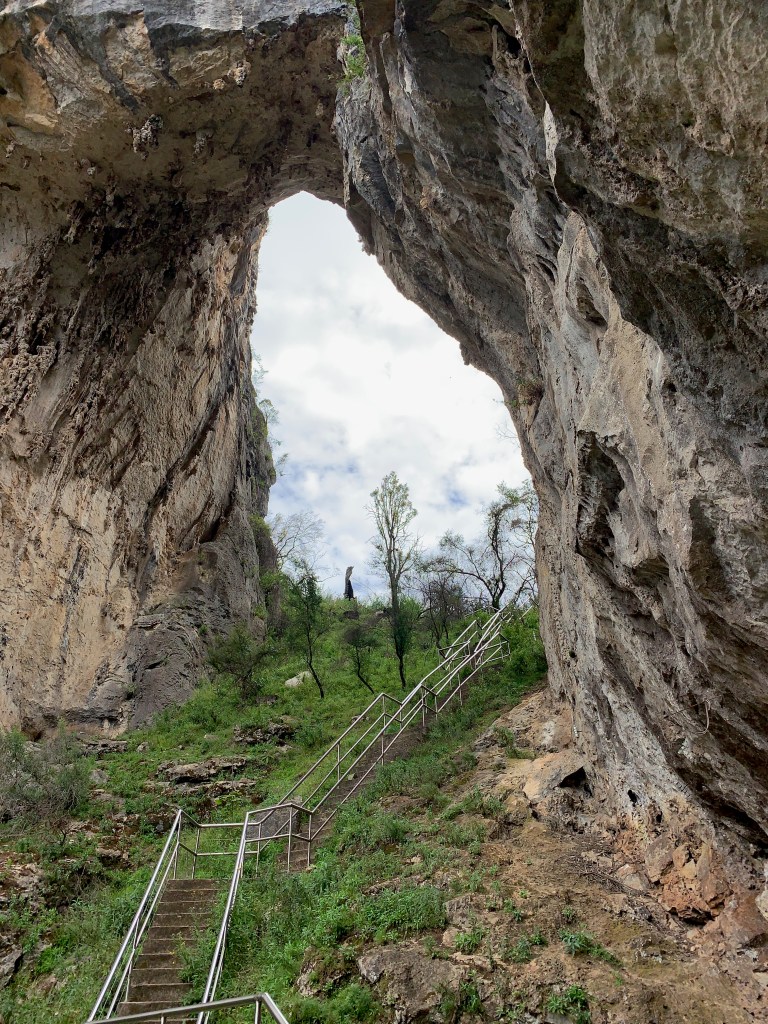
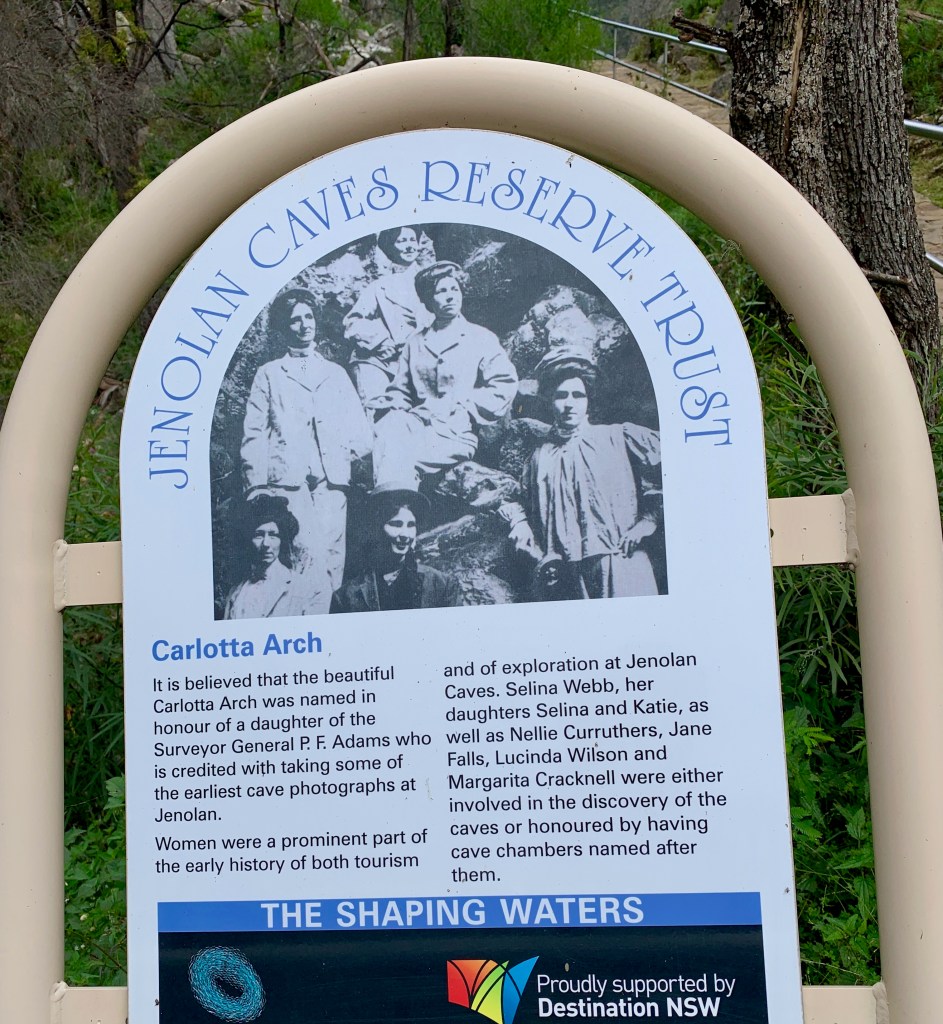
and we didn’t even see the caves. that requires reservations. so in the brief moment available, we explored the arches. you can see why carlotta’s arch is a popular wedding photo spot. strangely, it’s divided into two parts: new car-lotta (first marriages) and pre-owned car-lotta (subsequent hookups).

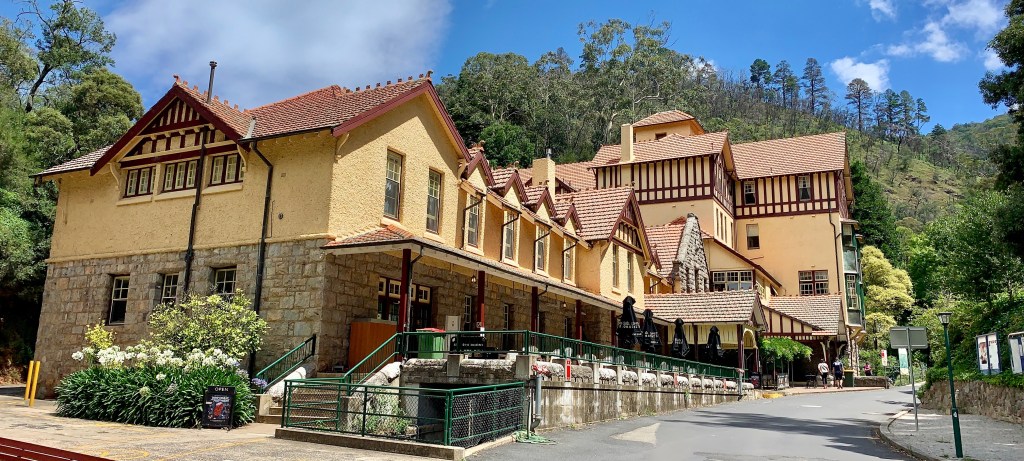
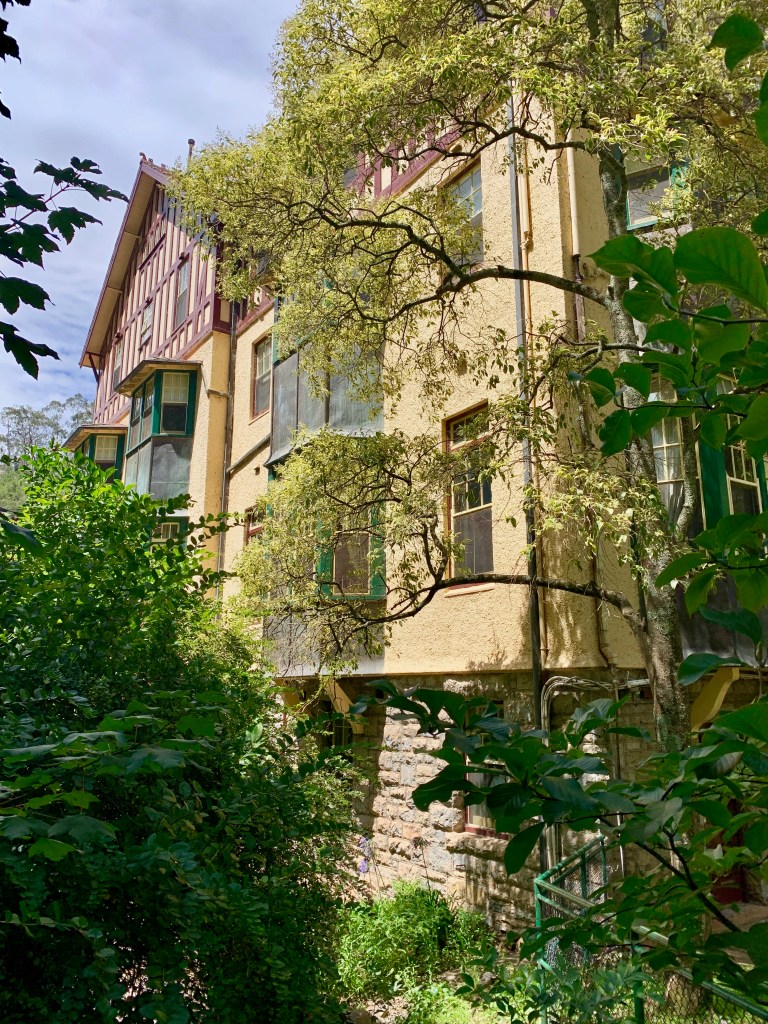
then there’s the lodge.

pictures speak louder than words, so i’ll reserve further comment on the lodge. it ain’t broke, so we won’t try to fix it until there’s time for a proper visit. suffice to say it’s on our bucket (seat) list with a bullet. but now, we’re going for broke.

there is actually a mount broke, lurking in the background.

beyond broke, to be precise, just a few kilometers past the broke village store you’ll find the winmark vineyards, identifiable by the danish and australian flags waving side by side at the entrance.

the australian southern cross and the danish cross welcome visitors to this danish-australian collaboration

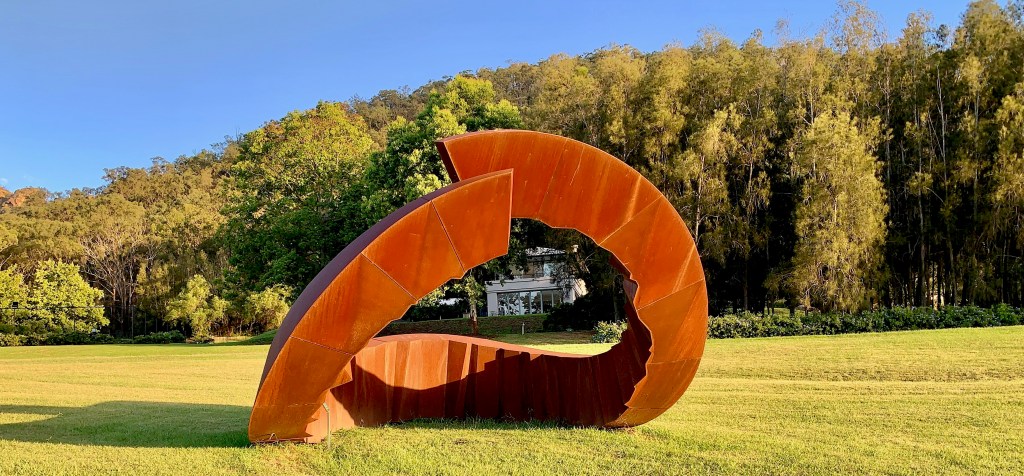
the centerpiece of the winmark estate’s expansive lawn is david ball’s intriguing “biosis” sculpture, which karin purchased shortly before ball won the “sculpture by the sea” bondi major prize in 2017. now he’s big, but not so big that he couldn’t attend the gallery opening.

“biosis” by david ball

just inside the fence, the iconic “poole’s rock” attests to the presence of aboriginal people on the land long before europeans arrived with their grapevines.

poole’s rock sheltered aboriginal people, but gets its name from an australian convict who slept there

the same cannot be said about richard poole, the 19th century convict after whom the cave is named. local lore has it that poole used to sleep in a hollow in the cave, which was probably hewn by aboriginals. the new york times reported that poole sent his regrets.

as australia’s reputation for superb wines has spread across the globe, thousands of wineries have sprung up across the country’s temperate southern; more than 200 in hunter valley alone. but winmark distinguishes itself with its unique aboriginal heritage, its magnificent location at the foot of the yellow rock state forest, fabulous guest houses dotting the estate, its collection of sculpture and wall art, and its dedication to making a single green grape masterpiece.

the animating force behind winmark the trademark from denmark is karin enemark adcock.

karin adcock & one of the danish artworks gracing the winmark vineyard

karin bought the old poole’s rock estate in 2016, after it had fallen into disuse under ownership of an energy company with no passion for wine. the place was in need of vision, and karin found herself in the visionary position, from which greatness often comes.

five years in, karin’s dream is bearing fruit, literally. nowadays, just like jeremiah the frog in the old three dog night classic “joy to the world“, she always has some mighty fine wine. (if you’re not old enough (or too old) to remember jeremiah, click on the link. it’s fun.)

karin has assembled a team of renowned viticulturists and winemakers to get the best from the fertile hunter valley soil. winmark’s main claim to fame is rusty’s run, a fragrant, refreshing vintage that harkens back to the days before someone decided the reason to drink wine was to get hammered.

rusty is actually karin’s dog, a kelpie that says, ‘mark, mark’, instead of ‘bark, bark’, except when you ask him about the covering over the cellar door in which case he answers, ‘roof roof’. (truthfully, we must admit we made that up. we’re not the new york times, you know)

rusty’s run chardonnay 2019

the journey hasn’t been all sunshine and roses, although sunshine is essential to a great vintage, and rose bushes bookend end each row of winmark’s vineyard, serving double duty as both an artistic touch and an early warning system for fungus. you won’t find rosé here, however. winmark’s signature is exclusively chardonnay, which is not coincidentally the world’s most popular white wine.

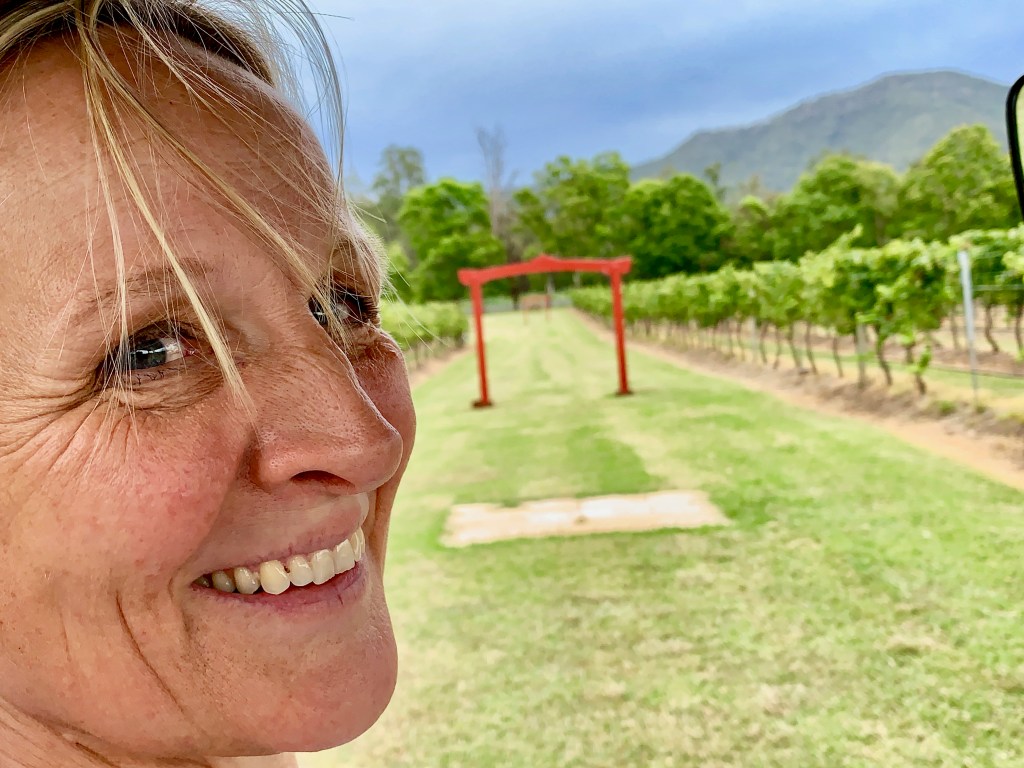
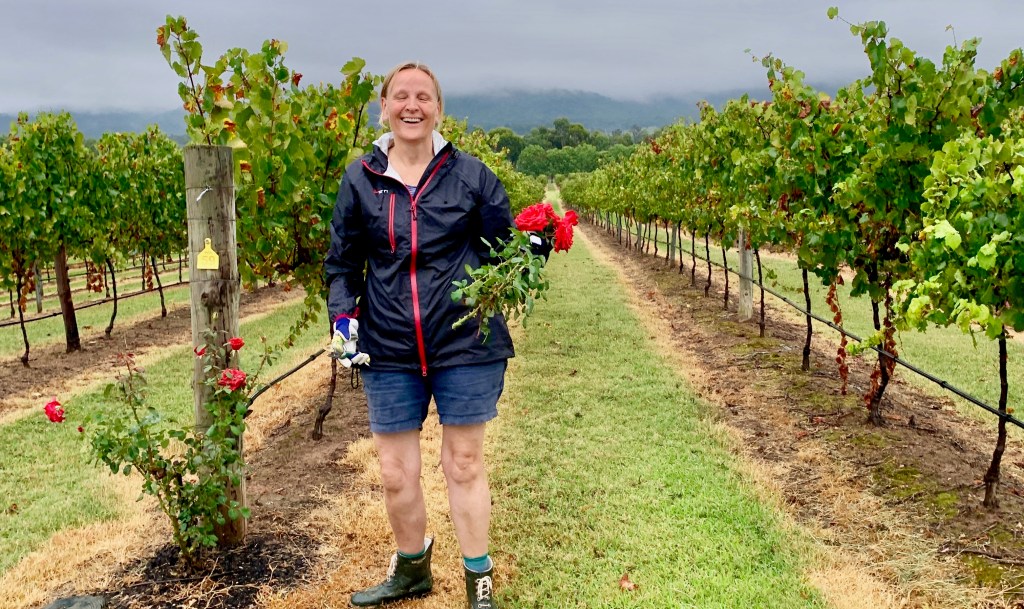
sunshine was in short supply the day of the gallery opening. as dawn broke over broke, a gloomy mist shrouded the valley, and a drizzly downpour was forecast. nevertheless, we found karin out in the vineyard at first light, harvesting roses to brighten the mood.

at winmark, rose is a flower. chardonnay is wine.

hours later, a refreshed and radiant karin was at the cellar door to welcome the 300 guests who braved the downpour to celebrate another hunter valley milestone, a gallery featuring some of australia’s – and denmark’s – most talented artists. many were there for the party.

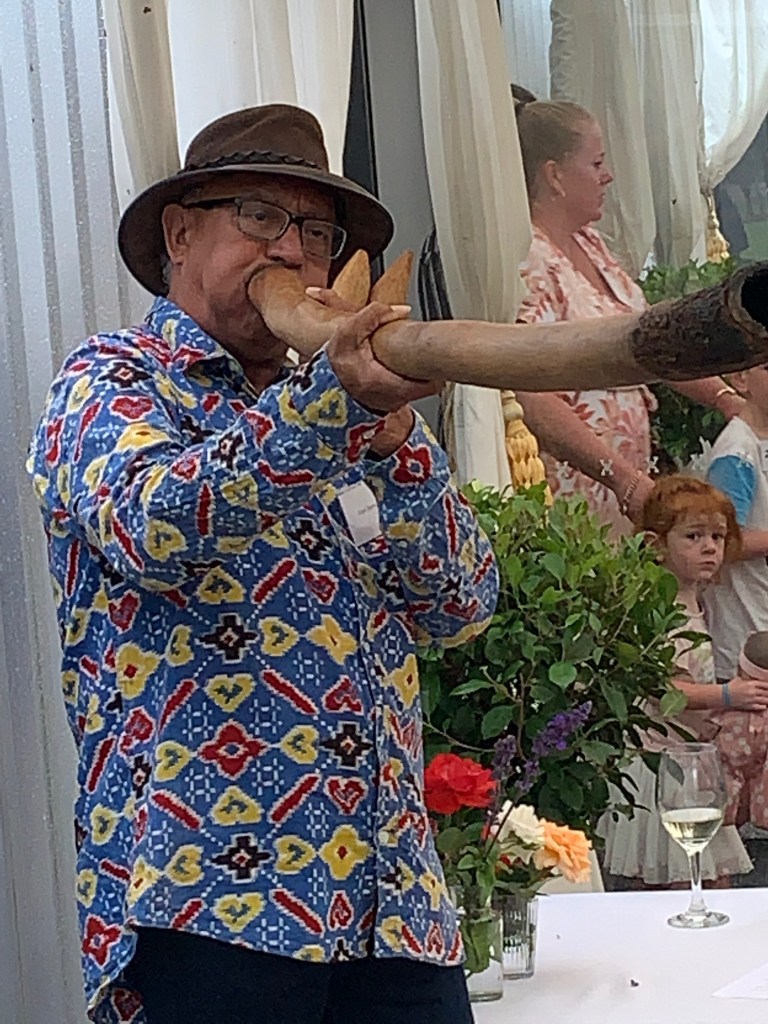
fittingly, gavi duncan, an elder of the awaba gameroi people, began the event with an aboriginal prayer, a song, a blast on his didgeridoo, and a brief explanation of the significance of this ground to the legend of creation held dear by the region’s indigenous people.

according to the dreaming story, baiame (or bayami), the morning star/father; and yhi, the evening star/mother, gave birth to the surrounding mountains and valleys and rivers. the nearby baiame cave is considered sacred, and contains ancient wall art depicting the creator.

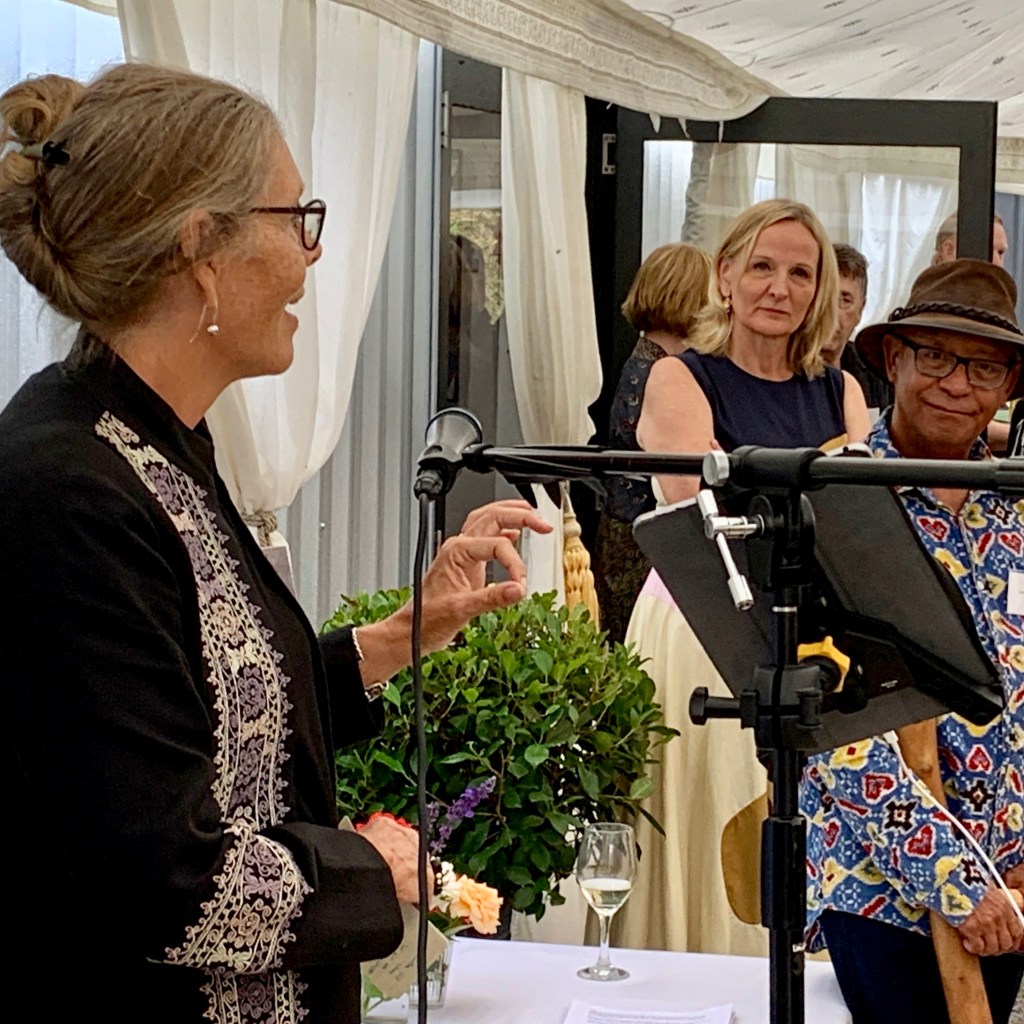
then it was pernille’s turn. as the representative of denmark, she officially opened the gallery, and a small plaque on the wall attests to that fact. as the president of her fan club, i probably should not characterize her speech. but i did bust the buttons on my shirt.

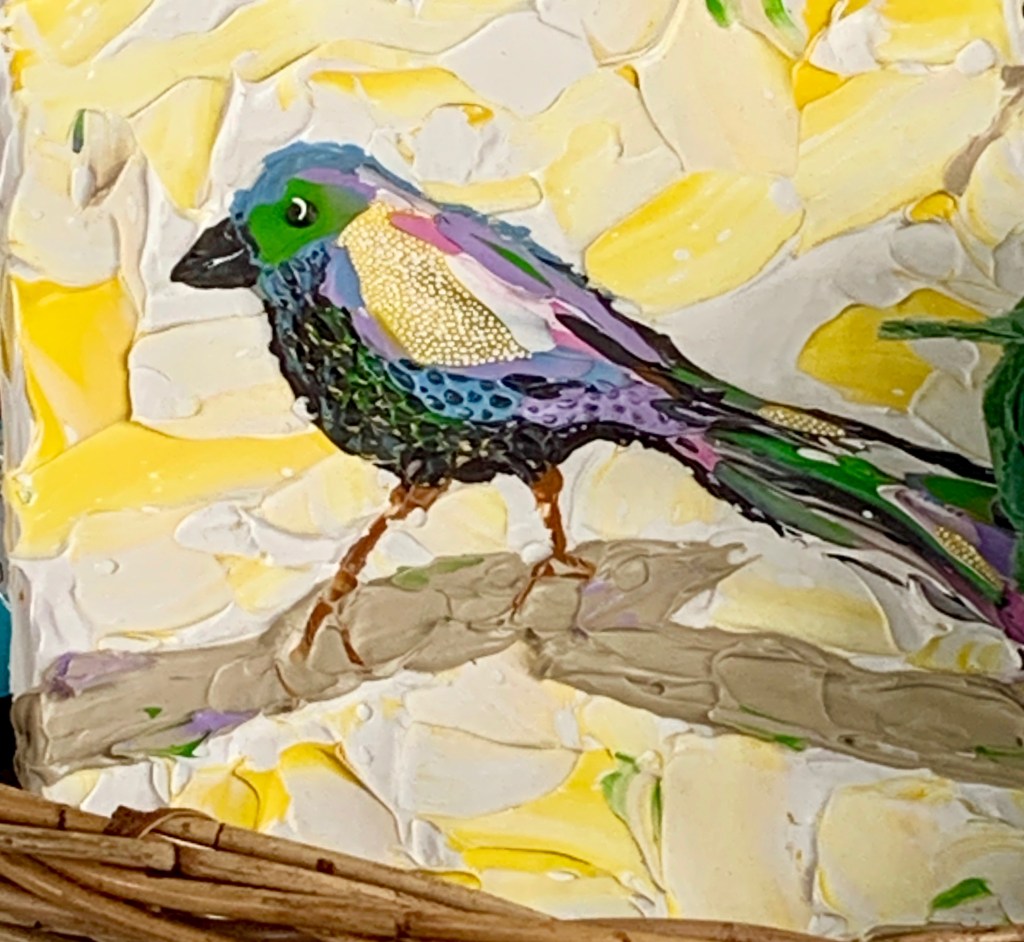
and when pernille was done, karin gave her the bird. (smile emoji here) and what a bird it was. a rebecca pierce original.

even i, an art moron, was blown away by this exquisite piece. rebecca pierce is not an artist to sneeze at (though i had forgotten my allergy medicine). a picture of this bird is posted below. but like all of rebecca’s works, photographs don’t do it justice. you have to see it, feel the texture, in person, to understand her talent.

this bird of color has assumed a prominent position in our home. you should come feel it yourself. better yet, head to winmark gallery next time you’re in the neighborhood and see the collection.

as luck would have it, the next day was bright and sunny, as is almost every other day in this warm-climate wine growing region. before heading back to canberra, we accepted an invitation from our new friend phil hele for lunch with his family at their hunter valley resort.

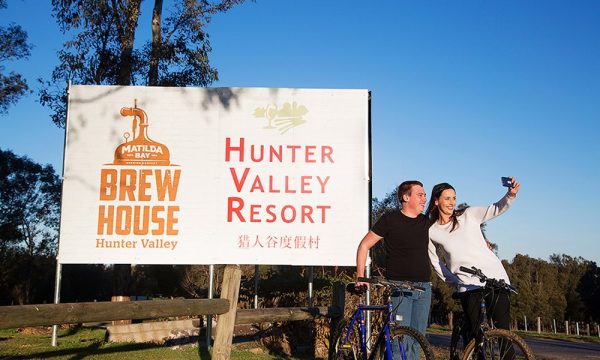
the hunter valley resort

of course there was a danish connection. phil’s mom, anni comes from a long line of distinguished copenhagen hoteliers. she’s another on a growing list of ambitious danes we’ve met who have come to australia to realize their dreams…and succeeded.

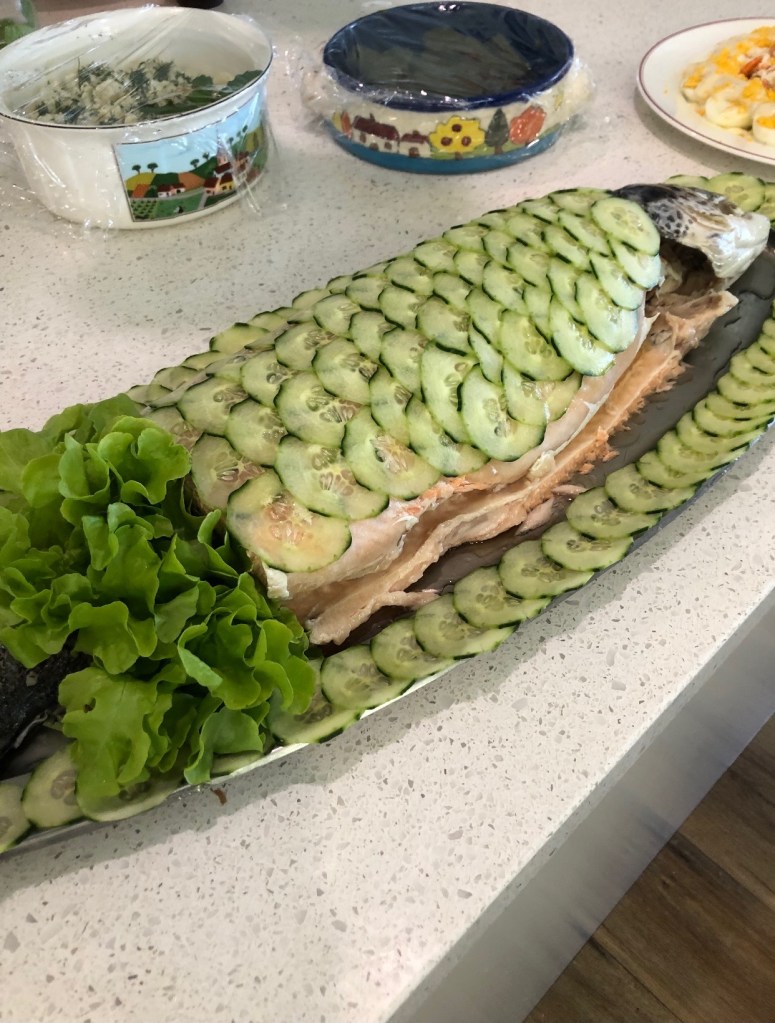
i wish i’d had the presence of mind to take a picture of the slab of salmon anni’s husband julian prepared for our lunch on the back deck of their home overlooking the sprawling resort. julian’s culinary talent is legendary.

the cucumber-smothered salmon

(update: a photograph of the salmon was forwarded to me after original publication, courtesy of the hele family. the other two photos were lifted from the resort website, as my brain was off duty that day.)

it was heartening to see that the hunter valley resort includes a brew pub. according to phil hele, the establishment of a beer hall/brewery created a frothy fizz among the local winemakers when it opened a few years back. “it takes a lot of beer to make great wine,” explains phil in defense.

my sympathies are with phil. i’m a beer guy.

the south coast is on the east coast; in a directionally-challenged country

plus, kangaroos for breakfast, parrots for lunch, and a rusty jinker

if you — a foreigner– were asked to look at a map of australia and guess which is the south coast, you might be tempted to guess it’s the one that runs along the southern edge of the country.

in which case you would be wrong!

in our quest to get to know our host country, we’re making regular reconnaissance trips. our first february excursion was to the south coast. we drove east.

perhaps a little context is in order. canberra –where we live– is an enclave completely surrounded by new south wales, australia’s most populous state. according to its internet page, new south wales…

“borders queensland to the north, victoria to the south, and south australia to the west.”

get that? victoria is to the south, south australia is to the west. and the south coast is to the east.

it gets worse, but this is no place for a geography lesson. this is about going to the beach.

our destination was north durras, which we’re happy to report is north of south durras. it’s a short walk to the murramarang national park, where we found two ancient beachfront rainforests on the mend after the beating they took from last year’s bush fires.

the abundance of green is encouraging, but it will be a while before the canopy grows back, making them function like rainforests again.

the birds are coming back, too. maybe a bit too much. we rented a little b&b-b (bed and beach, no breakfast). we were sitting out on the deck overlooking the ocean shortly after arriving when a handsome king parrot appeared on the railing next to my shoulder, looked me in the eye and began grumbling. i know grumble when i hear it.

“i’m cute,” he grumbled. “where’s my dinner?” then he flew to a nearby tree, expectantly.

pernille had noticed that there was a ziploc bag of seeds in the house, so she poured some onto a plate, and presto! we were popular again. our new pal returned in a flash, and the noisy crack-crack of his beak crunching open the shells was his acknowledgement that we had correctly interpreted his direction. we’re very trainable.
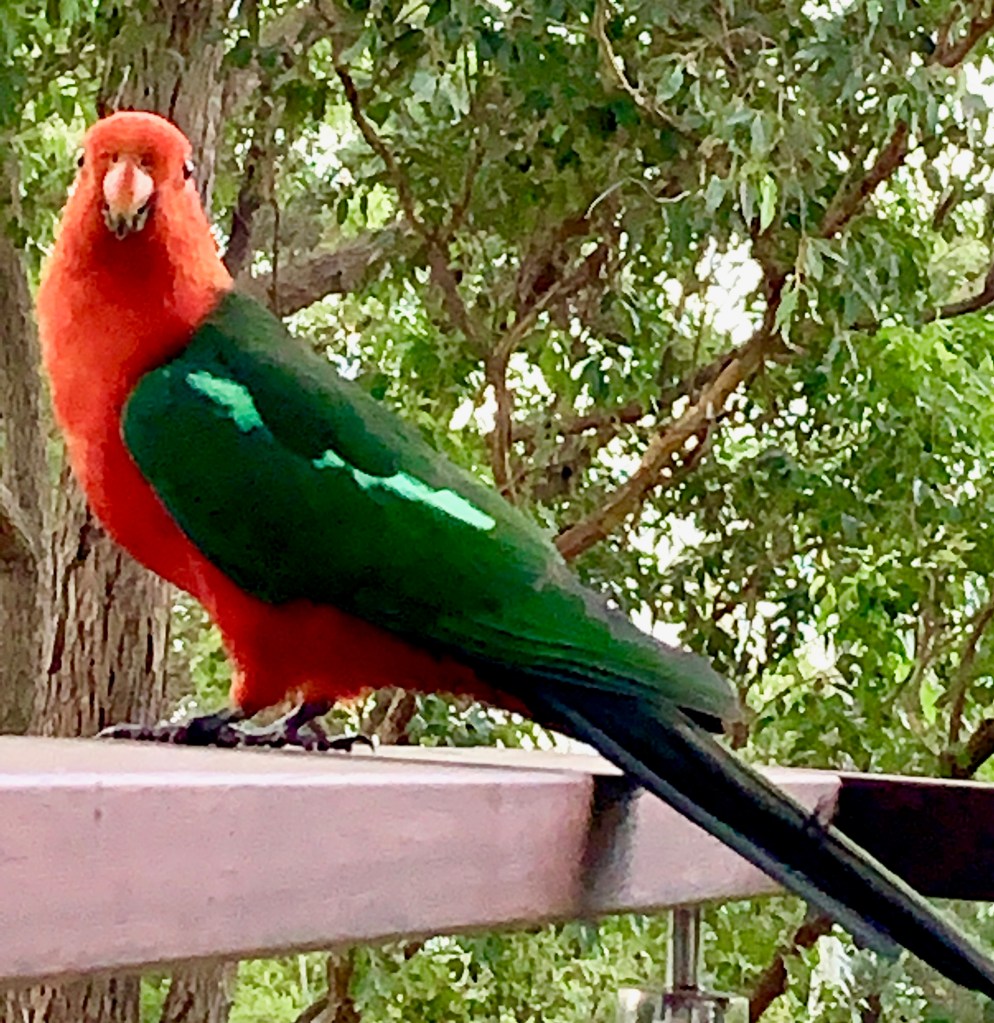
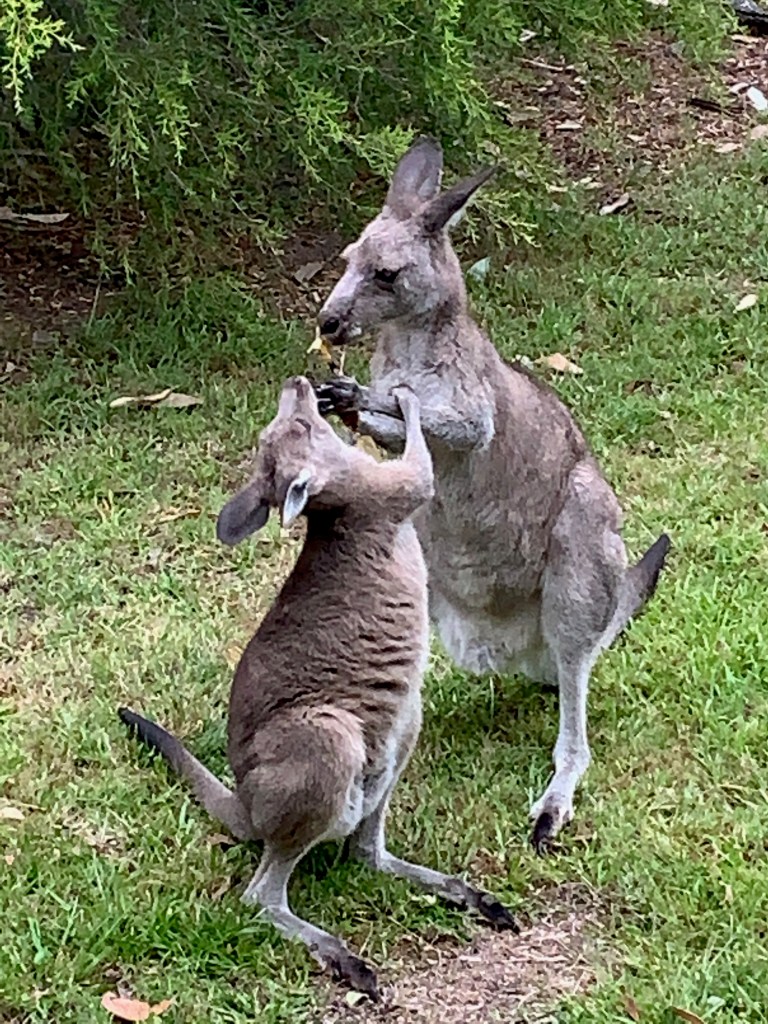
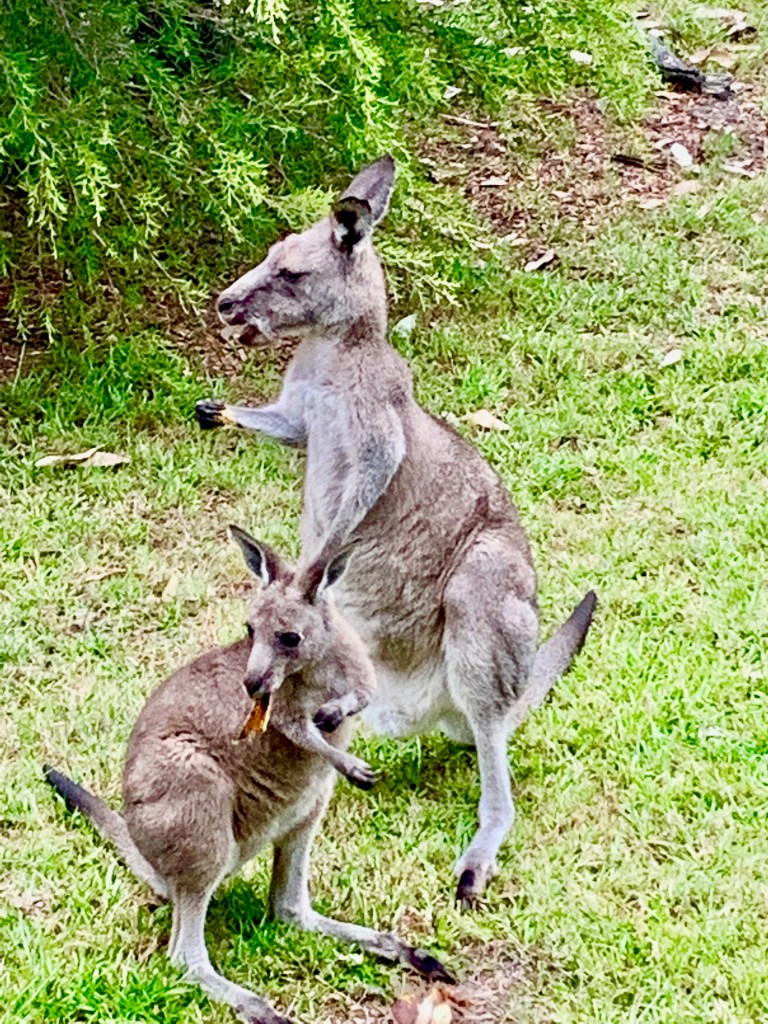
apparently, word spread fast through the animal kingdom. the next morning we not only witnessed a procession of parrots along the railing, but a mama kangaroo and her joey (youngster) were standing quietly in the front garden. they were shy at first, lurking behind a bush, but when i started peeling a banana, mama put aside her inhibitions.

i got the message. so i walked down the three steps and handed her my banana peel. she took it tentatively. then joey came up and demanded a bite. she let him have a taste. they both stood and chewed for a bit, then joey changed the subject.

“c’mon mom, let’s wrestle”, he pleaded, giving her a playful whacka-a-mom slap in the mouth. she responded with a good smack up-side the head, and soon the lure of food gave way to a good-natured game of kangaroo patty-cake. (anyone remember patty-cake?)

just as a test, i went to the kitchen, fished pernille’s banana peel out of the trash and offered it to them. mama roo scrunched up her nose. “no thanks,” she grumbled. i could almost hear her whiny voice saying, “we’re not fond of peels,” as she turned her head away.

and she bounded off, followed closely by little roo. i’m now advised feeding roos is poor form. it upsets their tummies.

next was the winged invasion, right out of alfred hitchcock. as lunch time approached, our fine feathered friends were lined up like aircraft waiting their turn at the runway.

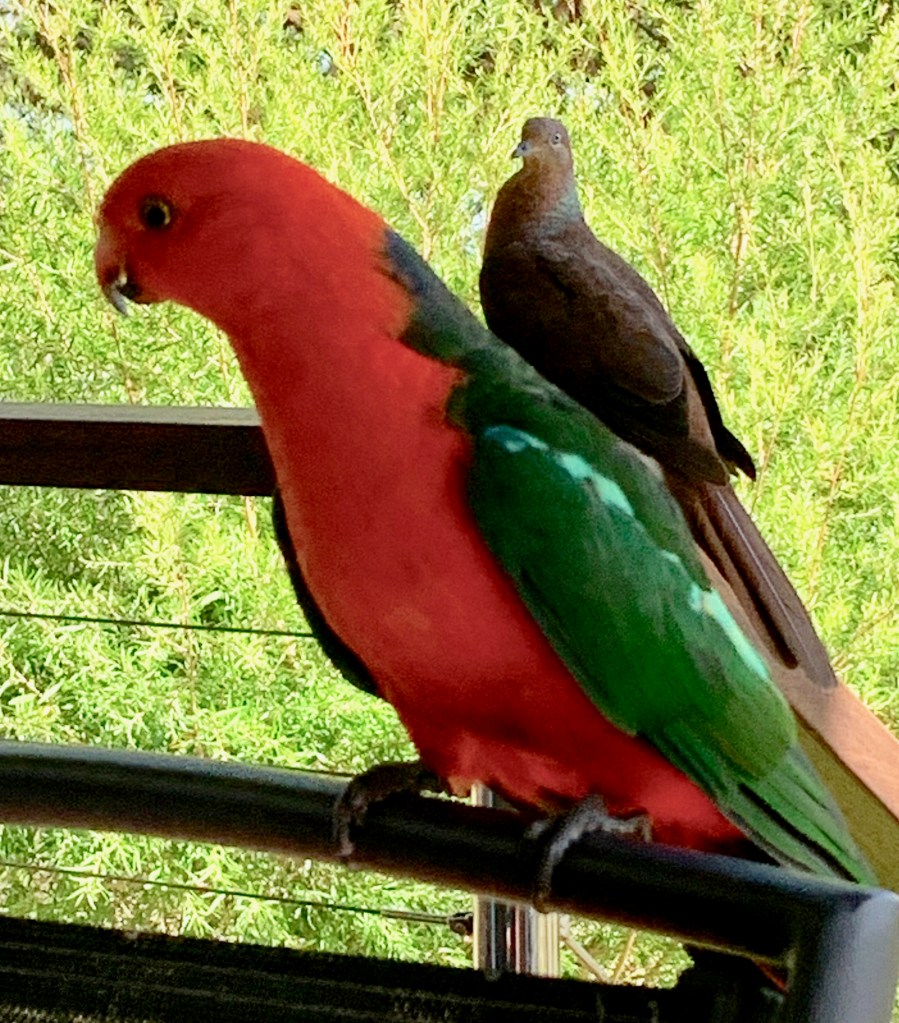
the pecking order: parrots, then cuckoo doves, until the cockatoos arrive

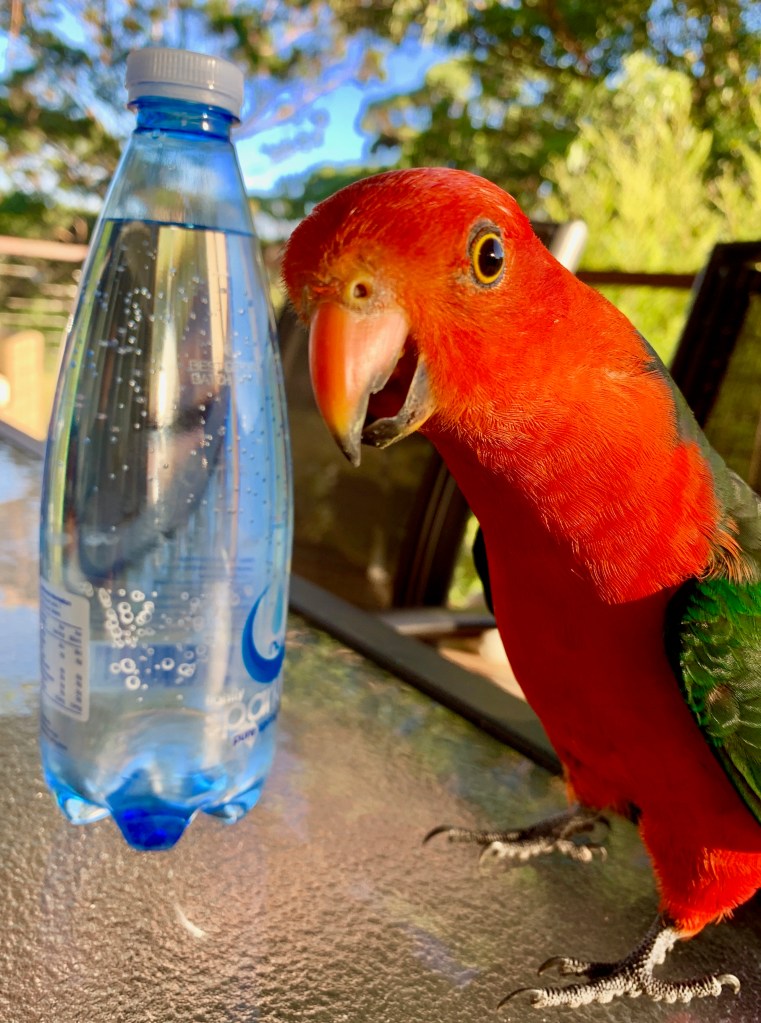
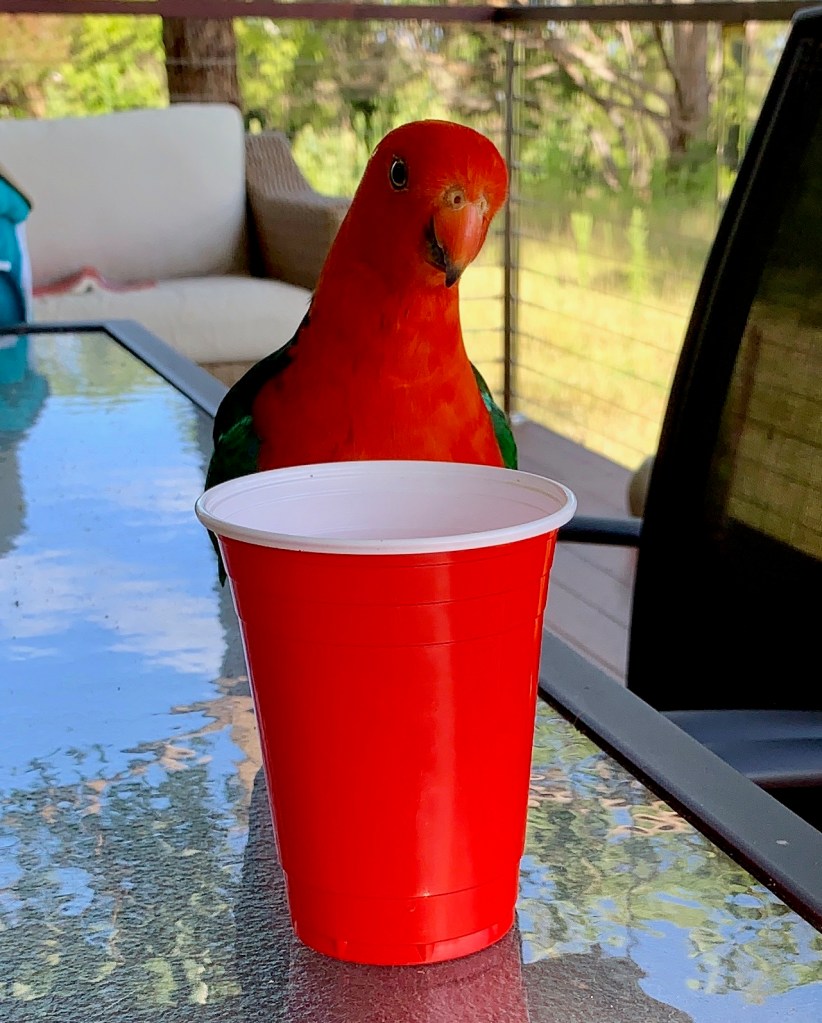
the parrots led the charge, of course. with their bright crimson heads and forest green wing and tail feathers they look like they should be perched on captain hook’s shoulder. these rascals invited themselves to the table, and almost made off with the cheese before we asserted what little authority we could muster.

one of these little characters seemed to take a shine to a red solo cup. another one had an eye on my beer.

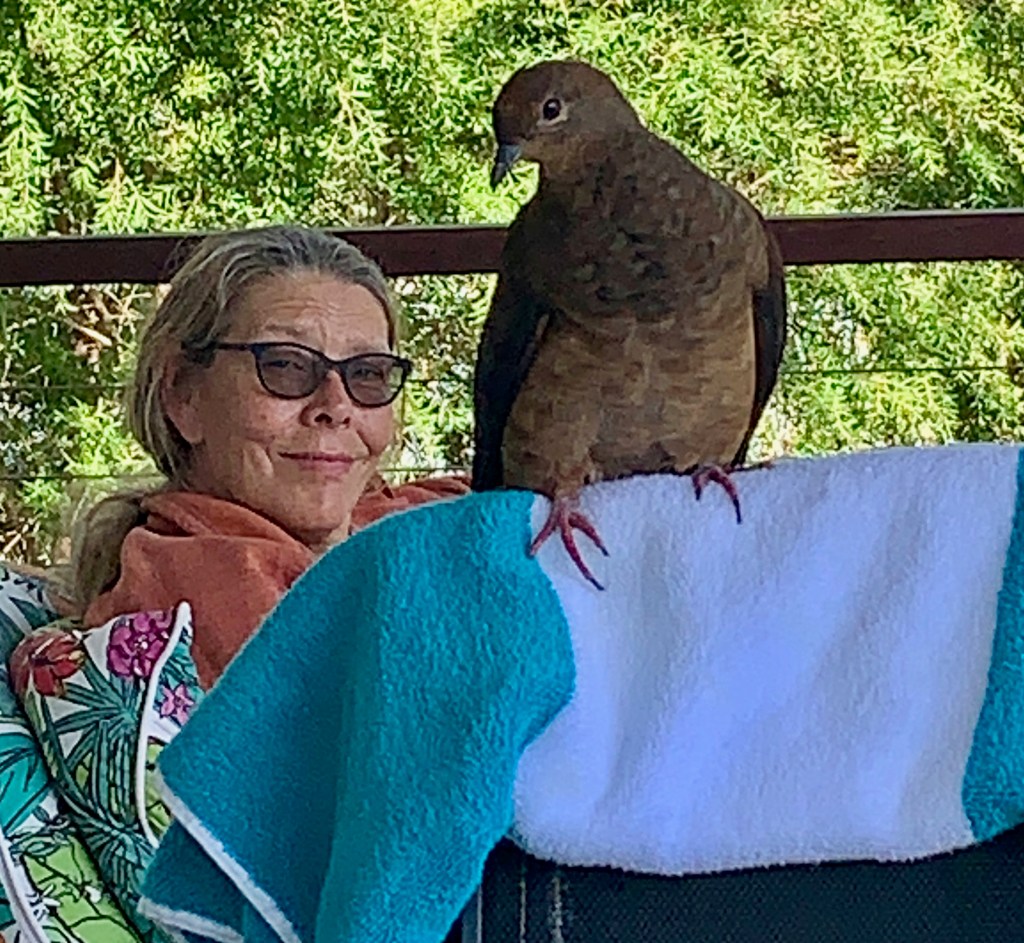
after lunch the parrots yielded to a team of cuckoo doves, which are really nothing more than pigeons with stunning brown- orange plumage.

then, the big bullies moved in; the sulfur-crested cockatoos that are destroying the trees in our canberra back yard, snapping off twigs and covering the deck with the detritus of the nuts they’re scavenging. when these scoundrels touched down, all the other birds fled.

in their defense, they are handsome devils, pure white with a sulfurous yellow hook-like crest accenting their “black and white TV” appearance. but the sulfur is a throwback to their origins in the nether world, and their ear-piercing screech is like a woman being hacked to pieces by a homicidal maniac in a hitchcock movie. beyond obnoxious.

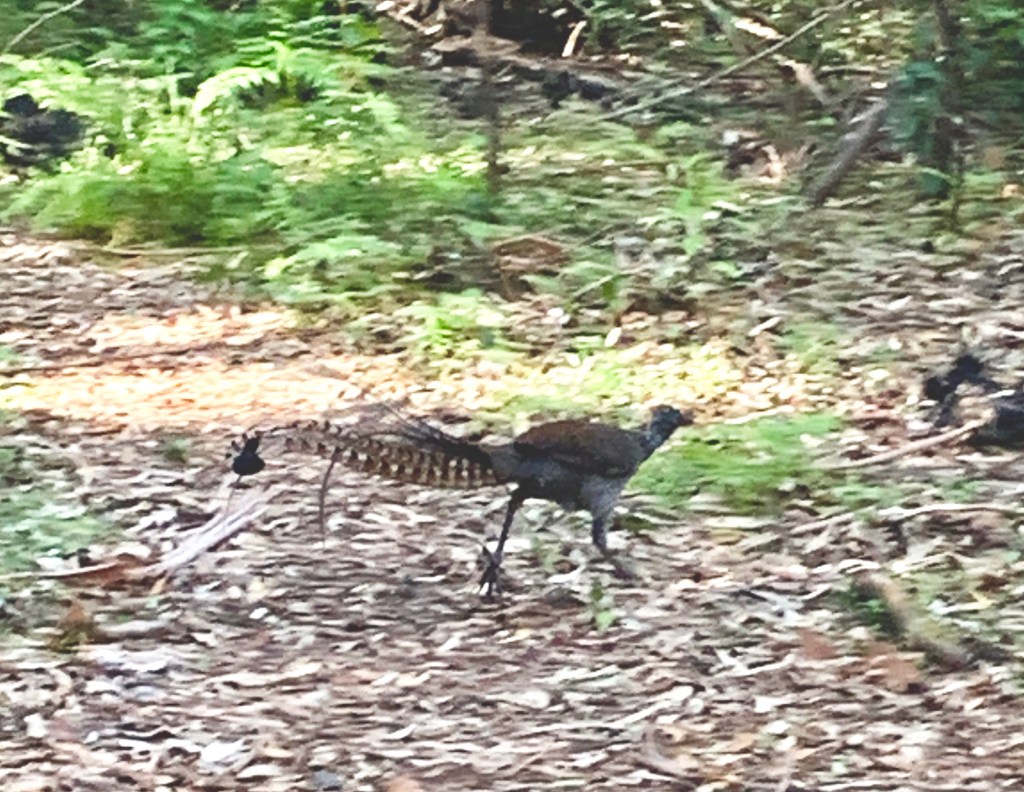
what we were hoping to see, however, was the elusive lyre bird, so named because its elaborate tail feathers resemble the musical instrument of the same name. and as we were out on an afternoon walk, there he was, shaking a tail feather right in our faces.

this bird sounds like a liar to me

the bbc’s david attenborough has documented how the lyre bird can mimic almost any sound, from a chainsaw to a human voice.

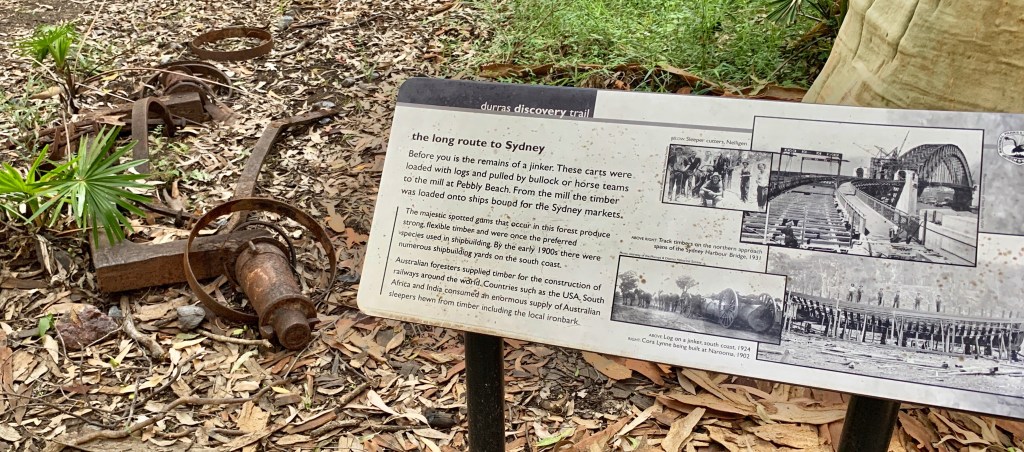
birds we had expected, but our next discovery was a real surprise: the remains of a jinker.

fortunately, a sign told us this was not just junk metal lying in the forest, but a piece of history.

there was a time when this forest produced the finest spotted gum trees, prized for their height and the flexibility of their timber; brilliant for ship building and railroad sleeper cars. but how to get these massive trees to market? look closely at the pictures. jinkers were carts with giant wheels pulled by bullock or horse teams. timber from these trees made australia a prime shipbuilder in the early 20th century. and australian railway cars were the gold standard in luxury.

this being groundhog day (more or less), i was surprised to see my shadow, which i hope signifies six more weeks of summer. or maybe six weeks of summer, since we’ve hardly had any summery weather. we’d been told about the furious australian sun. “in a sunburned country” in the famous title of a book by bill bryson, who apparently already wrote the definitive australian travelogue. (so why do i bother?) but we’ve gone through december and january and a good bit of february and we still keep a sweater handy. hats we wear to keep warm as much as to guard against ultraviolent rays.

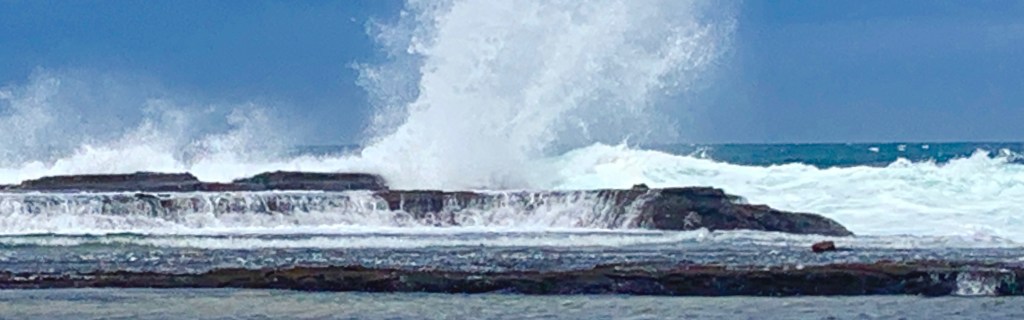
spectacular waves break over rocks at the gorgeous depot beach, a short hike from north durras

so yes, we went to the beach, but no swim. too darn cold. i waded out on a sandbar at one point, but the water never touched my knees. it’s high summer now and the forecast for the next week is for high temps of between 21-29 celsius (70-84 fahrenheit), and lows in the low teens (mid 50s) with substantial winds in canberra. good sleeping weather.

so g’day, mates who’ve stayed with the story this long.

five months here and i’m still trying to develop an aussie ear so i can tell the difference between the “a” in g’day mate and the “i” in vegemite.

i’m often asked, “how d’ya like the vegemate, mite?” it taistes grite.

and i can still see ya with my g’deye.

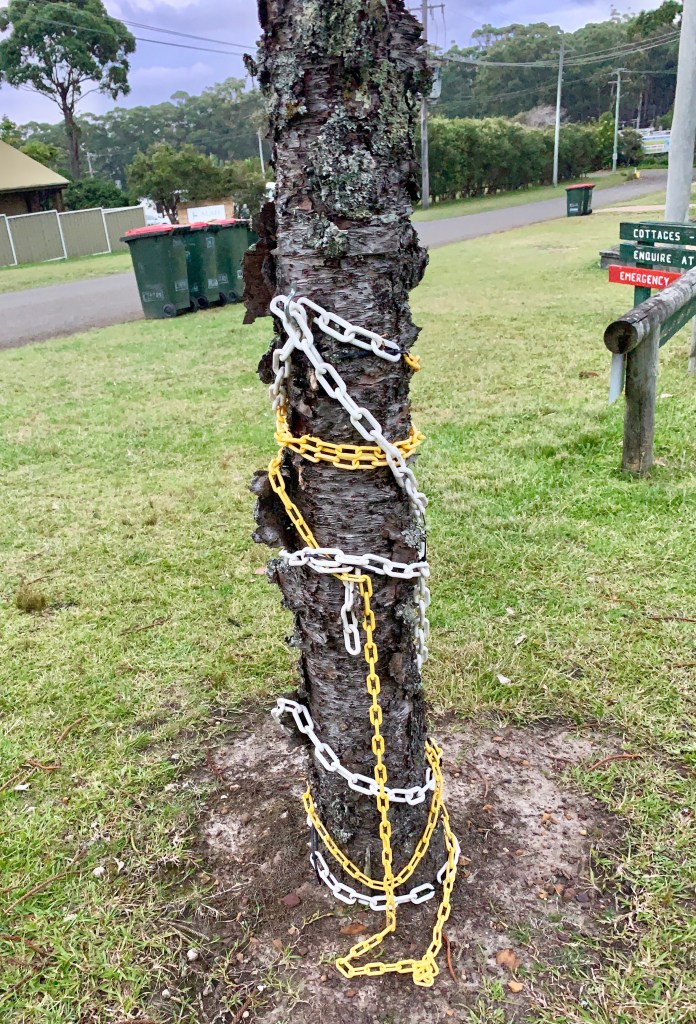
free the tree

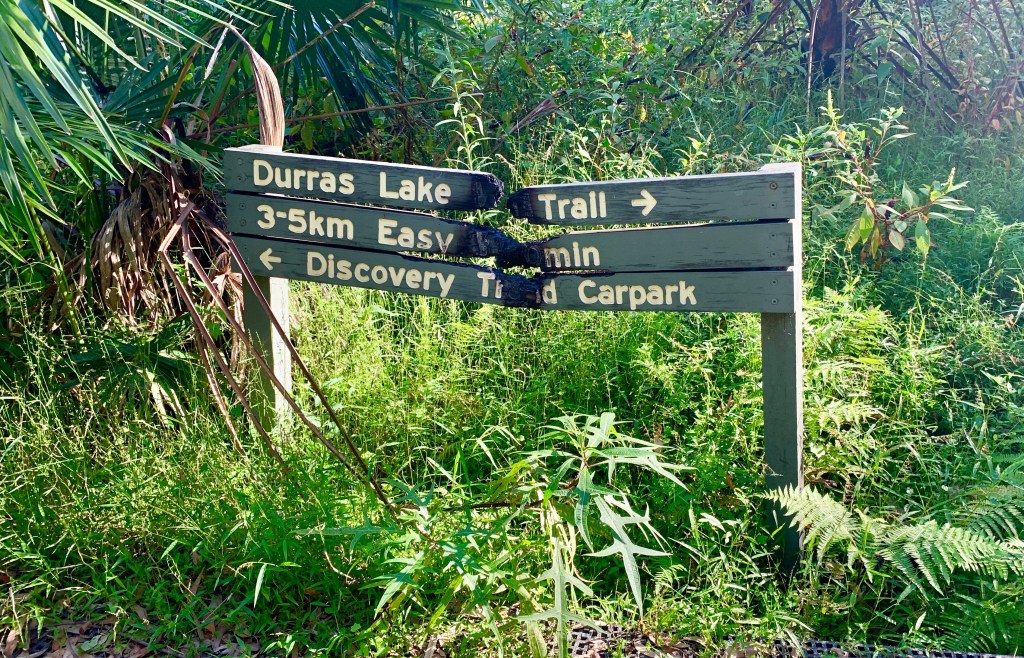
one last note. this tree at north durras has been at the same spot for years. so many captions come to mind. but haven’t found the right one. suggestions?

no americans, no river, no oysters

but kangaroo island does have a significant seal community, most of the world’s rare black cockatoos, a 1st class gin distillery, wineries wallabies wannabees & honey bees

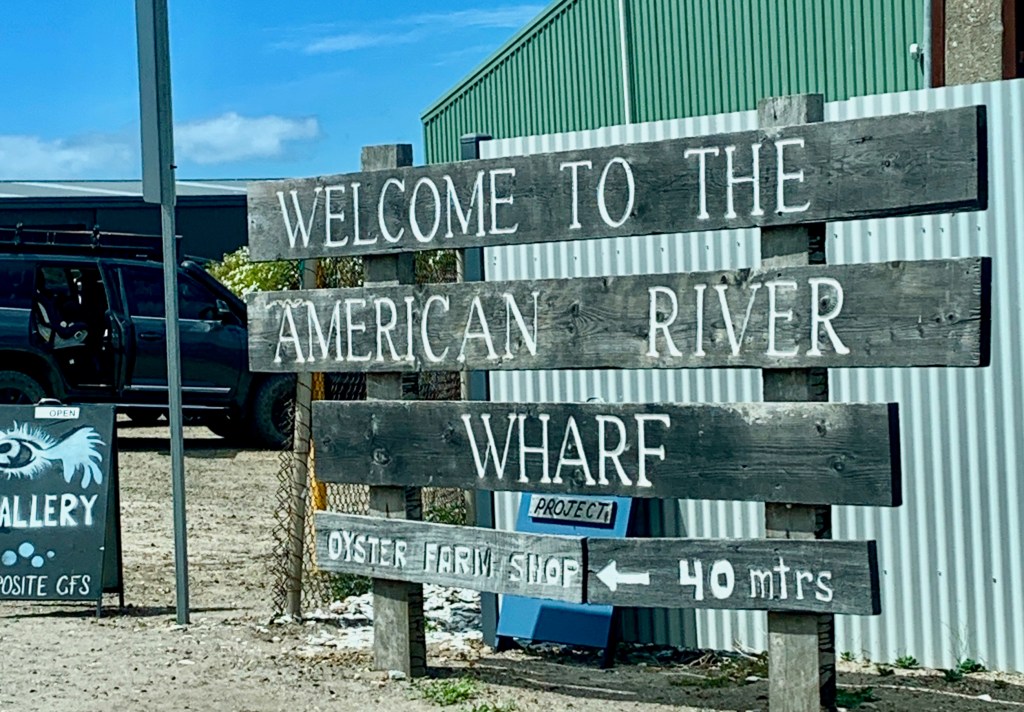
american river is an enigma. a 15-star u.s. flag greets visitors to the town’s wharf, where a replica of the u.s. schooner independence is being lovingly crafted by a crew of volunteer shipbuilders. but there are no americans living here, and truth to tell, there’s no river. just a bay.

we had been drawn to the little village by mouth-watering stories of an oyster farm shop, but when we got there, no oysters. sold out. hungry, we discovered a little cafe on the wharf, but they were out of everything on the menu except cake. damn tourists, gobbling up everything.

the story of the schooner is a bit sketchy, too. as the brochure tells it, the independence was the first ship built in what is ‘arguably’* the first settlement in what later became the state of south australia.

ostensibly, a crew of seal hunters from connecticut, usa, showed up at kangaroo island in the winter of 1803, which was only 15 years after the first european settlers arrived on the continent, and when old glory only had 15 stars.

these americans stopped at the bay, which they seem to have mistaken for a river, and built themselves a two masted-schooner that was used for sealing operations. two years later, the ship was presumed lost with all hands while making her second voyage. so, for the past 218 years, there’s been no independence, either. the replica could be ready as soon as 2022, by which time they may have more oysters, and maybe americans.

hey, pssst, let me tell you the real story of the fate of the independence, based on a journalistic investigation. (believe me, i know about journalistic investigations.) according to recently unsealed documents, the americans had sailed around the island to seal bay and massacred scores of innocent seals to sell their pelts and blubber. the second time they came around, the seals were lying in wait. they ambushed the ship and lured it onto the rocks, where it broke apart and sank. the birds made short work of the sealer-sailors, and not a trace was ever found. my sources must remain anonymous. my lips are sealed.

today, thousands of seals come to the bay each year to celebrate their victory, lounge on the environmentally sustainable solar-heated rocks, and birth their young. in fact, seal bay is kangaroo island’s premier tourist attraction. (open 9-5 every day except christmas!)

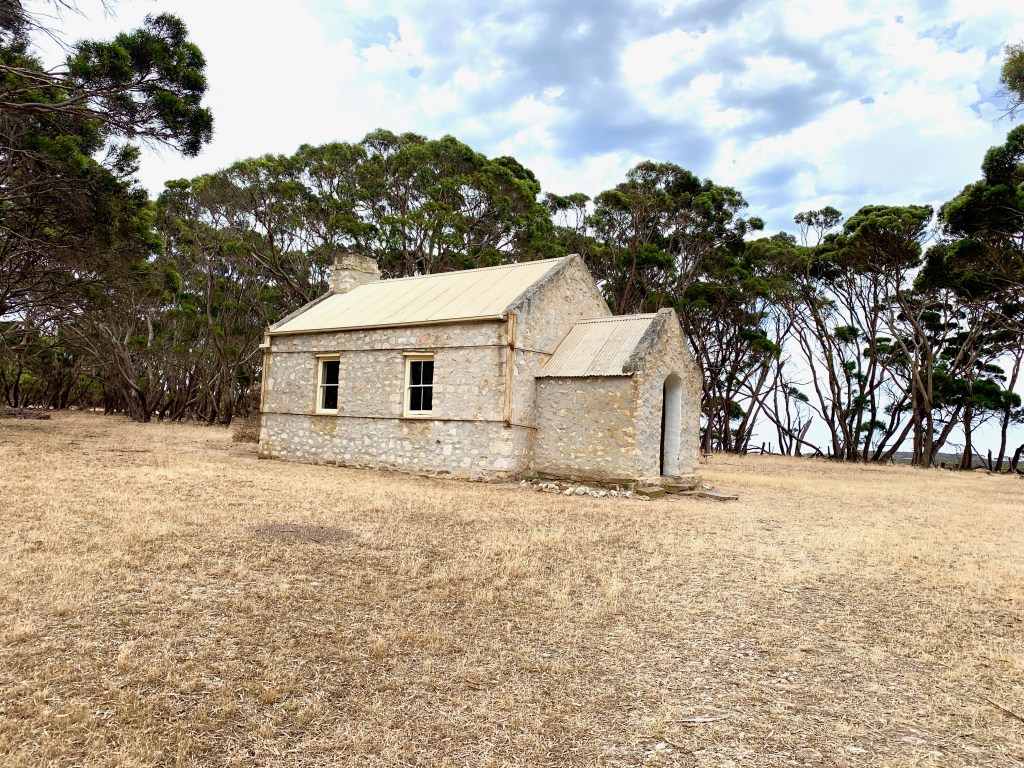
kangaroo island also features a one-room schoolhouse that has, you guessed it, no students.

the old schoolhouse is well worth a visit. it’s been completely restored just as it was when it was operational in the 19th and early 20th centuries, right down to the “rules for teachers” posted on the wall, which make it abundantly clear why it closed. no teachers. who’d take that job?

if these were the rules for teachers, what were rules for students like?

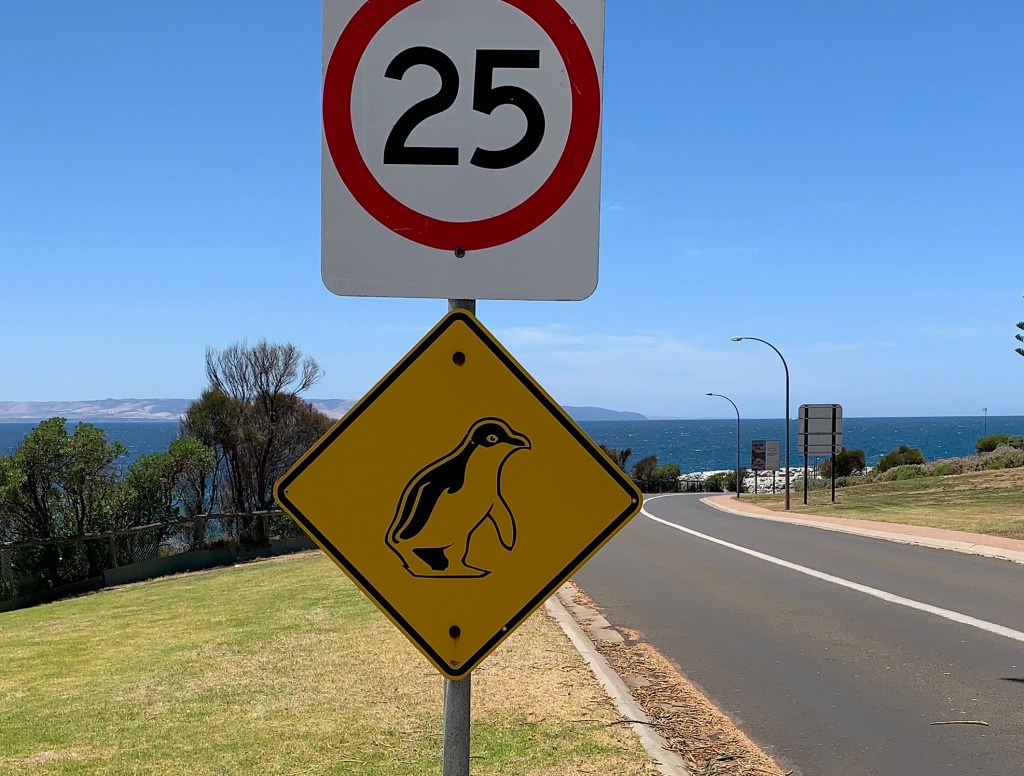
one thing k.i. does have, however, is birds. some rather rare and unusual birds. there’s even a sign warning motorists to look out for penguins. i guess there’s no need to mention that we didn’t see any.

penguin crossing in penneshaw

pernille’s passion for ornithological wonders was perhaps the main reason we chose k.i. for our holiday. so i was resigned to a day of driving from place to place, looking up into trees and hoping we’d catch a glimpse of some of the rarest and most elusive birds on the planet. pernille in particular had her sights set on the glossy black cockatoo. there are only about 400 of them in existence.

the female glossy black cockatoos have yellow cheeks, like these in a painting at the american river art gallery. they usually have red eyes, but sometimes they fight over the males

we engaged the incomparable ron swan to guide us to bird hideaways. and sure enough, within the first hour ron had led us to a grove of tall eucalyptus trees where a pair of glossy blacks was perched in the highest branches. pernille was ecstatic. she couldn’t wait to get back to our b&b to tell our hosts, pierre and branka, about the sighting.

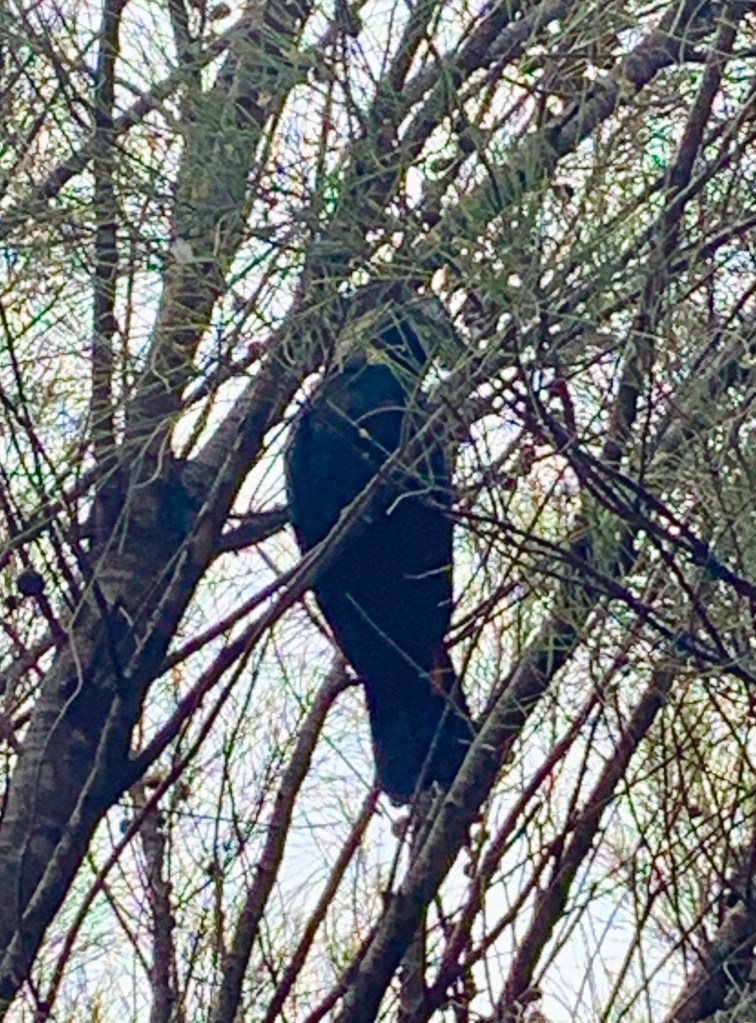
the following morning, as we were having breakfast, our next door neighbors summoned us to their back yard, where they have a casuarina tree. there, we discovered “the curious case of the casuarina congregation of cacophonous cone-cracking cockatoos’ “.

to make a long story even longer, it turns out glossy black cockatoos have a casuarina seed fetish. a group of six or eight of them were perched in the tree, noisily cracking the cones and crunching the seeds. they seemed to find it amusing to plop the broken shells on our heads. but hey, it’s not every day you get to see a glossy black cockatoo close enough to take a picture with a plain old cell phone camera. so we let them.

our friend ron also knows where the island’s reclusive ospreys have their nest. it’s not much of a secret among locals. the nest was first sighted in the 1860s in d’estree bay and is quite prominent at the tip of a rocky peninsula.

for you ornithologists, pernille saw 17 birds she hadn’t seen before, including the elusive hooded plover and a night heron asleep in his daytime hideaway. well done, ron.

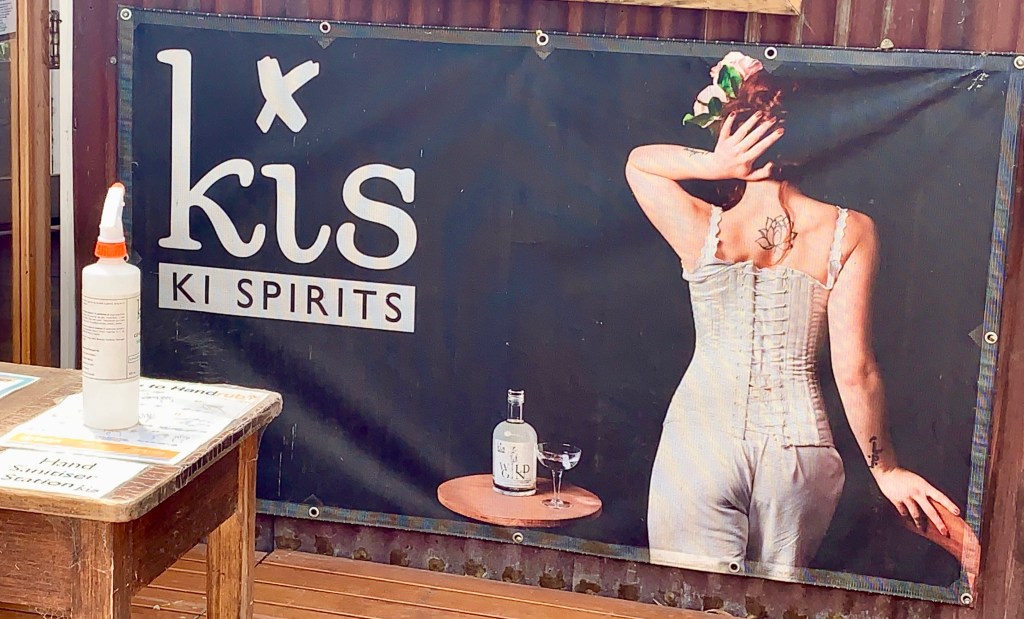
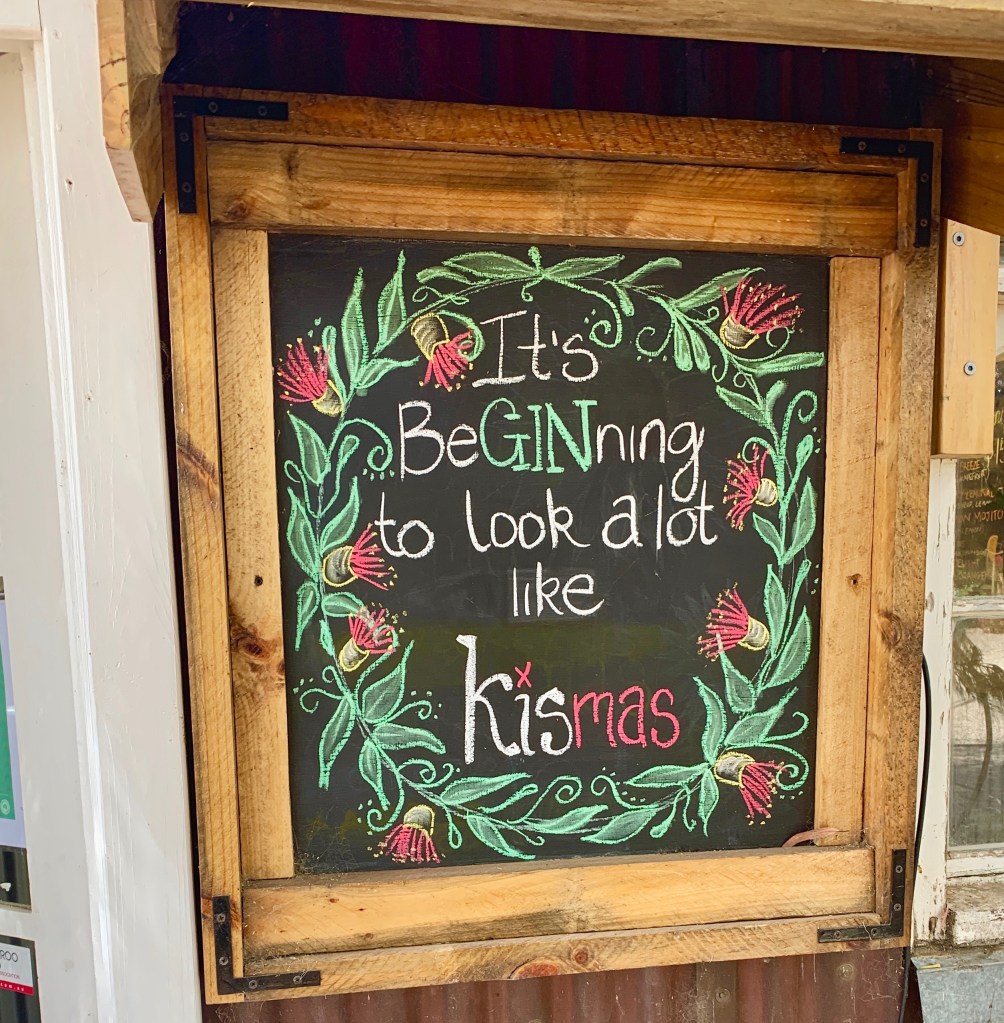
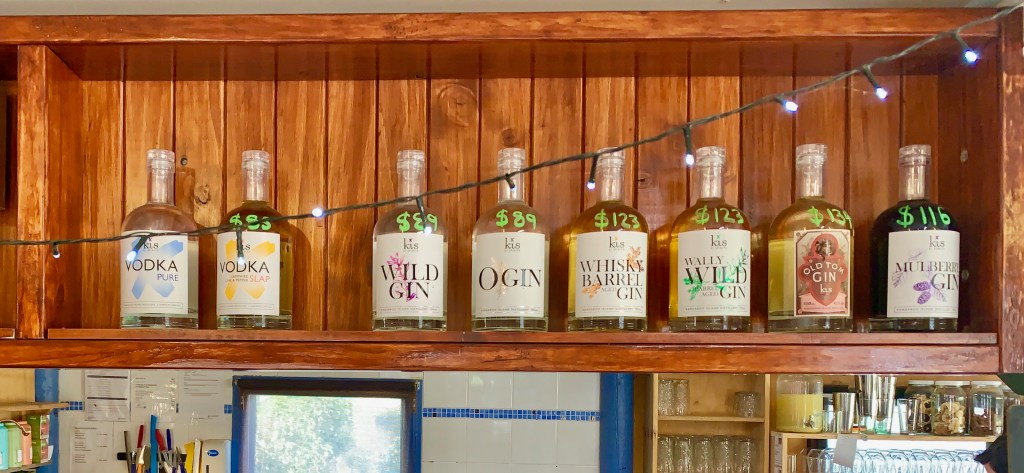
our island explorations turned up a few unexpected finds, such as the k.i. brewery (meh), and the k.i. spirits gin distillery (yeah!) our favorite: the mulberry gin. over ice with a sparkling guava drink. it’s a knockout. literally. i never thought we’d be gin aficionados, but this stuff is nice.

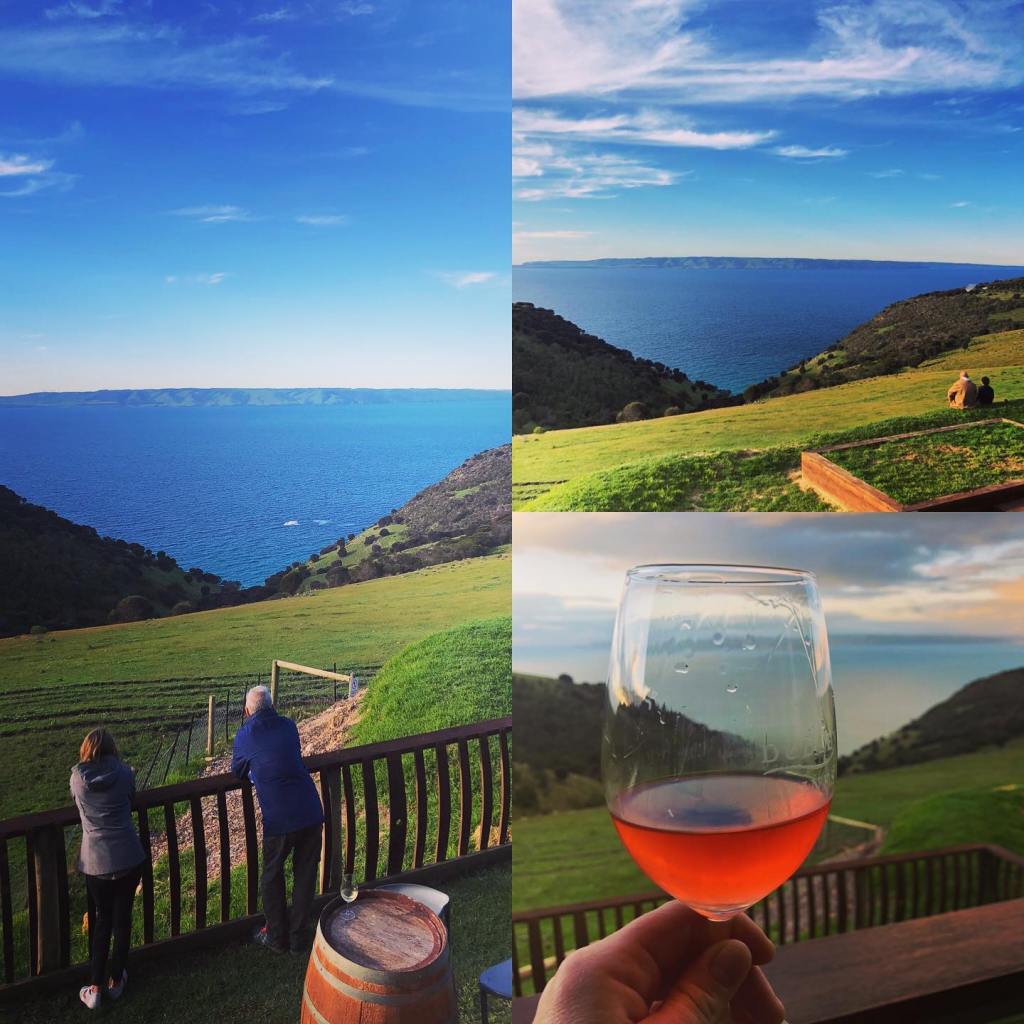
we also visited some of the island’s wineries, one of which is set on a cliff overlooking a spectacular vista of a valley plunging down to the sea. it did seems a bit peculiar, though, that among the vast expanse of acreage, there were, yep, no vineyards. we left scratching our heads, wondering where they get the wine. on the other hand, it seemed a sin to plow up such a gorgeous valley to grow grapes. so we’ll give them a pass. no journalistic investigation. after all, they must have some vineyards somewhere.

photos from the dudley wines facebook page. we could have taken our own but, um, we forgot.

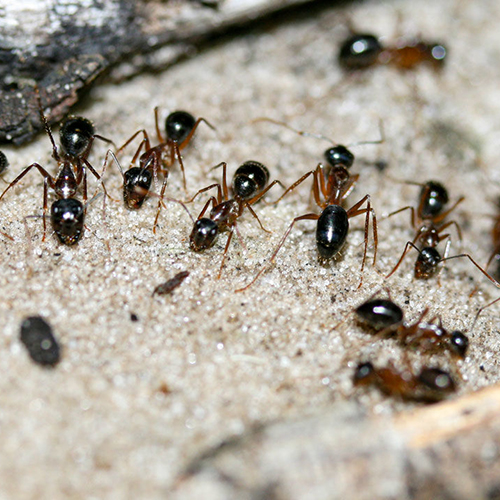
and one last thing before we go. ants. k.i.’s got ants. “ants with attitude” as one website called them. our man ron swan showed us an actual ant highway adjacent to his yard. thousands of ants were marching along, just like in the dave matthews song.

k.i. has several species of ants, including mildly venomous jack jumper ants and sugar ants. an internet search turned up some interesting facts about k.i. ants. for instance, did you know that sugar ants have a ‘penchant for pee’?

according to a university of south australia research team, sugar ants prefer urine to sugar. the team concluded that the sugar ants’ taste for urine could play a role in reducing greenhouse gasses. so beware, next time you step on an ant, you could inadvertently be contributing to global warming.

wallabies are shy, except this guy

and one more last thing. wallabies. we hadn’t seen a wallaby, but we discovered our host, branka has a friendly wallaby that she feeds. he seemed unconcerned as we crept to with a few feet for a photo session as he munched on a cabbage leaf.

and one final last thing. bees. there is a place called island beehive that has quite a story. they produce something called ligurian bee honey. we didn’t go. maybe next time. this sign has nothing to do with the beehive. i think i saw it hanging over a urinal somewhere.

so farewell kangaroo island. you showed us a lot more than you didn’t. and you’ve got soul. a year on from disaster, you are thriving. and unforgettable.
we love your signs.

* “arguably” is one of my favorite weasel words, words that allow journalists and fraudsters to allege something without any evidence, and when it turns out to be false, they can “argue” that it was only speculation.

fire, the teacher

bushfires have played a crucial role in shaping australia’s ecology for millions of years.

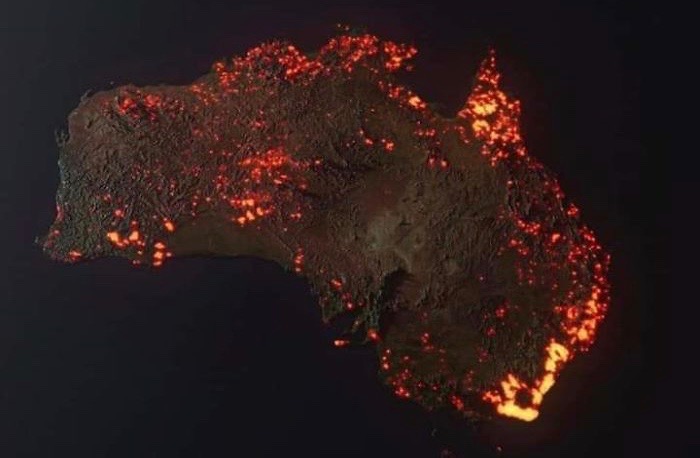
photo from NASA satellite data; dec. 2019; jan.-feb., 2020

the original intent of this post was to take a lighthearted look at how one tiny australian island is roaring back after half its land area was blackened in last year’s bush fires. but as sometimes happens, the story took on a life of its own.

the main character in the story is mother nature, which is in riotous growth mode after a rather rough patch in oz. the story, however, is set against the backdrop of the difficult discussion australia is having as it grapples with two intertwined challenges; the increasing intensity and destructiveness of bush fires; and the emerging reality that australia’s european settlers disrupted a land and fire management system that sustained the balance between man and nature for tens of thousands of years.

so as australia reckons with its past and evaluates the adaptability of indigenous methods to 21st century challenges, the circle of life (remember ‘the lion king‘?) goes humming along,

the flames engulfed every shred of vegetation in parts of western Kangaroo Island, right down to the water’s edge. now it’s being reborn
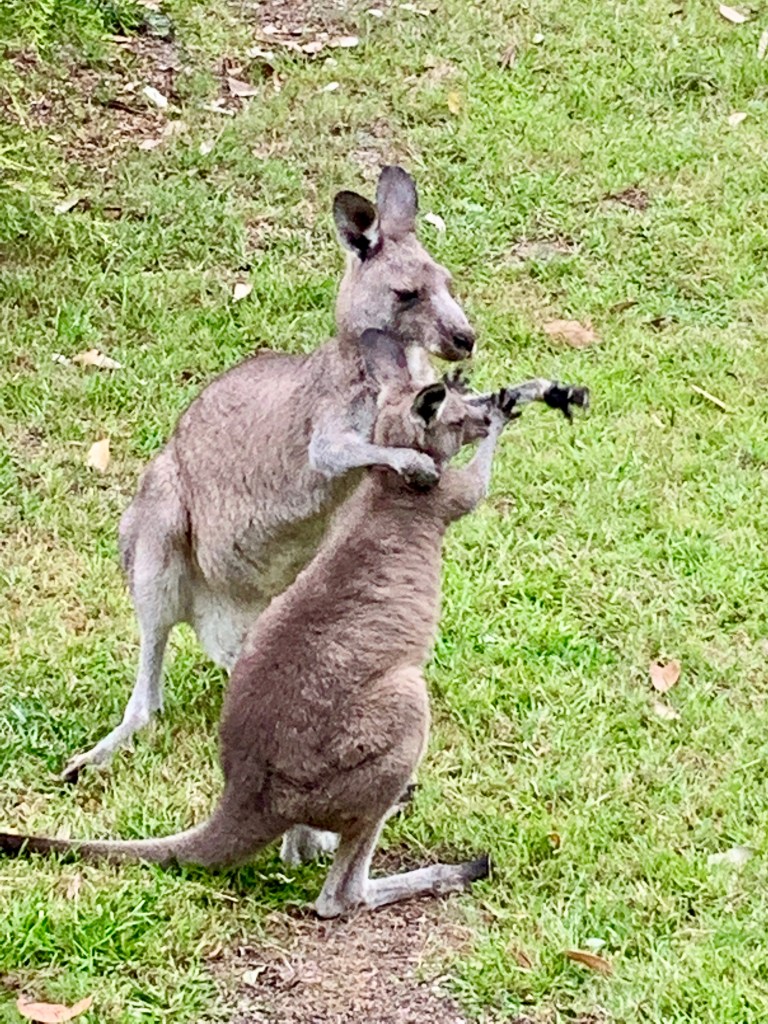
exhibit A: kangaroo island (k.i. to the locals) is a treasure trove of biodeversity located off australia’s southern coast. k.i. is about the size of luxembourg. (it’s visible in the satellite imagery above, a brightly burning dot about halfway down the inner coast). the island’s western half is mostly wilderness, home to a smorgasbord of endangered species, many of them found nowhere else.
lightning strike fires burned large swathes of australia to a crisp a year ago. clouds of smoke and a blanket of ash smothered the country. breathing was an existential risk.

it was a time of superlatives. we were told the fires were “unprecedented anywhere in the world”, temperatures were the hottest, damage was the greatest. entire native species were wiped out. experts estimated a billion animals died. and that’s not counting fish, bats and frogs. apocalyptic predictions dominated the news.

observers from abroad seeing news accounts could be forgiven for confusing australia with hell; a blazing inferno down below where cuddly koalas and kangaroos were being barbequed to extinction.

n.b. this is not intended as a rant about the pathology gripping journalism. if journalism is the first draft of history (god forbid!), this is the second draft. the longer view.

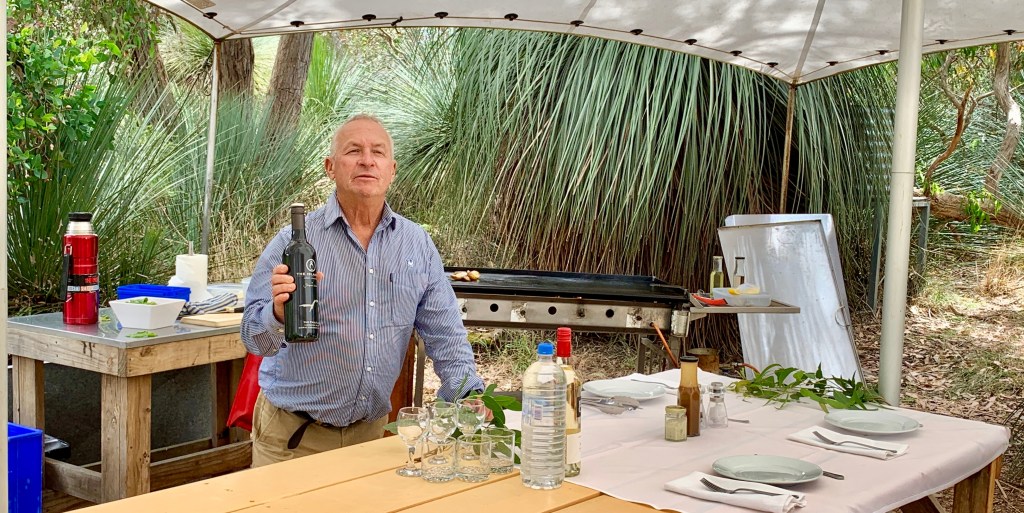
and now, meet mr. long view, ron swan. ron is a walking kangaroo island encyclopedia, not to mention a bush country chef.

grilled local fish, fresh salad, fine k.i. wine. ron’s secret bush kitchen he’s got a few tricks up his sleeve

ron makes his living introducing visitors to the hidden wonders of kangaroo island. he’s damn good at it.

he also knows a thing or two about the ecology of fire.

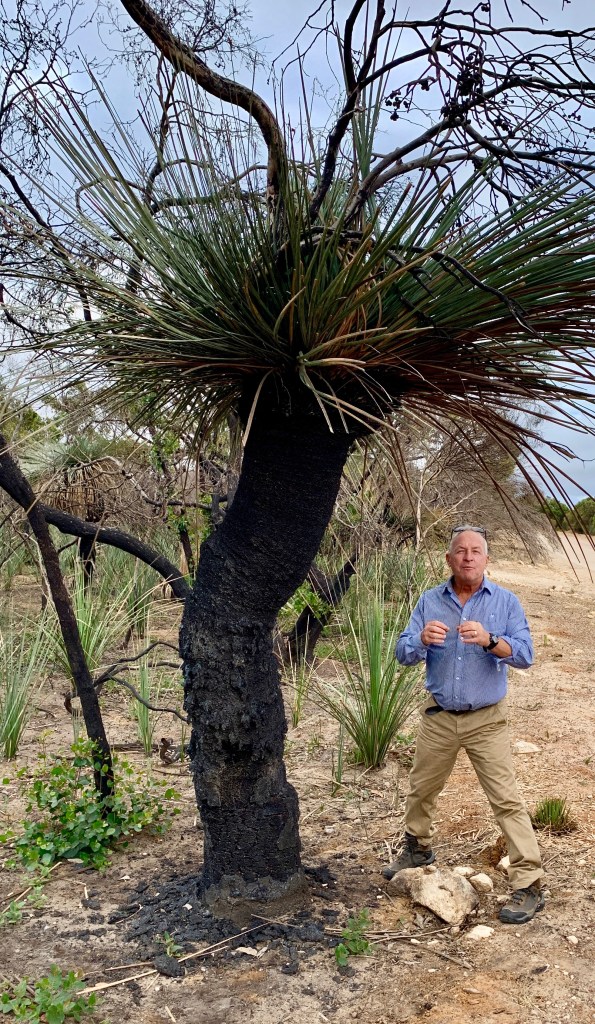
driving through a forest of charred stumps, ron pulls over to show us the life percolating inside. this one is a yacca (no, not yucca, you northern hemisphereans!)

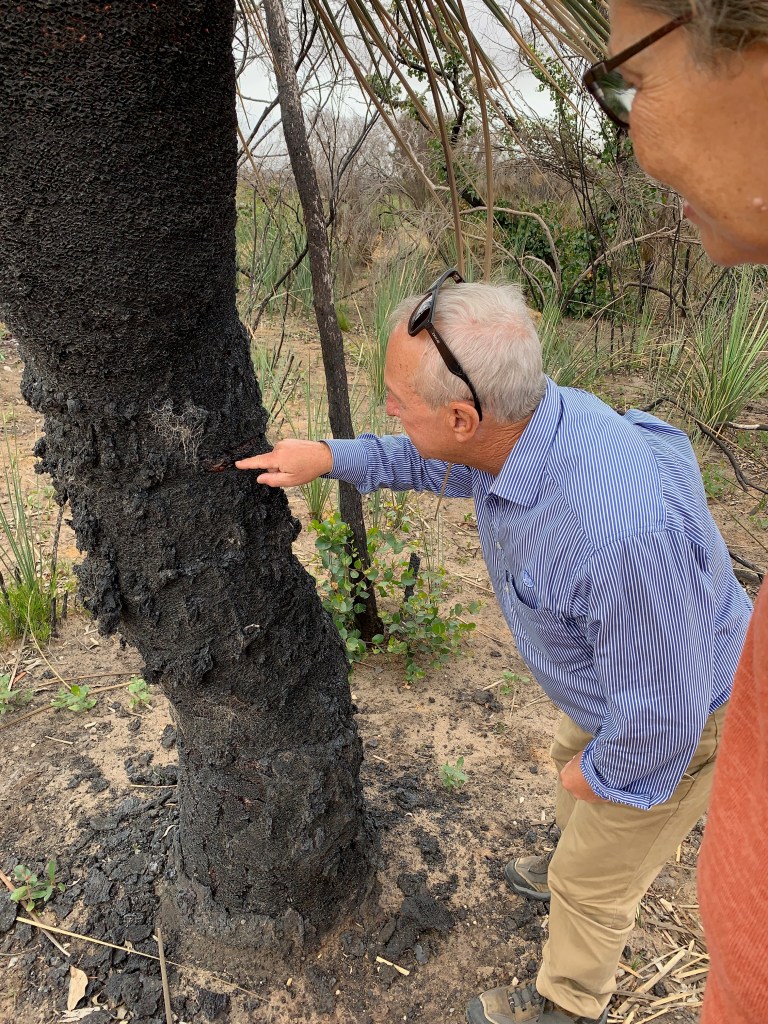
the bark of this yacca was turned to ash in the fire, but beneath the surface it’s alive and well.

yacca is the aboriginal name for what are commonly known as grass trees, though they’re neither grass nor trees. and the bark is not bark at all, (though it’s worse than its bite). ron shows us that the “bark” is made of tightly packed leaves. he then peels back a layer to reveal the inner core, which is very much alive.

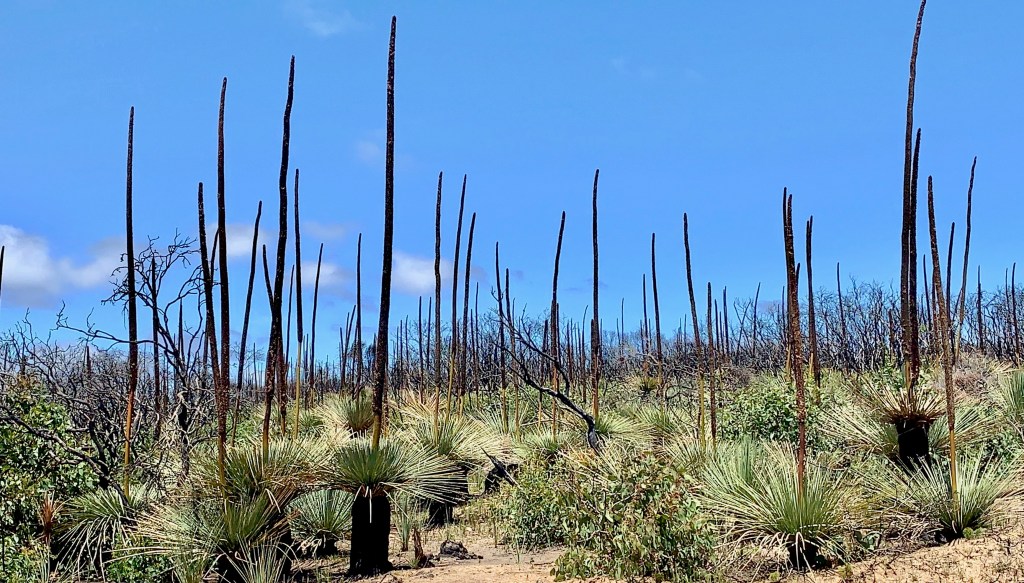
to make a long story short, these species survive and thrive on fire. while the tops of the eucalyptus trees are destroyed in a blaze, the underground core re-sprouts from buds (lignotubers) stored either deep in the stem or at the base of the trunk. this dance of fire and flora is one of mother nature’s wonders.

the tops of these eucalyptus trees in flinders chase national park were destroyed but new growth is erupting from the underground core

when europeans arrived in 1788, the people living on the land had a good working relationship with fire. we now know that these traditional custodians understood fire to be an inevitable force that must be managed, just as the flora and fauna had adapted. it was not so much that they had tamed fire. it was the other way around. they had learned from fire. the most adaptable (flora, fauna, humans) survived and thrived. the rest are now extinct.

some contend we’re facing another extinction crisis today.

on the extinction/survival scale, kangaroo island is showing its mettle, rising like a phoenix from the ashes. almost all its 4400 residents live in the eastern half, which was spared by fire. in the west, where the flora and fauna of the spectacular flinders chase national wilderness park was a near total loss, the terrain is again verdant.

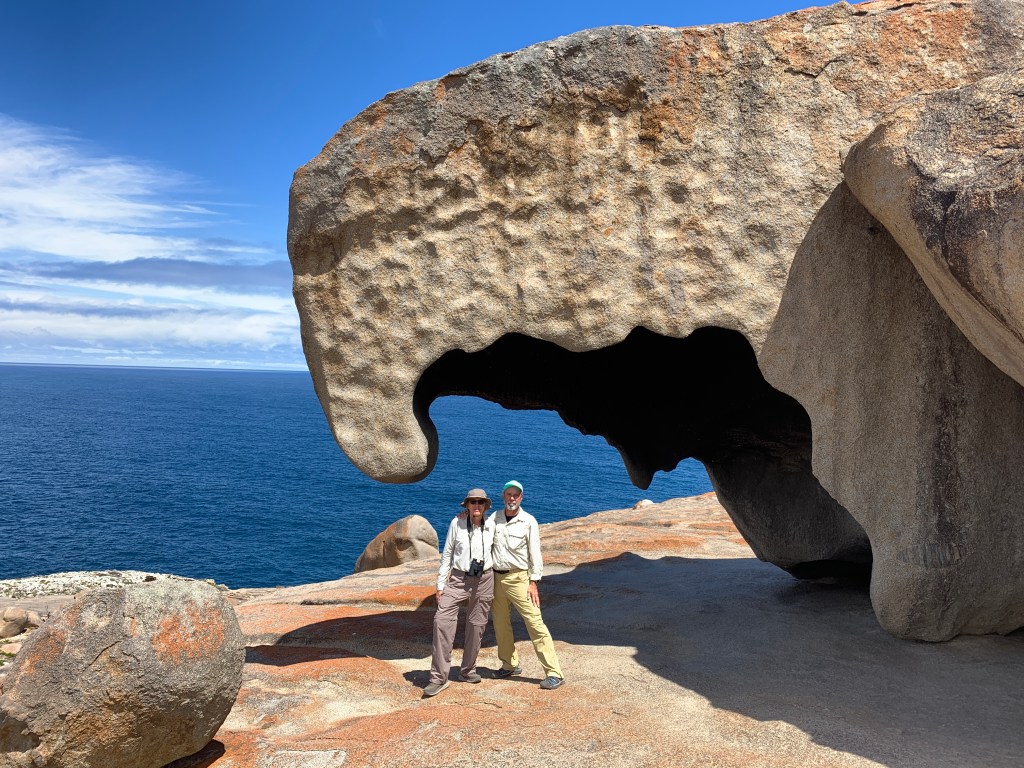
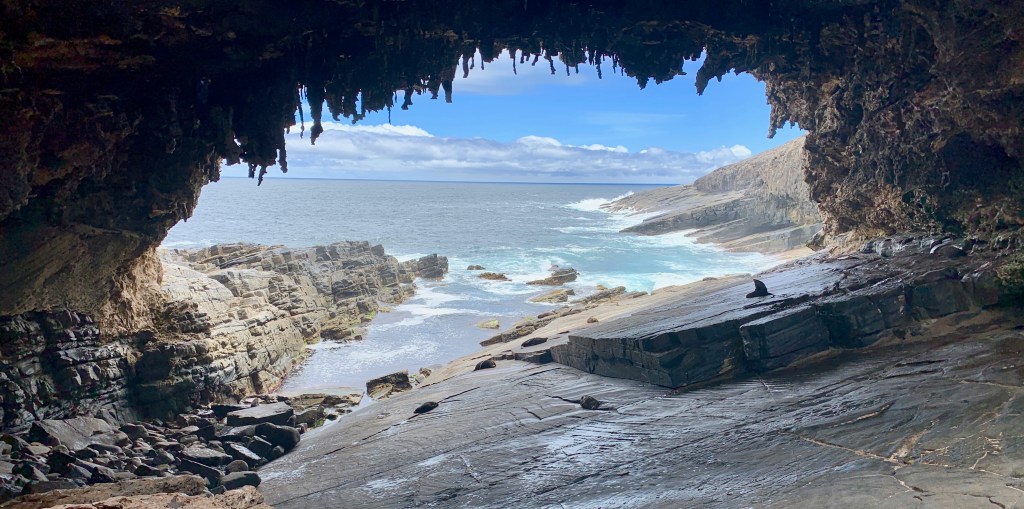
most of the park’s major attractions are intact. one famous lodge was destroyed; but others, like the magnificent lighthouse, admiral’s arch and remarkable rocks, three great photo ops, (we couldn’t resist) were untouched.

another tourist favorite, the koalas, were decimated by the fires. but peggy rissmiller, co-founder and resident scientist at K.I’s pelican lagoon research and wildlife center, says there are 25,000 of the teddy-bear like animals remaining. and they’re a nuisance, she says, an invasive, fast-breeding species playing havoc with the island’s delicate ecological balance.

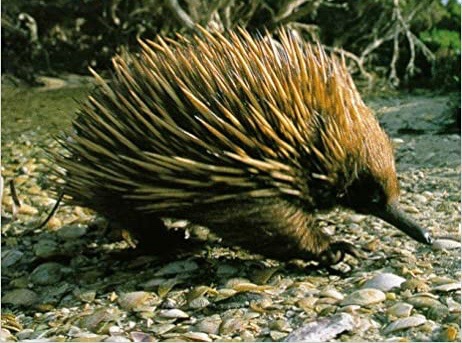
peggy rissmiller is the world’s leading authority on echidnas. photo from her website.

dr. rissmiller, an american, prefers to work with her echidnas, spiny little creatures that were also fire victims. they’re native to the island, and endangered. an article about her work with these rare monotremes (mammals that lay eggs) is titled “what animal has a four-headed penis and produces puggles?” it’s a must read.

amid fears of a fire-filled future, the government named a royal commission into national disaster arrangements. the commission’s 578-page report is a disaster planner’s bible. in a sign of the times, it includes a chapter on indigenous land and fire management practices, but commission chair, air chief marshal (ret’d) mark binskin regrets that there are not enough “cultural fire practitioners” to implement the concept.

it will take time to recover and institutionalize the traditional knowledge lost over more than two centuries.

eventually, the idea is to mesh cultural burning with modern techniques to develop a strategy to meet the challenges of hotter temperatures and a growing population.

the good news is that, after a season of searing temps and unhealthy air, much of australia is experiencing a cooler and wetter year; a time to heal its burn wounds. it may turn out that by the time the country’s pandemic-shut gates swing open to foreign visitors again, the country may be well on the road back to normal; whatever the new normal may be.

it has also provided a much needed time for rethinking the relationship with flame. the continent’s european settlers brought with them a fear of fire. they could not comprehend the fine art of land and fire management possessed by the original occupants.

now the eyes of understanding are opening, and as mother nature heals her wounds, a cultural healing is also underway. the wisdom of indigenous fire practitioners is no longer ignored. it is revered.

that cloud of smoke australians were choking on a year ago may have a silver lining after all.