a mariner’s rime in christchurch time

At length did cross an Albatross,
Through the fog it came;
As if it were a Christian soul,
We hailed it in God’s name.

–from “the rime of the ancient mariner”by samuel taylor coleridge (1798)

the albatross’s “vast archangel wings” as melville described them in “moby dick”

the albatross has captured the imagination of southern ocean seafarers since, well… ships. it certainly captured ours. a visit to aotearoa/new zealand was a chance to observe the “largest living thing in the air“, a sea bird with a three-meter wingspan.

like a horseshoe to a magnet, we were drawn to kaikoura, a seacoast village up the road from christchurch, the south island’s largest city. kaikoura bills itself as “possibly” the albatross capital of the world!
And a good south wind sprung up behind;
The Albatross did follow,
And every day, for food or play,
Came to the mariner’s hollo!

in nautical folklore, having an albatross hanging around your ship meant windy weather. it was a good omen back when seafaring vessels were powered by clean, renewable wind energy. in aotearoa’s maori culture, the majestic bird has been venerated since the first waka (boats) arrived from polynesia centuries ago.

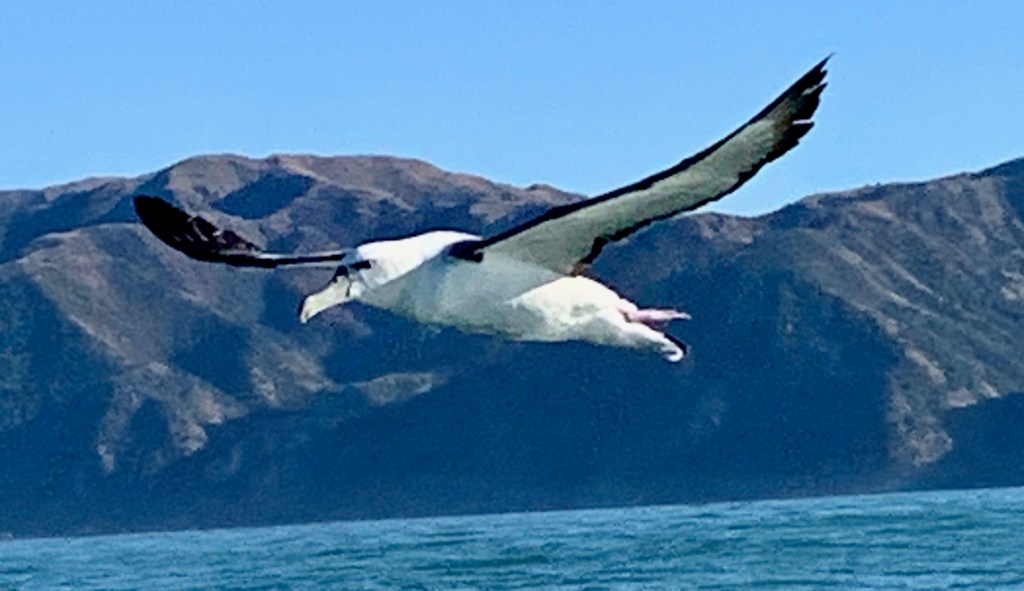
a royal southern albatross tails our boat

conversely, having an albatross hanging around your neck; not so good. that’s what happens when you shoot the good luck albatross that’s been tailing your ship…

‘God save thee, ancient Mariner!
From the fiends, that plague thee thus!—
Why look’st thou so?’—With my cross-bow
I shot the ALBATROSS.

… and the bird dies and the fair winds fade, and your superstitious shipmates start giving you the evil eye. it’s a heavy burden.

that’s exactly the story of samuel taylor coleridge’s “rime of the ancient mariner”, a mainstay of english literature since nearly a century before clean but unreliable wind power was jostled aside by combustion engines that “fowl” the environment.

in his lifetime, coleridge never actually saw an albatross. nevertheless, it is through his poem that generations of english-speakers have come to use the expression “having an albatross around one’s neck” to mean “bearing a heavy burden”.

Ah! well a-day! what evil looks
Had I from old and young!
Instead of the cross, the Albatross
About my neck was hung.

a statue of the ancient mariner with albatross hung from his neck at somerset, england; where coleridge wrote “the rime”.

in coleridge’s “rime”, when the albatross dies, clouds evaporate and the air hangs like a blanket, turning the ship’s deck into a rotisserie.

Day after day, day after day,
We stuck, nor breath nor motion;
As idle as a painted ship
Upon a painted ocean.

without rain, fresh water supplies are gone with the wind. shipmates drop like flies, unlike albatrosses, who have built-in desalination systems that allow them to drink seawater and expel the salt through their nostrils. (really!) leading to perhaps coleridge’s most (mis)quoted verse,

Water, water, every where,
And all the boards did shrink;
Water, water, every where,
Nor any drop to drink.

and one of monty python’s hilarious sketches. (warning: rough language)
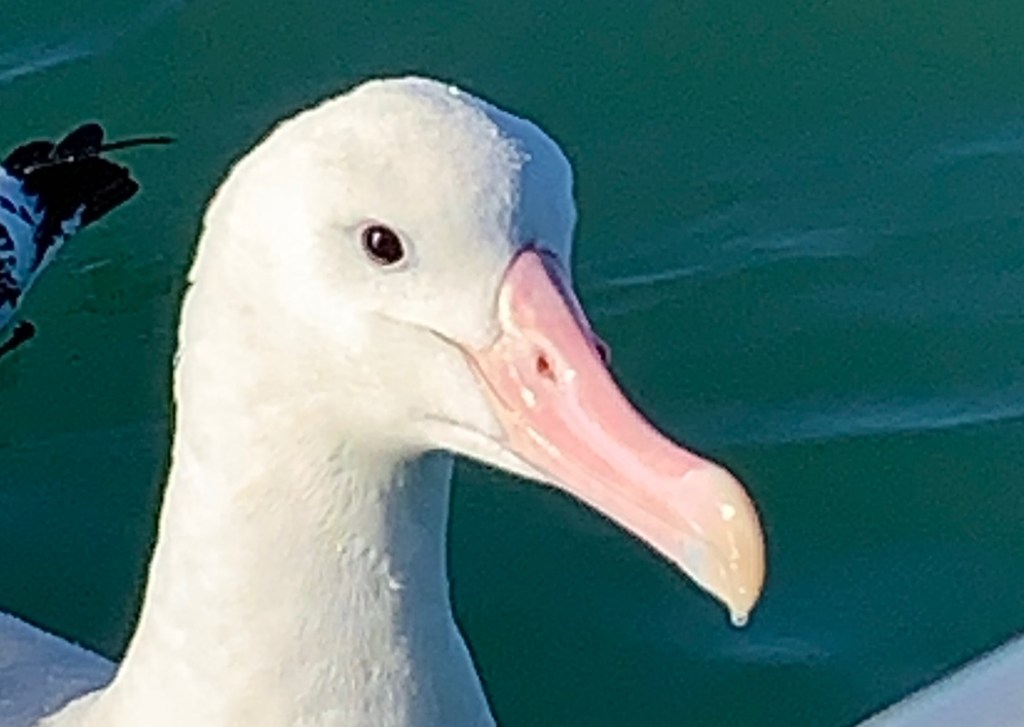
natural desalination

winter is off season for albatross watching, so it was just us and the skipper embarking on our “albatross encounter” from kaikoura.

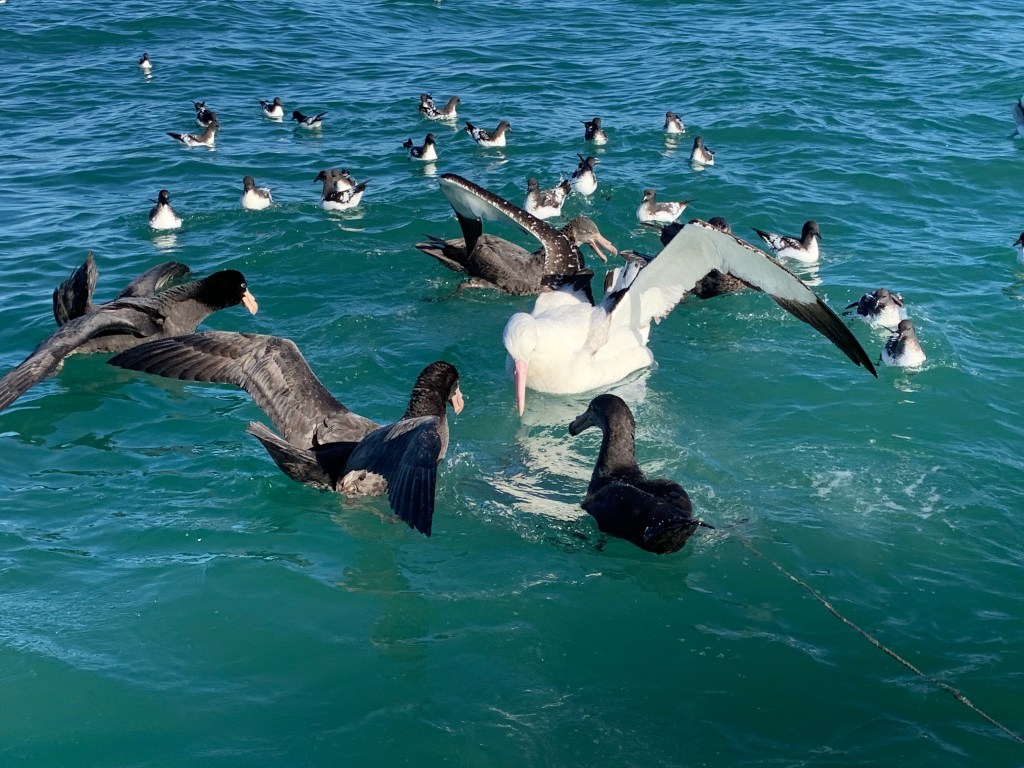
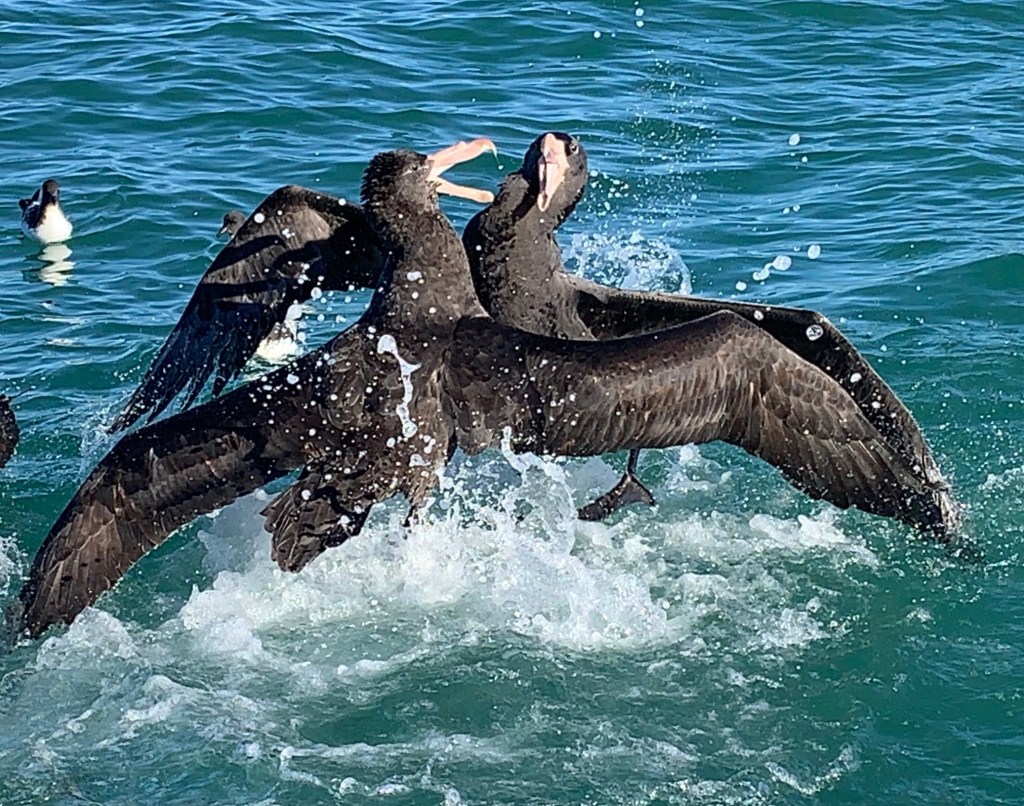
the flock was waiting for us. five different species of albatross and all kinds of petrels made it a diverse group. (though lacking in equity or inclusion). unlike the human world, the laws of nature are unchallenged in the bird kingdom. survival of the fittest rules. as the albatross swoops in with a whoosh, smaller birds scoot out of the way.
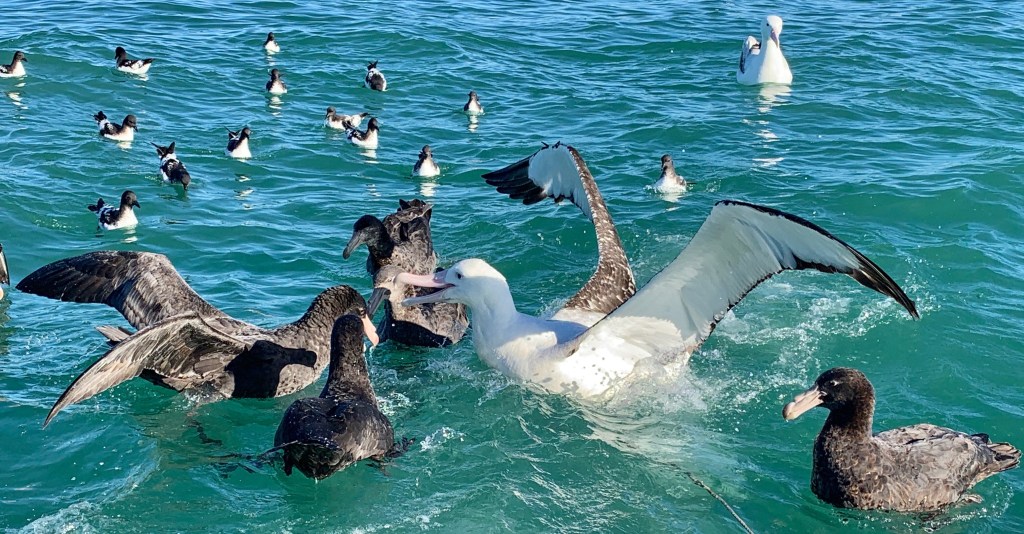
the albatross schools the black petrels vying for a peck at the scrap net

we come a-hunting coleridge’s bird
not with arrow and bow;
but camera in tow,
by combustion engine spurred.’

a bad coleridge impersonator, 2021

the skipper has brought along a net filled with fish scraps, and as he drops the scrap net in the water, a scrap begins. the scrappiest are the albatrosses, first in the pecking order. next are the black petrels, who scrap playfully among themselves while waiting for leftover scraps. smaller species hang around until the big fellows are done, then scrap among themselves for the scraps of the scraps. we have a front row seat.

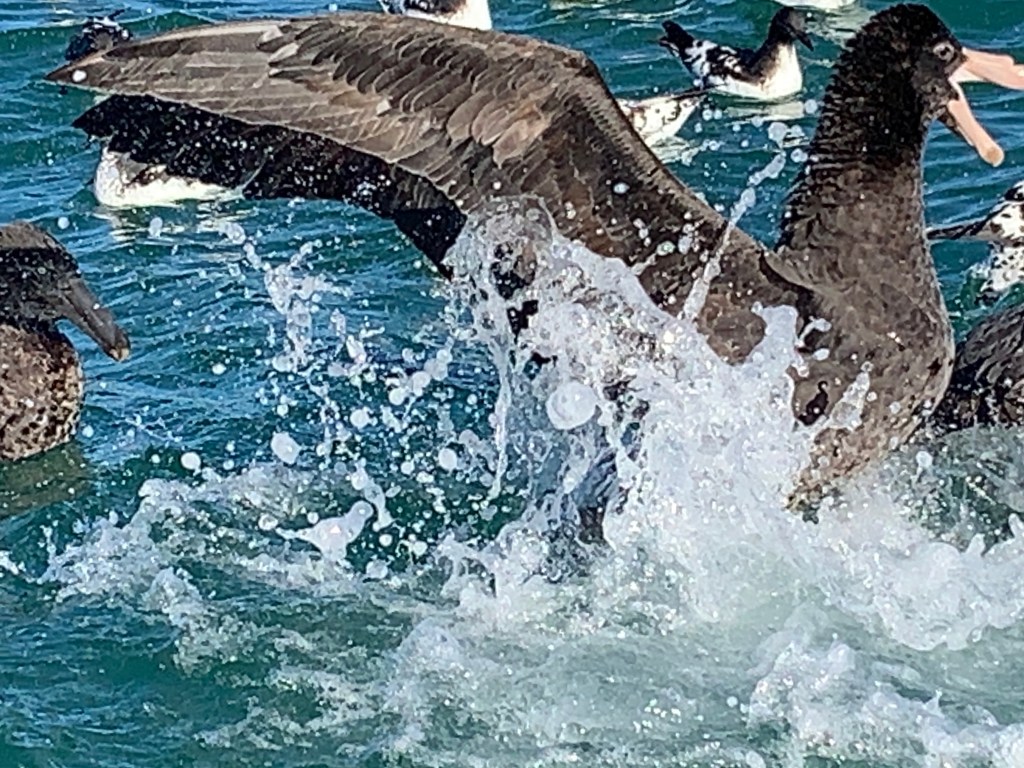
graceful in flight, albatrosses are hopelessly clumsy on land. watch this short video clip recently captured by an “albatross cam” in new zealand.

coleridge’s influence on albatross mythology is so powerful i can’t help examining my own superstitions as we drive south toward our next stop, christchurch. the city has borne a heavy burden over the past decade.
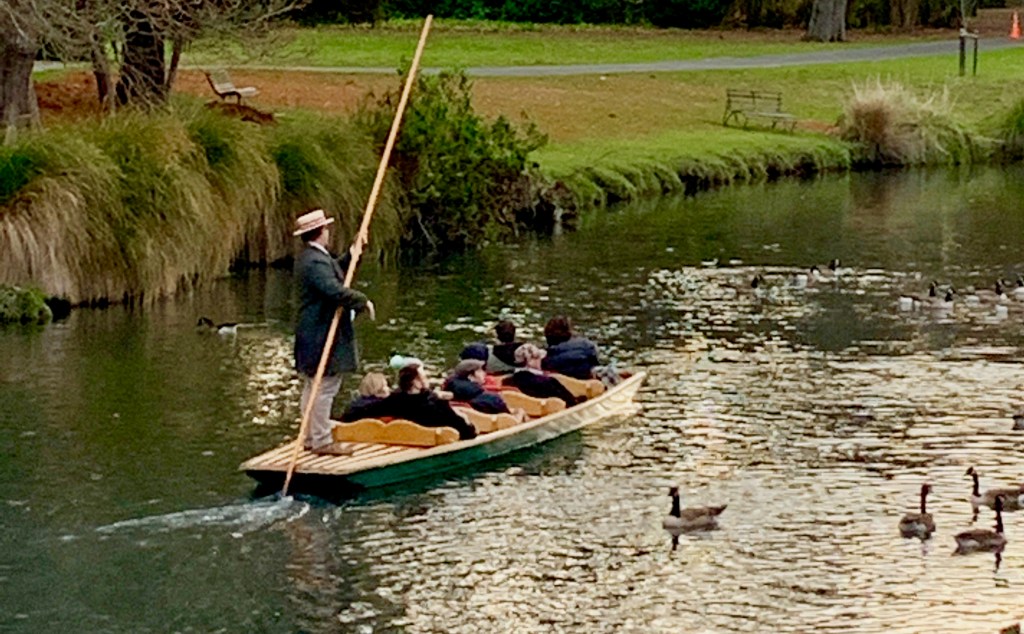
the Ōtākaro/avon river drifts lazily through christchurch, probably the most english city outside england. punters in edwardian costume ferry tourists along landscaped river banks in handcrafted flat-bottomed boats.

at a bend in the river, the boat pauses at “oi manawa”, maori for “tremor” or “quivering of the heart”. it is a memorial to victims of the most violent earthquake to hit “the shaky isles” (as they are known) since the first european settlement more than 200 years ago.

it was lunchtime on a summery afternoon, february 22, 2011, when christchurch shuddered mightily. some of the city’s tallest structures crumbled in clouds of dust. entire districts were laid waste. on the streets, falling rock and debris crushed cars and busses.

the quake measured 6.3 magnitude, less than a 7.1 jolt five months earlier. but while the first tremor killed no one and caused minimal damage, the second was much closer to the surface, and its epicenter was just a few kilometers from the city’s central business district. when the earth erupted, structures weakened by the first toppled like bowling pins.
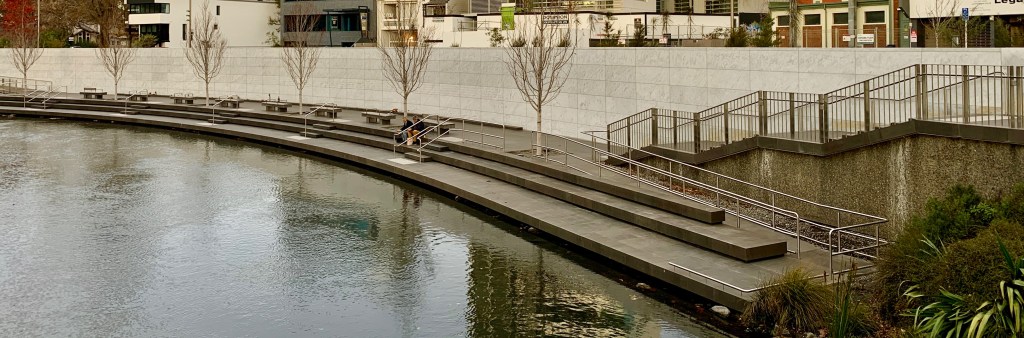
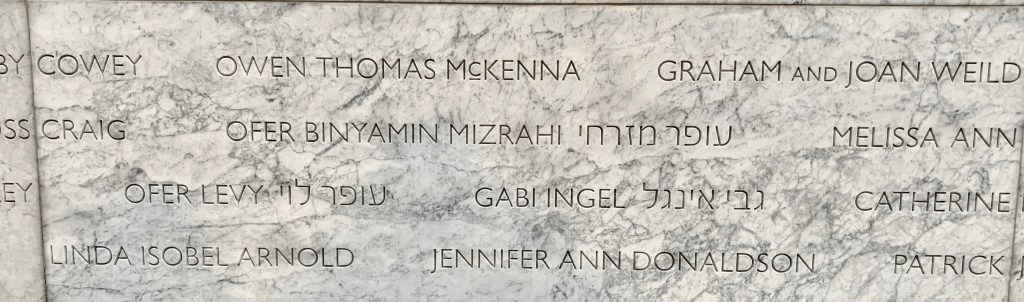
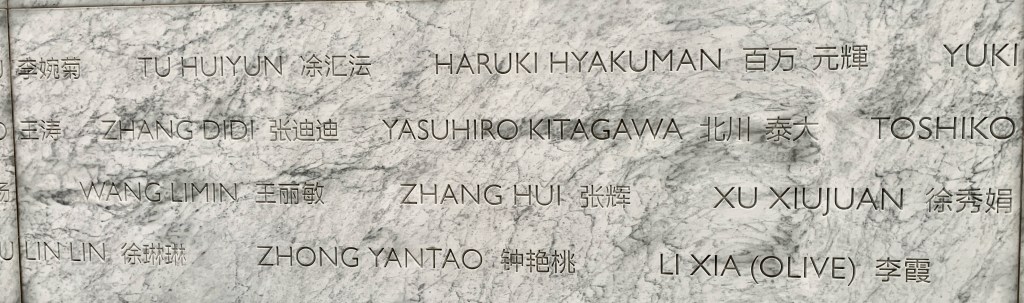
the riverside memorial wall bears the name of each victim etched in marble. it is a curious list. all names are written in latin letters, but many also in a foreign script. and rather than alphabetical order, the names of victims are grouped together with those they knew and loved.
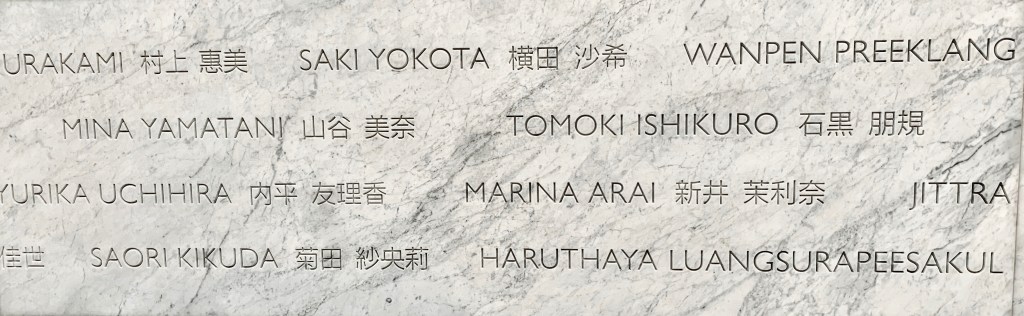
of the 185 who died, 115 were in one building, the canterbury television headquarters. it was home also to a school where foreign nurses were studying english and taking medical classes. of the dead, 53 were nurses, 28 from japan. the victims included citizens of 16 countries.

a tribute to israelis killed in the quake

a decade after the tragedy, the wounds still burn. healing, physical and emotional, is achingly slow. so many people moved away after the quake that christchurch shrunk. once new zealand’s second city, it is now third.

one healthy sign: the historic christ church cathedral and its magnificent tower had at first been written off as a total loss and slated for demolition. seven years later, that decision was reversed, and work on resurrecting the structures has begun.
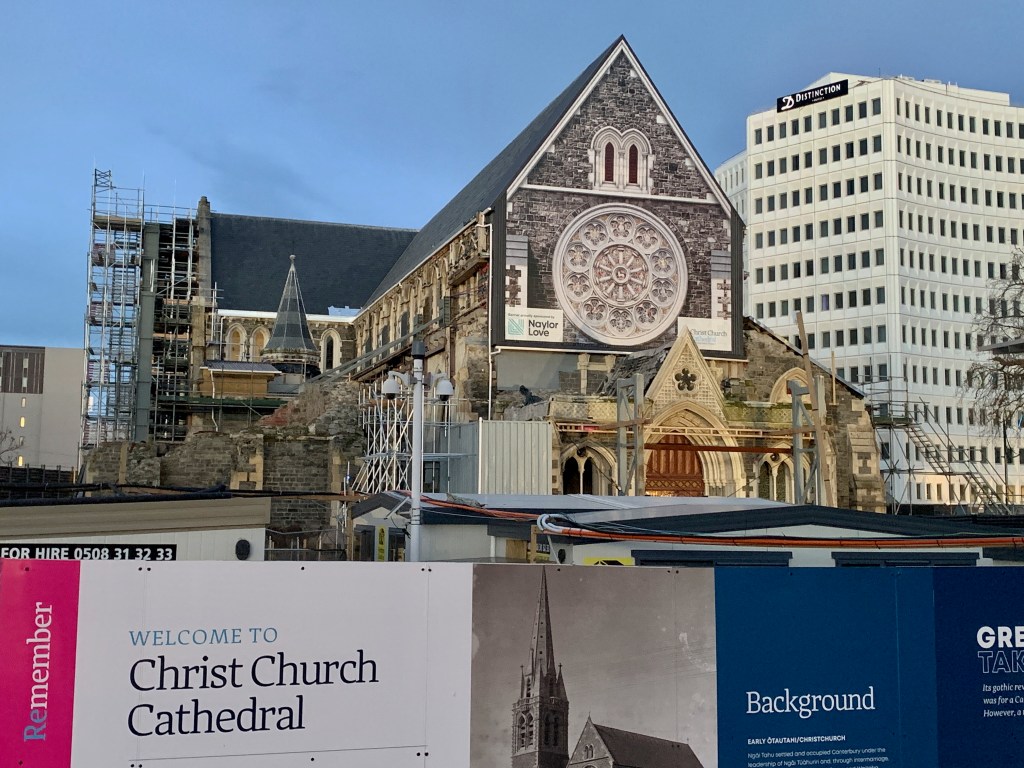
still, however, a sense of foreboding hangs over the city. an albatross. everyone knows it’s just a matter of time till the next big shudder.

the entire length of the southern island is riven by one of the world’s most active geological break points, the alpine fault. geologists are expecting a great quake, the “once every 300 years” variety, at any time. the last “really big one” was in 1717. that’s 304 years ago.

a website tracking the island’s seismic activity shows more than 130 quakes of magnitude three or higher around aotearoa/new zealand in the past month. smaller tremors number in the hundreds.

a few miles from oi manawa earthquake memorial, another albatross roosts.
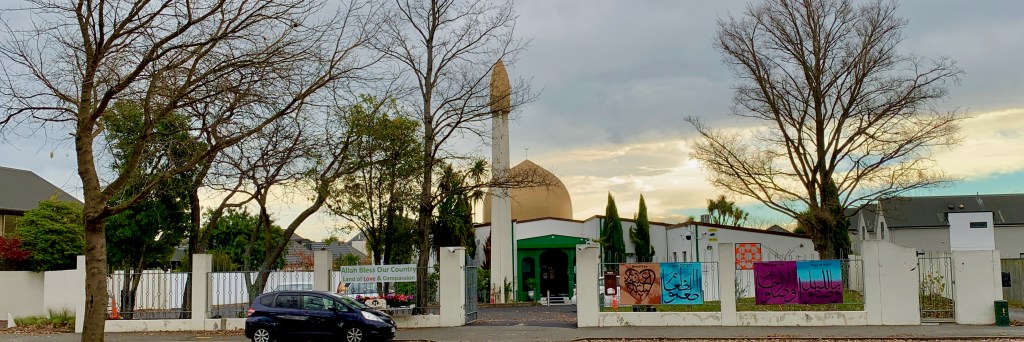
the canterbury islamic center sits on a broad suburban street directly across the city’s main park from the earthquake memorial. the cast iron entry gate to the al-noor mosque stands welcomingly wide open.

it’s been just over two years since 40 worshippers were mowed down in a hail of bullets during friday prayers. eleven others were slaughtered minutes later at another mosque nearby.
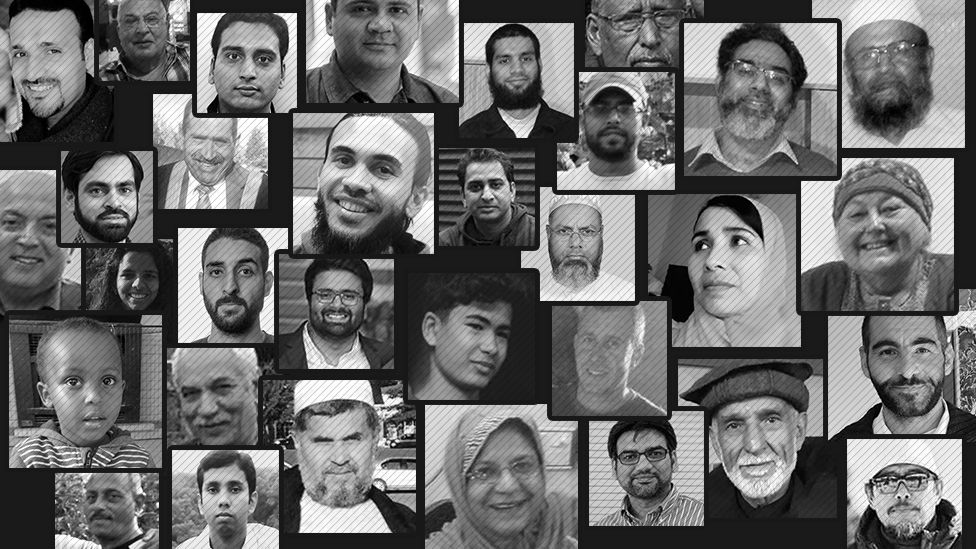
some of the worshippers murdered at the christchurch mosques

as in the earthquake, the victims had come to christchurch from many places: bangladesh, egypt, fiji, india, indonesia, iraq, jordan, malaysia, mauritius, new zealand, pakistan, palestine and turkey.

the only outward sign that this was the site of the country’s most heinous crime is a banner hung along the front fence, over a shelf filled with flowers and painted rocks. inside the gate stands a modest stone of remembrance, unveiled by prime minister jacinda ardern, who earned plaudits for rallying the country in its time of grief.

standing at the entrance, i am overcome at the enormity of the evil committed on that spot. the mosque seems encased in a bubble of calm drowning out the hustle-bustle of the city. cars appear to travel in slow motion as they pass. a stain touches the city’s collecive soul.

as i snap a final picture and turn to go, a woman walks by. as she passes, i manage a weak smile of acknowledgement.

“what are you smiling at? she snaps back.

time will heal christchurch’s wounds. but the “archangel wings” of that damn albatross cast a long shadow.

to paraphrase coleridge

“a sadder and a wiser man

i rose the morrow morn.”
aotearoa

land of the long white cloud

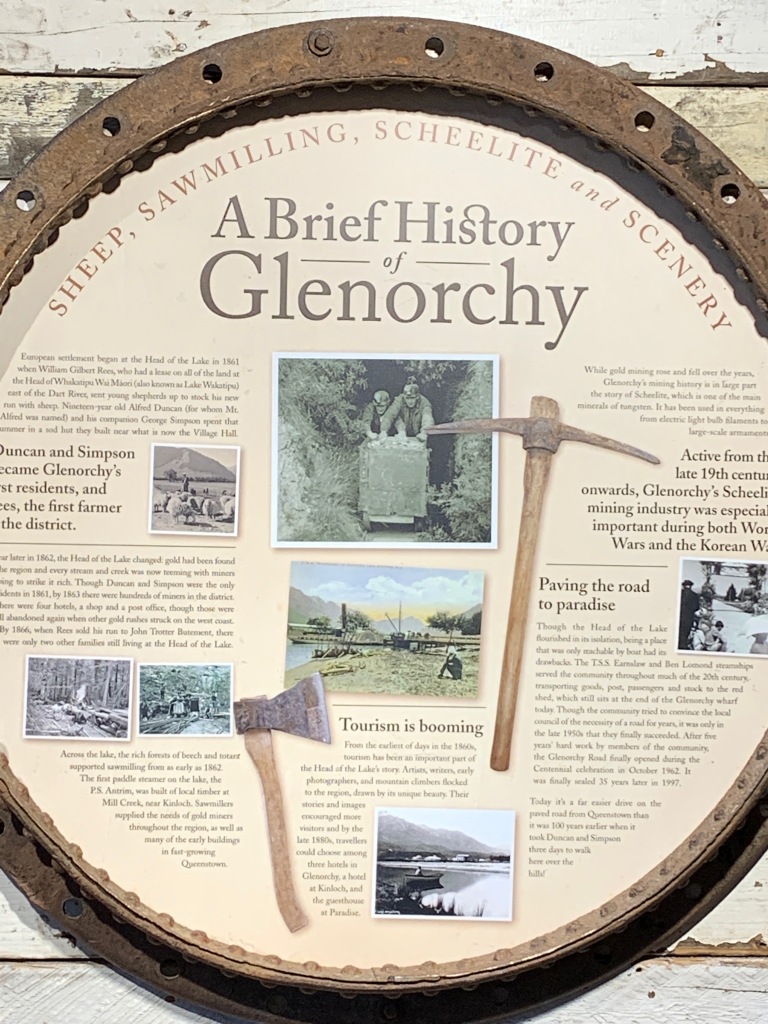
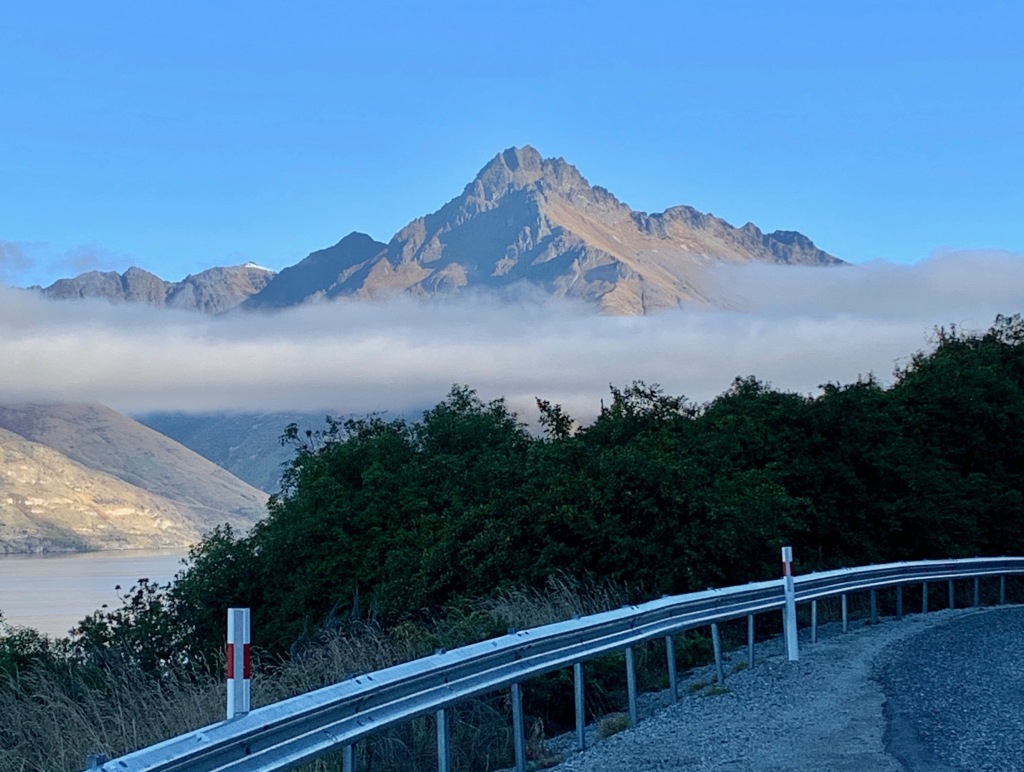
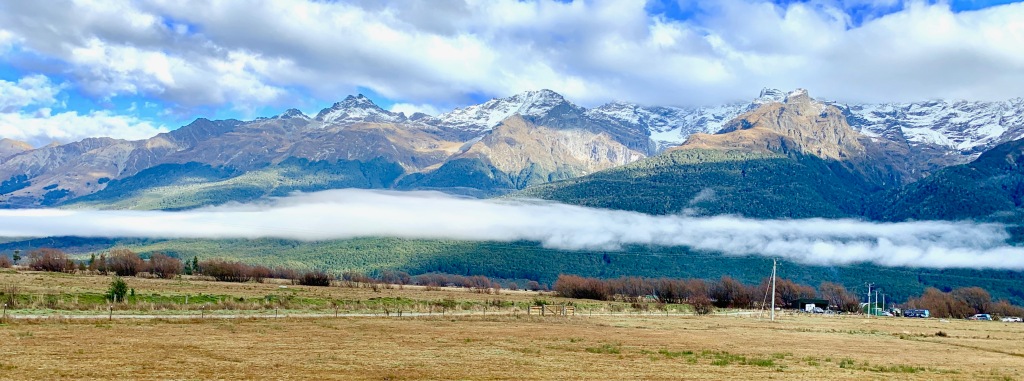
clouds hang along the mountains around glenorchy, where many scenes for the “lord of the rings” trilogy were filmed

say the name. aotearoa. [it’s pronounced aɔˈtɛaɾɔa. or “ow-TAY-rwa”]. it could soon be on the “a-list” of united nations member states.

ok. it’s new zealand. at least for now. but the indigenous name change movement seems to be gaining steam (or at least cloud vapor).

aotearoa means “land of the long white cloud” in the māori language of new zealand’s first settlers. it’s easy to see why they chose it. during a three week visit to aotearoa/new zealand, so many strips of cotton fluff lay draped along the landscape we began to wonder; are they real, or are they memorex (computer generated)?

we became suspicious when we met ian taylor, founder and c.e.o. of animation research limited, a pioneer in computer generated imagery (c.g.i). animation research is based in dunedin, one of the southernmost cities on the planet.

interestingly, dunedin is only a laser beam away from where those cumulus streams were draped around towering peaks, just as a party of dignitaries was touring new zealand’s south island. coincidence?

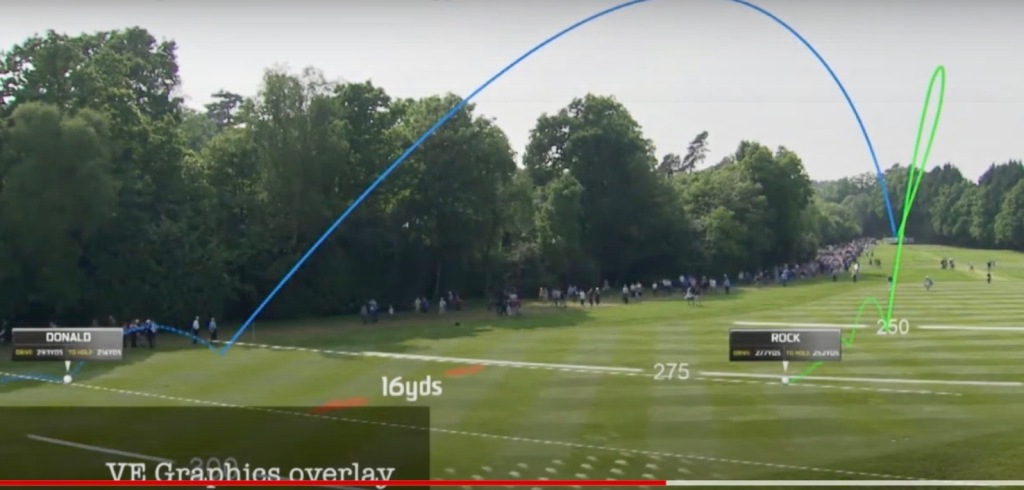
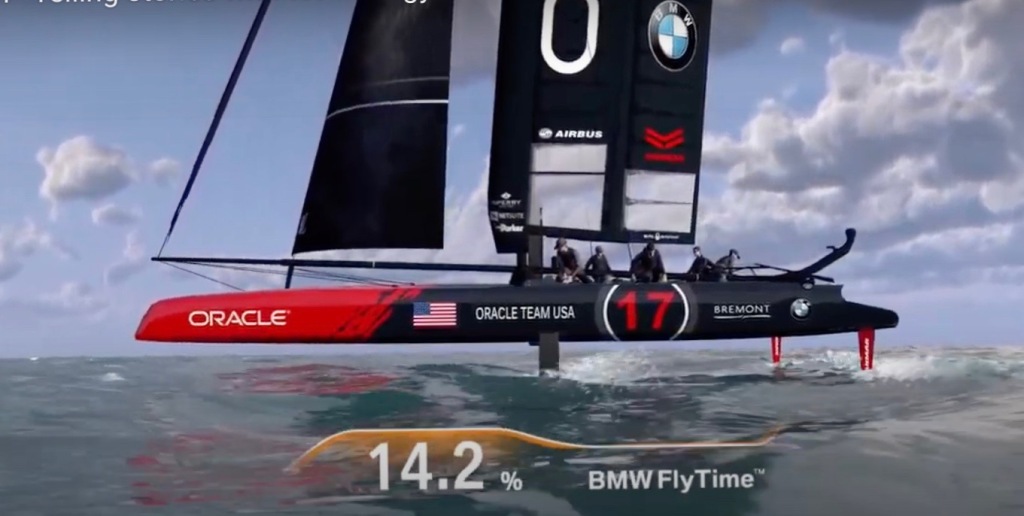
from humble beginnings, raised by his māori mother in a north island village, sir ian has risen to the heights of the c.g.i. industry. if you’ve watched the master’s golf tournament, formula one racing, major league baseball, test cricket and the like, you’ve seen virtual eye’s innovative storytelling technology, which is revolutionizing how people watch sports.

virtual eye’s graphic overlays add so much to the experience of real time televised sports there’s hardly any point battling masked crowds to watch in-person anymore. and it’s all done from dunedin, half a world away from most major sports venues.

so hanging a virtual cloud around the mountains of tolkien’s middle earth? don’t be surprised if one day sir ian and company are outed for projecting clouds against the mountains, just for giggles. they’re good.

looks like tolkien’s mt. doom?

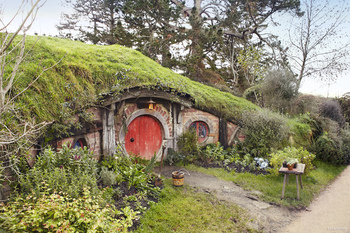
after all, aotearoa is imagination central. one of its claims to fame is that it’s where tolkien’s “hobbit” and the “lord of the rings” trilogy came to life. we suspect one of sir ian’s band of c.g.i. wizards is named gandalf.

honestly though, we have no proof. it’s just a good conspiracy theory. a really good one.

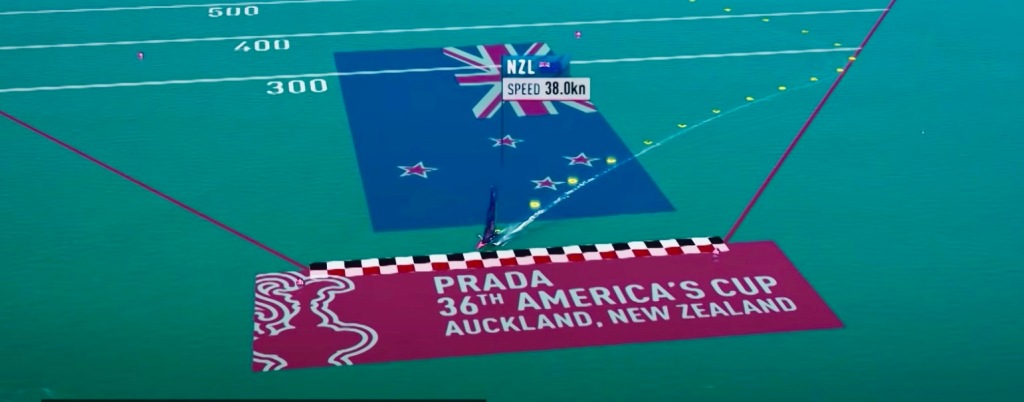
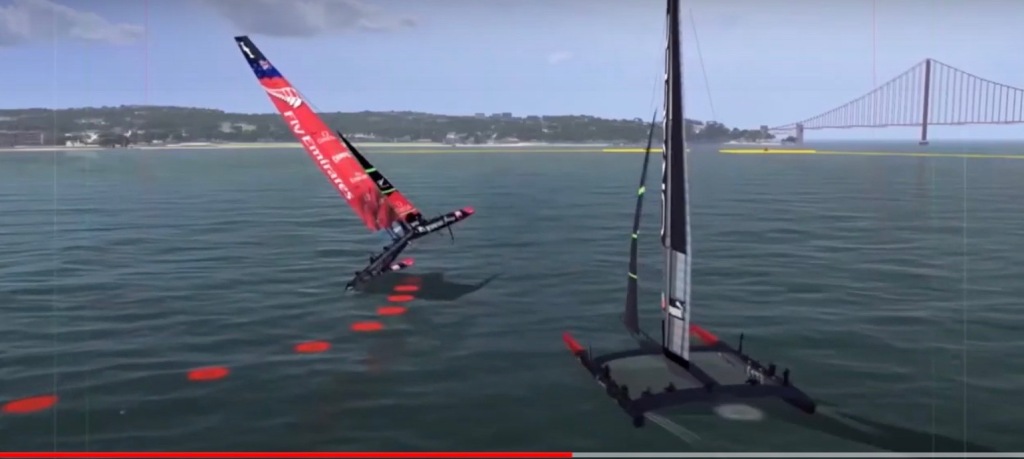
taylor and company were at their proudest showcasing the virtual eye coverage of this year’s america’s cup yacht race. the race was on home turf (surf), and the kiwis successfully defended the “auld mug” they won in 2018. it was the fourth time they’ve won in the last eight races. three other times they’ve finished second. yacht-a yacht-a yacht-a, as seinfeld might say.

c.g.i depiction of the kiwis crossing the finish line to win the 2021 america’s cup

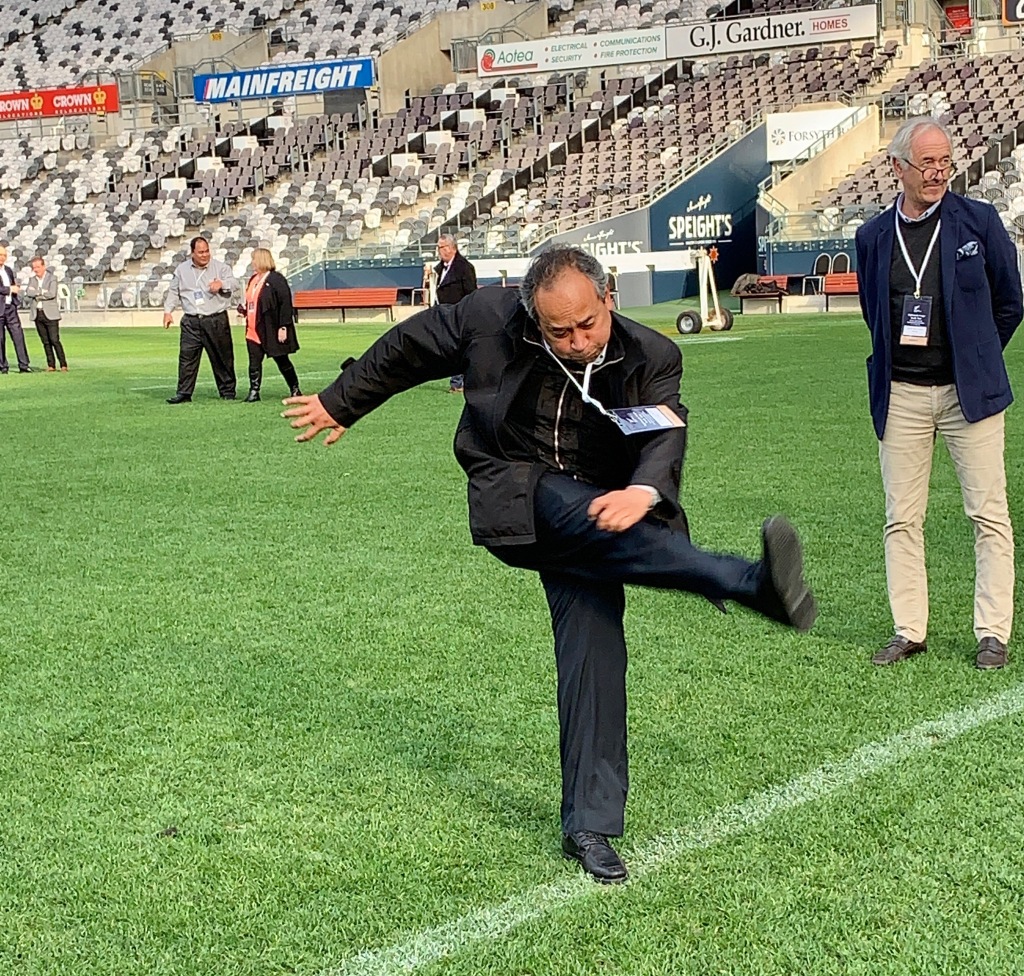
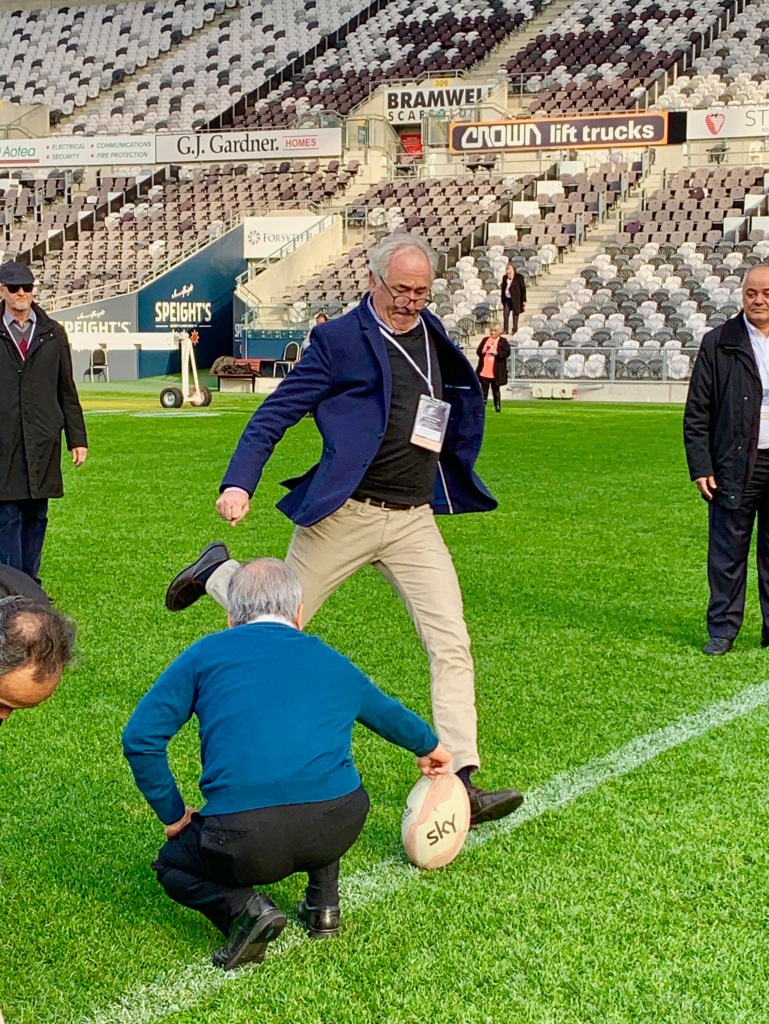
the roving ambassadorial entourage also had a taste of aotearoa’s other big sport, rugby, at dunedin’s forsyth-barr stadium, the scene of past and future world cup matches.

the all blacks, the kiwi national team, are a rugby legend. they’ve won three of the nine rugby world cup competitions. the south african ambassador dumped a little rain on the kiwi parade, however, noting that the springboks have also won three, and are the current cup holders.

the all blacks perform a haka before a match in the 2011 rugby world cup competition

unfortunately, the all blacks weren’t there to perform a traditonal māori welcome haka. (they did play fiji in dunedin in july, however.) but for kiwi youngsters steeped in rugby lore, forsyth-barr is a field of dreams.

speaking of young kiwis, we did receive a welcome haka from the youth of dunedin. not as ferocious as the all blacks, but a sign of the current revival of māori language and culture among aotearoa’s emerging generation.

click the pic for a taste

at every stop our welcome included māori language and customs. at one stop we were given cards allowing us to taste the words with our own tongues.

and at every stop, unfailingly, the greeting was the māori “kia ora”.

kia ora is the national greeting, not a small car

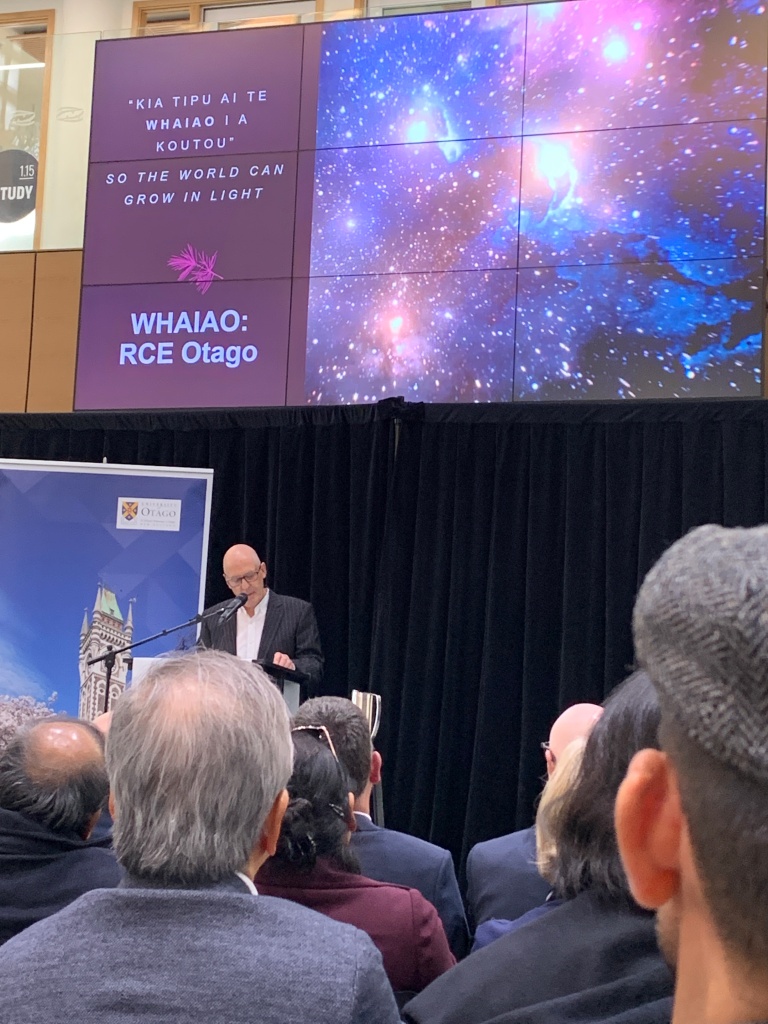
dunedin’s otago university is not only the oldest institution of higher learning in aotearoa, it’s the southernmost university in the world. during our visit there, a power point presentation by university administrators was done with māori language visuals and english subtitles.

dunedin’s public art gallery is currently featuring an exhibit that elevates māori and indigenous voices, titled “hurahia ana kā whetū – unveiling the stars”.

when it came to elevating voices and unveiling stars, dunedin’s mayor aaron hawkins took us to the art gallery for dinner. after the main course, three of the waiters revealed themselves as frauds. they weren’t waiters at all, but opera virtuosos in aprons, stars of dunedin’s opera otago, the longest-running opera company in aotearoa.

so after serving our supper, they sang for our supper; a performance worthy of la scala, except we were sitting on stage, and la scala ticket prices are a few octaves higher.

i had the presence of mind to video the grand finale, an audience participation number that brought down the house.

click on the pic to watch.

a rousing rendition of “that’s amore” brought the house to its feet.

if dunedin was the main course of our “magical diplomacy tour”, queenstown/glenorchy was a luscious dessert. en route to queenstown, the bus pulled into highlands motorsports park, a competition-tested 4.1 km racetrack boasting a few jewels.

pernille settled in behind the wheel of a radical sr3 race car. i was a bit nervous. spoiler alert: damages were minimal.

the park’s showpiece is a $2.3 million aston martin vulcan. no driving, though. it’s in an on-site museum, just for racing enthusiasts to drool over. an attendant is always on duty to wipe up after tourists.

there’s also an attendant standing by to clean up after visitors to the men’s room. it’s often needed at the “orange man” urinal, where people lining up to pay “respects” have to mind their pees in queues.

according to “peer reviews”, the big mouth is a fan favorite, though it’s easy to miss while snickering. if you do miss, urine good company. there’s a lot of miss-chief, (and not much privacy.)

next up, queenstown; and glenorchy, where the clouds go on forever and the mountains meet the fjords.

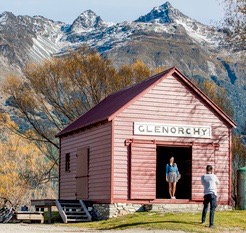
the “dip-pack” debussed at glenorchy (if you can deplane, you can debus) for an end-of-tour group photo in front of the old red boat shed, with the spectacular mountains in the background. (see left). a professional photographer stood by with a ladder to capture the moment, (see right). but we got nary a peek at the peaks. photo bombed by a cloud.

whaddaya think? a diabolical plot? the animation research folks, maybe? just asking. for a friend.

instead we assembled on the shore behind the shed, in front of a thin sliver of drab hillside sandwiched between a cardboard gray sky and a dishwater gray lake. the inverse of a long white cloud. very clever, sir ian.

the gang of 52

the faces in the photo are small, but the tallest fellow in the back row center with a tan coat and scarf is jonathan austin, acting chief of protocol for the kiwi ministry of foreign affairs and trade. he and his team of sally forrest, fiona fowler, penny mitropoulos, alistair ferris and martin waikara herded diplomatic cats with aplomb during four action packed days, but they couldn’t overcome the diabolical cloud conspiracy.

as our magical mystery tour bus rolled back down the winding road toward queenstown and flights home to wellington and canberra, the curtain over the mountain peaks began to lift. it was a tease, just enough to fuel a final frenzied, but futile cell phone photo op of the fantasy land where the orcs roamed in the lord of the rings trilogy.

pernille and i elected to stay on a couple more days in glenorchy to retrace our daughter’s steps trekking after her semester abroad at the university of auckland in 2018, and to search for the fabled canyon stream known as the “orc-chasm”. (it’s real; no faking!)

we rented a cabin a stone’s throw away from the glenorchy landing. that evening, the sky was crystal clear as pernille went out for a sunset stroll to survey the local bird life.

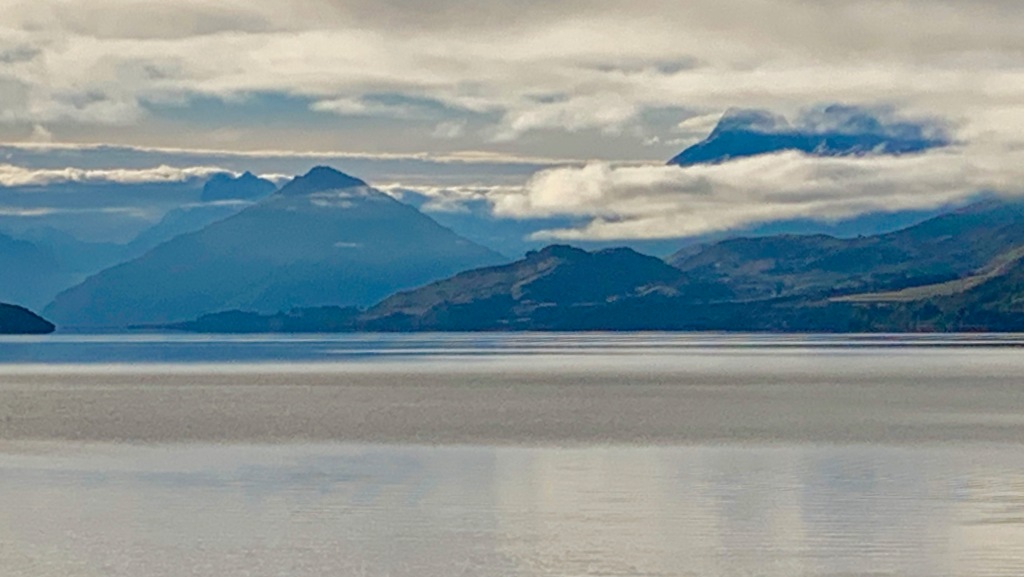
the next morning, we peeked out our front door to see the snow-capped peaks peeking through. a long white cloud was draped along the surface of lake whakatipu. of course.

lake whakatipu

oh, and the bird pernille had spotted the evening before? a peeking duck.

gabby, shown here, is actually not a duck; she’s an albatross. she’s the city icon of dunedin. more on her in the next installment.

we spent the day hiking the routeburn track, considered among the world’s premier scenic trails. even on an overcast winter day deep in the southern hemisphere, it’s easy to see why glenorchy is a magnet for backpackers, lord of the rings fans, māori history buffs, or anyone who can get there by hook or by crook.

a place this gorgeous has attracted big bucks and big names, some you’d instantly recognize. there’s a spa catering to international jet setters embarking on “wellness adventures” to “rejuvenate the human spirit”.

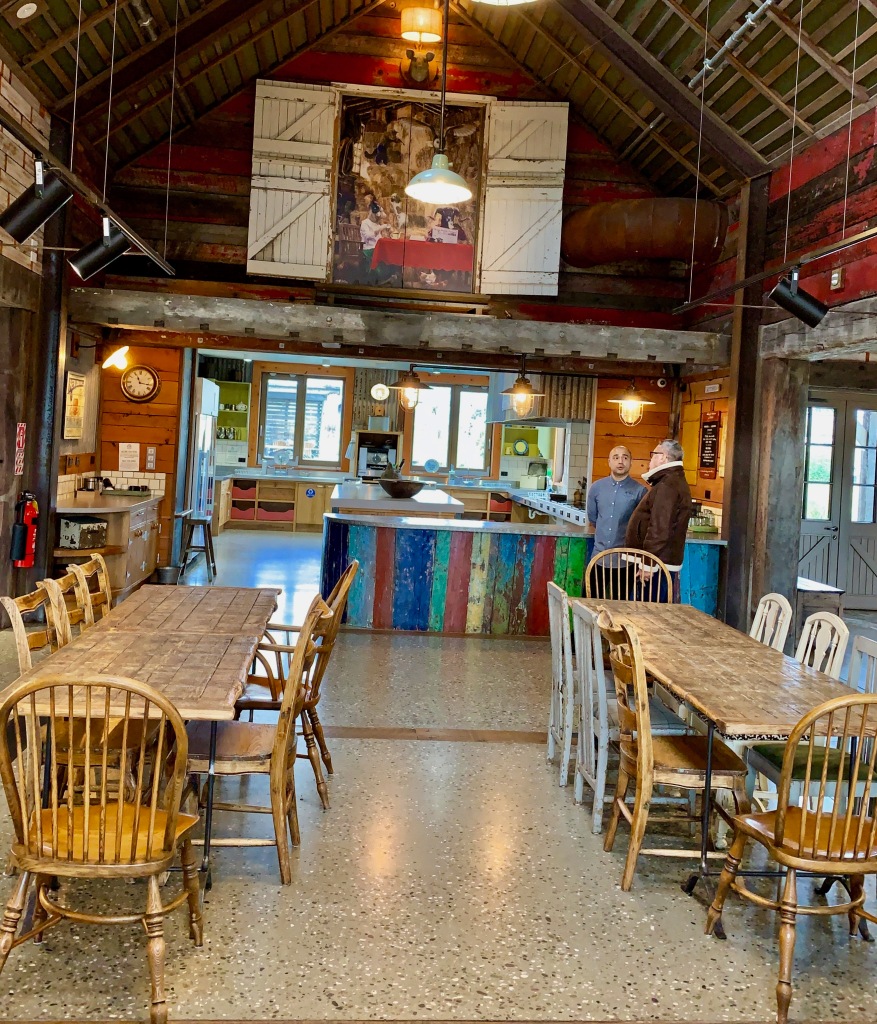
then there’s paul and debbi brainerd, and camp glenorchy. it’s not a scout hangout. it’s an “eco retreat”.

paul brainerd might not be a household name. but back in the 80s, as a computer programmer in seattle, washington, brainerd developed a little thing called “page maker”, which in combination with the apple macintosh computer launched the desktop publishing revolution. he is actually credited with coining the term “desktop publishing”.

brainerd was eventually bought out by adobe. with the leftover change, he switched careers to philanthropy.

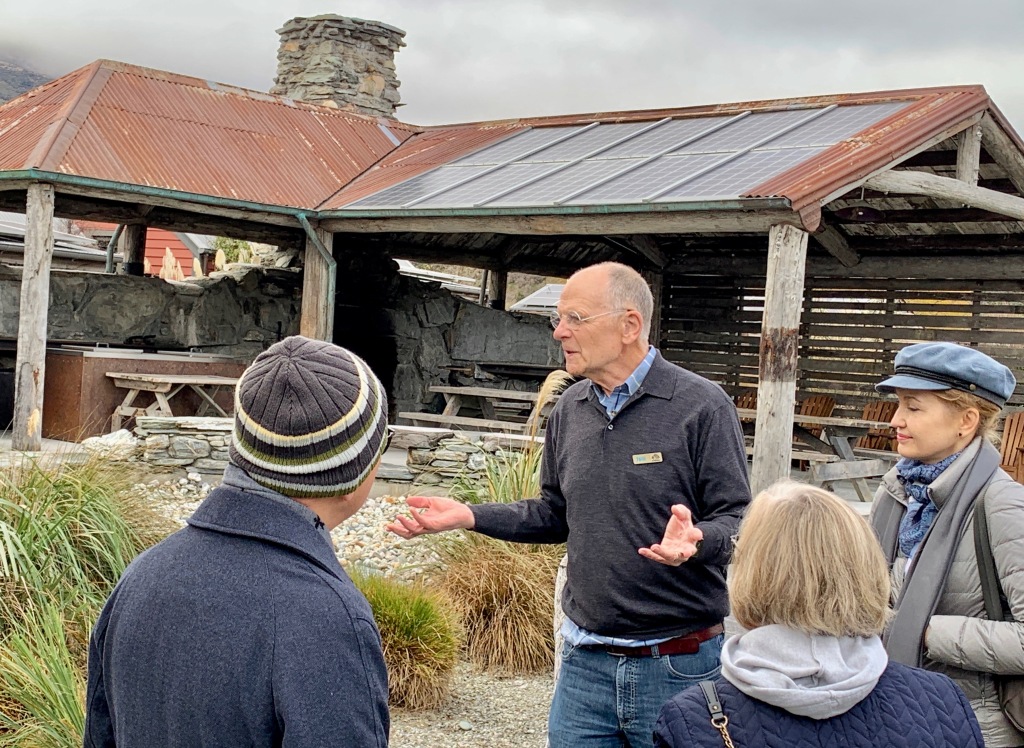
paul and debbi founded camp glenorchy in 2018 as aotearoa’s first net positive energy visitor destination, generating more power than it uses. they keep asking “what if?” the answers are promising.

time magazine listed camp glenorchy among the world’s 100 greatest places of 2019, and one of 44 “must go” accommodation destinations.

in retrospect, we wonder whether paul brainerd the desktop publisher and ian taylor the c.g.i. innovator might be old friends. it could explain a lot.

a parting photo as we drove away

we’ll be back, land of the long white cloud, whatever you call yourself.