a 3-week excursion to the near reaches of the australian outback

Week one— 1200km — canberra to broken hill
The odometer reads just over 23,000 kilometers as we pull the land rover out of its garage in the comfortable canberra suburb of yarralumla, bound for the australian outback. the car is packed for three weeks of the unknown, a stretch of land known for being inhospitable to travelers. we’ve even purchased a tiny propane water boiler for the occasion, just in case, and a real refrigerator that plugs into power outlets in the car (for beer and, who knows, possibly some food.) pernille’s got a master’s degree in (central) planning, so we’re prepared, like the bolsheviks of a century ago.
the outback has no boundaries, no lines on a map, no signs indicating you’ve crossed over from one state of mind to another. The change is almost imperceptible at first. it’s not like a swimming pool, where you dive in, and all at once you’re drenched. It’s more like a sunrise, where the blackness of night gives way by degrees, revealing itself like a striptease dancer, one garment at a time, till the orange orb rises over the horizon and you’re bathed in the light of a new reality.
the first leg is a lazy afternoon drive to temora, a tidy community where we had spent a weekend a few months earlier. on our last visit, billabong the dog and i bunked at a B&B while pernille spent the weekend with a pack of hard-core ornithologists placing tracking bracelets on the region’s birds.
this time we’re being hosted by our friends mark and gitte binskin, who have a “holiday house” alongside the temora airstrip and flight museum. gitte and mark, a former chief of the royal australian defence forces, have offered to put us up in their “dog house”, the hangar where their prized possessions are stored.
it’s a good omen. true to its name, the exterior of the dog house features a foot-high wrought iron snoopy dog in full battle regalia gracing the front entrance, appaently. inside the hangar is one of mark’s treasures, a genuine u.s. army “bird dog”, an olive green army vietnam-era two-seater reconnaissance plane that was used in wartime to seek out (bird dog) enemy targets just before the bombers struck.
The slow moving propeller-driven “bird dog” planes could easily have been shot down by the viet cong fighters hidden in the jungle below, but the planes were never attacked because that would have given away the enemy positions to the jets that would be arriving on bombing missions moments later. (or possibly because the VC couldn’t imagine any danger from a single-engine cessna.) mark’s “bird dog” sits in the hangar in perfect condition, decades after the war ended.


mark binskin’s pride. the vietnam-era u.s. army “bird dog” recon plane.
thursday the first of June, we begin our trek westward toward the back of beyond. The weather forecast is for clear skies through the weekend, followed by several days rain. First stop, leeton, a spot on the map known for its wetlands. We’ve been told to seek out a woman named cathy at the leeton information center. cathy is behind the counter when we arrive, and she informs us that a former leeton mayor and serious birder, paul maytom, is out at the town lake for his daily look around. She picks up her phone and paul is on the line in seconds, saying we could meet him at the entrance a few blocks away. Five minutes later we pull up at the entrance and there are paul and his wife julie, waiting to escort us through the gate and into bird wonderland. easy as that.

paul and julie maytom have little time for politicians making water policy for the outback.
I’m occupied with my iPhone camera, shooting up the surrounding birds with my 15x zoom cellphone lens. paul has a little doodad-looking camera on a strap around his neck, and from time to time he snaps one. Each shot is a stunner. his zoom lens captures every bird in perfect focus. as opposed to mine. i’m envious. his camera, it turns out, is a canon power shot SX-70 HS. i’m buying one as soon as we get home. expect an improvement in picture quality on this blog soon.
We stay too long at leeton, captivated by the ornithological wonders, and paul’s biting commentary on australia’s water politics. he and his mates in leeton are unequivocal in their contempt for the central planners in sydney and brisbane who dictate the distribution of water, ignoring the needs of the farmers and the wetlands that are the lifeblood of the regional (read rural) population. one of paul’s mates singles out a former deputy premier of queensland for criticism. “that damn barnaby joyce,” he observes. “he’s always serving the interests of big farma (the agricultural conglomerates), never giving a thought to the little farmer. they don’t give a darn about us.”
water is the topic on people’s minds out in this wetland-ish part of the outback. “water is gold,” paul tells us, as if quoting from the bible. “sometimes it”s floods, sometimes its drought. we have to be ready for whatever, because it’s (the water is) precious.”
soon paul and julie have to leave, but they entrust us to the care of another couple who carry on the anti-big city politician commentary until we realize that we’ve blown it. the locals’ trenchant analysis is fascinating, but we’re due that evening at an outback station, west of the town of balranald, nearly 200km down the road.
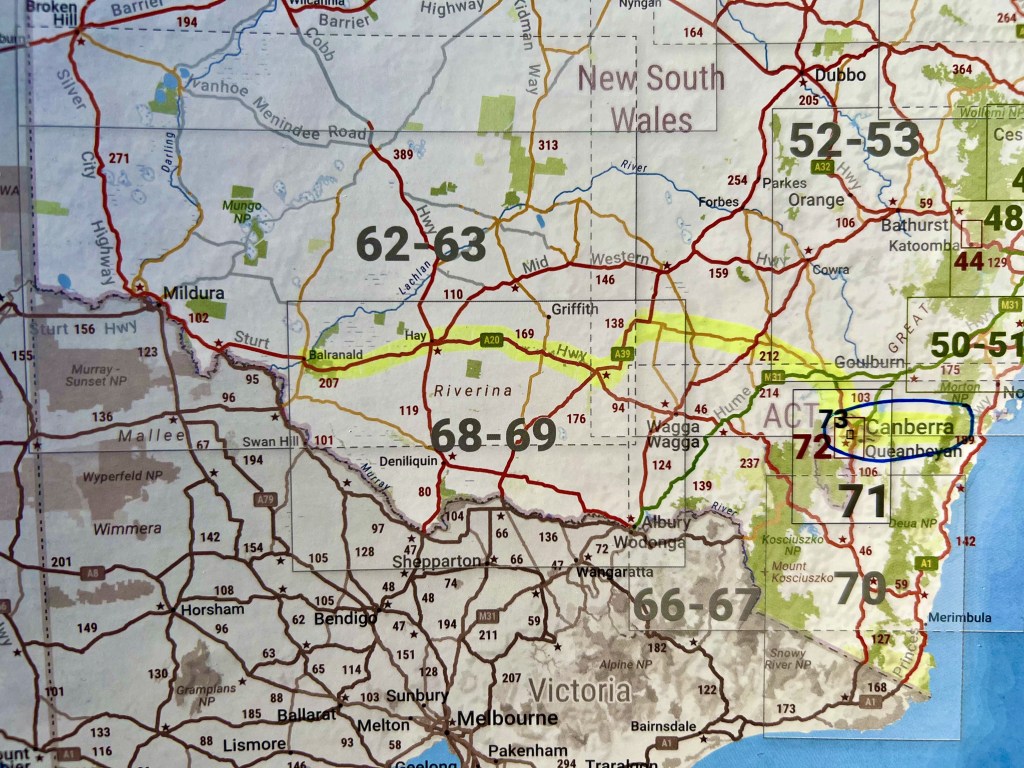
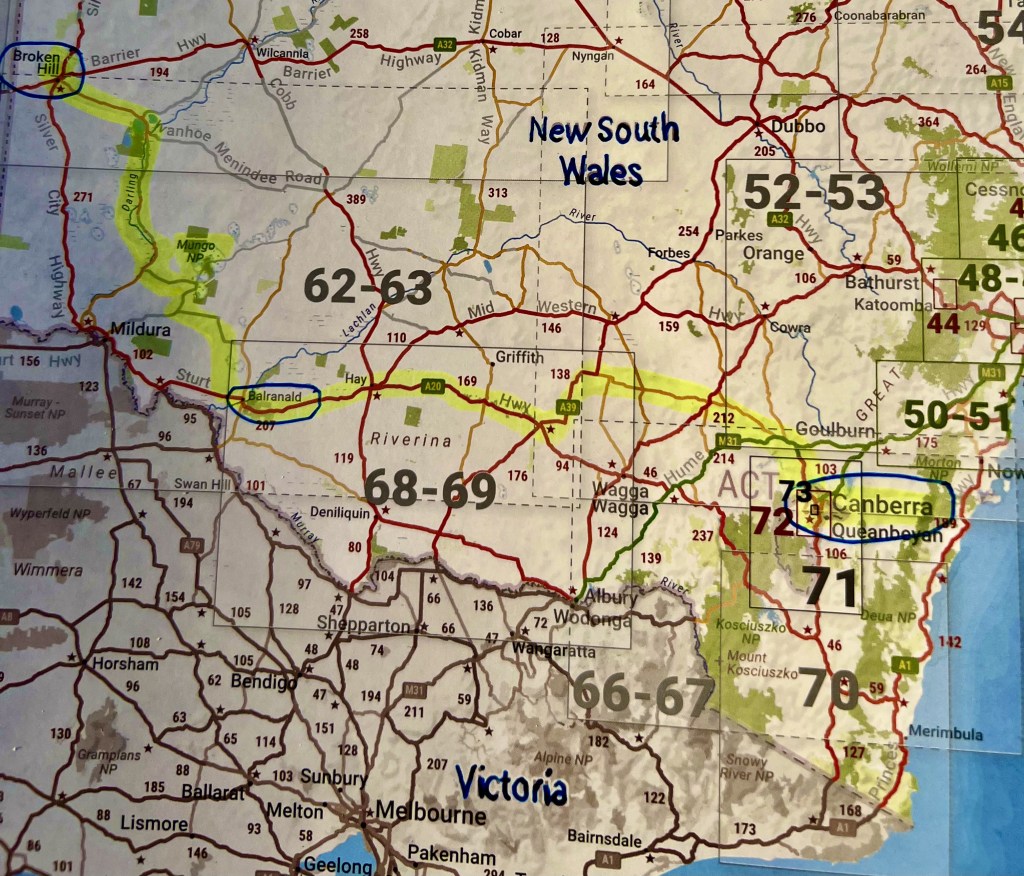
map of the southeastern corner of australia, where most of the people live
we hightail it out of leeton, but the race is lost before it’s begun. by the time we reach balranald, the orange orb is staring us in the face. as we race west. our failure is blindingly obvious as we watch the day’s end taunting us on the horizon. as we pull in to balranald, pernille’s cellphone rings. It is our host for the evening anxiously asking when, or if, we are coming. she instructs us that it’s 17km from balranald to the farm station, but by the time we negotiate that 17km, it’s nearly dark, and the entrance light she tells us to look for is facing the wrong direction, so we miss it. when we reach the 20km mark, we realize we’ve gone too far and drive back to the gate.
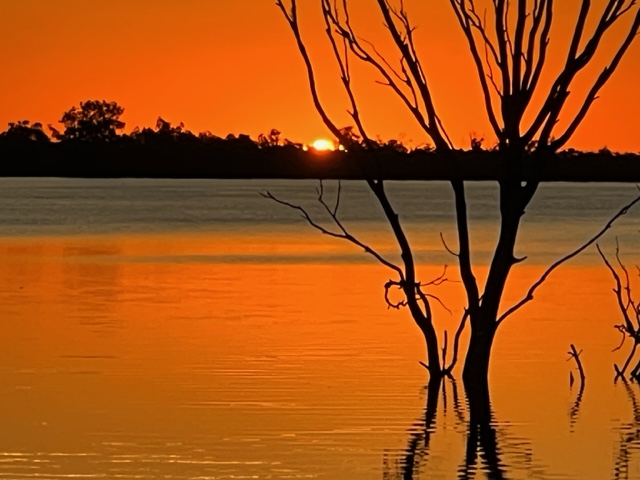
As we pull up outside our residence for the evening, it’s immediately apparent why our host was so anxious about our arrival. sunsets over the water at lake paika are grandiose, and they wait for no one. all we get to witness are the last few flickers of what had been; the final notes of a grand symphony. we can almost hear the audience rising in applause for the final curtain call as we unpack. opportunity missed.
The following morning makes up for the previous evening’s loss. The rising sun on paika station’s 19th century farmstead brings out the ochres and pastels reminiscent of old time photographs and paintings. in the words of the old fleetwood mac song, we pick up the pieces and move on.
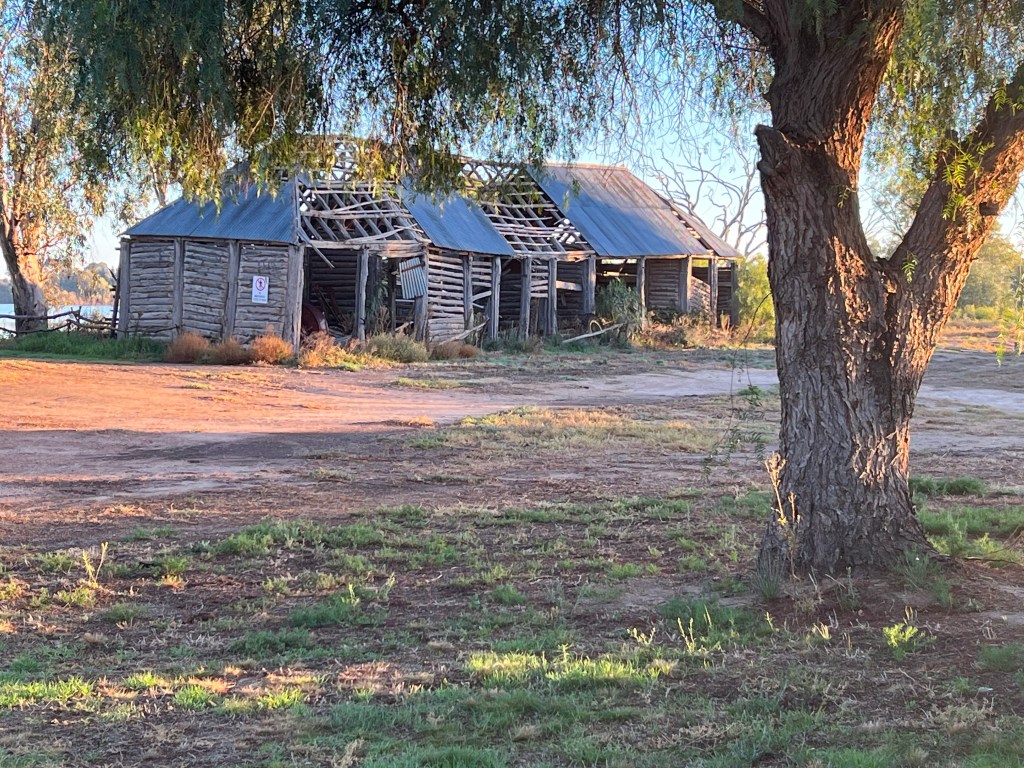

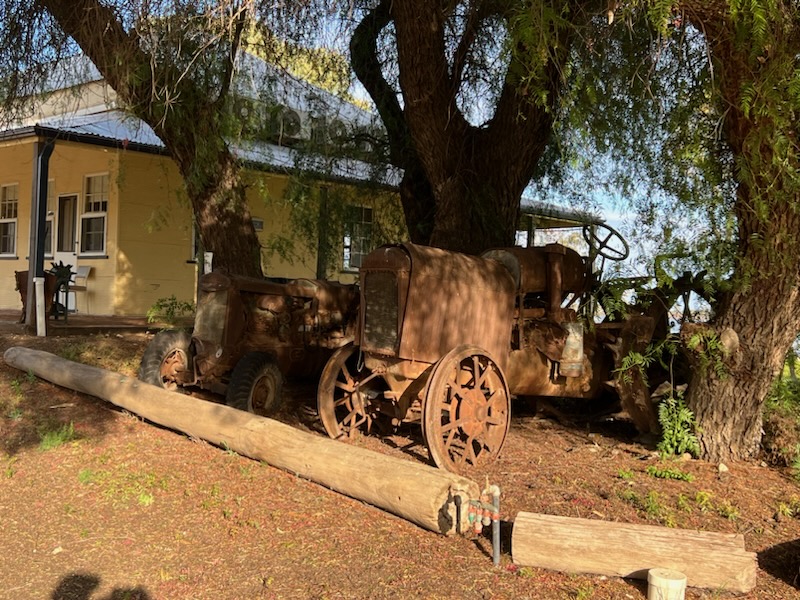


all too soon, it’s time for the day’s drive to mungo national park, one of the highlights of the new south wales outback. our guide for the day is german (and he’s not german). herman, as he pronounces it, it a chilean transplant who’s built a reputation as one of the region’s most knowledgeable birders and all around entertainers. we’re joined for the day by max, a retired brisbane barrister who’s taken up bird photography in his dotage. he’s equipped with a nikon DL480 camera (the best) with one of those foot-long telephoto lenses that you see sports photogs lugging around. it’s a beauty and he knows how to use it.
“mungo not gay”, to paraphrase alex karras’s classic line from the 1970s movie “blazing saddles”. mungo fabulous. we return from a day at mungo park agog at the wonders, including a flock of rare “major mitchell” cockatoos feasting on melons in the middle of the road ahead of us. major mitchells! a birding coup. thanks, max, for the high-quality image below.

heaven is a comfortable pub after a thirsty day in the bush, and on the road home we pass by a place called the homebush hotel a few miles outside paika station, just as the bright orange ball is sinking into the bush in a red western sky. it fits the bill. the homebush is a stereotypical hollywoodesque outback roadside inn, with regulars straight out of central casting. our beers disappears in the blink of an eye, (or “oyeblik” as the danes would say). but the red streak in the sky above the hotel makes a lasting impression. “red sky at night is an outback delight”, to paraphrase and old sage.
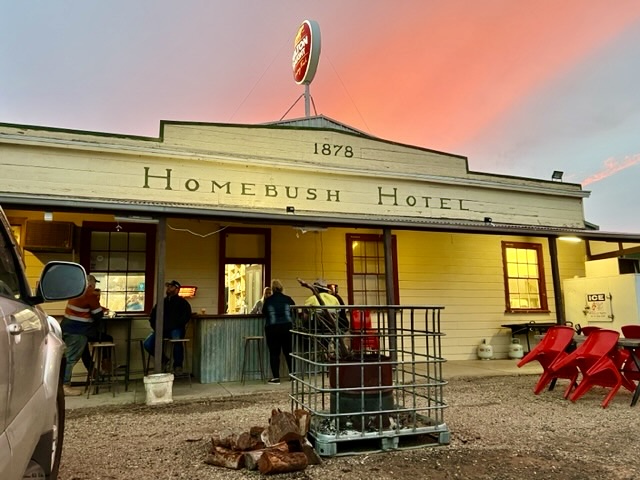
the following night we make it back in time for the fiery finish at paika station. second time lucky.
next up, we turn north for the trek up to to bindara on the darling, a darling farmstead on the banks of the darling river, operated by a darling woman named barb. “outback beds with friends” is the name of a small band of wilderness farmsteads, and barb is a friend forever.
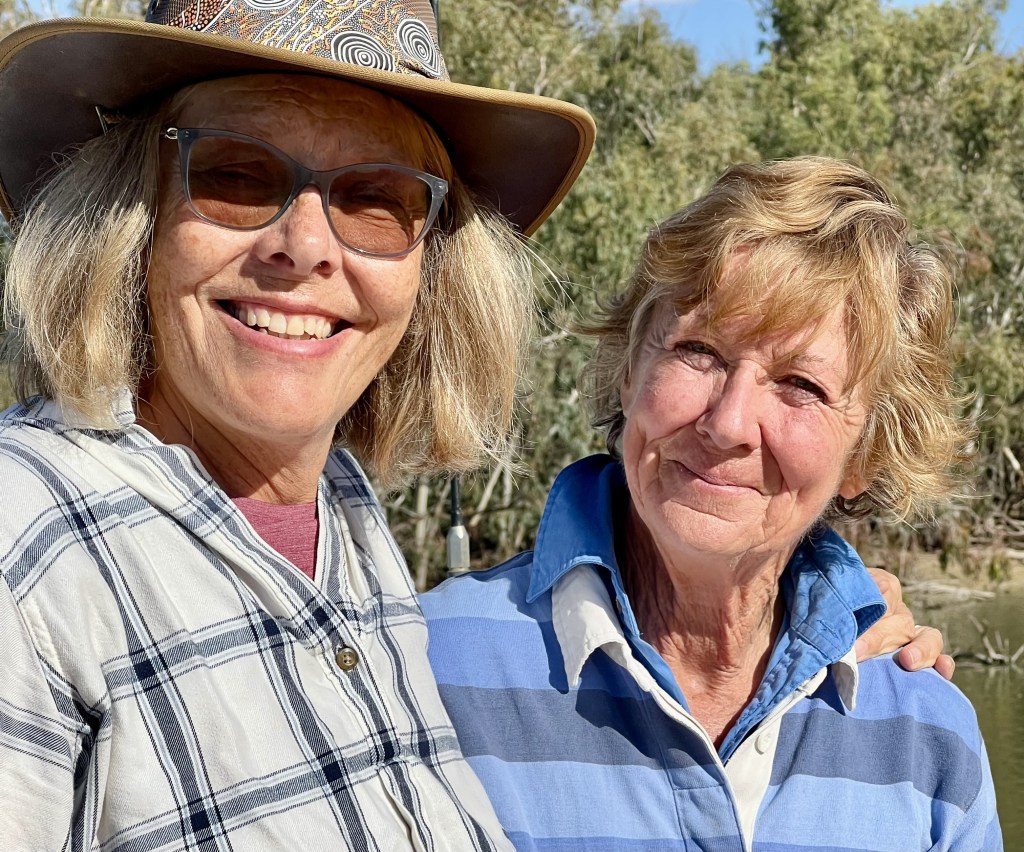
she’s the quintessential aussie frontier woman, tough as nails but tender as a baby’s bum. married at 18, she’s now a 60-ish grandmother with a 17-year old granddaughter who has some mighty big shoes to fill. barb and her late husband, bill, bought the lovely riverside farmstead when it was still a thriving sheep-shearing station in the last (20th) century. bill died after a long illness brought on by inhaling noxious fumes while working at a neighboring farm, so barb has carried on the family business by joining together with other (mostly female-operated) country bed & breakfast homesteads to create “outback beds with friends”.

the “outback beds” network encompasses tens of thousands of square kilometers across the vast and sparsely populated far western quarter of new south wales/queensland. the farms are so widely dispersed through the outback that the owners rarely see each other, but they’re offering a special volume discount. anyone who stays a three or more of their properties qualifies for a complimentary tea towel. (spoiler alert: we’re the proud owners of an outback beds tea towel)
the bindara farmstead comes with an extra friend as well–michael, a long lost acquaintance of barb’s who’s stopped in, ostensibly on his way back to adelaide home from a lawn-bowling tournament in renmark, a town far to the northeast. he’s parked his caravan outside the guest quarters, and while he’s quick to point out that he’s not staff, only passing through, he appears eager to help barb with chores around the farm. he’s a strapping 6’5″ fellow who has brought along a saw to trim low-hanging branches from trees around the farm. and after dinner, he helps with the kitchen chores, then pulls out a fancy guitar from the cab of his truck and proves to be an entertainer, as well.

michael has a thick book filled with lyrics of songs he says he hasn’t played in years, from which he produces one after another sing-along folk tune by artists from john denver to gordon lightfoot to roger miller and on and on into the night. he also has a repertoire of old scottish/australian sheep-shearing songs that he picks with precision. entertainment worthy of a good night club, and at “friends” bargain basement prices. (free)
bad news. our second day at bindara, as predicted, the clouds open up and deliver a steady sheet of soaking rain. not a gullywasher, but enough to turn the dirt roads into mud-red ice rinks. barb takes us out for a spin (literally) in her SUV, to show us the hazards that await on our upcoming drive northward toward broken hill. the undriven roads look perfect, but it’s like navigating across an icy lake. any misstep and you could be mired in red goo up to your wheel wells at a place out of cell phone range and inaccessible to rescue vehicles. this is where flying doctors are often the only hope for the injured. roads are too risky. we were happy to learn that denmark’s crown princess mary, who just happens to be an aussie, is the patron of the flying doctors.
and so it is with a great deal of apprehension that we load up the land rover and point it in the direction of the largest town on our itinerary, broken hill, and week two of the great outback adventure. the odometer reading is just over 24,200 km. we’re a third of the way (1200 kilometers) in. see you next week.
to be continued
 not that heinlein