reuben gregor puts his land cruiser through its paces
the 20-year old toyota landcruiser roars happily as it bounces along a mountain goat trail through australian bush country. it’s exhilarating riding shotgun with reuben gregor, son of our hosts on kangaroo island, as he powers up a jagged rock face, downshifts into a gravel-strewn gulley, then grinds upward again to a promontory overlooking a craggy beach.
they don’t make SUVs like that anymore. the odometer shows 286,000km
the last hundred meters’ descent to the water would be suicide by car, so we all clamber out and do a slip-and-slide down a rocky slope to a sliver of white sandy apron separating the cliff face from the swirling surf where we hope to snorkel for abalone and crayfish.
welcome to kangaroo island’s south coast. next landfall, antarctica.
descent to the beach. photo courtesy caroline hobbs
it’s not a day for snorkeling, at least not here. we had brought wetsuits to brave the 16 degree celsius, (60F) water, but crashing waves are stirring up the rock pools. visibility is near zero.
ruben is apologetic. he says there’s another cove just a few kilometers away that’s better protected. we’ll have to walk, though, because even the land cruiser can’t negotiate those cliffs. and there’s no trail. not even a kangaroo track.
it’s a steep drop from the cliffs to the beach below
reuben knows the territory. he has worked these cliffs trapping feral cats that are a menace to the island’s indigenous species. he’s wearing solid walking shoes and socks.
reuben’s cousin, michael, is psyched for the hike, too. but he’s wearing flimsy flip-flops. big mistake.
michael is sabotaged by thongs that are no match for the rugged terrain
my sandals offer some protection against the gravel and thorns. by the time we reach the third crest, however, i’m agonizingly aware of a strategic blunder. i’m listing badly to starboard under the weight of a gym bag stuffed with gear i had packed in preparation for any eventuality… except this one. my one “good” shoulder is on fire.
with every step i’m thinking, if it’s bad now, what kind of hell awaits on the way back. michael, it turns out, is wondering the same thing. his feet are being shredded by razor-sharp stones turning his thongs to mincemeat. the prudent course of action is obviously to swallow our pride and turn around. so after an hour and a half of bush-bashing, we’re back to where we started. no joy.
after two hours of cooling our heels, made bearable by the picnic michael’s wife caroline and reuben’s wife tracy had packed, we see three tiny dots rise up over the horizon. as the sun sinks low in the afternoon sky, reuben, along with michael’s 14-year old daughter sarah (who borrowed her mom’s boots) and sade, another young woman in the party with good shoes, straggle back to base, triumphant.
reuben hands over the treasure tub to michael. notice the difference in footwear
reuben hoists the booty tub up to michael, who swings it around for us to examine the prize: five massive abalone and one crayfish. the ladies proudly show ’em off. michael reckons each one of these beauties would fetch $100 at market.
these beauties are gold. or dinner.
ultimately, it’s been a grandly successful day. reuben has put food on the family table, thin-sliced and pan-fried. a feast for the land lubbers back home.
it wasn’t an easy task, he admits, because he’d forgotten the sharp knife he uses to liberate the abalone from the rocks. his only blade was a tiny shard strapped to his belt. fortunately, it worked.
reuben’s makeshift knife was good enough.
for me, the day was a mixed blessing. to add insult to the injury of my miscalculation, i found that a large bottle of sun screen that was in my bag had burst open during the trudge. everything was slathered in white goo. spf 50+, too. it’s now thoroughly protected.
on the other hand, i could not imagine a better way to experience real australia. how many total strangers are privileged to be invited into a fun-loving, seafaring, welcoming family like the gregors and hobbses, who accept me as one of their own for a wild seacoast diving expedition and picnic? you can’t buy that.
there’s a moral to the story. when in the bush, be prepared, and travel light. yes, it’s a contradiction; australia’s full of ’em. it’s up to you to choose. don’t ask me. i’m a bush moron.
a summertime christmas carol adapted for a kangaroo island holiday
merry christmas from the little town of penneshaw, south australia, (population: a few). penneshaw is the ferry port of kangaroo island, where three wise men in front of st. columba’s church are breaking out their surfboards to catch a quick wave before depositing frankincense and myrrh (no gold, it’s too expensive) before baby jesus lying in the manger. st. columba’s has anglican services twice a month, catholic mass once a month, and apparently nothing on christmas.
penneshaw, like most of kangaroo island, is blessed with gorgeous white sandy beaches.
wetsuits are required for surfing, however. even though it’s high summer, the yuletide temperature peaked at 23 degrees celsius, which is more or less 76 fahrenheit, and the water temp is a bracing 65 fahrenheit, or between 18 and 19 centipede.
kangaroo island is either australia’s third or fourth largest island by area, depending on how you measure. most people count the main island as a continent, but among the locals, that’s referred to as the north island. it’s about 30 minutes away by ferry. officially, kangaroo island is third, after tasmania and melville island.
the ferry
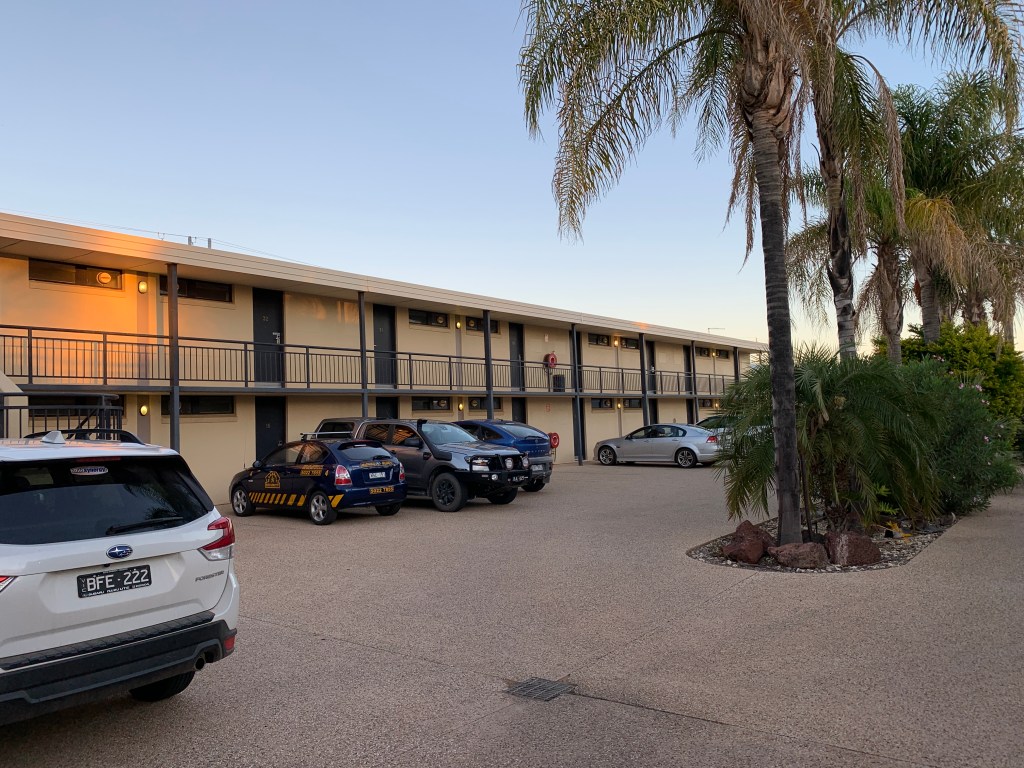
we ferried over on christmas eve after a pleasant two day drive from canberra. we overnighted in a town called mildura. stayed at the best western motel and dined at the motel restaurant, where the woman who waited on us (definitely not a waitress), assured us that the chef had worked at michelin starred restaurants in europe. in this time of covid, every chef is just lucky to have a job.
eating and sleeping at the best western in mildura.
the food was indeed quite good, and the presentation well done, but we made the mistake of trying a local specialty, the salt bush salad, and were ravaged by thirst the rest of the evening.
we made several other stops along the way, including at a covid testing facility on the border between the states of victoria and south australia. since we had passed through the state of new south wales on the way over, we were required to have the test entering SA. thankfully we both tested negative, though we have to have another test on day five.
at the town of loxton, holiday cheer is guaranteed
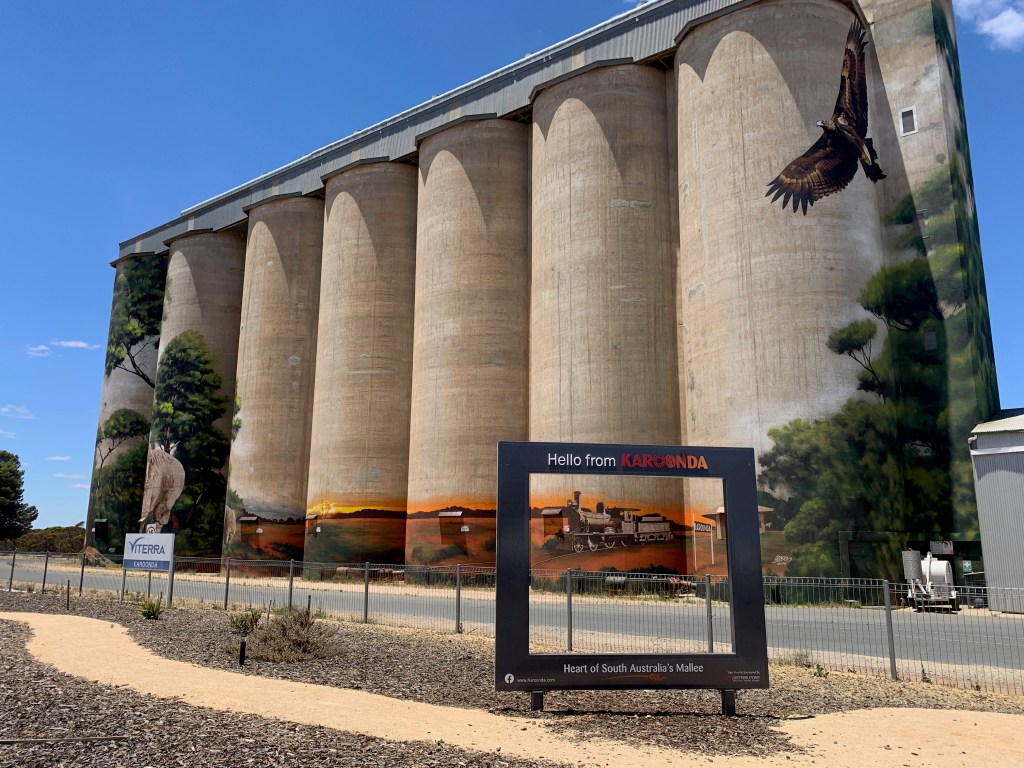
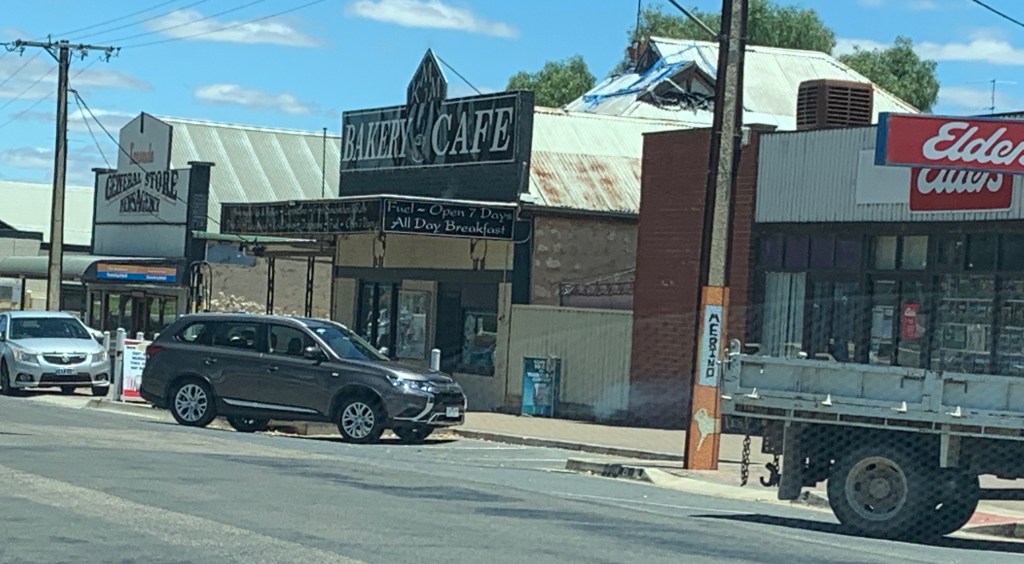
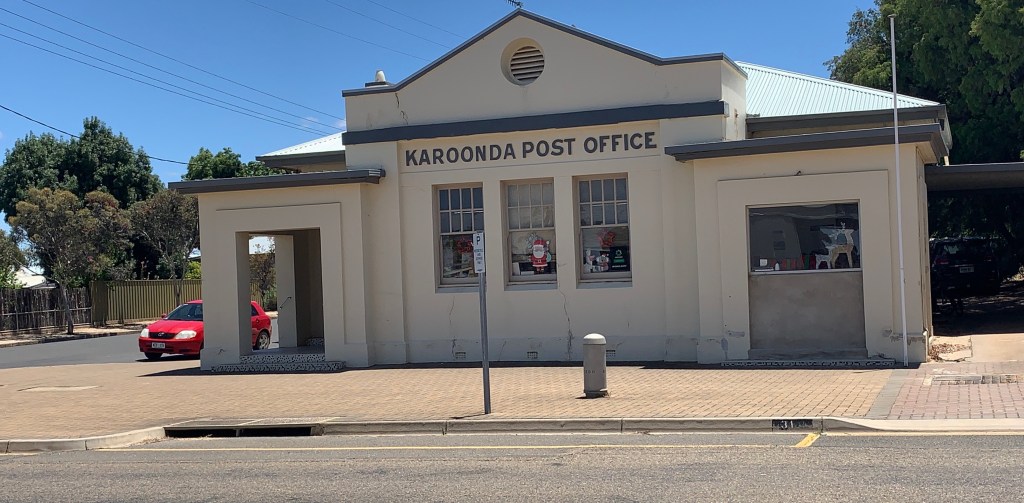
we stopped for lunch (pernille’s open faced danish sandwiches and hard boiled eggs) under a tree in a sweet blink-of-an-eye town called karoonda. this is rich farming country, and karoonda brought me back to the 1950s in el paso’s lower valley along the rio grande river before housing subdivisions displaced pecan orchards and cotton fields. oh, sweet memories of being a five-year old playing in the dry bed of an irrigation ditch behind escobar’s dairy.
we arrived on kangaroo island five hours early. our reservation was for the 9p.m. ferry but we were there before four, and they loadmaster squeezed us on. apparently the recent outbreak of covid in sydney had forced some cancellations, so we made it in time for dinner and a sunset drive.
the road to island beach
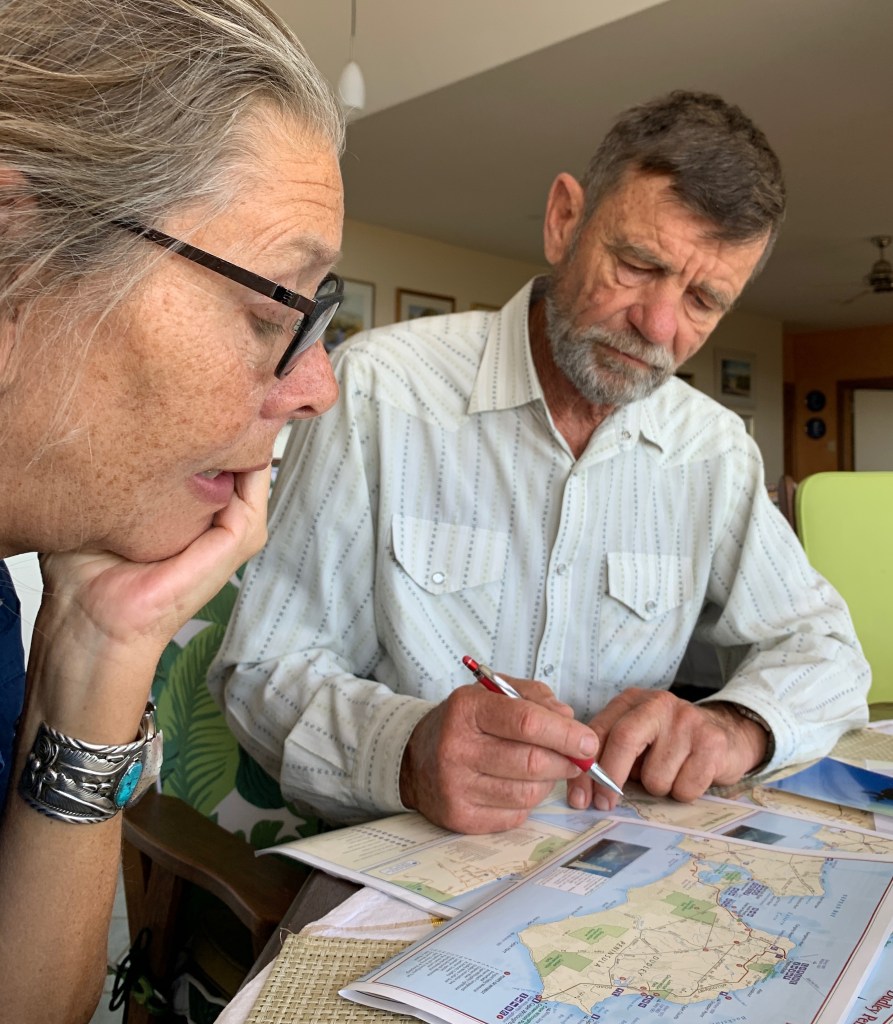
the western half of kangaroo island was hit hard by the bush fires that ravaged parts of australia last summer. we plan to check that out but first we check in at our island beach b&b, the adagio. our hosts, pierre and branka gregor, know every inch of the island’s 4374 square kilometers. pierre, we learn, is chairman of the tourism commission, so we’re in good hands.
pierre has maps and photos and a wealth of anecdotes to help us plan our stay.
the aussie sense of humor never ceases to amaze. on a hill overlooking penneshaw we encounter a ‘photo stop’ where a clever sculptor has placed a cutout of a kangaroo appearing to serve up a slab of the north island. i’ll have mine medium rare, thank you.
a little kangaroo humor
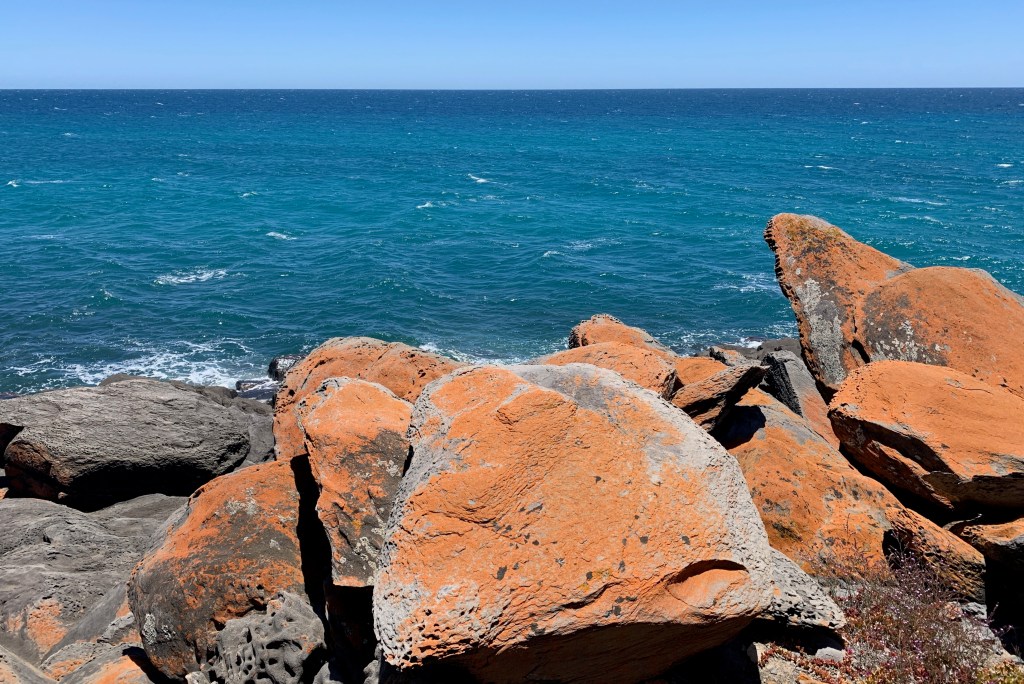
they say you never get a second chance to make a good first impression, and this island’s teal and turquoise coastal waters are an inviting introduction. the lichen-crusted rocks along penneshaw’s seafront serve as a fitting contrast. not exactly traditional christmas colors, but hey…
the lichen-covered rocks against the
…..more to come. the western part of the island beckons.
we touched down at melbourne international early monday morning, dec. 7th and dropped our bags at a midtown hotel. pernille went off to do diplomacy, and i went off to explore.
the city of five million seemed to be in the grip of a bad hangover.
a deserted victoria market and a dog guarding his homeless master
melbourne, and the entire state of victoria, has been in complete lockdown for most of the year. no one in or out by land, sea or air. tight restrictions on movement. it worked. zeroes across the board for more than a month.
all zeroes, no worries, mate
we were among the first allowed in since the reopening.
out on the streets, the city is doing a rip van winkle, groggily awakening from a long slumber to find a changed world. life in the age of covid may never be the same.
even a cup of coffee was hard to find.
up one semi-deserted street and down the next until – hold on! – commotion! police!
in front of the state library of victoria, officers with shoulder mounted cameras were monitoring a bunch of scruffy characters in hammer and sickle gear folding up tents and hauling away pots and pans and bedding.
over the previous days, as melburnians huddled in their homes, the aussie communist party, along with a sister group called the community union defence league (known by the acronym cudl. cute!) had built a tent city on the library steps offering shelter and a hot meal to the homeless. it had attracted a crowd.
performative? sure. but there are more people “living rough” since covid. communist party flyers advertising an “open air homeless and community service” were welcome in many quarters.
flyers promoting the 24/7 open air homeless “cudl” service
with the lockdown over, however, melbourne’s finest rousted them from their sleeping bags with an ultimatum: take it down by noon, or we will. it was getting close to noon, and the hammer and sickle gang was in “beat the deadline” mode.
communists in australia seem to be a different cup of tea than those back home. in most of the the u.s., “communist” is a dirty word, though it’s enjoying a heyday under several aliases.
here, it seems, they’re loud and proud, gaining followers by providing services for the downtrodden.
the group’s organizer, wearing a jacket with the party logo boldly emblazoned across his back, says communism is attracting young people faster than his organization can keep up. “I’m 27, and i’m one of the oldest in the local party,” he explains. “some of them are almost too young.”
this fellow, the son of nepali immigrants, is presumably not a communist. he’s enjoying the christmas decorations in federation square
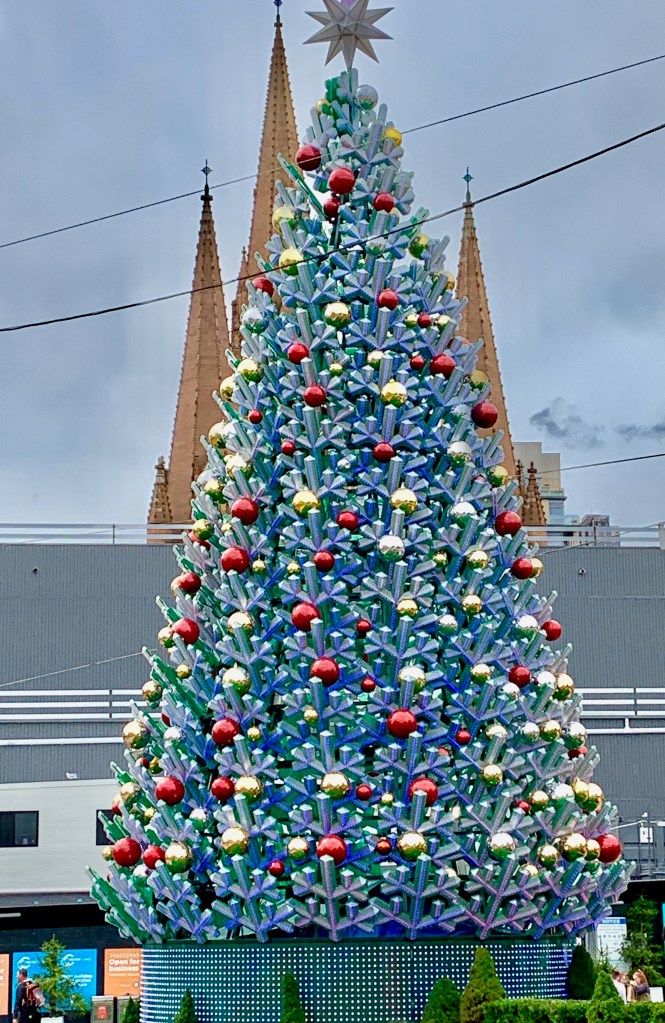
ok, not that young!! a few blocks further on, at federation square, a family of immigrants from nepal is taking pictures in front of the christmas (chrissy to aussies) display to send to relatives in kathmandu. nepal is a hindu country, though interestingly, the communist party currently holds power there. the silver and blue belled tree accented by steeples from the nearby st. paul’s cathedral makes a nice backdrop no matter where you’re from.
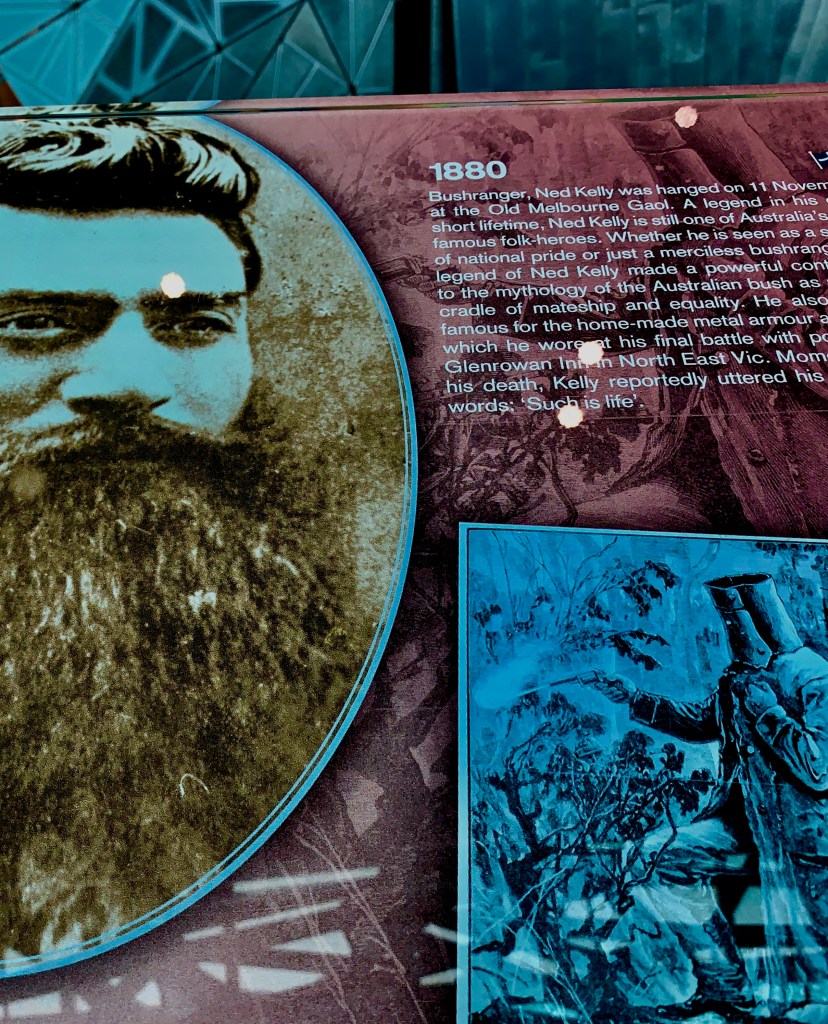
federation square is among melbourne’s favorite meeting places, drawing more than 10 million visitors a year (pre-covid) with its family-friendly events and fantastic, free museums, so i popped into the national gallery of victoria and spent a chunk of the afternoon catching up on local lore. two of my faves were the legendary bad-guy hero ned kelly, australia’s billy the kid, who was hanged at melbourne gaol (jail) in 1880; and the story of “waltzing matilda”, the unofficial national anthem. (would you recognize the official one?)
the stories of the outlaw bushranger ned kelly, and the origin of waltzing matilda, at the national gallery of victoria.
Ned Kelly was a notorious criminal, feared as a robber and murderer. Despite this, he had many sympathizers who believed he was a symbol of the Australian spirit – an enduring underdog with the courage to challenge the authorities.
— state library of victoria website
it seems in every australian museum you’ll find a celebration of the art and culture of the continent’s first peoples, and a warning about the impending doom of climate change.
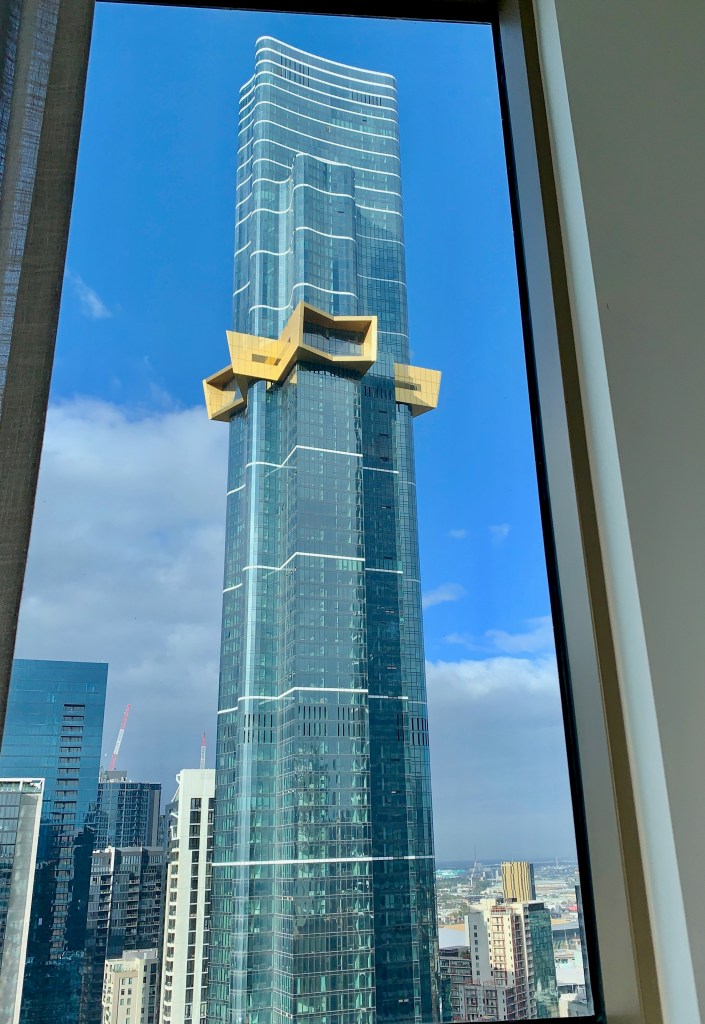
a serious case of aching feet told me it was time to circle back to the hotel, where we had deposited our belongings what seemed like eons ago. taking off my shoes, i glanced out the window to see the australia 108 skyscraper, our next door neighbor. the residential tower was completed just a few months earlier, and initial reviews have been mixed. an apartment on the 100th floor, the highest residence in the southern hemisphere, is advertised at $25 million (pssst! i hear they’re offering discounts)
room with a view of the australia 108
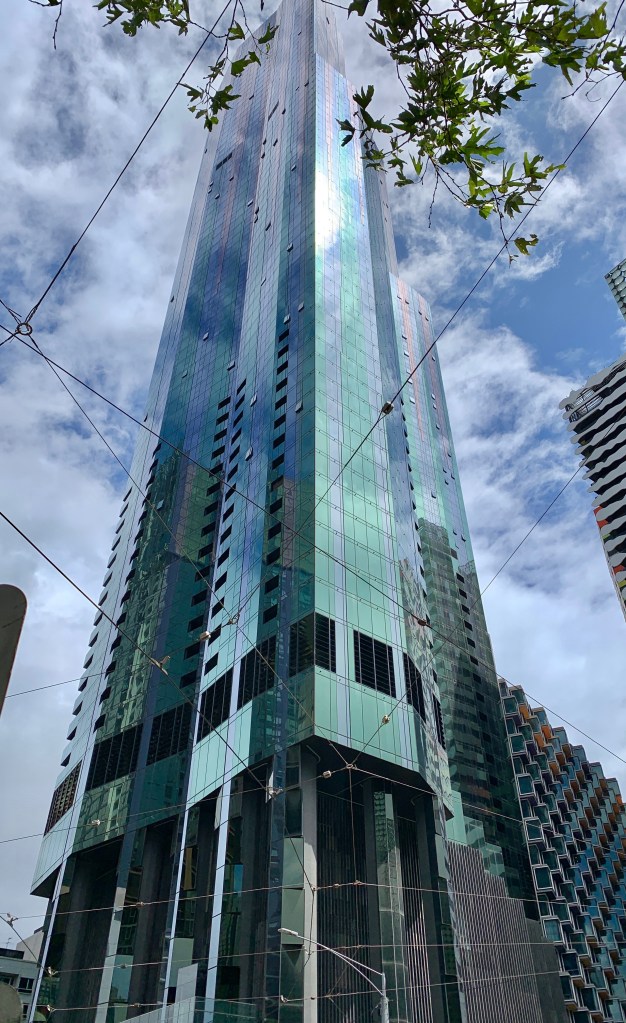
what came as a surprise is that melbourne is among the world’s major financial capitals. two australian cities make the list of the global top 15, with melbourne trailing sydney by a shade in the rankings, but closing the gap. the victorian capital is a city of 21st century gleaming glass towers.
another of melbourne’s tallest
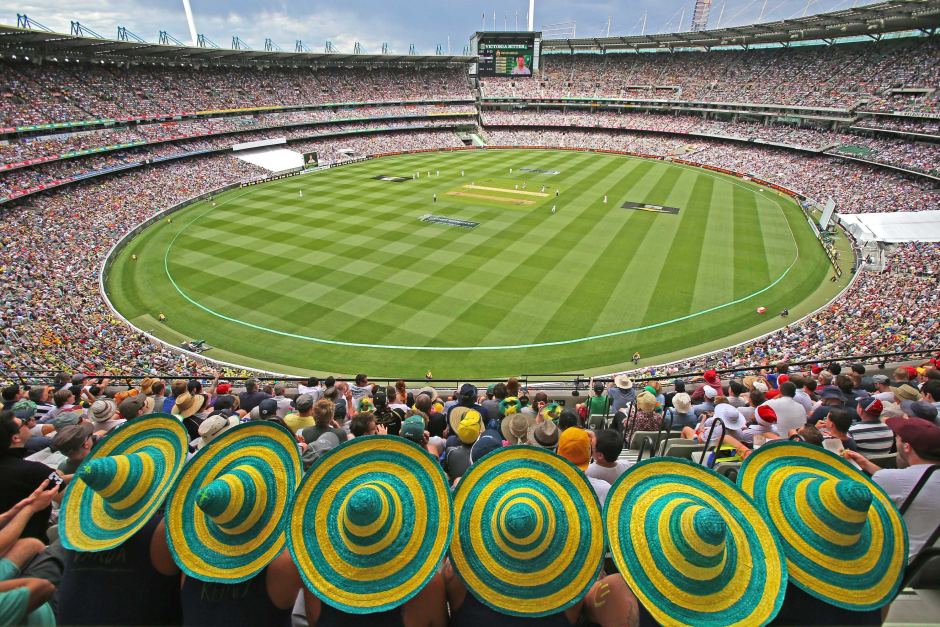
we arise early the next morning because it’s going to be a short day in melbourne. we’re due back home in canberra by early evening. so it’s off to experience the “magnificent mcg”, the hallowed melbourne cricket grounds. the “G”, as its known, has witnessed many glorious moments in sport, including the 1956 olympic games, the commonwealth games and many fabled football (footy) finals.
(everything is abbreviated in australia; abbreviations are “abbys”, i think)
the MCG was the centerpiece of the 1956 olympics and 2006 commonwealth games
the mcg seats a measly 100,024 fans (fannys?), which according to some internet websites ranks it among the 10 largest sports venues in the world. number one on the list may surprise you. answer below.
australia was hosting india in a big cricket test that day, but not in melbourne, so the cavernous building was deserted. still, it was awe-inspiring to walk through the olympic village and stand at the site of the 1956 games that i had imagined as a boy from newspaper reports and black and white TV snippets. australia might have been on another planet, for all we knew back then.
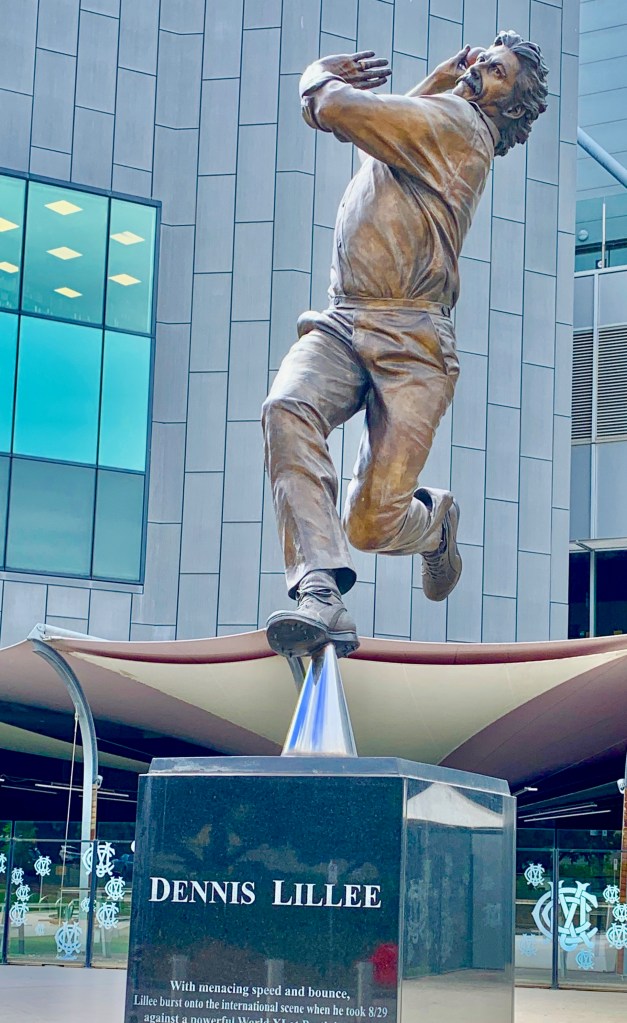
a walk around the perimeter of the “G” provided a great introduction to some of australia’s sports legends. names like dennis lillie, don bradman, leigh matthews and ron barassi are the australian equivalents of american heroes like michael jordan, mohammed ali, babe ruth and jackie robinson.
that stake through dennis’s foot must have hurt a bit
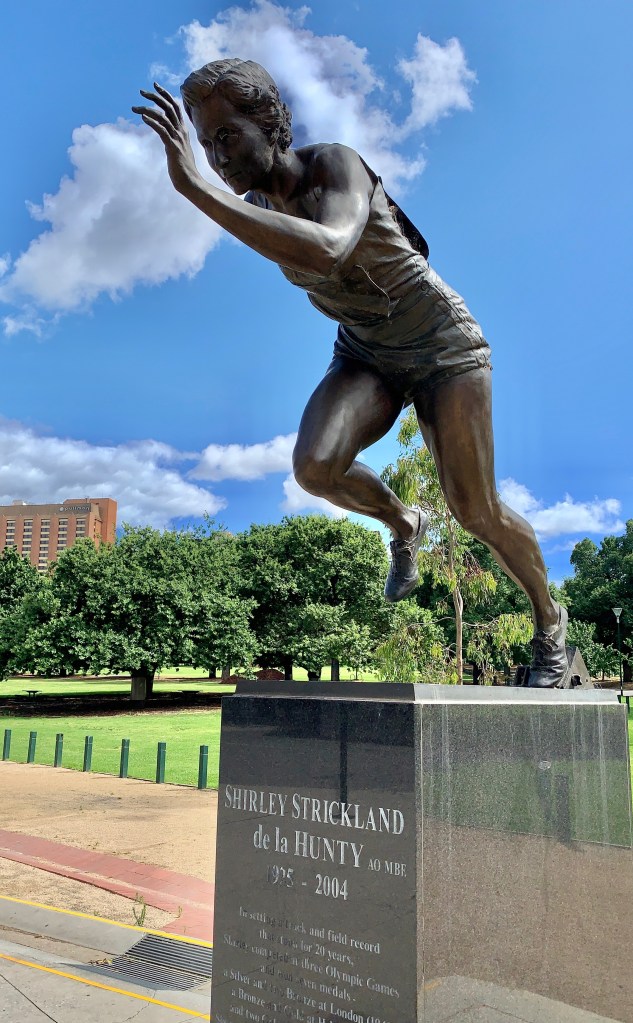
and aussie olympians betty cuthbert and shirley strickland de la hunty are right up there in the firmament of stars with americans babe didrikson zaharias, martina navratilova and jackie joyner.
shirley strickland de la hunty x2 and betty cuthbert stand permanently outside the mcg
the “G” is not just a sports venue, either. in addition to the olympics and the 2006 commonwealth games, it also hosted queen elizabeth three times; in 1954, 1970 and 2006, as well as pope john paul in 1986. billy graham’s evangelistic crusade drew a record crowd of 130,000+ in 1959. but safety regulations don’t allow that size crowd any more.
one last “foot”note, and not an insignificant one. australian rules footy began on the lawns outside the “G” more than 160 years ago. and the melbourne clubs are among the best. this year the grand footy final was between two melbourne teams, but covid forced a relocation of the match to brisbane. that was a rare occurrence. every other footy final since 1902 has been staged at the mcg, except 1924, 1942-45, and 1991.
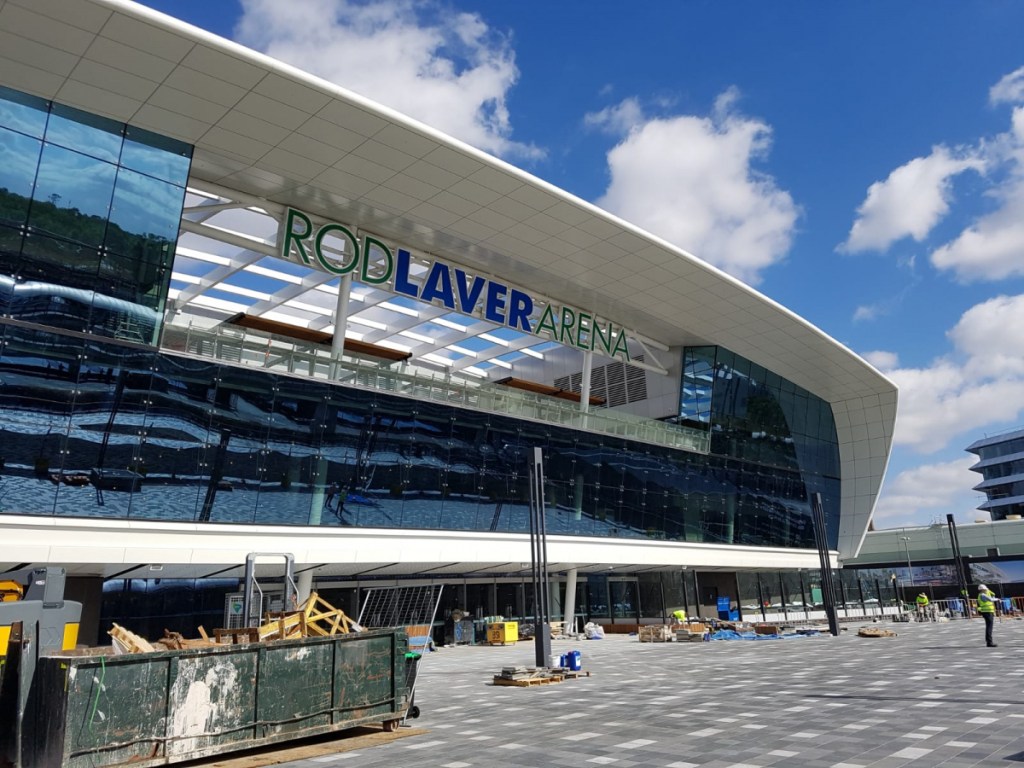
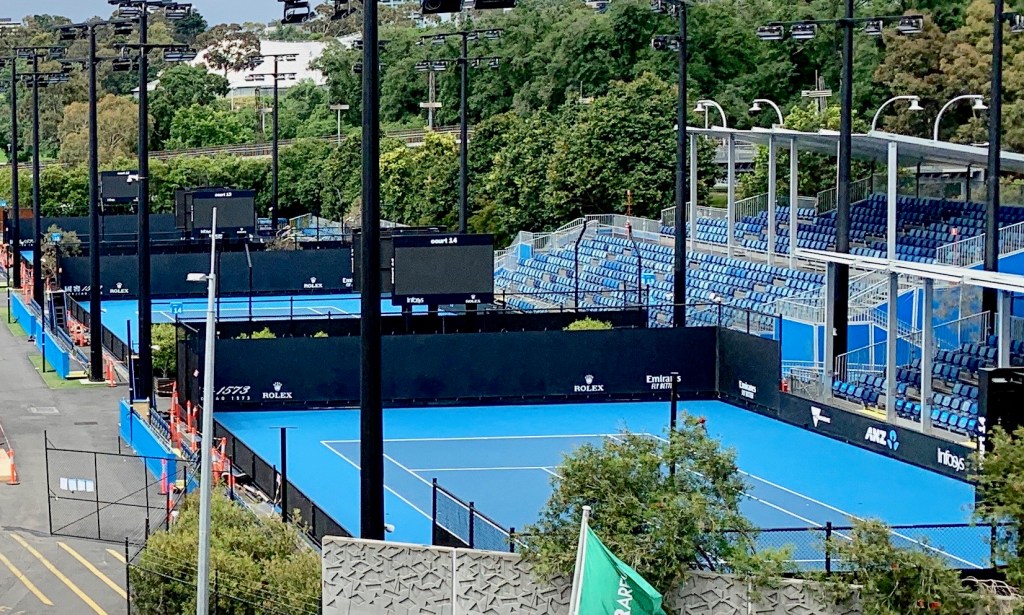
and just in passing, there’s the rod laver arena, site of the australian open, a grand slam tennis tournament, right next to the mcg. the 2020 open (opie?) was probably the last international sports competition in melbourne before the nine-month lockdown.
serbia’s novak djokovic won the men’s title for the eighth time in 2020. the russian born american sofia kenin won her first women’s title. both are expected to be back in 2021
the 2021 event will be pushed back from january to february to give players time to quarantine and acclimate before the tourney begins. qualifying matches for men will be held in doha, for women in dubai.
australian open tournament director craig tiley expressed the emotional importance of maintaining this glorious sports tradition, and the global spotlight that comes with it, in healing the psychological scars inflicted on melburnians.
“it has taken 8 months of working alongside government authorities here in victoria, nationally and interstate, to give us the opportunity to present an australian open that will play a major role in both the economic and psychological reinvigoration and rejuvenation of melbourne and victoria.
craig tiley, aussie open director
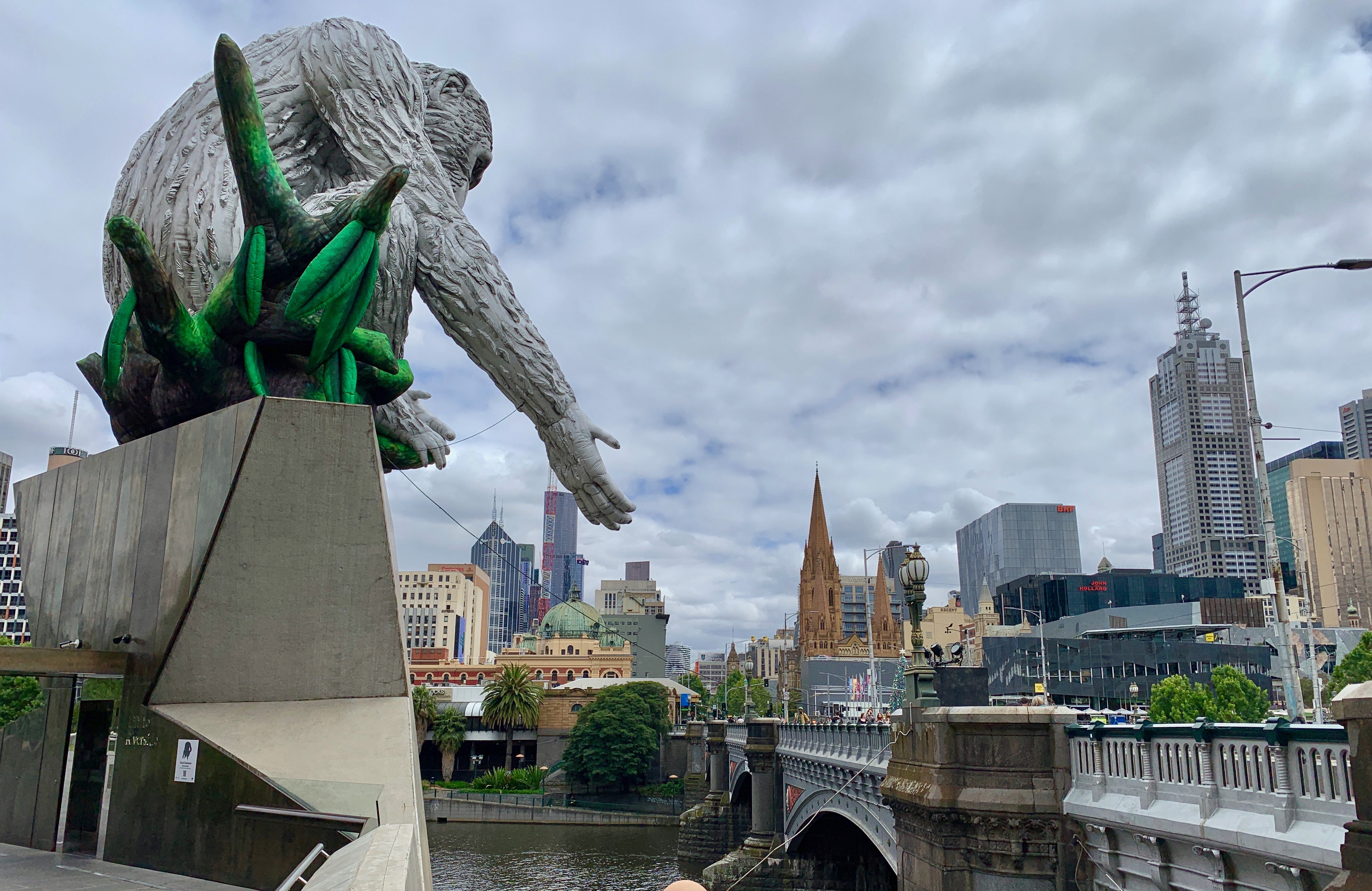
that should have been enough for a mad dash through this great metropolis and financial center. this piece is already too long for a blog post (sorry, mom), but on the way home i’m accosted by an oversized silver chimpanzee. my camera pulls itself out of my pocket.
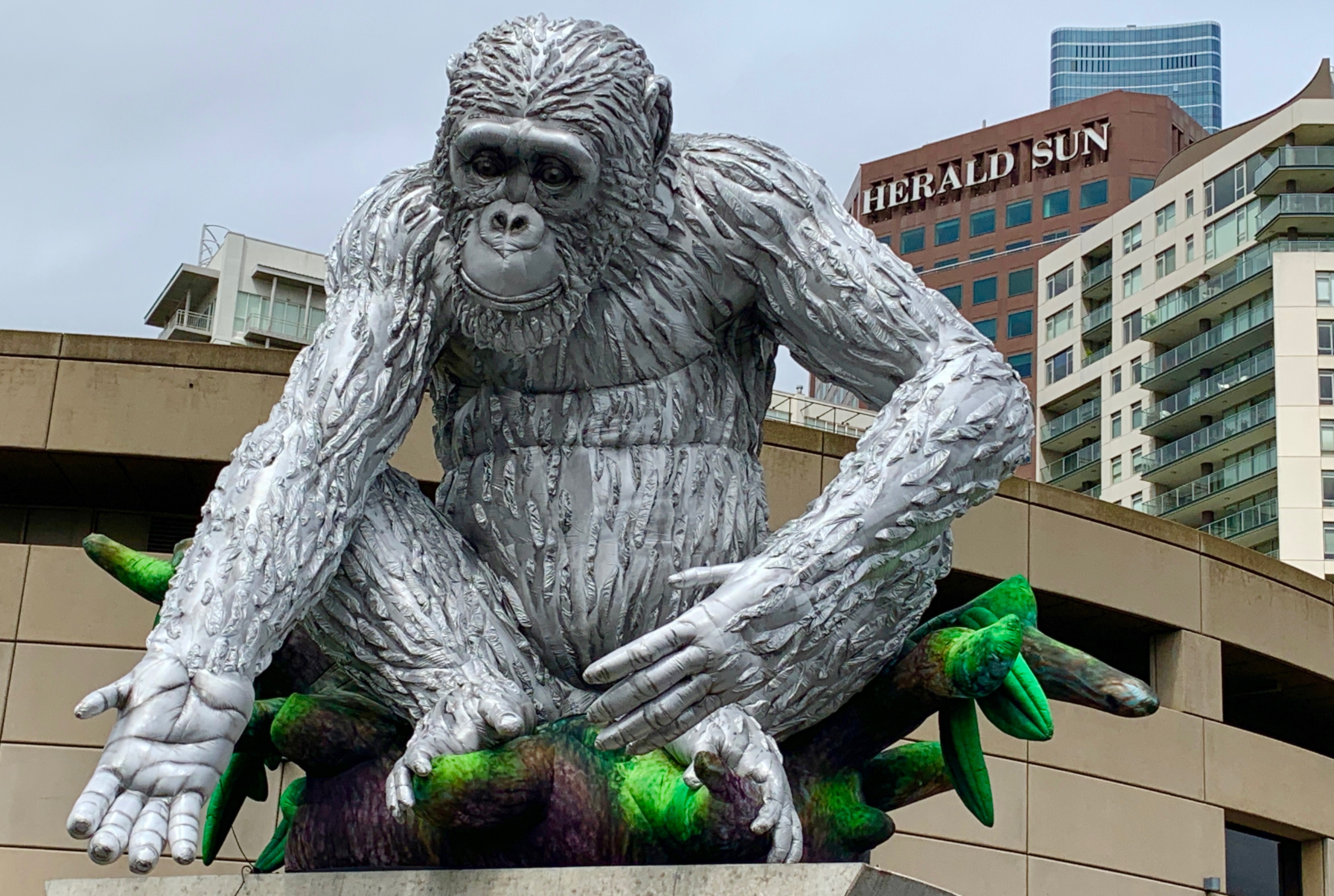
meet david greybeard. he’s eight months late because of you-know-what, but he’s finally here, unveiled this morning while i was wandering through sportsland.
david is an inflatable sculpture by australian visual artist lisa roet to commemorate the 60th anniversary of british ethologist jane goodall’s pioneering work that gave the world new insights into chimpanizee behavior.
a check of the jane goodall institute home page revealed some other startling insights. for instance, while observing chimpanzee behavior in the gombe stream national park in tanzania, what type of shoes did jane wear most often?
answer: low top canvas sneakers
see, bet you didn’t know that. and another thing you probably didn’t know is what is the largest stadium on the planet? it is the rungrado may day stadium in pyongyang, north korea, which seats 150,000 fannies.
and so with this whirlwind at an end, the airport beckons. the melbourne arts center’s final message is a whirlwind warning:
due to safety regulations, david greybeard will need to be deflated when winds are above 40 km/hr.
but not today.
oh, and by the way, i walked everywhere during the visit, except to and from the airport. no ubers, no trolleys (though they are free in the city center), 100% shank’s mare.
the view of “the rocks” from sydney’s barangaroo ferry wharf & promenade
our second visit to sydney was off to an inauspicious start. we had driven from canberra this time because flying in oz ain’t cheap. we booked a room at a hotel that was half the price of the fancy place we stayed at the first time with the great view of the sydney opera house. but we were still in the swank business district known as “the rocks”.
however, as can happen when you try to save a buck, when we got there the hotel was…gone! we drove up to the address, 26 clarence st. and found 36, and 16, but no 26. it was sunday evening and the street was quiet, but the spot where 26 should have been seemed to have been taken over by the wynyard metro station.
hotel masquerading as a metro station
we drove around the block a couple times, up a block, down a block, scoured the other side of the street. (probably broke a few traffic laws.)
pernille had been certain she’d made a reservation at a real hotel, but she began doubting herself.
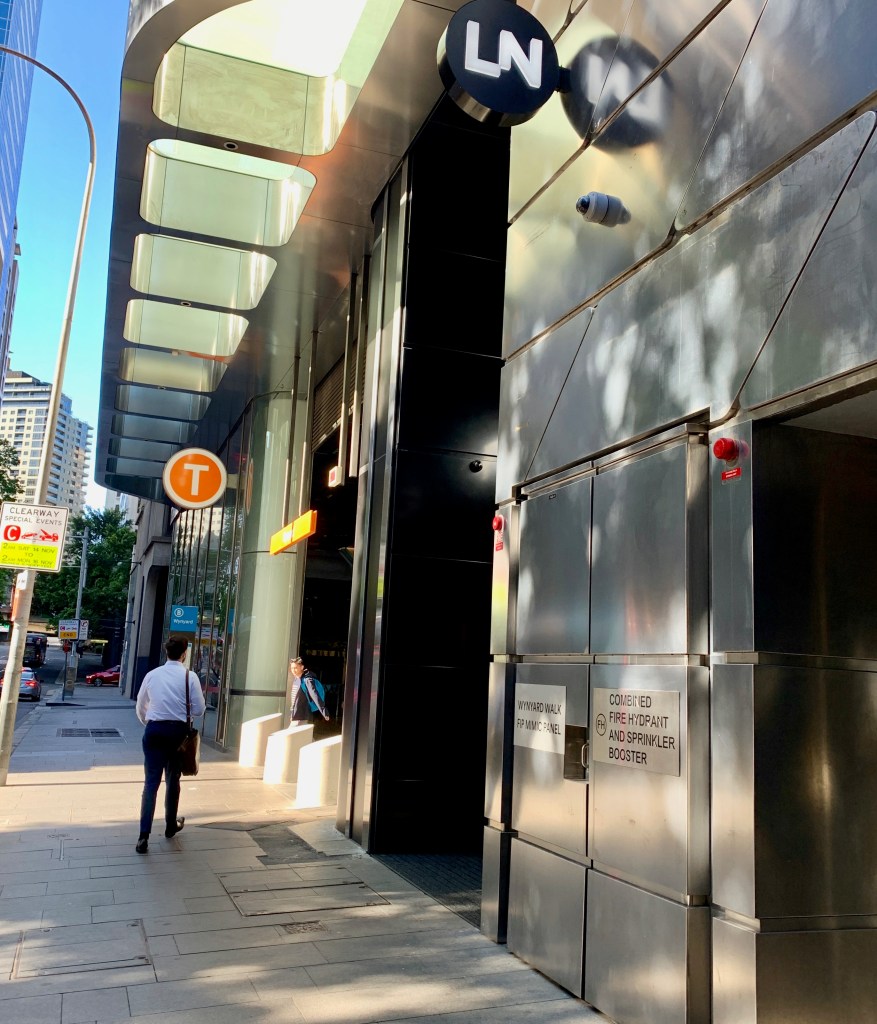
then, just at the point of despair, we spotted a clue. a small sign bearing the letters “LN” above a nondescript metal door that read, “combined fire hydrant and sprinkler booster” on one side and “wynyard walk and fip mimic panel” on the other. a very clever disguise, lest anyone might suspect there was a hotel lurking there.
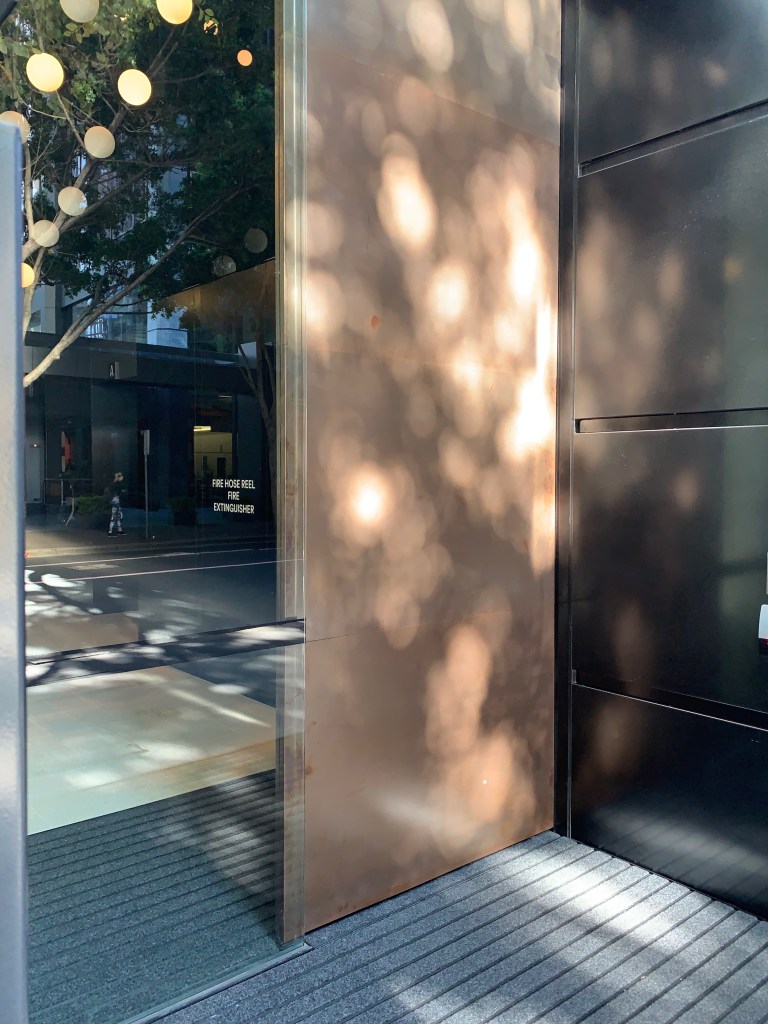
next to that door was a shadowy alcove with a tall metal panel that slid open as we approached to reveal a bare room with a modest desk adorned by a single bottle of hand sanitizer. behind the counter stood a bangladeshi immigrant named anwar.
the hotel entrance
anwar at the front desk
welcome to the little national (LH) hotel. emphasis on the “little”.
anwar escorted us into the elevator up to the reception desk on the fourth floor, (called level one). After check-in, he took us up to our closet. (o.k., room). it was all of 8 feet (2.5 meters) wide. “but it’s a deluxe corner room with a panoramic view,” anwar pointed out. “and you can see the bay.”
sure enough, two of the room’s three walls were glass, and we could see ferry boats gliding by in the distance through the tiny slit between two massive skyscrapers staring back at us. fourteen floors below, we had a view of a city street, and above the street (if you look closely) an elevated highway.
room with a view
anwar gave us a two-minute tour of the room, which was a marvel of efficiency. as he left, i handed him a tip. “thank you,” he said, “that’s the first tip i’ve ever received”. the hotel, he said, had only been open four days. we were among the first guests.
this little gem of a hotel is exploring a new concept in urban accommodations, catering to business people on a budget who want to stay at a stylish place in the heart of the business district, but don’t want to pay exorbitant rates. it’s tucked almost invisibly into a corner of the metro station, providing instant access to the city’s mass transit system.
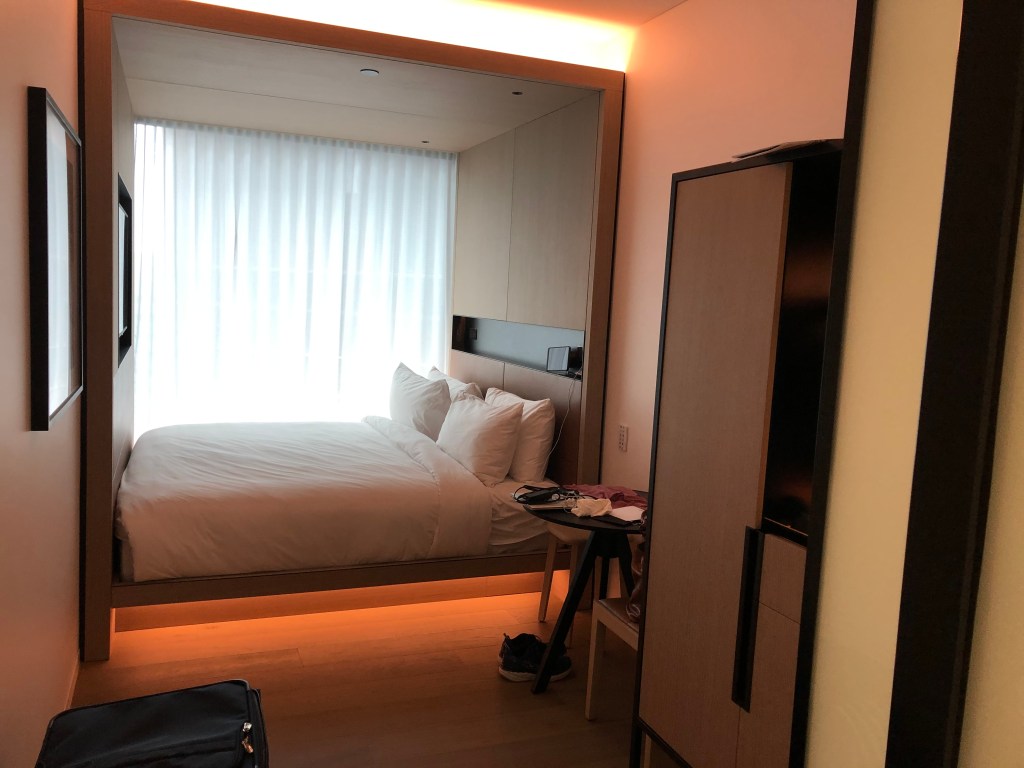
the standard LN room
most rooms are only about six feet (under two meters) wide, with a queen-sized bed up against the far wall, accessible from only one side. not great for two, but ideal for business people looking for an upscale, downtown crash site a short walk from a great restaurant and bar scene designed around an inviting waterfront promenade.
there’s a lot within walking distance in central sydney, and while pernille does what diplomats do, i’ve got a day to explore.
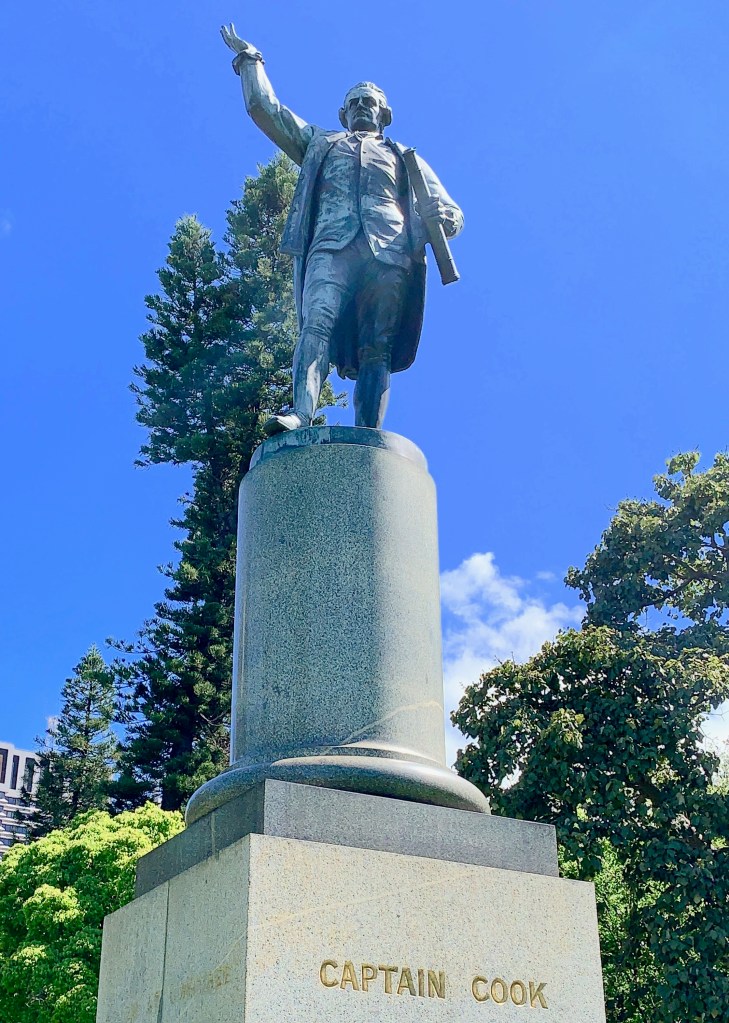
my first destination is the sydney tower, an observation deck that juts out from the downtown skyline. but when i get to the admission window, which is in the middle of an obscenely opulent shopping mall, i learn that the price for a ticket to go out on the observation deck is $82. no thanks. instead i walk another block to hyde park, where an iconic statue of captain cook still stands, 250 years after his historic arrival in sydney harbor, although there have been calls for its removal.
captain cook’s jekyll in hyde park
my intention was to get a picture of the tower, but my eye caught an interesting angle of the two landmarks together. what i didn’t notice til later was that i had inadvertently caught the good captain in a compromising pose.
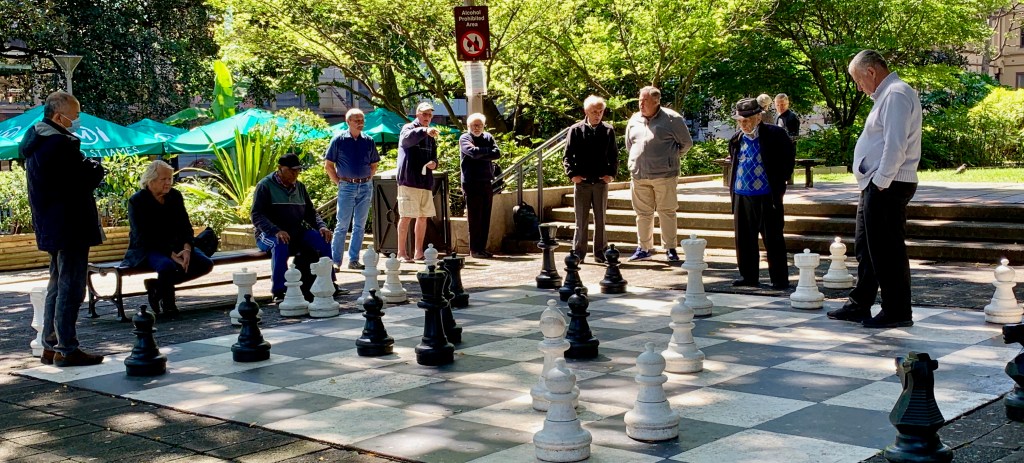
moving on, it was a gorgeous spring day in the park. i stood for half an hour watching a group of eastern european men playing chess.
not a word of english was spoken, the matches were intense, with long periods of silence punctuated by fiercely competitive commentary; and finally, applause.
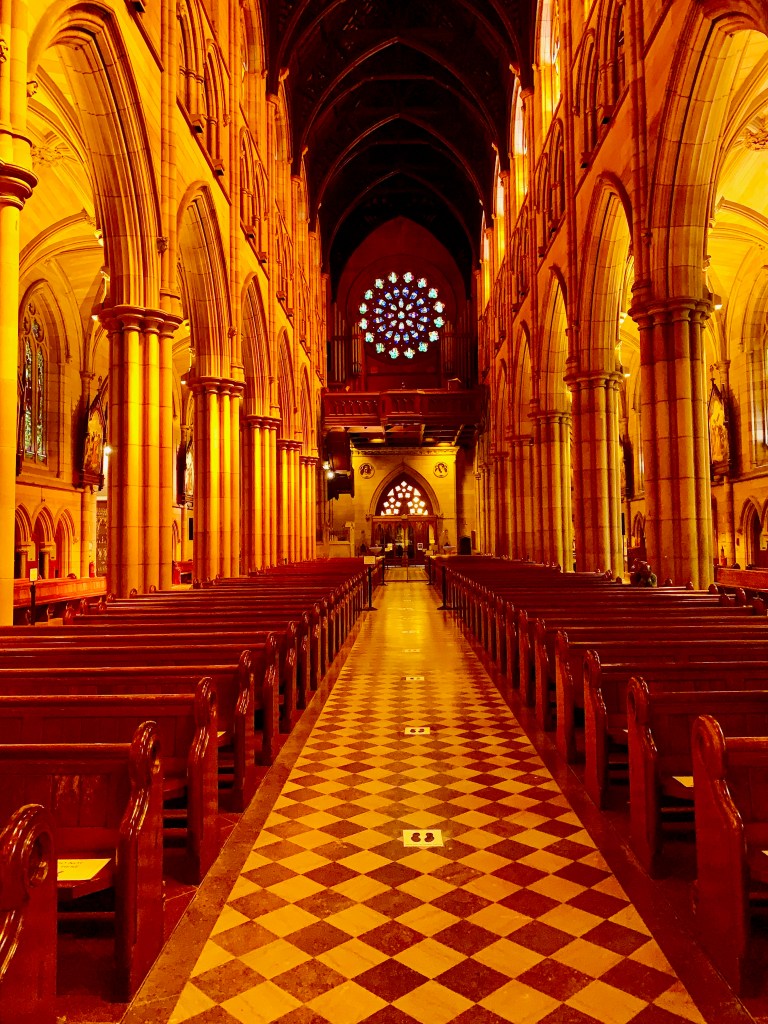
the park holds many attractions, but the art gallery of new south wales is beckoning. along the way, however, i’m drawn into the imposing roman catholic cathedral of st. mary. the afternoon sun streaming through the stained glass windows is heavenly.
st. mary’s cathedral
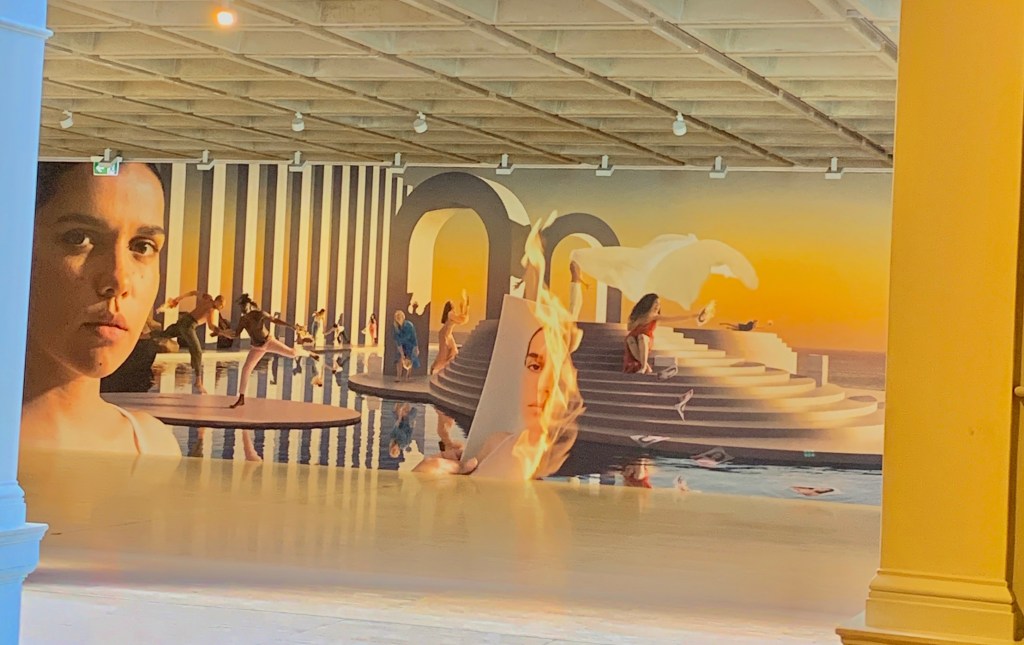
the museum did not disappoint. my favorites included this tribute to non-traditional aussies who made a significant contribution to the growth of the nation.
there’s a great story behind these stunning portraits. here’s the condensed version.
in 2016, artist peter drew inspired volunteers all over australia to paste screenprinted posters of long-dead aussies on public walls in their local communities. the ‘aussie’ posters became a familiar sight on city streets. these photos are of people who sought exemption from a dictation test required by the immigration restriction act of 1901. the test gave immigration officials wide discretion to refuse entry to non-europeans. it was repealed in 1958.
this arresting presentation also caught my fancy.
as the afternoon sun faded, i headed back to the LN to meet pernille to hunt for more adventure. this time i found the place first try.
hunger was setting in, so we decided to head out to the rocks to satisfy our hankering for mexican. we discovered, however, that because of the tourist shortage, most restaurants were shut. we were nearing exhaustion when we stumbled on a pub called the glenmore tucked away on a side street next to what our google map said was “el camino cantina”, which translated into english means “place to get a margarita”.
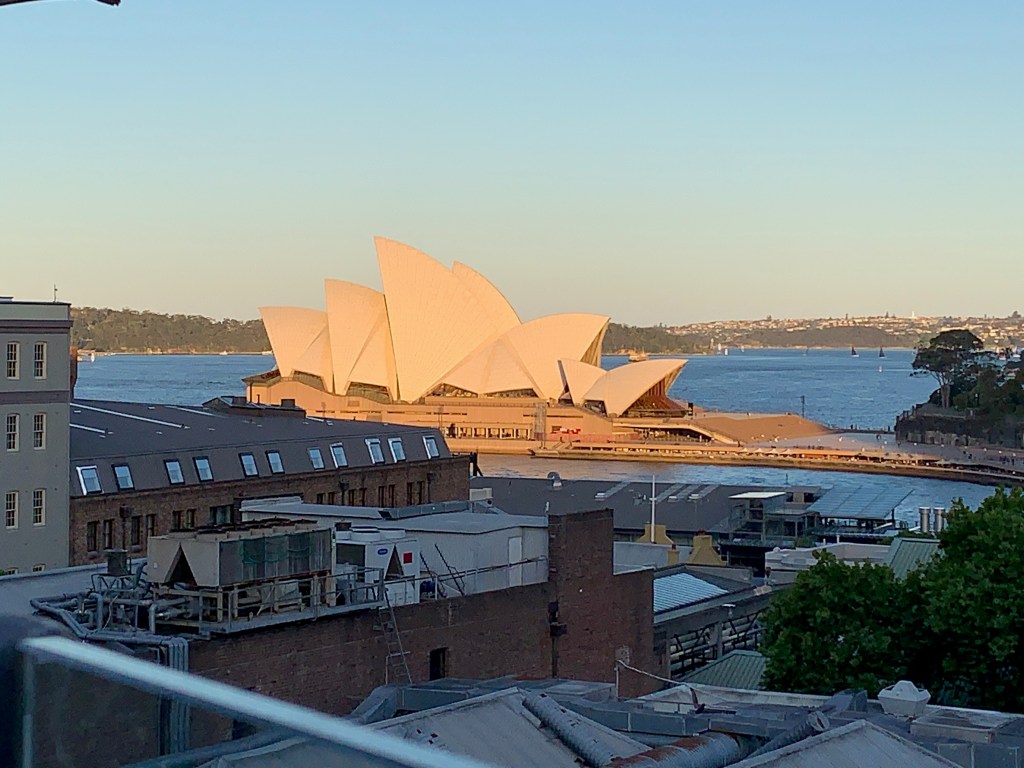
at the glenmore’s front desk, we confess that we don’t have a reservation (harrumph, harrumph) and beg for a table. we are escorted upstairs onto a sunny patio, and seated at a little table in the back. the first thing we notice is that the patio has an excellent view of, what else, the opera house. the second thing we notice is that a pitcher of beer is $29. the third thing we spot is a group of women standing up to leave a table right on the railing facing the harbor.
“of course,” the waiter says when we ask if we could be bumped up to first class. so as the evening shadows roll across the landscape toward the operatic sails in the harbor that captain cook traversed exactly 250 years earlier, we slide into place at the table of honor, order a pitcher of $29 beer and sit back to soak in the psychedelic symphony.
and as we ponder our second pitcher, (it’s like baseball; after a while the pirates need a relief pitcher), the sky erupts to a brilliant ochre, evoking images of the old classic song “red sails in the sunset”.
red sails in the sunset, original by the platters, 1935
after reaching peak brilliance, the ephemeral evening light and the memory of long-ago music dissolve together, as a blanket of darkness envelopes the bay.
with eyes half closed and brain half clouded with suds, i could almost see captain cook’s high masted ship, the endeavour, sailing into sydney harbor. i began to wonder if the designer of the opera house, the danish architect jorn utzon, had been conjuring sails in his mind’s eye as he imagined his grand creation jutting out into the bay.
HMS Endeavour off the coast of New Holland by Samuel Atkins c. 1794
i checked the internet for confirmation of my theory, but it turned out to be a figment of an overactive imagination, or ‘fake news’. utzon apparently was imagining shells, not sails. perhaps we could rewrite history for the opera house’s 50th birthday. isn’t that what journalists do?
i discovered, however, that i wasn’t the first to imagine the red sails theme. in 1984, the sydney rock group midnight oil released a “red sails in the sunset” album, which according to widipedia:
…is significant for becoming their first No. 1 album in Australia – it also entered the United States Billboard 200. The album cover by Japanese artist Tsunehisa Kimura featured a photomontage of Sydney – both city and harbour – cratered and devastated after a hypothetical nuclear attack.
the classic ‘red sails in the sunset’ album cover by japanese artist tsunehisa kimura. opera house included
midnight oil’s music reflected their involvement in the anti-nuclear movement and other political and societal issues. not bad rock and roll, either.
oh, and one last thing. despite the photographic evidence presented above, cap’n cook is not a pervert. a “full frontal” photo shows him to be the picture of propriety. that’s a spyglass in his hand.
storeys and stories galorese belgrade, here we are. our personal effects, furniture, clothing, our entire lives lie in a container, presumably on the high seas somewhere between continents. but we, our suitcases, and our dog billabong, are on the ground in serbia, ready for whatever. the older we get, the more we look forward toContinue reading “the ups and downs of multi-storey belgrade”
editor’s note: this blog post, our last from australia, is being published after our departure from down under. we sincerely apologize for the delay, which was due to unavoidable schedule conflicts and miscommunication between me and my long suffering and patient editor, kevin lynch. and thank you, kind readers, for enduring all the technical hasslesContinue reading “wa-a, wa-a, the end, good-bye”
the spirit of the king of aussie country lives and breathes in the annual tamworth country music festival. two weeks a year, at the height of summer, outback australia lives a fairy tale called tamworth. the ghost of slim dusty rises from his grave singing songs every aussie country music fan knows by heart. parentsContinue reading “tim tam(worth), slim (dusty) slam (worth it!)”
a few hardy australians turn out to support an imprisoned native son the demonstration was right out of the 70s. in fact, most of the tiny crowd appeared to be in their 70s, relics of an earlier age when long-haired protestors railed against a long-ago war. and if attendance was a bit on the shortContinue reading “free assange- an old time ’70s protest”
a golden tribute to australia’s iconic architectural wonder “it is the symbol of modern australia. it’s the most recognized thing… internationally, apart from the kangaroo and the koala, and the most loved.” those words, spoken by louise herron, CEO of the sydney opera house, perhaps said it best. speaking to australia’s ABC radio, herron calledContinue reading “quintessentially aussie — kangaroos, koalas and the opera house”
i had just completed a gruelling run over a rocky, ragged bush trail in the ferocious australian sun at mulligans flat, a vast nature preserve on the northern outskirts of canberra. i was spent. gasping for breath (i gasp easily) and drenched in sweat, i found a shady spot to recover, when i was approached by a young woman.
“are you here for the aboriginal tour?” she asked politely. My first thought was, do i look like a tourist? but instead i asked what the tour was about. and as quick as that, i was off on a journey into the deep history of australia’s (presumably) first peoples, the continent’s traditional custodians.
mulligans flat has become one of our go-to destinations as we settle in to the ACT (the australian capital territory, which encompasses canberra). it’s ideal for pernille’s bird-watching exploits because of its woodlands and wetlands, which count among its inhabitants all manner of avian species, from the rare australian spotted crake to the more common eurasian coots and cuckoos. (mostly old coots and cuckoos, it seems)
the flat, which is not flat at all, also offers a challenging jog along craggy paths that by one reckoning date back to the early 19th century, when the irish ex-convict edward mulligan received a land grant in the area after serving his sentence. or maybe it was another mulligan, cornelius. it’s disputed. research, as they say, is “ongoing”.*
what’s not in dispute is that the true pioneers of mulligans flat were probably the ngunnawal (pron: NUN-a-wall) people, who inhabited the land thousands of years before mulligan or any other europeans set foot on the australian continent. the ngunnawal were hunter-gatherers who settled in this area around the end of the last great ice age, perhaps 12,000 years ago. other tribes are believed to have roamed the continent as long as 65,000 years ago.
now, full disclosure. i didn’t know any of this until about 15 minutes ago. i was just out for a sunday morning run and, and… well, things happen.
the tour i have been enticed to join has been organized in conjunction with the annual celebration of NAIDOC week, which was postponed this year from its usual time in july to give us time to arrive in australia for the observance. (ok, it was because of COVID, but sometimes things just….happen). call it serendipity.
2020 national NAIDOC poster contest winner, Shape of Land, designed by Tyrown Waigana
NAIDOC originally stood for ‘national aborigines and islanders day observance committee’, which was once responsible for organizing national activities to recognize the culture and traditions of the continent’s first residents. over time, the acronym stuck, becoming a recognized word in the aussie language, even though the term “aborigine” is now almost a pejorative, and the “day” has evolved into an eight-day week (sunday to sunday).
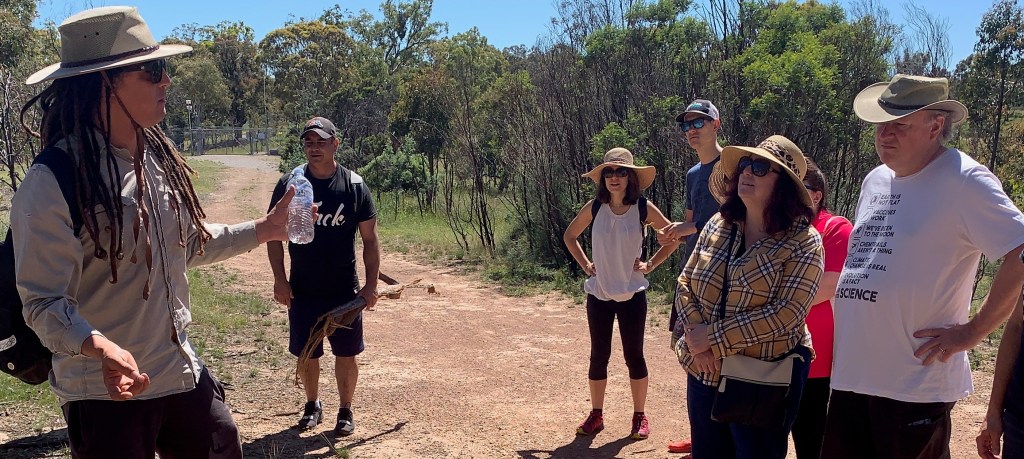
and so it came to pass that the first three representatives of australia’s indigenous community we encounter turn out to be some of the region’s most knowledgeable purveyors of inter-cultural harmony, dedicated to preserving the much maligned and almost forgotten traditions and history of their ancestors while healing the wounds still festering after centuries of ignorance and insensitivity.
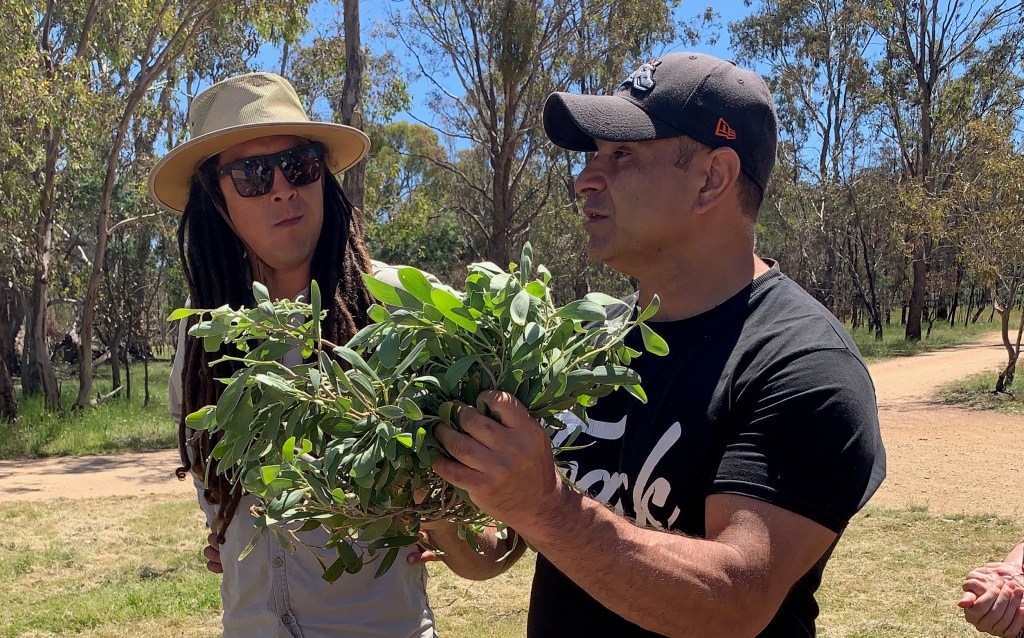
from L: richie allen, richie allen III and aaron chatfield
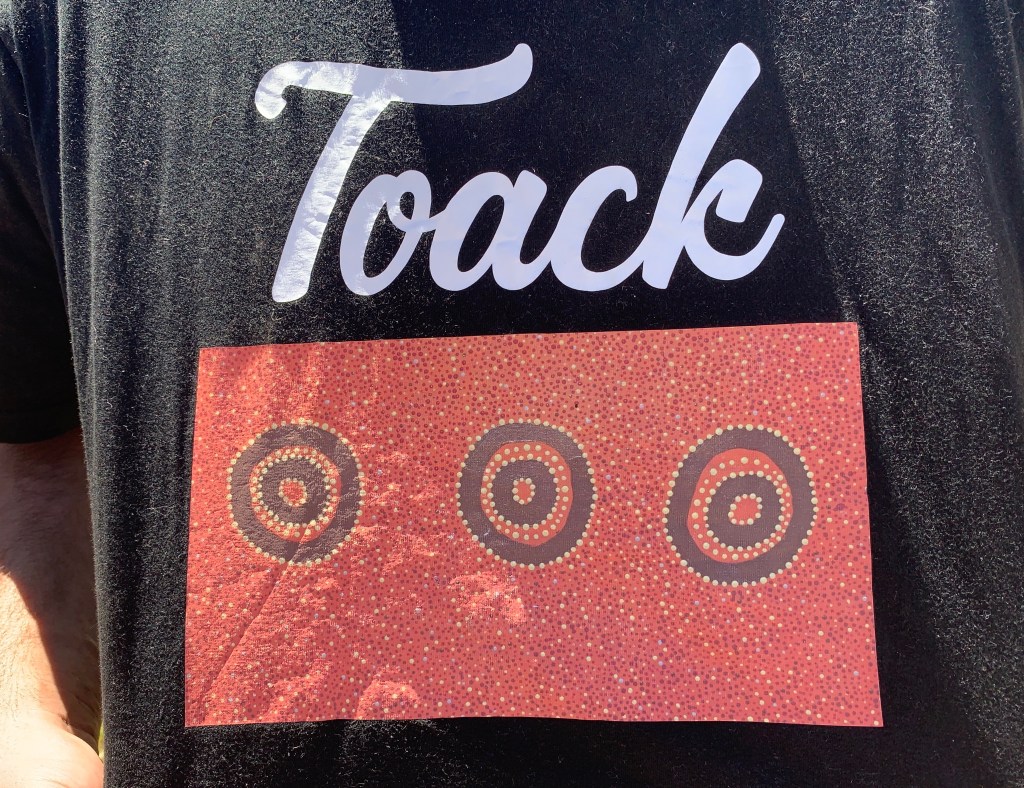
richie allan, our chief guide, showed up to our meeting with a fistful of eucalyptus bark. he is a legend in the field of cultural preservation and understanding, and is grooming his son, richie the third, to walk in his footsteps. they have a company called TOAC, or “traditional owners aboriginal corporation“, which has as its goal “to inspire and enable all australians to contribute to the reconciliation of the nation.” they’ve added a “k” to make it TOACK. the “k” stands for kinship, a reference to the holistic approach first peoples have historically taken in their relationship with mother earth, viewing land, water and culture as one, rather than as separate entities.
“our god is the earth,” explains the third member of the guide team, aaron chatfield. “we have to look out for it, so it will look out for us.”
chatfield, who wears his hair in dredlocks, (though it’s not an ancient tribal custom,) runs “dreamtime connections“, which works with local schools and community groups to preserve and promote the understanding of indigenous cuisine and agriculture. he’s renowned for his “bush tucker” gardens, where he teaches young australians about how the first peoples used the plants and trees around them to provide a tasty, healthy diet, and so much more. he seems particularly fond of wottle-seeds.
before eating, however, it’s washing up time, and aaron and richie give us a demonstration of aboriginal hygiene. from a nearby blackwood wottle tree, (acacia melanoxylon) they pull down a handful of leaves, aaron tears off a few and begins rubbing them between his palms.
richie pours water on as aaron rubs his hands together, creating soapy-suds that make an excellent hand sanitizer.
richie then demonstrates the many uses of the versatile eucalyptus bark. among many others, it’s a tasty tea, a healing medicine; it can be woven into a rope or torn into shreds to use as tinder for fires.
richie then points to some otherwise unremarkable trees and shows us what they can see but we can’t. the trunks and branches have been expertly trimmed and shaped in specific ways to provide directions for ancient nomadic travelers, literally an old school GPS system.
and the seeds from the wottle bush? aaron has made wottle-seed cookies for a snack, washed down with a eucalyptus tea.
everything these first people needed, mother earth provided. spears for hunting and fishing came from trees, as did the aerodynamically genius, not to mention lethal, boomerangs cut from the joints between trunk and branch.
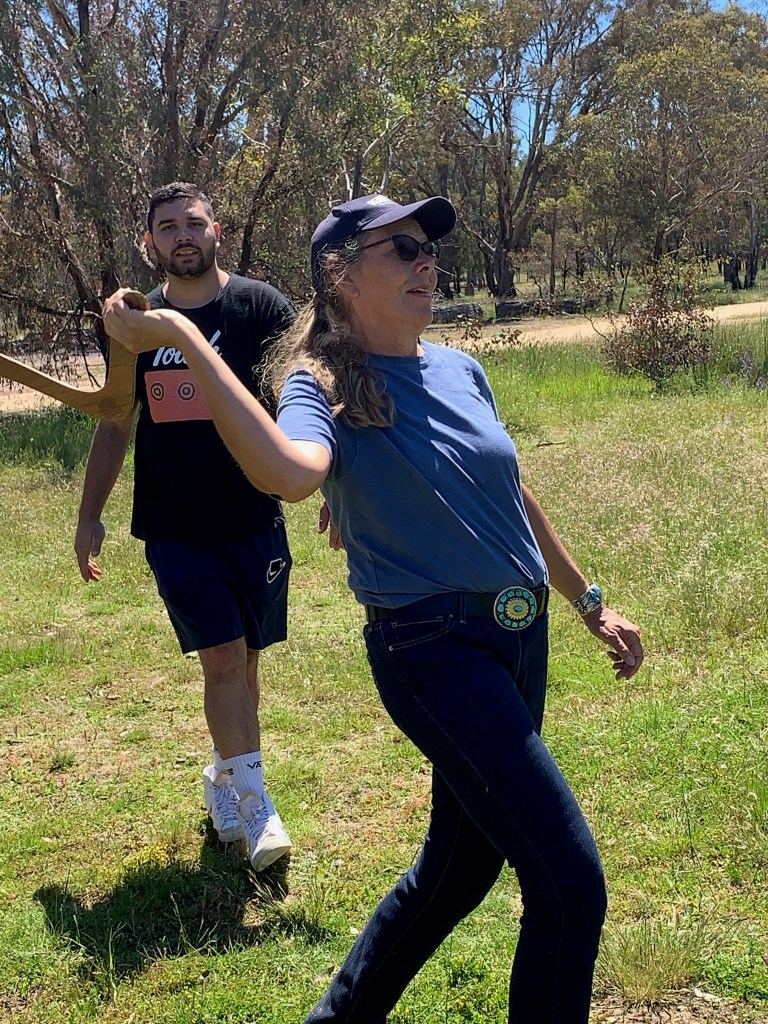
richie the younger has brought along a boomerang to give us a lesson in the deadly art.
pernille gets a boomerang lesson from richie. beware predators!
boomerangs hold a special place in aboriginal lore, known as The Dreaming, or Dreamtime.
according to the dreaming legend, a sacred ancestral being in the form of a rainbow serpent sent bats to earth for people to eat during a drought. but the bats flew high in the sky and the humans couldn’t catch them. so the snake removed one of his curved ribs and gave it to the people so they could knock the bats out of the sky for food.
richie the younger gave us all a chance to practice our boomerang fling. pernille got the knack right away. fortunately nobody died.
pernille strikes at her first victim.
our introduction to the dreamtime boomerang story was an epiphany moment, peeling back another layer in the remarkable history of australia’s first peoples, who lived for eons taking from mother nature as they needed and giving back as they could, ingeniously maintaining the delicate balance that existed until captain james cook appeared along the east coast of the country in april, 1770, ironically exactly 250 years ago, to claim the land for england.
it was eighteen years later that the europeans returned to sydney harbor to establish the first colony of convicts and ruffians that became white australia. in their defense, the 232 years since they arrived has seen the country rise to become a great and prosperous nation that is striving mightily to atone for the great sin that stains its history.
but the wounds are still fresh. the scar tissue still tender. it has been little more than 50 years since the passage of a referendum that recognized the existence of indigenous people. “until 1967, we were considered to be just flora and fauna,” aaron chatfield observes ruefully.
and it is 12 years since prime minister kevin rudd offered a public apology in parliament for the “stolen generations”, and lawmakers passed a resolution “that all australian parliaments officially acknowledge the responsibility of their predecessors for the laws, policies and practices of forcible removal.”
from the “endeavour voyage” exhibit at the australian national museum through april, 2021
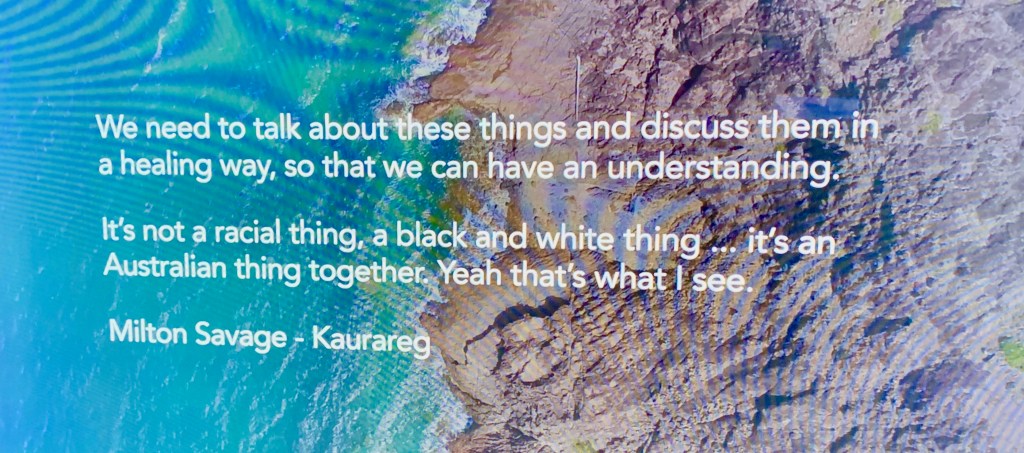
nevertheless, aaron and the allans are out in mulligans flat for NAIDOC week, healing, teaching, preserving for their children and ours, and for generations to come, the beliefs of their ancestors as told in the dreaming…
…that aboriginal people have been in australia since the beginning.
at the end of our tour, the allans invite us to break bread with them. not just any bread, mind you, but fresh home-made traditional bread of the ngunnawal people.
and what to dip it in? wottle-seed sauce. such a treat!
so what do we tourists owe? the tour is free, part of NAIDOC week observances.
but we owe it to the country’s traditional owners to honor the memory of the lost generations, and to foster the spirit of inter-cultural respect that will, in the fullness of time, heal the gory gash inflicted on the soul of a great and beautiful country of many peoples.
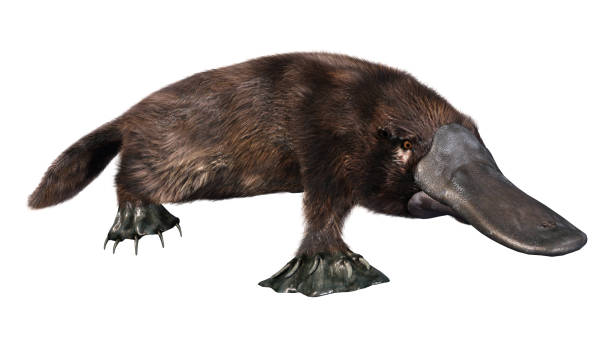
oh, and about that mystery of mulligans flat. solved. richie allan explains that mulligan is the ngunnawal word for platypus, the sweet creatures that are a common sight on nearby lakes and waterways. so much for the controversy of edward vs. cornelius.
all in all, not a bad way to start off a sunday morning.







































 not that heinlein