being married to a twitcher (hardcore birdwatcher) is like, um, well, hmmm, um… well… in a bird paradise like australia, it’s a first-class ticket off the beaten path to some of the most exotic places on the planet.
since arriving in oz, we’ve tried to combine business trips with side excursions to “megaspots” where bird life is varied and plentiful, or where rare species hang out. this month pernille had business in brisbane and sydney, the capitals of queensland and new south wales, respectively. instead of flying, we drove, with a few detours along the way. round trip, nearly 3,000 km.
the first day’s drive traversed 800 km (500 miles) to coffs harbour, a seaside community along new south wales’ north coast known for surfing and bananas (one banana so big you can walk through it).
the big banana is a family fun water park built in a banana plantation
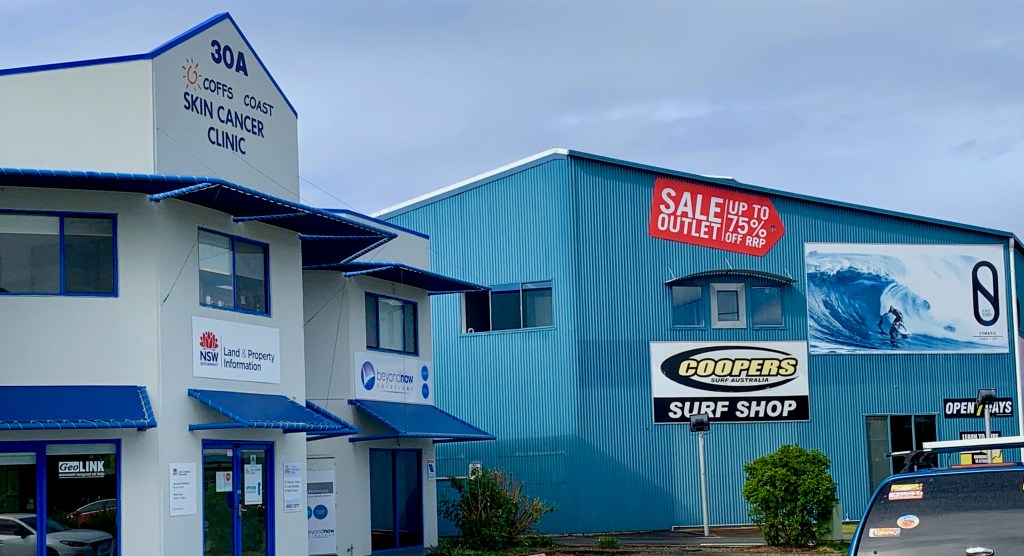
accommodation for the night was a funky motel just off the beach, near a surf shop bumping noses with a skin cancer clinic. a coincidence?
skin cancer clinic/surf shop collide
surfer dive
after a morning hanging out with beach bums and seagulls at coffs harbour (elev. 3 meters), we set the GPS straight east and upward to o’reilly’s rainforest retreat, nearly a thousand meters higher.
o’reilly’s is the centerpiece of lamington national park, a world heritage area straddling the new south wales-queensland border.
the villas at o’reilly’s retreat
we arrived a few minutes late for a killer sunset
lamington is for the birds, sure, but it’s more. it is vistas limited only by the curvature of the earth, hikes down mountain tracks to tropical rain forest waterfalls, and live trees so big you could hold a family reunion inside their hollow trunks.
the wishing tree
bored stiff
seven distant mountain ranges are visible
the nearby volcano is called “mt. warning”
o’reilly’s is ranked among australia’s top 10 romantic hotels, though the last 12 miles (20km) of road is a white-knuckle affair with more than a few “lover’s leap” opportunities (ideal for newlyweds experiencing “buyer’s remorse”.)
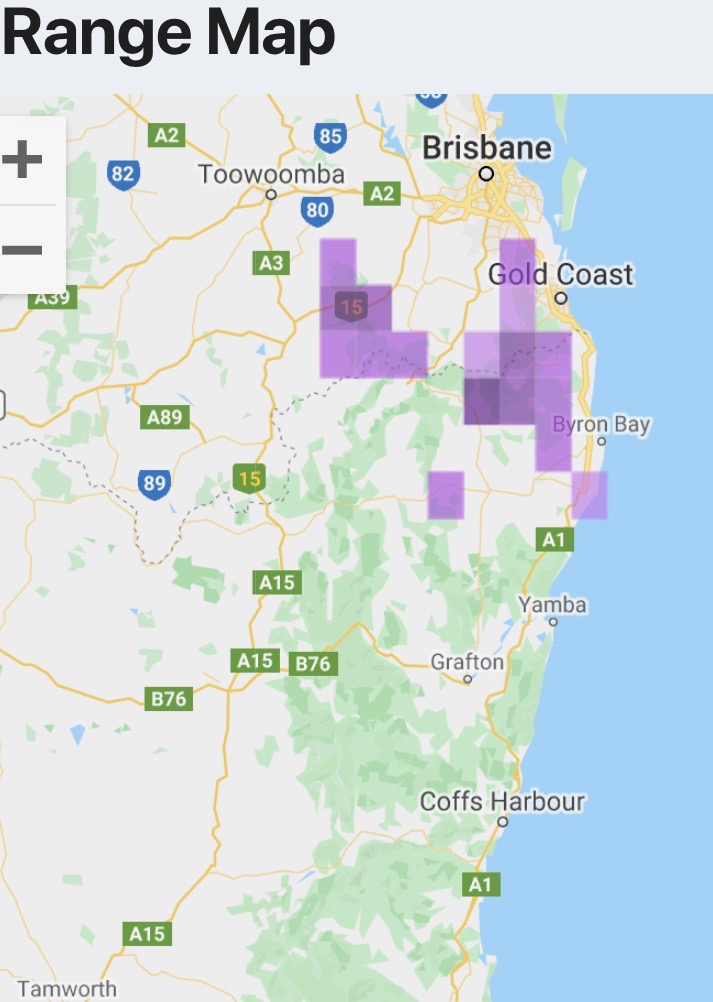
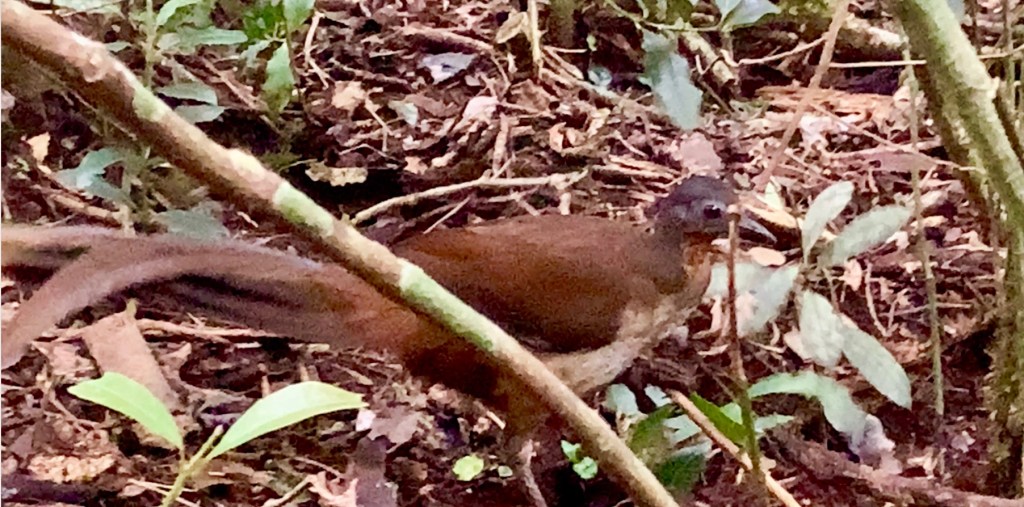
for birders, it’s home to several rare species, including a twitcher’s dream, the albert’s lyrebird. this long tailed bird only exists in a small area of eastern australia, marked in purple on the map.
albert’s lyre bird
we spent the better part of half an hour ogling a pair of these rare birds foraging in the forest undergrowth, unperturbed by our presence.
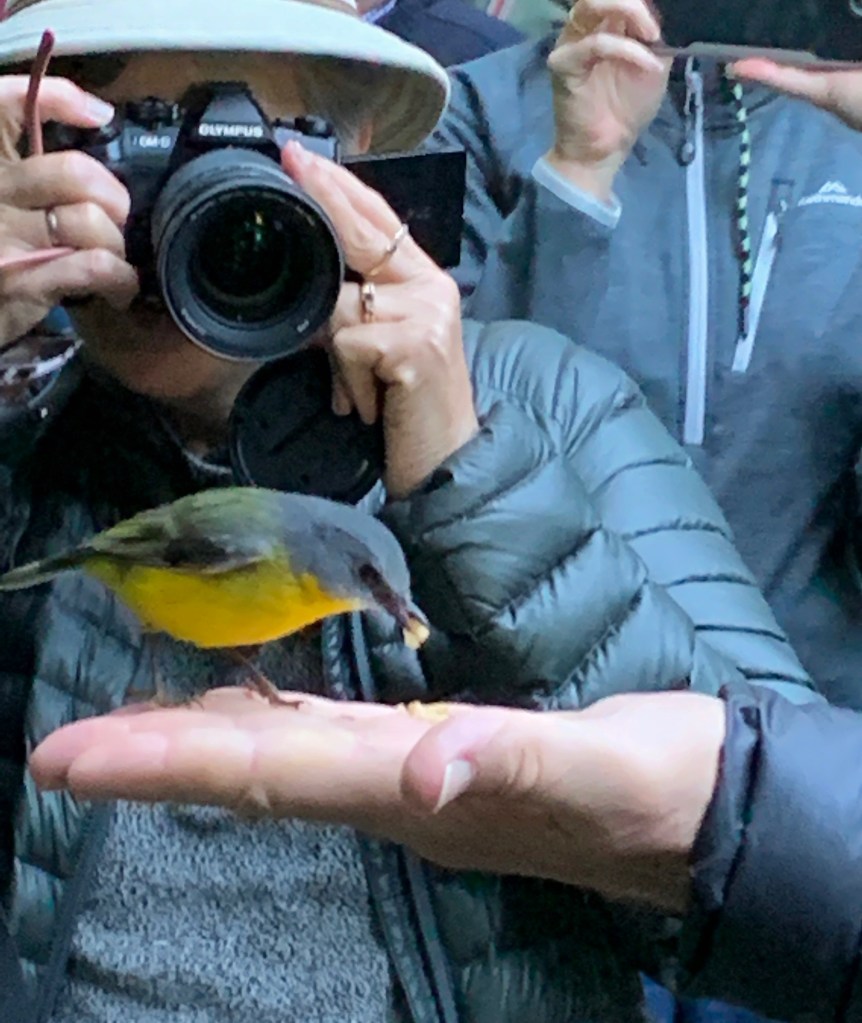
lamington is a bit of twitcher sensory overload, though. first thing each morning a crowd gathers at o’reilly’s for a bird-feeding walk. every participant is given a handful of crushed nuts. holding out your hand is considered an invitation for the feathery natives to zoom in for a nibble.
yes, a bird in the hand beats two in the bush, but they’re in and out so fast it’s hard to get a good photo. it’s even harder when you’re holding one hand out and taking pictures with the other.
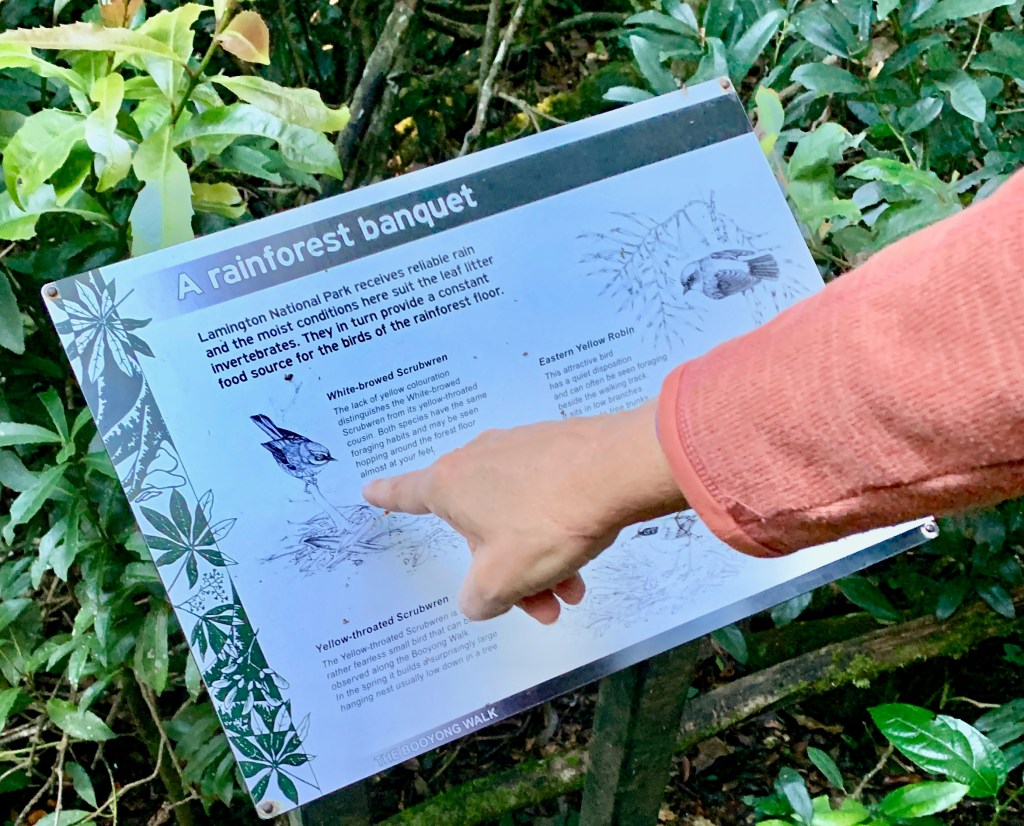
white-browed scrub wren
crimson rosella
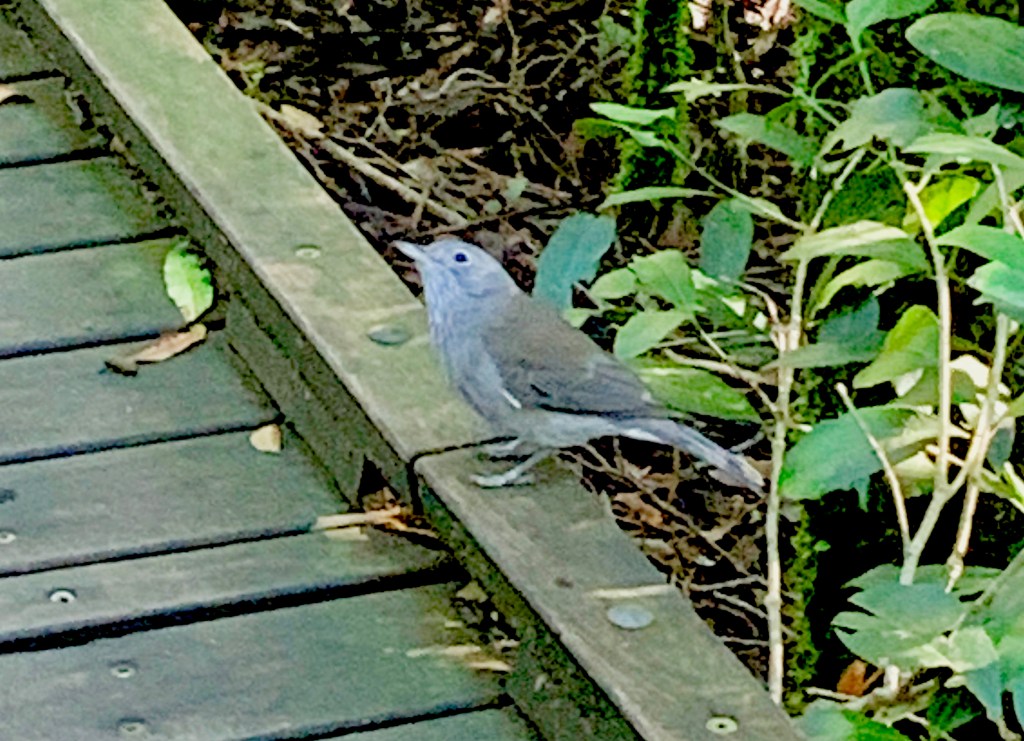
gray shrike-thrush
eastern yellow robin
pernille’s pointer
eastern whipbird
inviting birds to eat out your hand is said to be a no-no in the u.s it’s ok in oz.
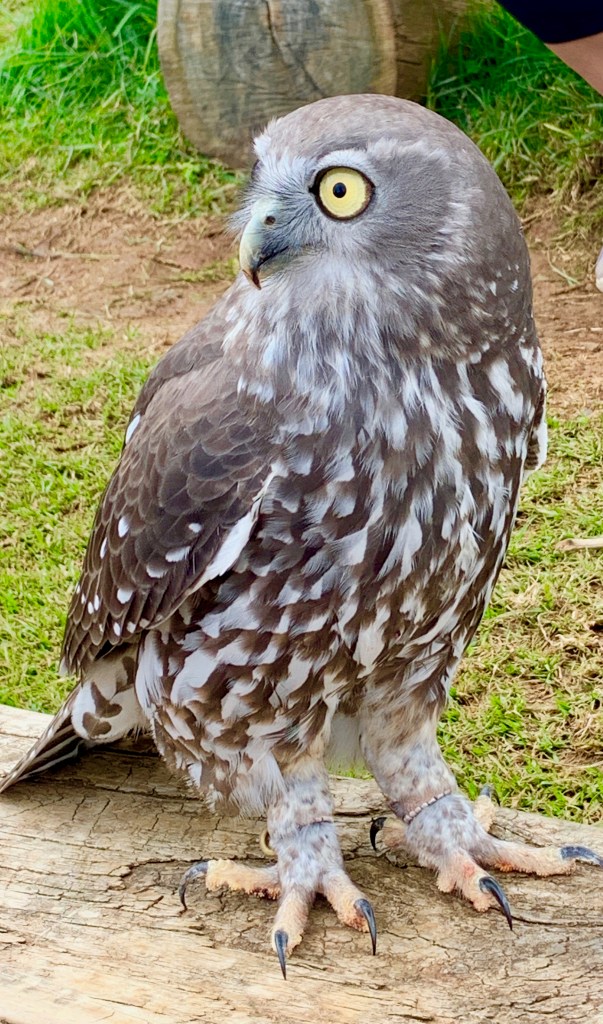
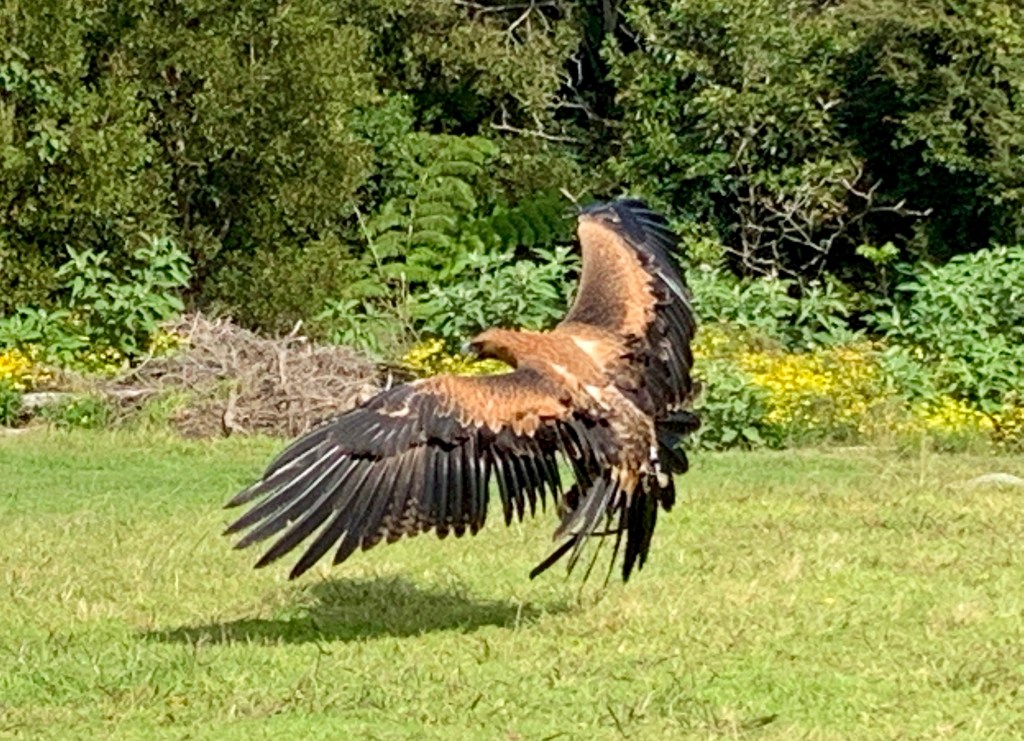
pernille refuses to count captive birds among the nearly 200 species she’s seen since our arrival in australia, but we couldn’t resist the lure of the daily “birds of prey” show at o’reilly’s. many of these are “rescue birds”. the owls are adorable.
barking owl
wedgetail eagle
barn owl
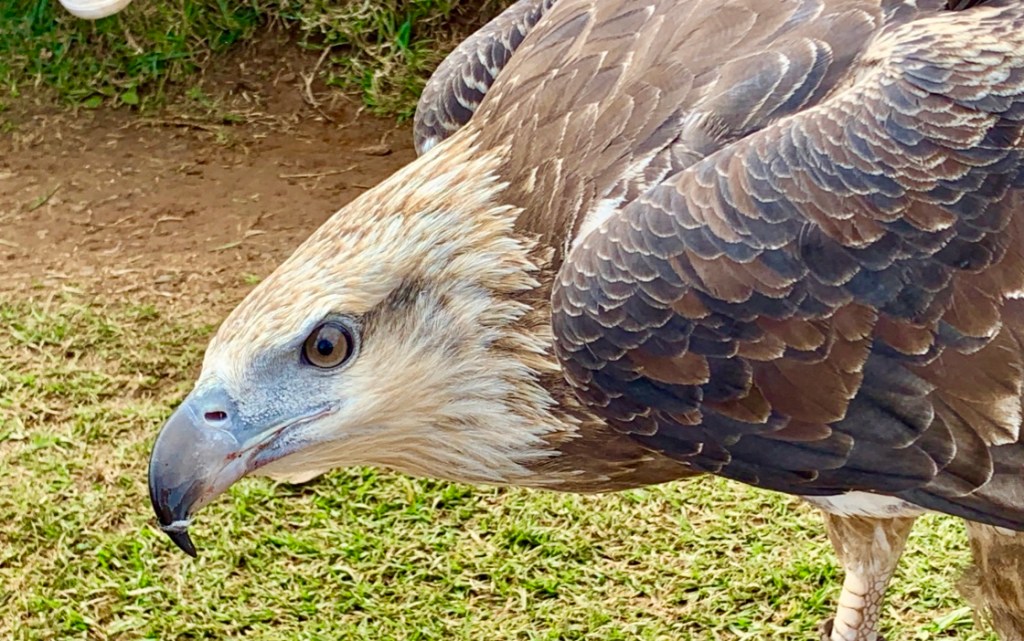
juvenile white-bellied sea eagle
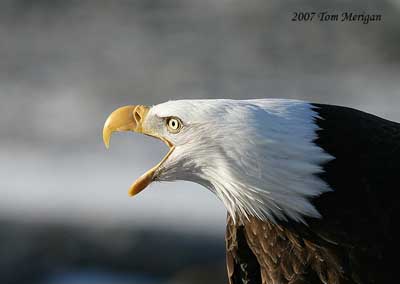
american bald eagle
the young sea eagle above is of the same genus as the american bald eagle. they look similar now, but this “ugly duckling” will mature into a swan.
from o’reilly’s we went “rolling down the mountain” going not so fast, toward brisbane, for a one night stand in australia’s third largest city. business, you know. that was followed by another day’s drive toward sydney, with an intermediate stop on the outskirts of newcastle (#7 in population, a coal town just like its UK namesake)* for a quick peek at the hunter wetlands.
“wetlands” it turns out, is just a fancy term for swamp, and a chunk of the hunter wetland conservation area was once the newcastle city dump.
later it was converted to a football field, but the surface kept flooding. eventually it was returned to what it originally was, a swamp. a bird conspiracy, perhaps?
“cacatua galerita”, painting by sharon o’hearn
the hunter wetlands visitor center hosts regular ornithological art exhibits, this one featuring the bane of our canberra existence, the sulfur crested cockatoo. they’re handsome devils, usually pure white with that hand-of-bananas plumage shooting out of their heads. but their screech makes neighbors want to call the police with a public nuisance complaint.
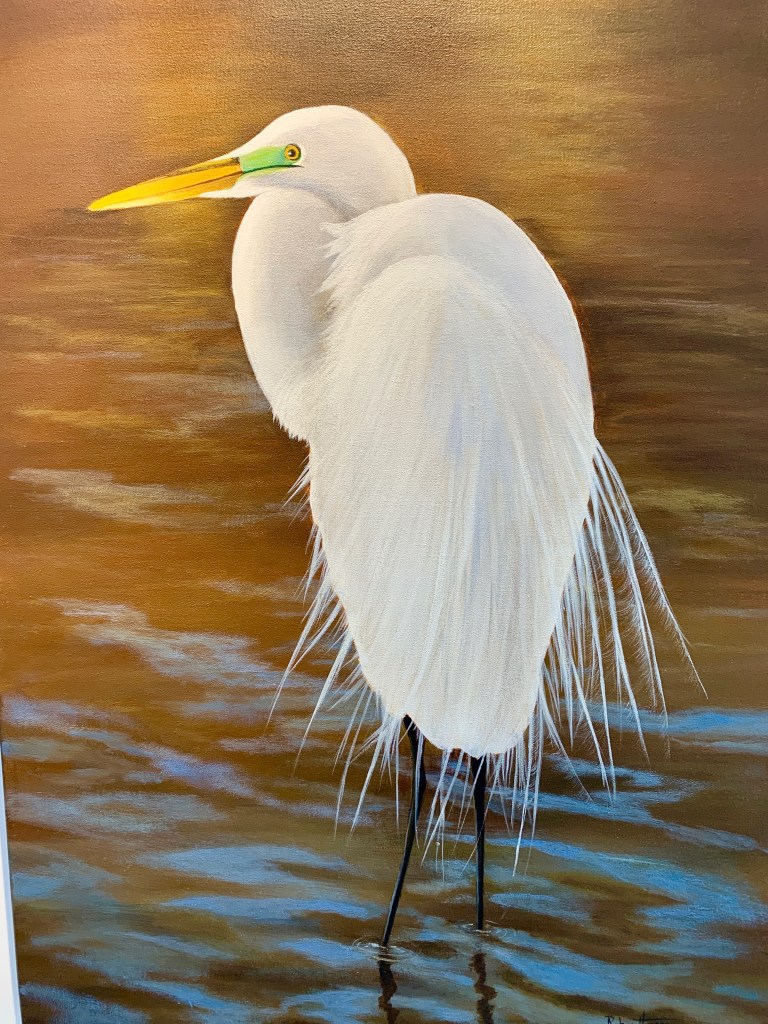
less noisy and maybe more regal is this egret portrait. her mate (right) is roosting on a log just outside the exhibition hall, probably waiting for closing time.
“egret (white lace)” by robin harper
real egret
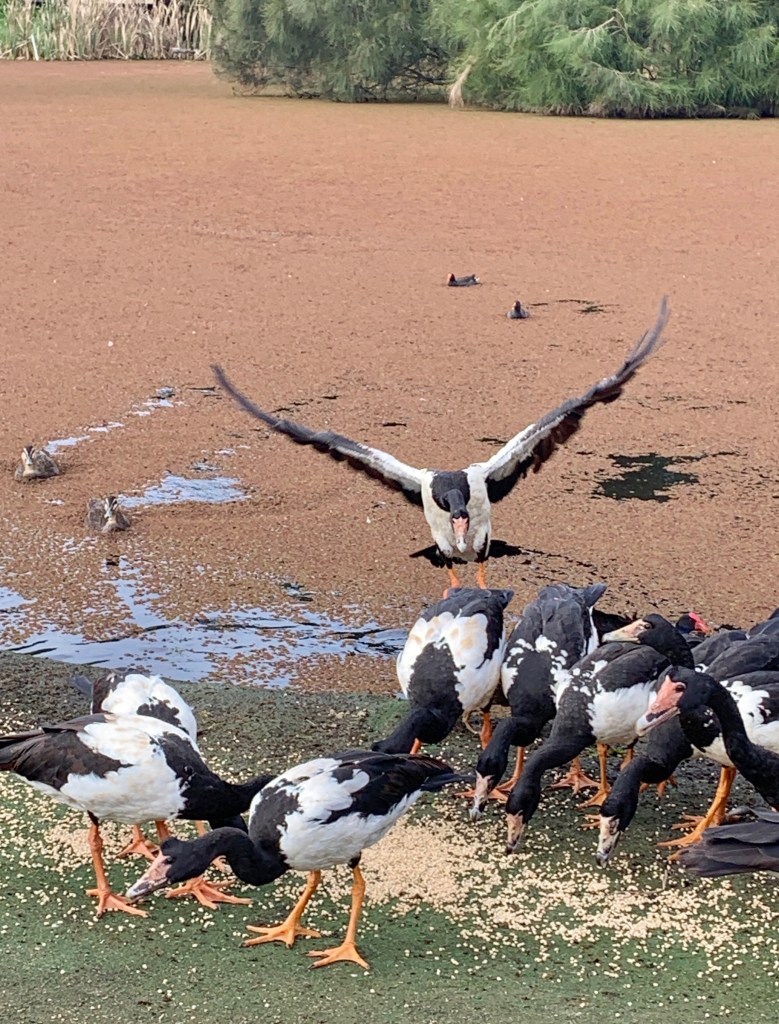
we arrived early enough to witness the invasion of the magpie geese, which takes place at an appointed time every morning, when an attendant dumps a bucket of grain at the edge of the swamp. the attendant says the birds know exactly when to fly in, except twice a year when daylight savings time gives them a headache.
the goofy geese are a daily attraction
another hunter wetlands specialty is a dinosaur. yep, a pre-duck duck that preceded modern day waterfowl in the evolutionary chain. they’re freckled.
these rare freckled fellows sleep all day, so they appear here in their preferred sleeping position, head buried between wings.
before exiting the swamp, we were treated to one more visual feast, mom and dad black swan and their three white ducklings paddling single-file across the algae covered pond.
there’s a lot to learn from our web footed friends. be kind. listen. (click the link).
so what is it like being hitched to a twitcher? to borrow a phrase from owlspeak — it’s a hoot.
*according to wikipedia, the australian port of newcastle is the world’s largest coal exporting harbour.
the strength of a nation rests on the ties that bind; a common language, a common heritage, a common purpose; the experience of fighting, even dying, for shared values.
there’s probably no way for a newcomer to grasp the depth of emotions aroused in the aussie soul by a single name: gallipoli. for more than a century, the shared grief elicited by that military disaster has done more than perhaps anything else to galvanize the nation’s identity.
each april 25th, the day in 1915 when australian and new zealand troops stormed the turkish beach at gallipoli, both nations stop to honor their war dead, on what is known as anzac day.
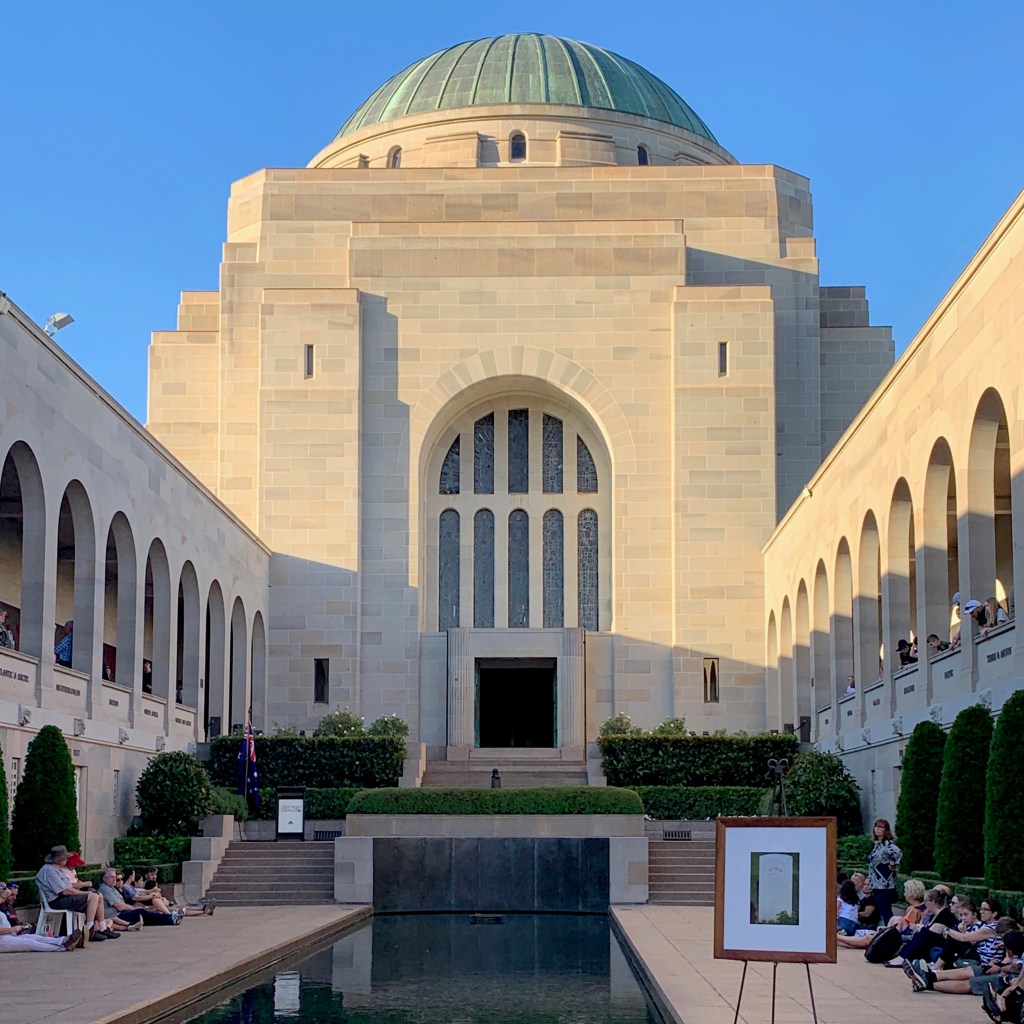
as shadows fall over australia’s national war memorial, crowds gather for the daily “last post” ceremony
the national war memorial is canberra’s #1 tourist attraction.
museum director matt anderson points to the wall where the names of 102,000 australians are engraved. of those, he tells us, 62,000 were lost in four years of world war one, including 8700 in the bloodbath at gallipoli.
memories fade, and the last world war one veterans have long passed. still, anzac day observances are held all over australia each april 25th. that first war left an indelible scar on a young nation’s psyche. almost no one was spared the loss of a loved one. on well-manicured lawns in village squares across the hinterlands of oz, the names of would-have-been husbands and fathers, wives and mothers, are chiseled in stone.
except in the tiny tassie town of legerwood (pop. 193). its boys are memorialized in trees.
legerwood wasn’t even an official town until 1936, but in october, 1918, residents gathered along the main road to plant saplings in memory of each of the seven local boys lost in the fighting.
for the rest of the century the trees stood as a silent reminder of the stolen promise of a generation. by 2001, the trees had become a hazard and had to be lopped. the local folk were having none of it, however. they commissioned chainsaw artist eddie freeman to carve the tree stumps into likenesses of the fallen soldiers.
private alan andrews is shown with his dog, waving goodbye to family and friends.
pernille and i might have missed the modest collection of houses that calls itself legerwood as we drove along tassie’s back roads, except for the roadside sculpture garden that commanded our attention. we stopped for a closer look.
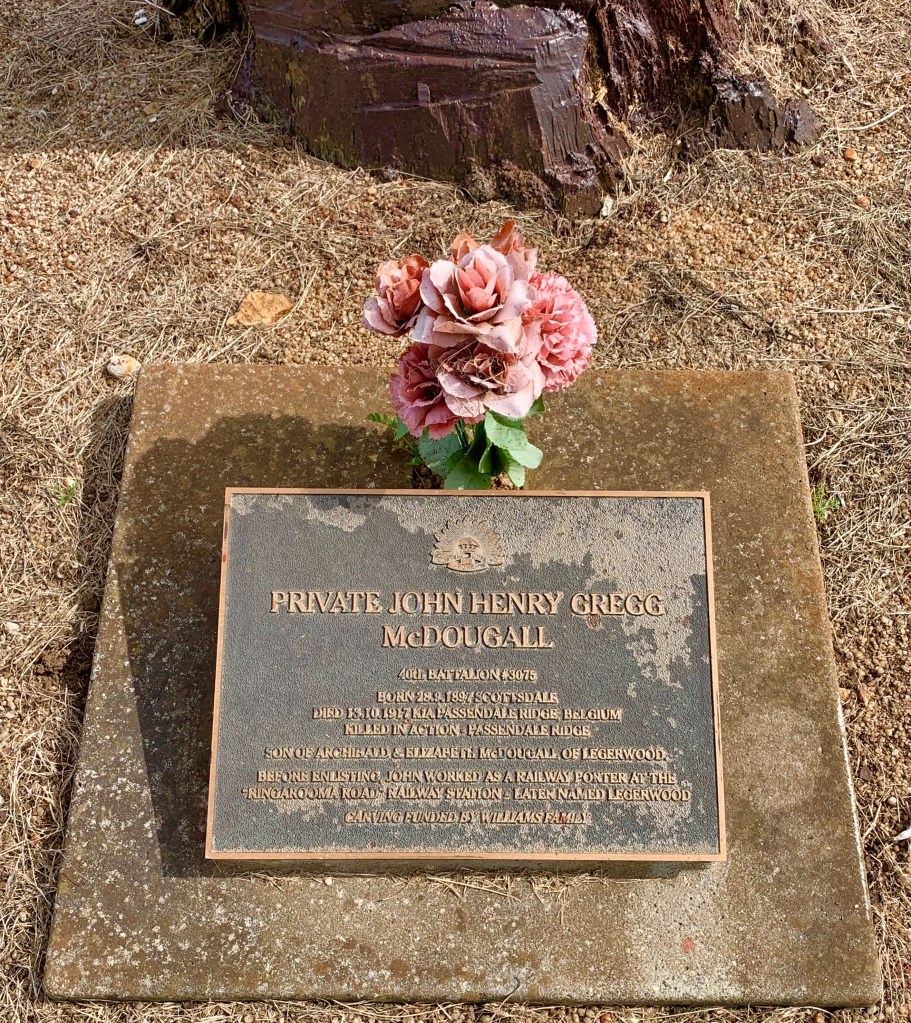
private john henry gregg mcdougall is depicted holding signaling flags. he was a railway station porter before enlisting
what we found was a window into seven war-shortened lives.
corporal john charles ernest riseley is shown in his soldier uniform
thomas edwards was the oldest of the legerwood volunteers. he and his wife of six years, florence, are shown in a goodbye embrace at the center of a carving that depicts the townspeople’s grief.
interestingly, none of the legerwood boys actually died at gallipoli. they all were killed on the western front in belgium and france toward war’s end.
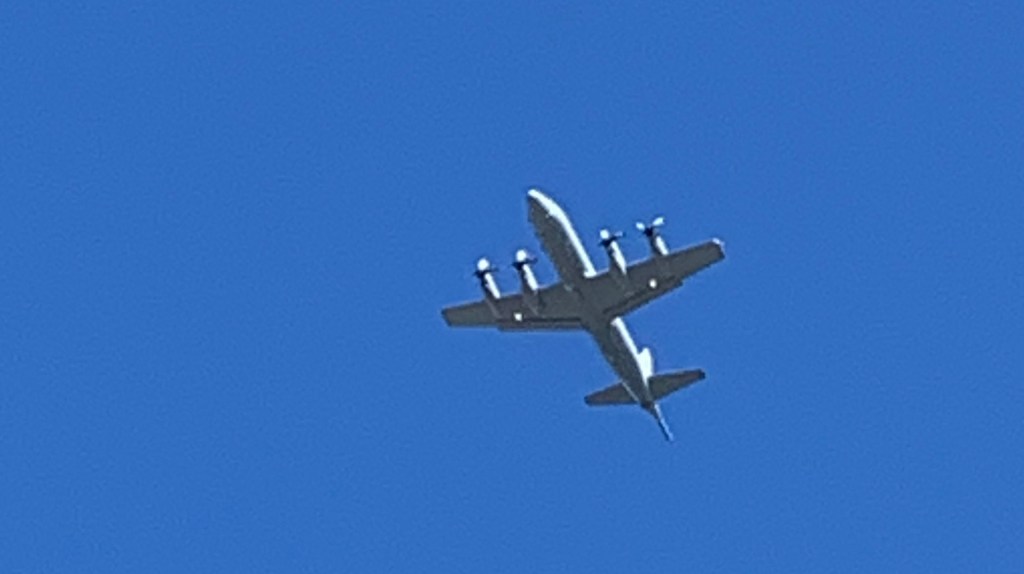
if anzac day and the legerwood memorial weren’t enough, australia’s military legacy was underscored weeks earlier as the royal australian air force celebrated its 100th birthday.
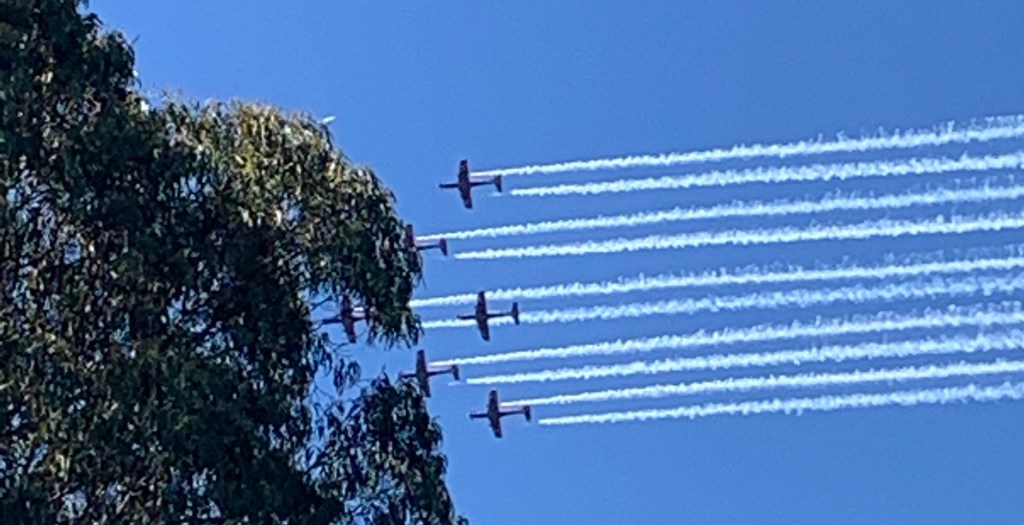
the r.a.a.f marked the milestone with a nationally-televised aerial spectacular in the skies over canberra’s lake burley griffin. (which incidentally didn’t exist then, either). imagine what might have been if the boys storming gallipoli had been able to call in air support.
the roulettes acrobatic team put on a show for canberrans and a live nationwide TV audience
canberrans poured out of their homes and offices on a picture perfect day to witness the flyover. they came by bus, car, bike, on foot; children in prams or on dad’s or mom’s back, with cameras and binoculars, stationing themselves on hills and bridges and along the shores of lake burley griffin, (which is named for the american architects, walter burley griffin and his wife marion mahony griffin, who won the competition to design the capital city in 1911.)
the throngs weren’t disappointed.
governor general david hurley hosted a phalanx of dignitaries for a gala event at government house at the west end of the lake to witness the display, while the band played “waltzing matilda”.
government house as seen from across the lake during the ceremonies
a bird perches along the shore of lake burley griffin to watch the flyover
it’s interesting to note that if the air force didn’t exist in 1915, neither did canberra, and this might be the time to introduce our home town.
in 1911, australia’s parliament formally set aside land for a national capital territory, but nothing much was there. it was just a mountain outpost noted for crisp alpine air and cold clear nights, a sharp contrast to the balmy coastal climate of the country’s major population centers. it wasn’t till the 1920s, after the falling out that prompted walter and marion griffin to return home to chicago, that their vision for a grand city began to materialize. canberra officially became the capital in 1927.
newcomers arriving in the city today see a fully formed metropolis, unaware that the lake, which forms the heart of the capital and seems as if it was always there, was only inaugurated in 1964. only in this century has the griffin’s vision of a grand capital (based loosely on l’enfant’s design for washington d.c.) has come into full view.
the parliament building, the national museum, the trendy kingston foreshore, and other distinctive features dotting canberra’s lakefront are less than 25 years old.
national museum of australia
parliament house
it is quite a paradox that canberra is a young city in a young nation that was still cutting its teeth when world war one broke out. and yet, canberra and australia are home to a civilization that existed in peace for tens of thousands of years before europeans arrived. there is still a reckoning to be done. lest we forget.
an escapade worthy of the elementary detective and his sidekick, watson.
kiah davey leads a double life. a penitentiary guide by day, a thespian convict by night. when the sun shines, she’ll scare the bejeezus outa ya. when the day is done, she’ll tickle yer funny bone.
sarah island is not a place you’d want to do time. its history is darker than a wintry day in june, when antarctic gales blow fierce across the rugged rocks of macquarie harbor.
hungry sharks are known to come right up on shore in search of a tasty morsel (you!)
when i first saw this, a leg was hanging out the mouth, but by the time i got my camera out, it was gone.
sarah island wasn’t on our itinerary when we plotted our trip to tassie’s west coast. we were seeking wilderness.
maps of tassie reveal a gaping blank spot in the lower left (southwest) quadrant, an area larger than nine european countries and about the size of the u.s. state of connecticut. in some places the nearest (dirt) road is 50km away. we were intrigued, hoping to experience the “wild rivers” and pristine rainforests at the back of tassie’s beyond. (birds, maybe?)
since roads were in short supply, we located a “family-owned” company offering boat trips across the vast macquarie harbor to the “franklin-gordon wild rivers national park”. the company’s ad featured “one of the world’s last truly unique world heritage wilderness experiences”, and a “stroll through an ancient forest”.
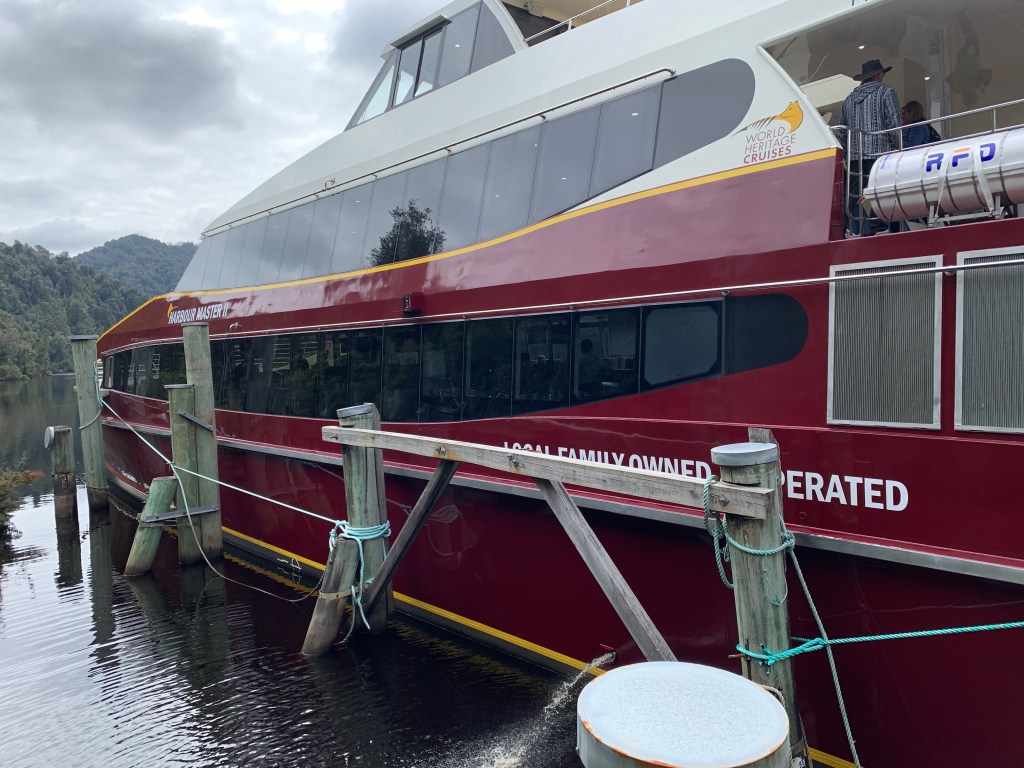
the big red boat
what we got was a five-hour trip on a spiffy red ferry boat up to a landing point where we disembarked for a walk through what could have been a disneyland wilderness theme park or a botanic garden exhibit.
so much for the vision of an aboriginal guide with a canoe gliding silently to a secret landing and clearing a path with his machete through dense underbrush to reveal previously unseen life forms. inflated expectations, ya think?
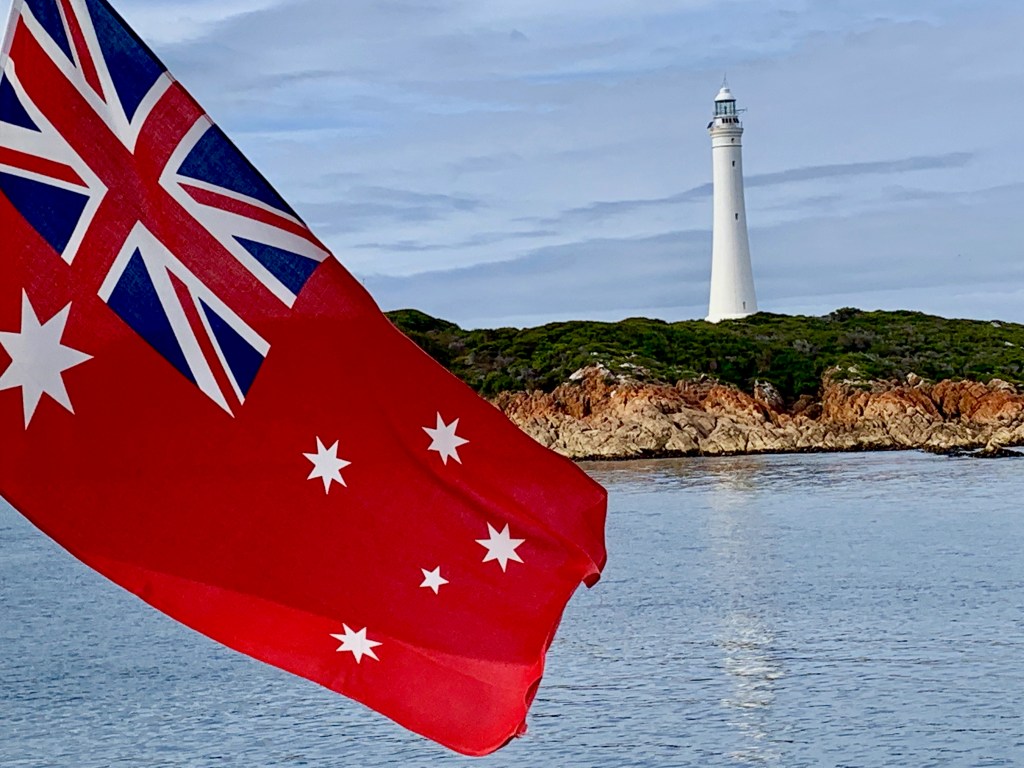
on the plus side, there are some photogenic 19th century lighthouses around hell’s gate, the treacherous entrance to macquarie harbor.
hell’s gate lighthouse warns mariners navigating the narrow passage to macquarie harbor
sorell point lighthouse is the second tallest in oz
the cruise begins at strahan, a munchkin-sized port (pop. 600) catering to the tourist trade astride hell’s gate, on a thin line between fantasy and cold, hard reality. strahan is a pale shadow of the thriving commercial hub that once exported copper and prized huon pine to the world. it’s also the gateway to sarah island, a convict settlement so miserable that….
the reality is, strahan makes a good bit of its living off sarah island’s horrid reputation.
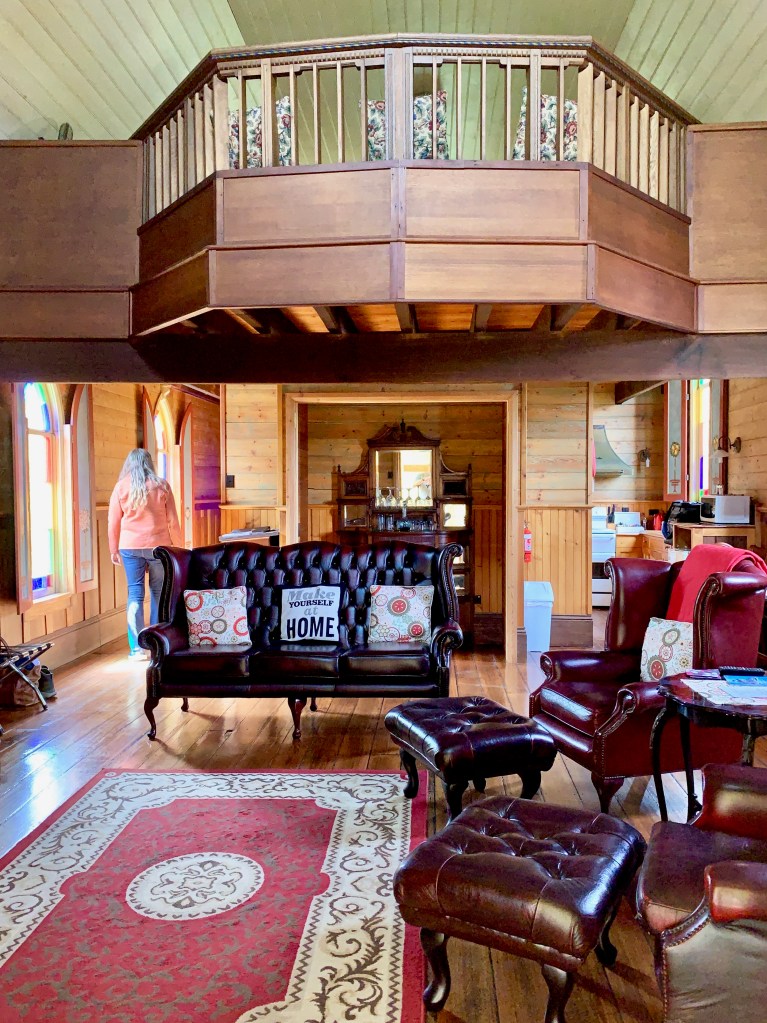
as for fantasy, pernille had booked us into a former church converted to a bed and (no) breakfast. as kids, we used to get in trouble for sleeping in church, now they have a bed above the altar and charge handsomely for the privilege.
after stashing suitcases in the choir loft, we ventured into town, wondering what other sacrifices had been made at that altar.
strahan (pronounced strawn) runs a couple blocks in either direction from the boat dock. the first thing we encountered was fantasy; a billboard for a way, way, wa-a-a-y-y off broadway dramatic production titled “the ship that never was”, advertised as australia’s longest running play. (27 years! in a town of 600 people?)
hmmm, might be worth a look, we thought. there wasn’t much on the evening’s agenda. “church tv” was on the blink. so it was off to the box office to purchase a couple tickets. “sold out”, announced the young woman in the booth. a second show had been added that evening by popular demand, because anti-social distancing rules limit the theater capacity, but….
we struck up a conversation with the box office attendant, whose name was peta. she asked if by chance we had reservations for the next day’s boat trip. we did. she suggested we might want to wait to see the show til after the cruise, because the story would be more meaningful once we’d experienced sarah island. hmmm, dr. watson. a clue.
we reserved two seats for the following night.
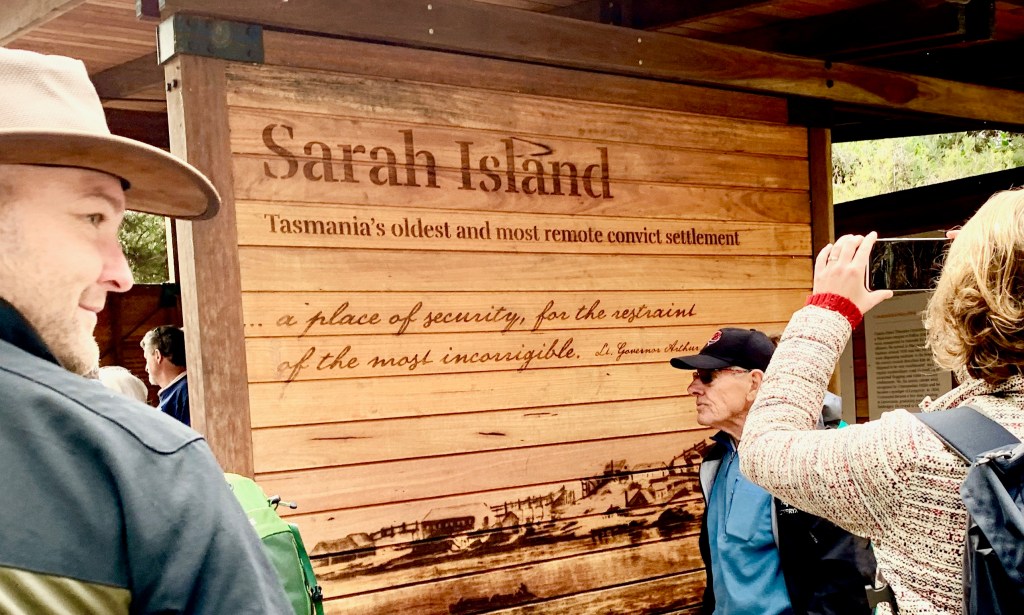
the next morning we boarded the boat, excited about the promise of a “wilderness experience”. the first stop, however, was sarah island, so named by the first englishman to set foot there in honor of his boss’s wife. the aboriginal name for the place is langerrarerouna.
with all due respect to the island’s indigenous peoples, we’re sticking with “sarah island”.
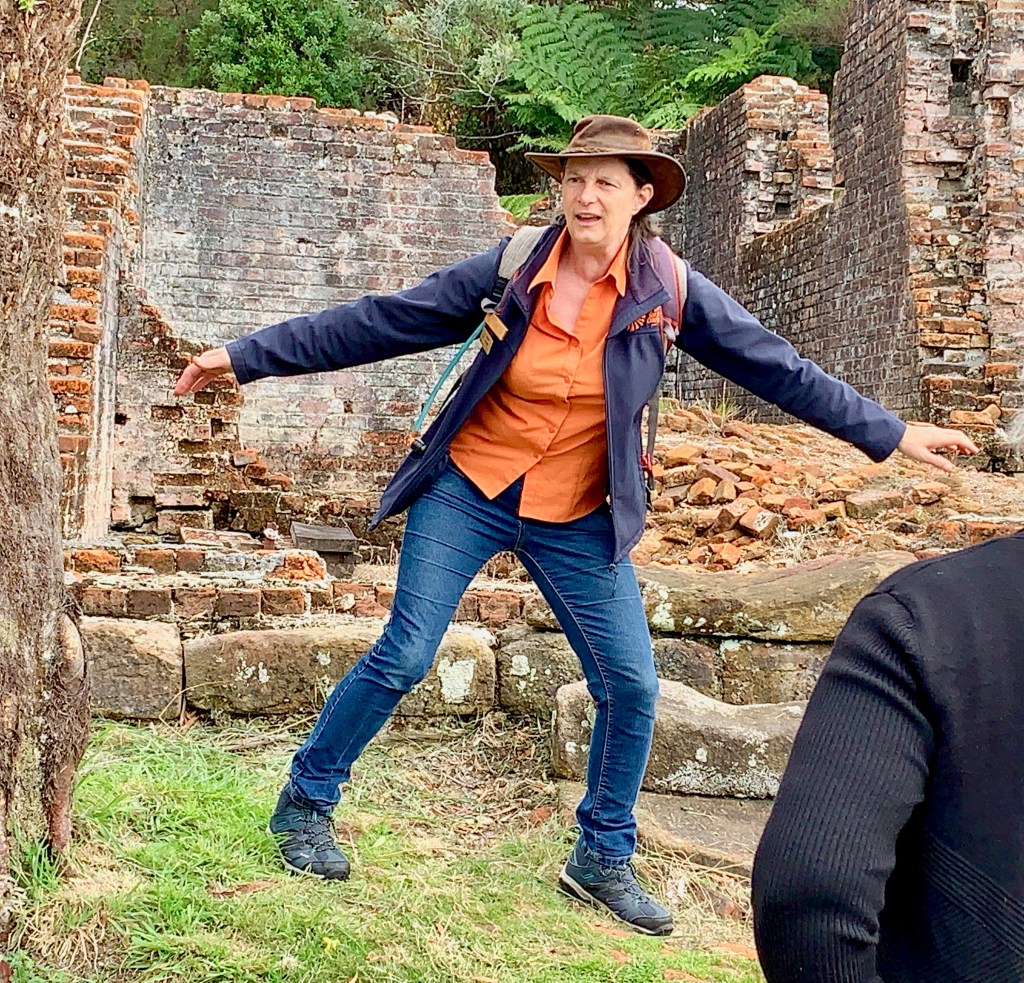
which is where kiah (pronounced kai-ah) davey, the storyteller, takes over.
kiah enthralls audiences with tales of the island’s sordid history
kiah is in several ways an original. she traces her ancestry back to the first convict ships that arrived in australia from england in 1788. her great great uncle tom davey served as lieutenant governor of van dieman’s land, as tassie was known then, from 1812 until he was sacked in 1815.
tom was known as a drunkard who hung with the riff-raff in the slums of hobart. he scandalized the ladies with bawdy behavior in his shirtsleeves on sunday afternoons. he was, as they might say in tassie, a “davious character”. in spite of that, or maybe because of it, tassie now boasts a port davey, a davey river, the davey amphitheater (in strahan) and many davey streets and davey drives and dives of diverse descriptions.
when the big red ship arrived at sarah island, the passengers were divided into groups and assigned guides. so it was the luck of the draw that brought us to kiah, the historian.
kiah tells a harrowing tale of australia’s first “banishment settlement”, a place meant to be so awful it would terrify convicts into behaving. “it didn’t work,” kiah observes dryly. “it never does”.
it isn’t hard to feel the hiss and crack of the cat o’nine tails ripping into human flesh as kiah recalls the year 1825, when a total of 10,000 lashes were meted out to 240 inmates (of roughly 350). the camp commandant and others witnessed the screaming pain to ensure there was no mercy. “It had to be correct,” kiah notes.
very little remains of the settlement. most of the buildings were made of wood. they’ve been lost to the ravages of time, scavengers and looters. only a few meter-thick sections of the penitentiary wall still stand, along with the baking ovens.
the establishment of the sarah island penal colony was based on two premises. first, it was so remote that it would be impossible to escape; second, it would earn enough money to pay for itself. the region’s tall, straight, flexible huon pine trees were highly prized by shipbuilders. but harvesting the logs and getting the timber to shipyards in hobart took a gruesome toll in lives, limbs and lumber. the treacherous one-way journey around the southern horn of tassie and through hell’s gate took eleven days in good weather.
sarah island around 1830, when it was a booming shipbuilding center with a population of nearly 600, including some families of staff and inmates.
it soon became obvious that it would be smarter to build the ships at sarah island. in 1827, when the shipyard opened, what had been a forlorn convict station became a boom town as skilled shipwrights were lured by lucrative offers of cash to man the yard.
from 1827 till it was shut down, sarah island was australia’s #1 producer of sailing brigs, turning out more than 100 seaworthy vessels.
the macquarie harbor penal station was finally scragged (put out of its misery) in 1833, not so much because it was a horrible place as that keeping it supplied was too difficult; even with convict slave labor, it was a money-loser. the prisoners were transferred to the newly opened convict colony at port arthur, just half a day’s journey from hobart, as opposed to eleven days of vomiting over the railing into storm-tossed seas on the sarah island express.
in the penal colony’s twelve year existence, (1822-33) at least 180 escape attempts were made from sarah island. most failed. one notable exception was the last one.
and therein lies a rollicking merry (and mostly true) tale of mischief and mayhem; a convict’s eye view of hardship and heroism, where underdogs rule.
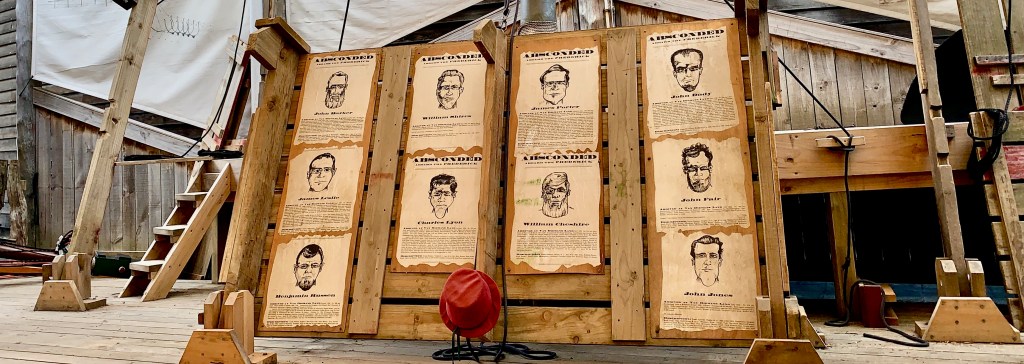
when the play opens, four convicts are discussing ways to avoid a scragging (the hangman’s noose) for mutiny and piracy on the high seas. the four were among ten convicts who had commandeered the frederick, the last brig to be built at the sarah island shipyard.
the ten of ’em were among the last convicts on sarah island. they were putting the final touches on the frederick before it sailed to hobart, where it would be commissioned. instead, they overpowered their guards and commandeered the vessel. they then sailed all the way to south america, where they ditched the ship off the coast of chile and told the locals they had been shipwrecked.
their story worked, for a while, and the ten were allowed to live as free men in the chilean port of valdivia. six of them eventually hopped a lift on ships headed elsewhere before the authorities got wise and turned the remaining four (two) over to a passing british frigate. they were brought back to london, then returned to hobart for trial, where they were found guilty of piracy and mutiny, and sentenced for a scragging.
as the play begins, the four are plotting a strategy for appealing their death sentence. when they walk out on stage, who do ya think they are? it’s kiah davey, this time in convict’s garb, playing the part of the ringleader james “jimmy” porter. her partner in crime, billy shires, is our friend peta, who had been selling tickets the previous evening. that’s the cast.
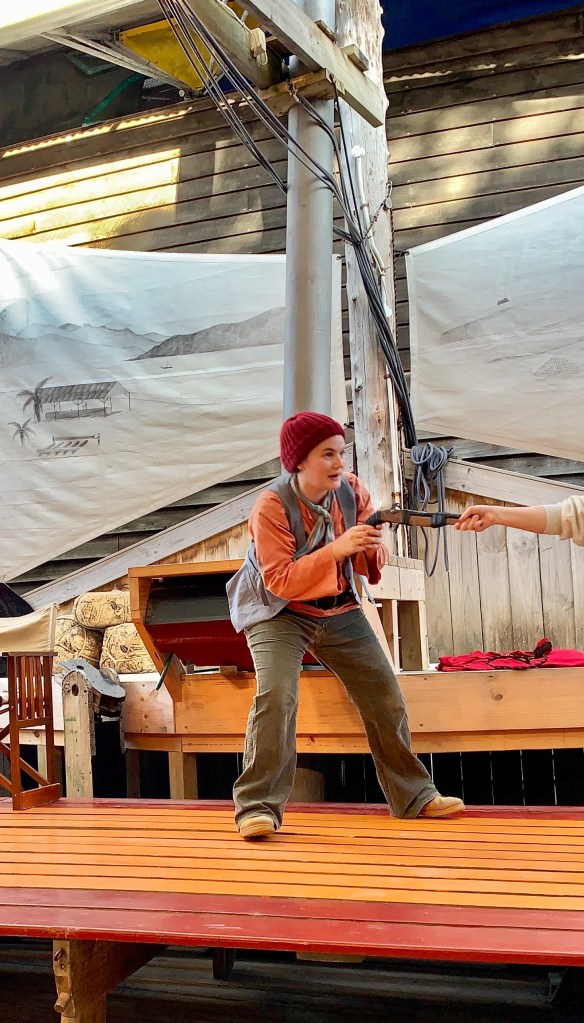
the other two co-conspirators, william cheshire and charles lyon are played by unsuspecting folks plucked from the audience. in fact, all the eight or so other players are paying customers drafted into the cast.
.
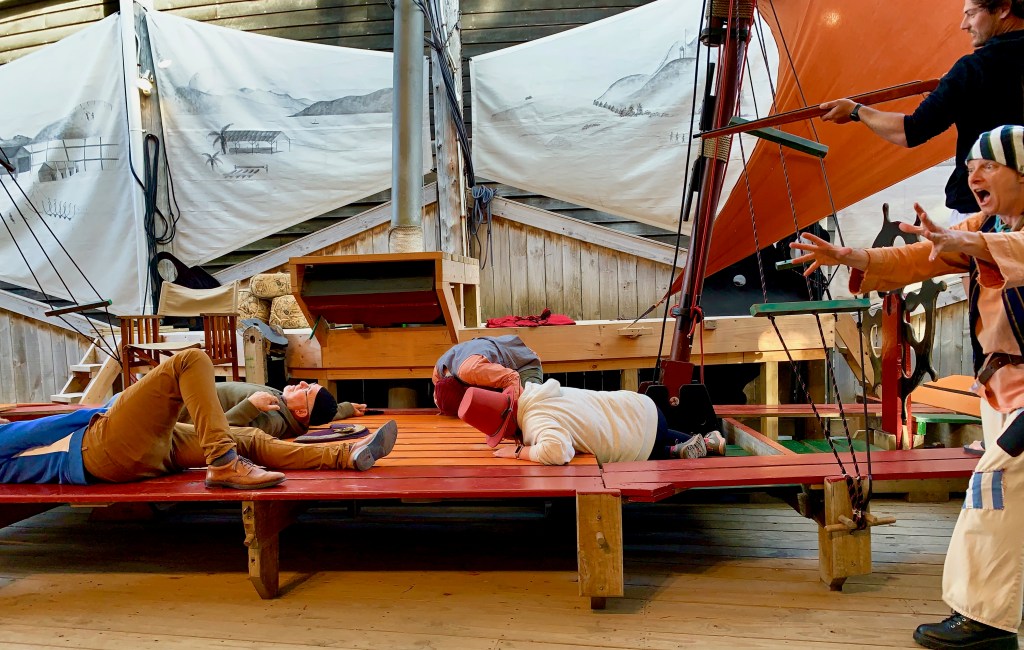
audience members play supporting roles, making every performance different
the result is a wild and hilarious audience participation free-for-all, including a re-enactment of the mutiny, complete with gunplay and axe fights, a parrot that squawks and curses incessantly, a cat, and kiah, all the while imploring the audience to give “thumbs up” or “thumbs down” to their crazy appeal to escape a scraggin’.
the argument they concocted was that the crime could not have been mutiny since the convicts weren’t actually members of the ship’s crew, and it couldn’t be piracy since the ship was not on the high seas; and, crucially, since the frederick had not yet been commissioned, it wasn’t technically a ship at all.
“It was canvas, rope, boarding and trenails, put together shipwise – yet it was not a legal ship; the seizure might have been theft, but not piracy.”[12]
so, no ship, no crime. right, sherlock?
in real life, their appeal succeeded. (thumbs up!) the judge ruled that they didn’t give a ship… or take one. so they were spared the noose.
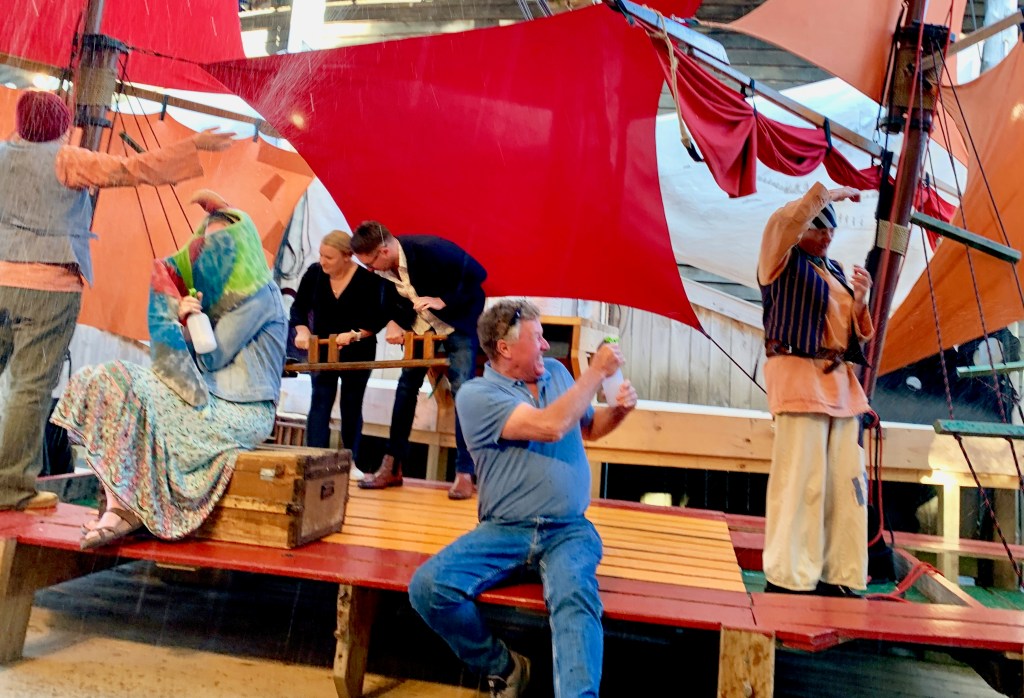
the grand finale is a sea squall that almost sank the frederick in the wind-whipped south pacific ocean. members of the audience play the part of the weather. water squirt bottles are handed out all around, and on cue, everyone starts spraying water at perfect strangers and creating a mist in a real squirt gun rainstorm.
it’s a riot.
interestingly, jimmy porter happened to have been an educated man, and he wrote two books about the convict experience. the first was published in serial form in a hobart newspaper, and was said to have been instrumental in turning public opinion against the brutality of the penal system.
instead of hanging, the four got off with’ life in prison. a few years later, porter had his sentence reduced after saving several officers from drowning after their boat capsized. he eventually escaped again and is still absconding. posters have been printed offering a reward for information leading to his recapture.
“the ship that never was” was among 70 plays written by richard davey, kiah’s father, and co-founder of the round earth theater company, along with his wife kathi. richard played the role of jimmy porter for most of the first seven thousand or so performances. sadly, he fell ill and succumbed to cancer ten years ago, so kiah has taken up the role of jimmy as well as the role as c.e.o. of the round earth company, keeping the family tradition alive.
the story is told seven nights a week, from september to may, at the richard davey amphitheatre in strahan. if yer doin’ time in oz, it’s worth the trip.
tassie’s glamorous. did we mention amorous? showing off for cell phone cameras.
cradle mountain at dusk
cradle mountain is a scenic masterpiece, enchanting visitors with glacier-sculpted sawtooth peaks piercing the sky. it is a rock of ten-thousand faces, changing every minute from an infinite number of angles and weathers; bathed in the rich hues of summer or crystalline winter white, shrouded in morning fog or glimmering under the silken rays of a newly risen moon.
and if it’s been there for hundreds of millions of years, as the pleistocenes would have us believe, it’s also been the subject of hundreds of millions of photos, most of them taken since the advent of the cellphone. (i took nearly a hundred myself)
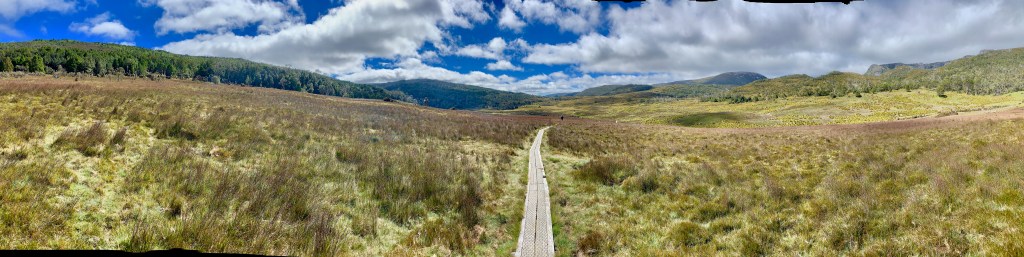
the “pano” feature on the phone camera helps capture the immensity of the 360 degree landscapes.
cradle mountain – lake st. clair national park was our mid-island stopover as we crossed from hobart, on tassie’s southeast coast, to the wilderness west, much of which is inaccessible to mere mortals. some places, we’re told, are 50 km (30 you-know-whats) from the nearest road. and tassie’s tiny.
we rented a cabin just outside the park entrance, and had two full days to explore the 1.4 million hectare (5400 sq m) wilderness world heritage area.
notice a little ‘cradle creep’ in the top right
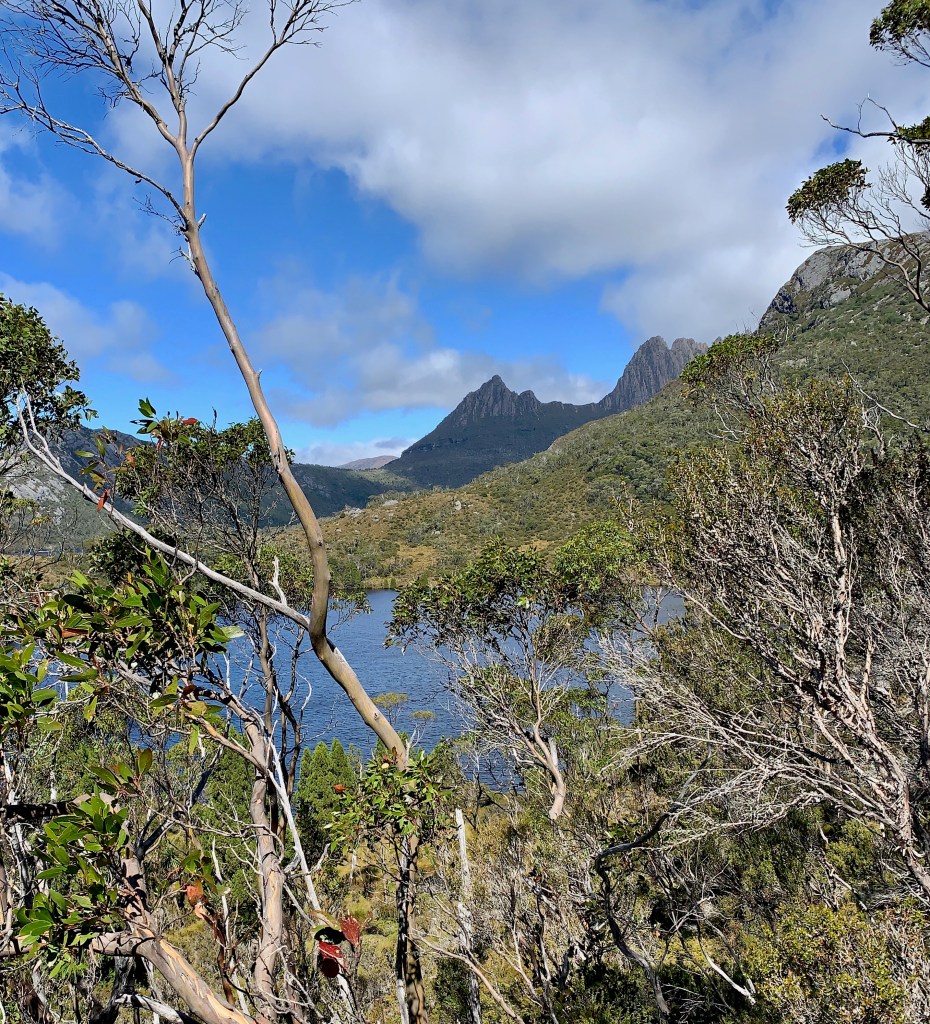
the eponymous escarpment was at first shy, peeking up from afar, partially obscured behind hills and forests as we wandered the expanses of the park, revealing herself in stages like the legendary fan dancers of antiquity.
no full frontal exposure. at least not on the first day. but with each new revelation, she became increasingly fascinating.
a distant peak
peek-a-boo
piqueing our curiosity
a peakasso
picante
honestly, we didn’t grasp the grandeur of the escarpment on day one, preoccupied as we were with wombats and wallabies and willy wagtails and wonderful wilderness walks — and staying warm, as whistling winds whipped up wintry weather.
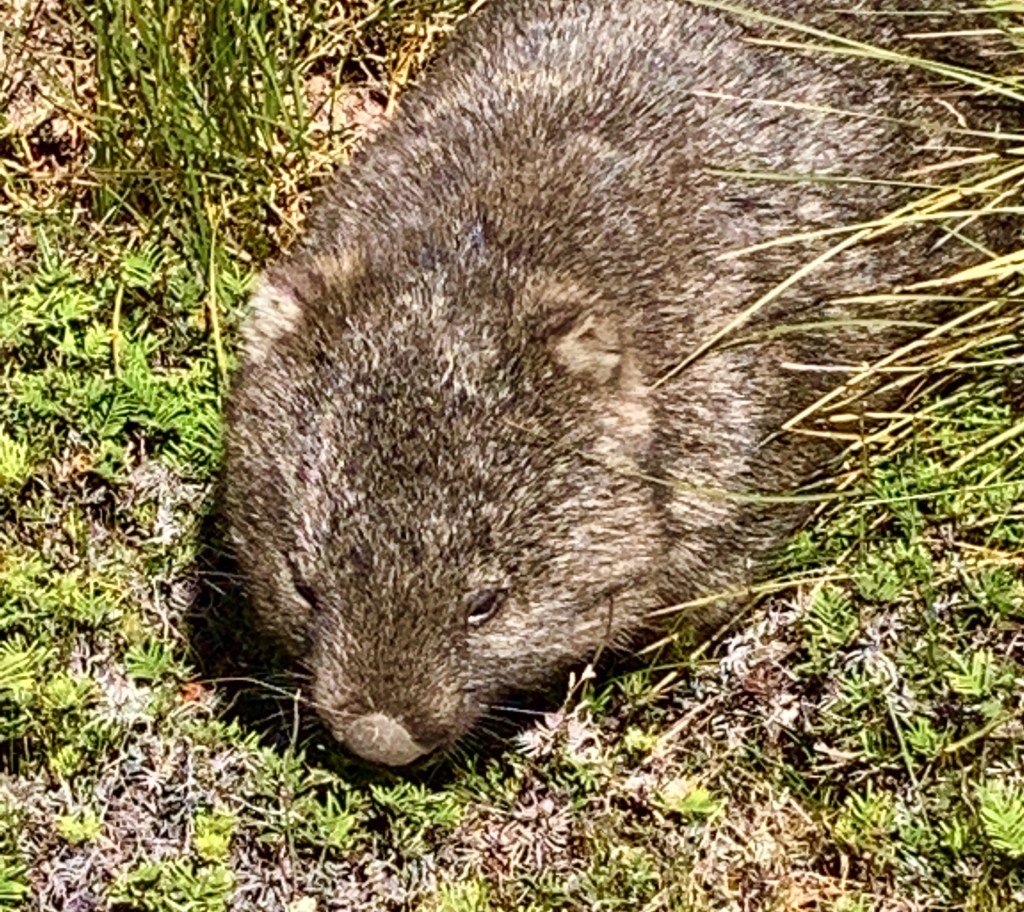
the wombat is the largest burrowing herbivorous mammal, and is also a marsupial
the star of day one may have been this little critter. wombats are mostly nocturnal, but hungry little fellows are known to pop out of the cradle for a snack when the sun’s not too oppressive.
at birth, wombats only weigh about 2 grams
adults weigh 25-30 kg., this guy maybe 5kg
with a short tail & legs, characteristic waddle & ‘cuddly’ appearance, the wombat is one of australia’s most endearing native animals. (parks.tas.gov)
we startled this youngster as he was out munching in the sun, and he waddled away to a safe spot out of reach. but as i stood watching, he inched his way back to within touching distance, eyes cast downward the whole time. he stood there quietly, as if to say, “hello, what are you?” wombats are solitary, but this kid was so young he may have been hoping i was his mom. (they don’t see too well) he reminded me of our kids and the old harry chapin song we used to sing with them.
after a couple minutes, our good time together came to an end and little wombat, who must have figured out i wasn’t a parental unit, waddled away to resume munching.
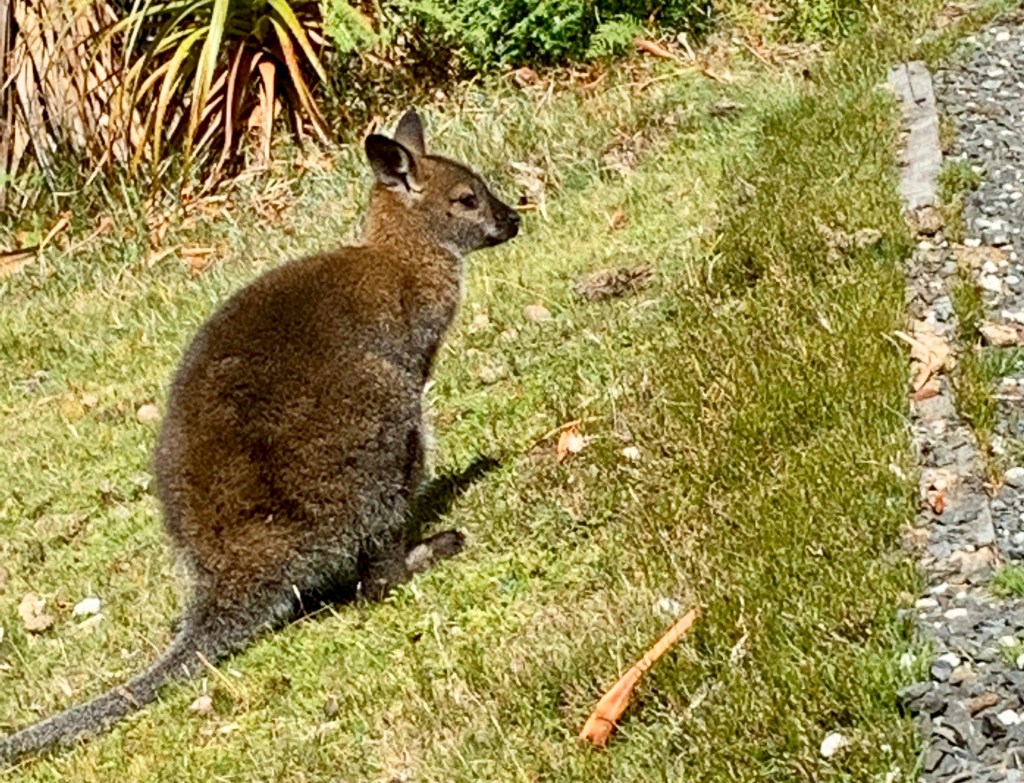
the wallabies, mama and joey, were out lounging on a grassy patch in the morning sun, obviously unperturbed by humans. they only grudgingly ceded their perch when the camera became intrusive.
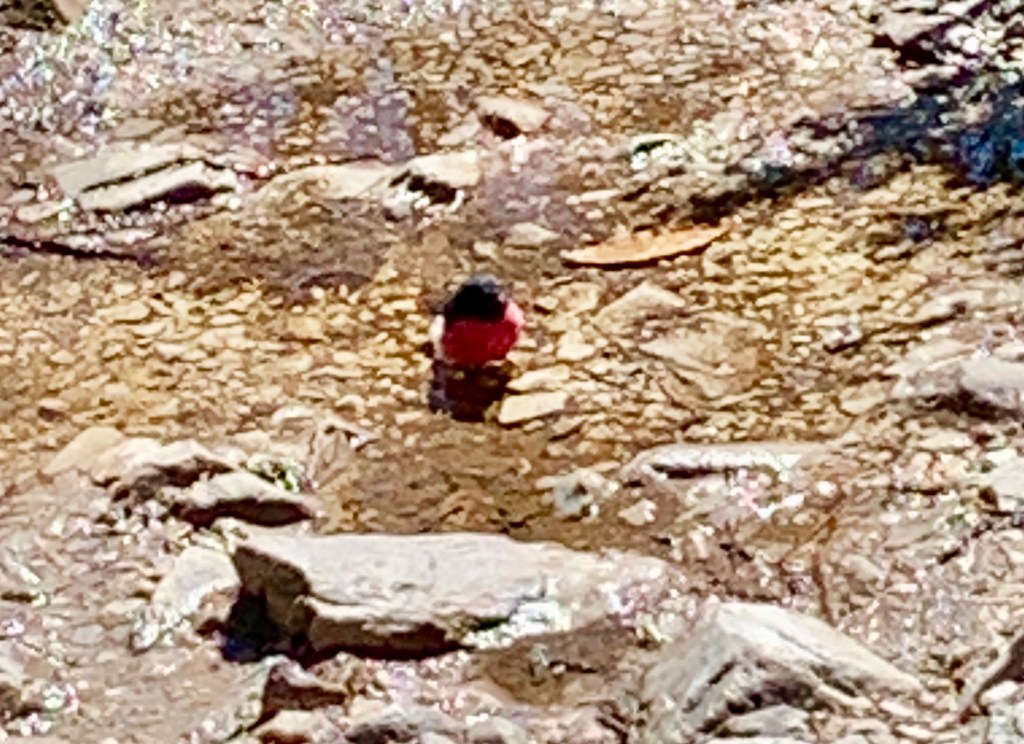
possibly pernille’s favorite find was a pink robin. here, however, you can see the difference between a professional photo and the cellphone shot.
day two in the park was as warm and wonderful as day one was windy and wintry. sweaters off, t-shirts on; long pants sweaty, shorts comfy.
day one
day two
day one
date who?
the day began with a quest for cradle lake. i thought i had overheard trekkers discussing it. turns out there’s no cradle lake. i guess they must have been talking about “cradle ache”, a malady common to amateur hikers. there’s a hot tub for that.
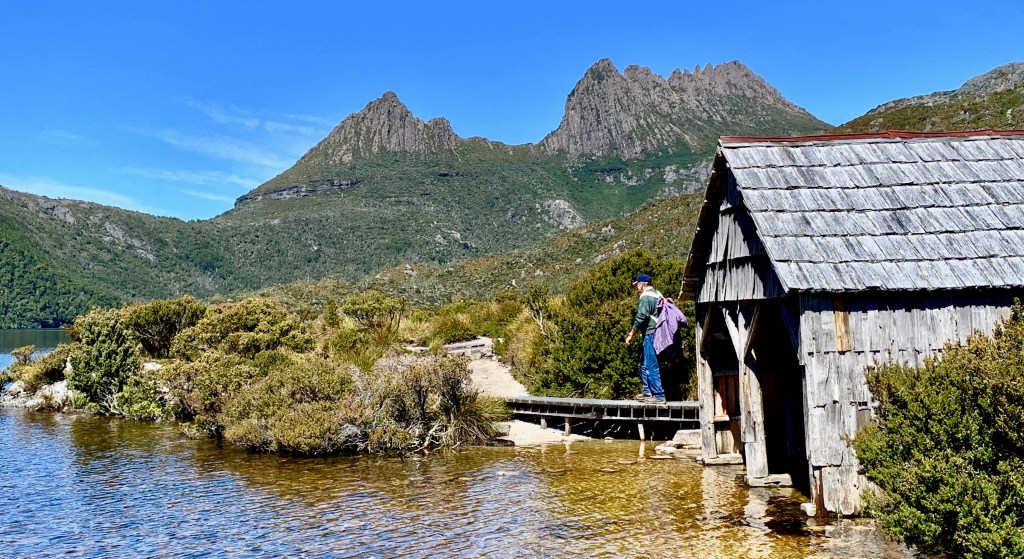
the big lake in the park is dove lake, which may be most renowned for being in the foreground of everyone’s favorite cradle mountain selfie. it’s a natural, with the lake and a century-old wooden boat shed in the foreground.
something was up as we neared the shed on our hike around the lake; crowds of hikers with cell phones pointed at the majestic rock face. moving to “the spot”, we snapped a few ourselves.
the iconic “boat shed shot” at midday.
sure, it’s a nice photograph. but it’s, it’s… flat! the time stamp on the photo shows it was taken at 12:24p.m. mid day! the sun is as high as the proverbial elephant’s eye. there are no shadows. no texture. no perspective. no deep, rich hues of dawn or sunset.
what to do? it was our last day in the park, and the buses that shuttle visitors from the park entrance to various trail heads stop running at 4p.m. sunset wasn’t till seven. there must be a way to get a sunset shot.
a quick check of the rules revealed that, while cars are forbidden in the park during the day, they are allowed as far as the first drop off point after the last bus run is finished. so we hustled back to the cabin, ate an early dinner, then drove in as far as possible and took off on foot. it was already 6:30.
the prospect wasn’t promising. the mountain faces north. dove lake is to the south. as we walked, the sun wasn’t visible. the sky was blah. there would be no “spectacular sunset” shot. i suggested we turn back. pernille told me to stop whingeing.
the longer we walked, alone in the gathering gloom, the gloomier i got. soon, however, we reached a way station where a park ranger was cleaning up the “facilities” after a busy day. as we were saying “g’day mate”, a van zoomed past. “what was that?” i asked. “oh, that’s the photo van,” she replied. “a local travel agency has a special pass to bring photographers in after hours for sunset shots.”
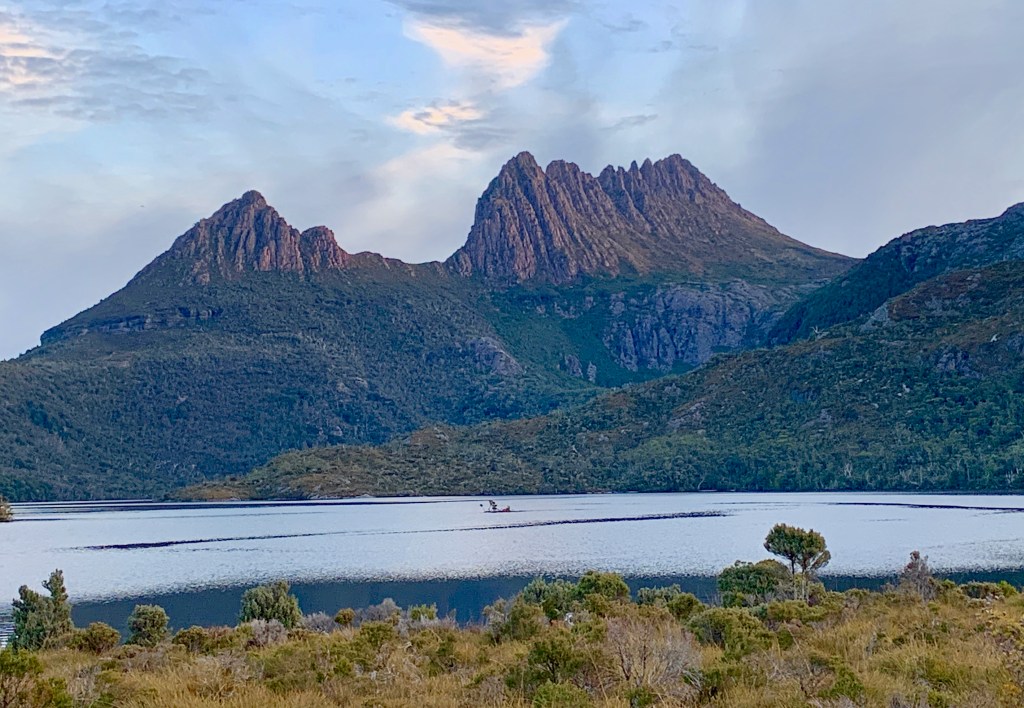
the sinking sun’s shadows accentuate each tooth in a sawblade strand of jagged peaks
yessssss! sunset photos are a thing!! and sure enough, as we approached the lake, the mountain revealed itself. the cliff face that had appeared as one at midday now separated into a dozen shards sloping upward to the heavens. as the lake came into view, a lone boatman stood, silhouetted against the shimmering water.
then, as if a director off stage gave a cue, the cliffs began to glow, and the amorphous gray cloud hanging over the peaks dissolved into wisps of cumulus vapor. we stood transfixed.
but wait! the iconic boat shed shot! onward we pushed to beat the descending darkness! fortunately, the shed was no more than a few hundred yards/meters ahead. there, lo and behold, stood the photo van. photographers with their nikons and canons with superzoom lenses had staked out their tripod positions along the bank opposite the shed. they eyed me and my cellphone camera disdainfully. when i asked if could squeeze past them on the narrow path, no one budged.
i climbed over a few rocks to get around them and found a vantage point from which to snap a couple pictures, including the one at the top of this post. ok, maybe not hasselblad quality, but a hasselblad won’t fit in your pocket.
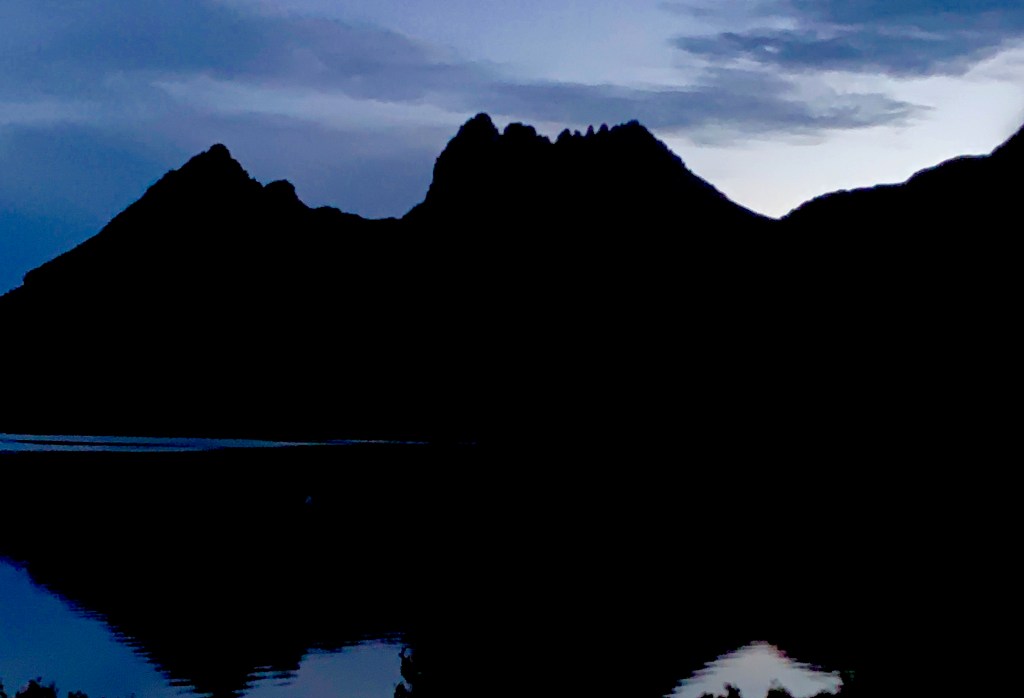
however, mother nature the lighting director wasn’t done yet. darkness quickly enveloped the escarpment, leaving only silhouettes. magical silhouettes. and curiosity. imagine what earlier eons of aboriginal people must have thought as they pondered nature’s phantasmagorical encore from the shores of dove lake, long before boat sheds and tourist busses?
and then i saw something! a lady!
lady in repose
could this be the reason cradle mountain was sacred to aboriginals? they left no written record. and the europeans who showed up in the early 19th century nearly wiped them out. tassie zealously guards the secrets of her past. one can only imagine how many humans have sat in eager anticipation on the shores of dove lake waiting for the image of a lady to appear at dusk.
or is this just the product of an overactive imagination?
and one last shot. the photogs had packed up their gear and driven off (without offering us a ride) so we began the half hour trek back to the car in the deepening darkness of a moonless night. we could barely see the road. looking out over the lake, i could just make out the rust-colored rocks lining the water’s edge.
hold on a minute! the camera has a flash. what would happen if…
the rust-color of the rocks comes from tannins in the roots of trees growing along the water’s edge
or maybe, those long ago people were simply imagining the batman logo. squint at the shot below and see what you think.
all right, that’s fifteen photos in which the same mountain appears. time to move west.
p.s. after the last blog post, two of my former voa editors, mollie king and walter hill, wrote to point out that 10 gallons does not, in fact, convert to 38 kilometers. thanks to them for that, but notthatheinlein stands by our calculation.
tassie’s easy. she shouts ‘i love you’ from every barn and craggy hillside. for us, it was love at first light.
the sky was bitumen (pitch) black as the overnight ferry from melbourne chugged into devonport, on the north coast of tassie, or tasmania as nobody calls it.
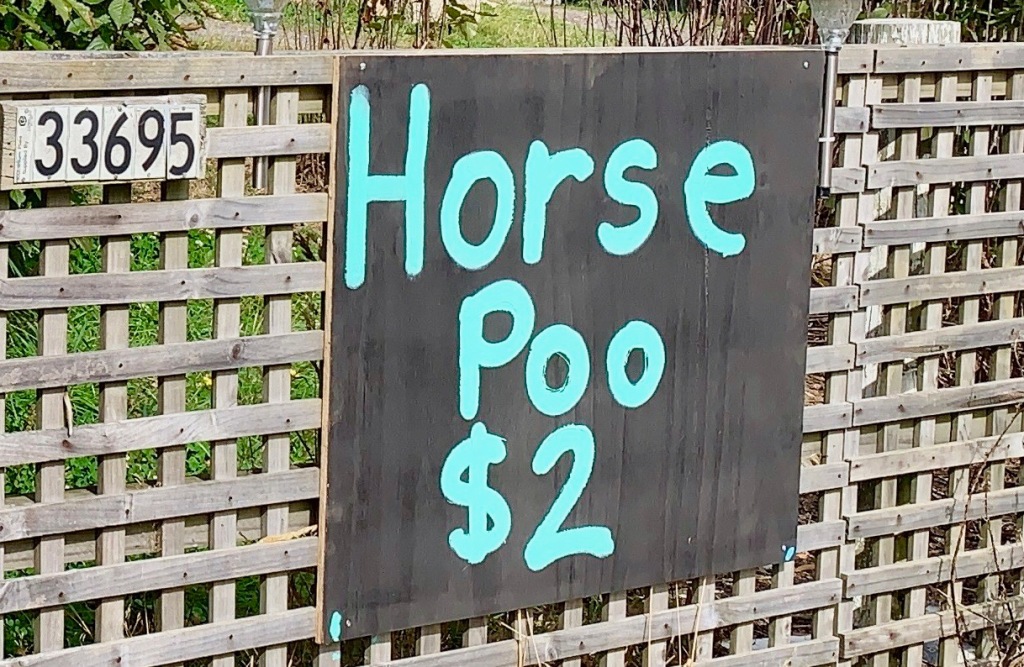
as daylight raised the curtain on the lush countryside, we were bombarded by the “common scents” of australia’s largest island: to wit, a roadside stand offering a “deep doo-doo discount”.
hot steaming meadow muffins – two bucks, chuck
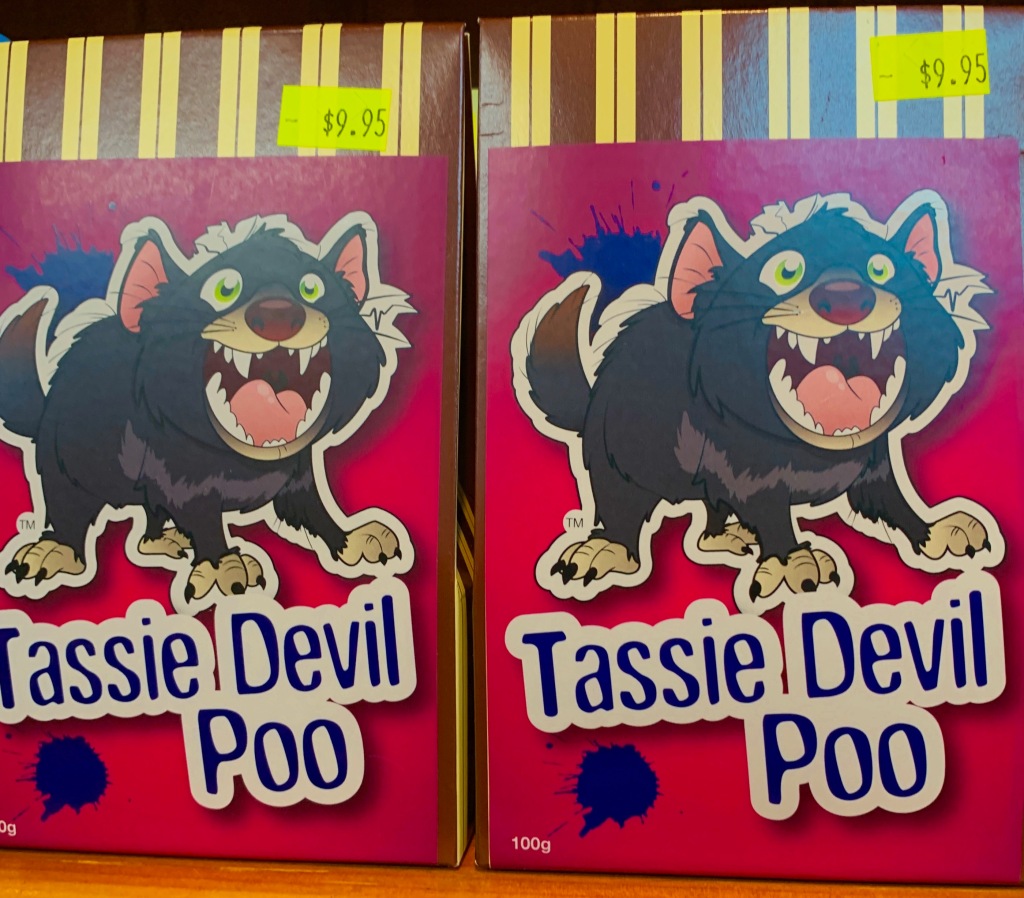
we held our noses as we drove past, but the price got our attention. in hobart, by contrast, where poo seems to be a preoccupation, they slap a clever label on it and jack up the price for tourists. we suspect that stuff might be the cheaper “bull” variety corporate media are peddling.
the fancy variety at a souvenir shop
after that assault on our olfactory senses, we set our compass toward hobart, tassie’s capital, largest city (pop. 200,000) and, little did we know, a burgeoning global center of the arts.
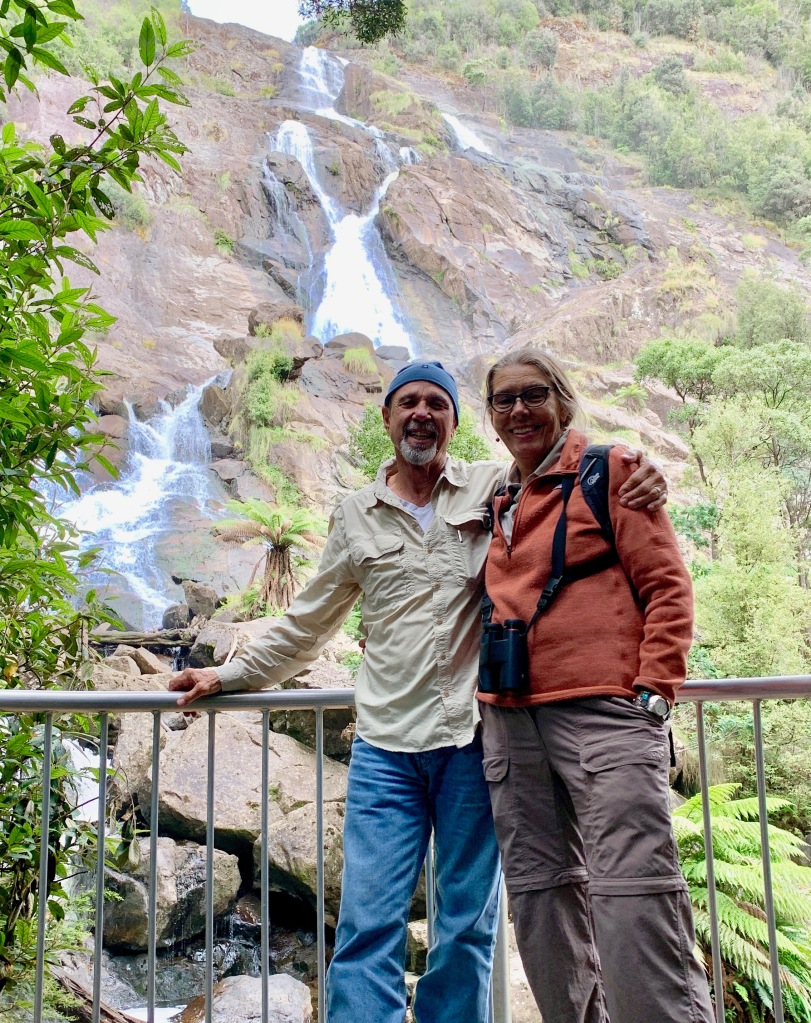
our plan was to take a dirt road shortcut through the mountains to sneak a peek at a waterfall recommended by friends.
watetfall selfies are obligatory
the waterfall didn’t disappoint, but a sign at the parking lot did. “road closed ahead,” it said. bridge repair. the only option was retracing our tracks back to the bitumen highway.
we shared our anguish with a forlorn-looking couple standing with us as we contemplated our options. they had driven down from tassie’s north coast to lunch at an artesinal farm just past where the bridge was out. the road closure meant adding more than 100 kilometers to their journey. they were out.
we, on the other hand, had to go that way to get to hobart anyway, and the mouth watering prospect of cheddar straight from the udder was irresistible to a couple cheese-aholics. the detour was a minor inconvenience. we were in. they told us the name to look for: pyengana. (pop. 123)
our GPS was a little unsure about pyengana’s location, and for good reason. when we got to the place marked “pyengana” on the screen, there was nothing but fields as far as the eye could see. not a building. not a sign, not an intersection. just as our tummies were cursing the people who’d told us about pyengana, we discovered a dirt track through the fields. as we turned we saw a board among the bushes with a single word: “dairy”. sure enough, up the path a bit, (a hilariously imprecise term in oz), paydirt.
we went in, bellied up to the cheese bar, ordered what we later learned was three sampler plates (oops, we had to eat them), then wandered out to the back lawn to find a table. there we found a troupe of trained cows in the midst of a matinee performance for an assortment of young children, accompanied by their cheese-freak parents. it was modern milking, 101.
each of pyengana farm’s 220 cows wears a computer-coded ID necklace that communicates with a state-of-the-art robotic milking system. so when bessie mae (not her real name) feels the urge, she ambles over to the pen. if it’s been at least six hours since she’s been milked, the gate unlocks and she nudges it open.
once inside, she gets a treat, then sidles up to a milking machine, where suction cups attach to her teats. (the kids can’t actually see that part) afterward, bessie mae can stop at a back scratching device before returning to the paddock to fill up for her next visit. bessie and her pals each happily produce about 10 gallons (38 kilometers) of milk a day.
ve gates
education
history
mom, are all cows girls?
bessie mae moocho
something for everyone at pyengana
eventually it occurred to us that we hadn’t come to tassie to eat cheese and watch cows being milked, so we resumed our quest for hobart, which not coincidentally is the birthplace of denmark’s crown princess mary. it’s also a bustling seaport with a thriving shipbuilding industry and a rich, though checkered, heritage.
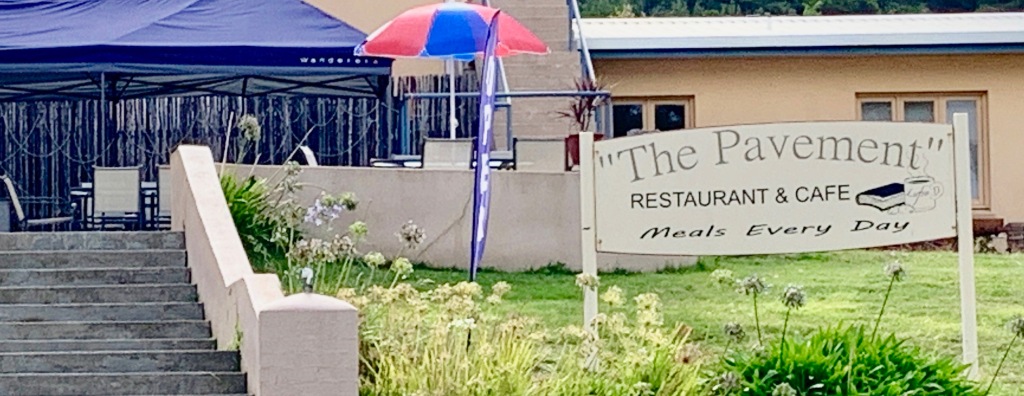
the route south to hobart was littered with tourist attractions and fine dining opportunities. imagine the culinary delights at “the pavement”. (tables optional)
“Chez Pavement”
i was tempted to check the drinks menu to see if if might feature a “concrete mixer” on the rocks. the imagination boggles at the possibilities. but we only had time for photos.
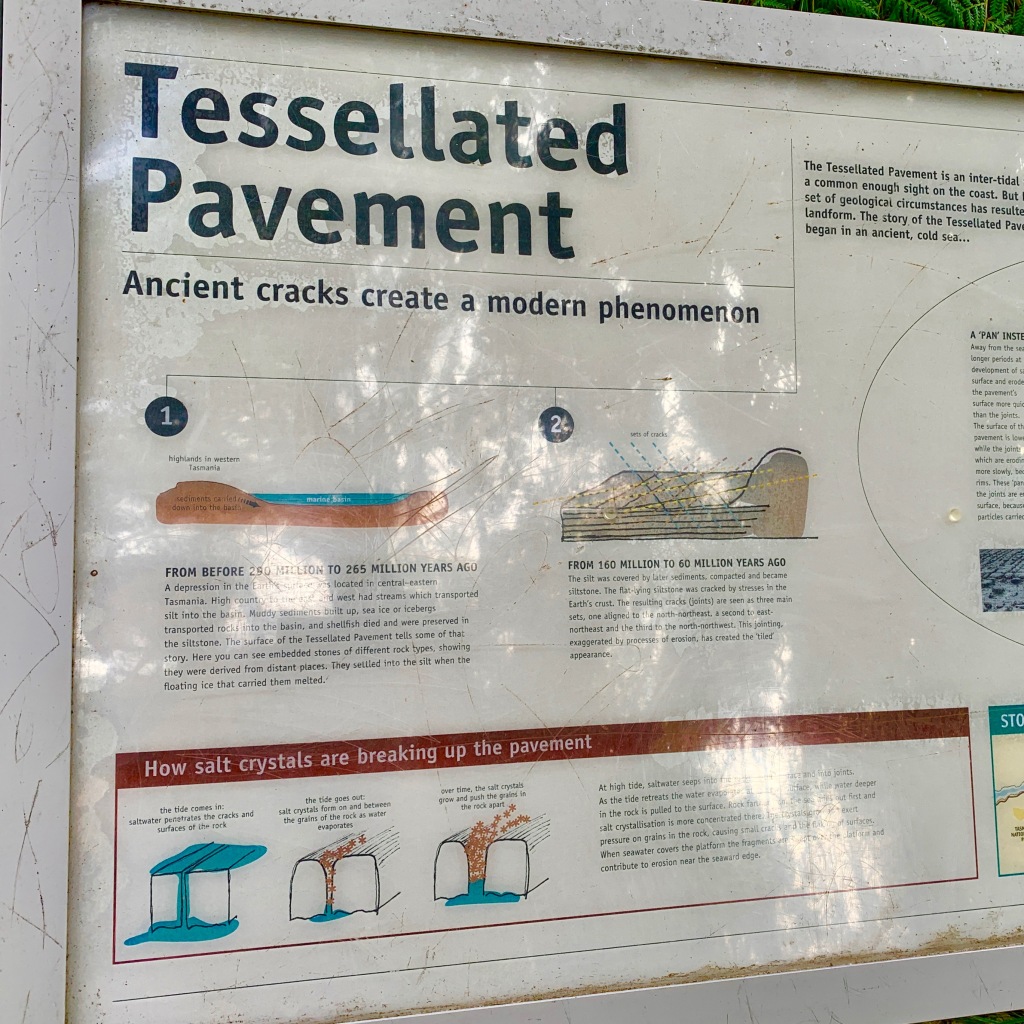
the pavement restaurant, by the way, is just across the asphalt from an actual park dedicated to ‘tessellated pavement’, a fascinating but not too photogenic natural phenomenon occurring along the coastline.
it’s naturally paved
a field for playing “step on a crack…”
so what’s the deal? pavement vs. asphalt vs. bitumen. enquiring minds don’t care, so is this worth your valuable time? i’ve always called a paved road ‘asphalt’. aussies seem to prefer the term ‘bitumen’. technically, according to asphalt.com, bitumen is the black gooey stuff that holds the asphalt (the pebbly stuff) together. it’s also called pitch. (as in, that’s strike three on your attempt at aussie humor, mate)
“black as bitumen” is also an apt descripion of tassie’s history. the dutch explorer abel tasman was the first european to set foot there in 1642. he named it van dieman’s land to honor his boss, who had commissioned the voyage.
but then the demons took hold. soon after the british arrived, around 1803, they waged a 25-year “black war” that nearly exterminated the aboriginal people who had been there for tens of thousands of years. and partly to substantiate england’s claim to van dieman’s land, they turned it into a dumping ground for convicts, establishing penal colonies that besmirched the island’s reputation for the next half century.
when they realized this wasn’t working out so well, convict transportation was ended in 1856, and as part of an image makeover, the island’s name was changed to tasmania (after abel tasman)
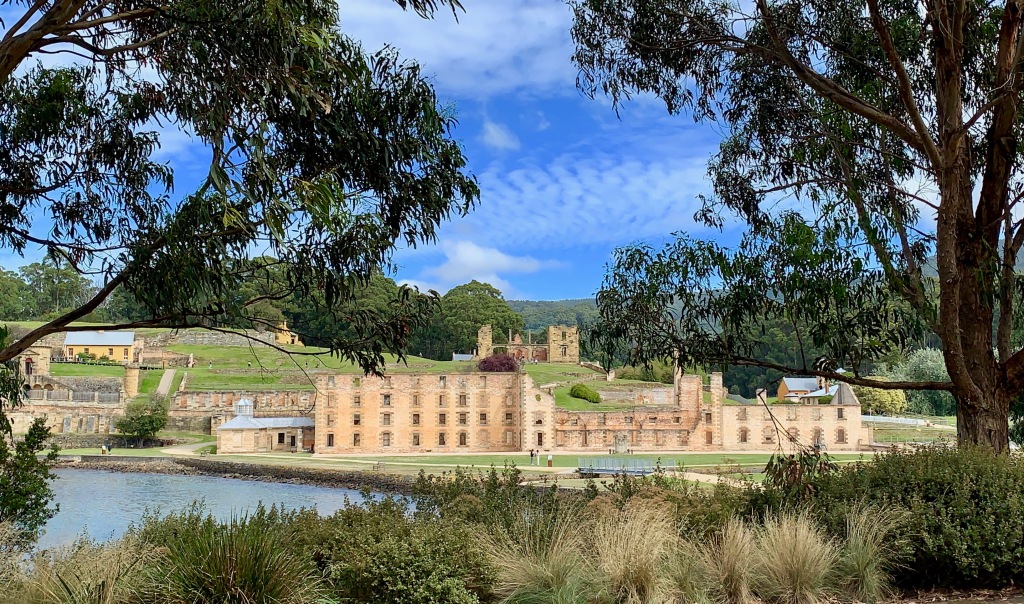
the remains of the penitentiary at port arthur
to learn a bit of the history, we drove 90 km south of hobart to port arthur, australia’s best preserved convict settlement, where repeat offenders and so-called “incorrigibles” were sent. it’s a hauntingly beautiful campus.
convict james rogers
bars encased in meter thick walls
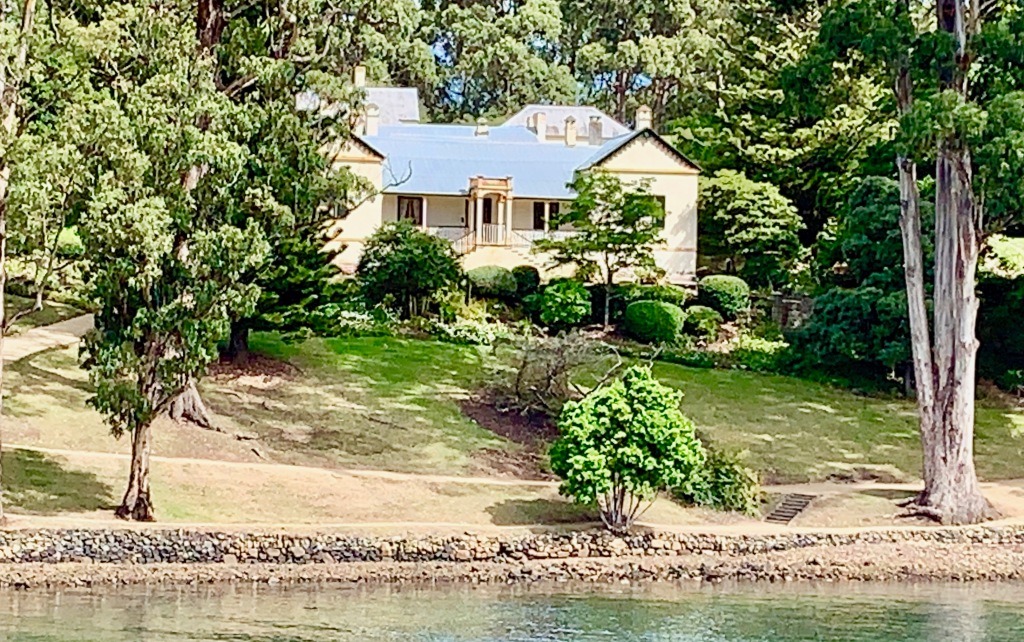
the commandant’s house
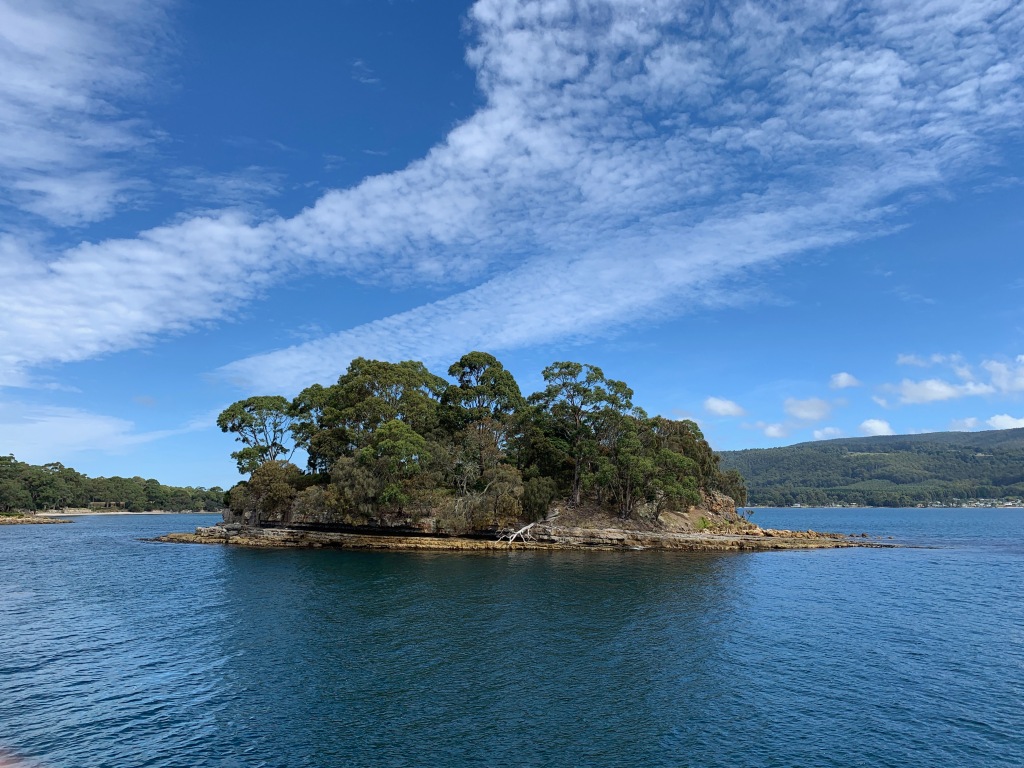
“incorrigibles” were isolated on islands
the main dormitory housed 200 inmates on four levels
pernille asked the warden if she could leave me in his care. he said the type of incorrigiblity for which I’m known does not qualify for incarceration – notwithstanding reader’s opinions.
interestingly, port arthur employed a photographer to take pictures of inmates. those pictures are being used to memorialize many of the convicts, such as james rogers, (above) who was sentenced in birmingham, england to seven years in 1849 at the age of 24 for “stealing monies”.
rogers was transported to tassie in a convict ship, did his time, and was freed in 1856, just as port arthur was being transformed from a penal colony to an institution for aged and ill convicts. he remained in hobart, where he ran afoul of the law again twelve years later for altering a one pound note and passing it off as a fiver to pay for a pint of beer for himself and a mate.
his trial received daily front page coverage in the hobart newspaper, and word-for-word transcriptions of the court testimony are available online. they make fascinating reading. the stories of other convicts are being posted each month as research is completed.
after serving his second sentence, rogers was released in 1874 and lived out the rest of his life in hobart. he died a pauper at a charitable home in 1899, at the age of 74.
with its blighted past and remote location, hobart muddled along, a backwater on the southern edge of the populated world, for more than 150 years after the penal colonies closed.
until….in 2011…
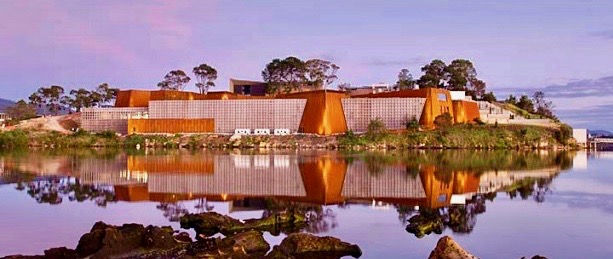
the museum of old and new art, hobart – photo: peter mathew for lonely planet
the art in hobart exploded. (leaving only an artless hob) that’s when mona, the “museum of old and new art” opened, bankrolled with the gambling fortune of native son and art collector david walsh.
the mona experience begins at the docks in hobart, from where a high-speed catamaran whisks patrons 25 minutes up the derwent river and deposits them at the base of a 99 step staircase to the museum’s entrance.
we had a minor misunderstanding at the ticket window, however. we intended to save a few bucks, and thought we’d purchased the “cheap seats”.
the catamaran features sheep seats on the back upper deck that offer “enhanced comfort”
there was a cow there, too, apparently to demarcate “cattle class”. we’ll know better next time. on the other hand, it was a better deal than the horse poo.
mona’s entrance, a mesmerizing reflection by the late celebrated artist/designer matthew harding, is different every time you look at it. it’s a mystifying wall of stainless steel distortion mirrors such as you’d find at a carnivalevery picture of the entrance wall is completely different
mona was intended as a sort of subversive anti-museum labyrinth. walsh blasted a huge hole in a sandstone peninsula overlooking the derwent river not far from the hardscrabble neighborhood where he grew up. he filled it with three subterranean levels of objets d’art, many of which he had acquired as he traveled the globe popping in at unsuspecting casinos and cleaning them out by counting cards at the blackjack tables (until he was banned). his goal was to put everyday emotions at the center of his gallery, so what better to focus on than procreation, expiration, and oh yes, defecation? (mostly sex and death)
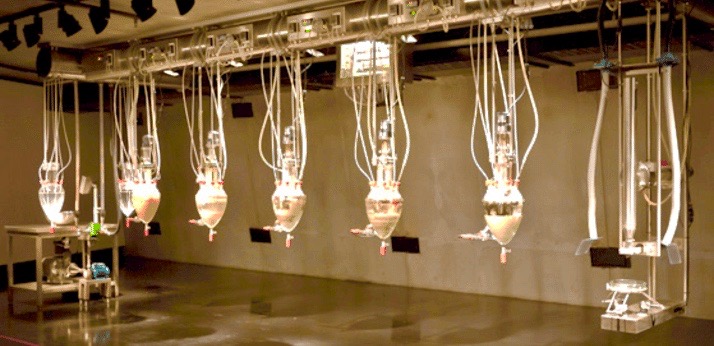
it’s probably not surprising then that mona’s most hated, and most popular display is, can you guess? of course. what else — a poo machine.
“cloaca professional” by dutch artist wim delvoye, is a row of connected bioreactors that mimic the human digestive system. the contraption is fed each day at one end, and solid waste is excreted at the other. photo borrowed with gratitude from the artist’s website.
we missed the daily dump, but people apparently time their visits to be there to see the ingestion, digestion, and particularly the excretion process, complete with the attendant sound and fury (and smell). it’s so… so low-brow.
a ‘white library’ of empty books. no content
a head-scratching optical illusion
a sunscreen dispenser with a foot pedal (it’s real)
walkway illuminated
apocalyptic art
some of the mona gallery’s popular attractions
almost overnight, mona transformed hobart into a global art capital. international critics flocked to tassie to experience walsh’s concept of art for everyone. some raved. one called it a “watershed in the way art is understood”. others ridiculed it as the end of art, or even worse in walsh’s eyes, conventional. but aussies adored it.
in the ten years since it opened , the museum has logged a quarter of a million visits in a city of fewer than 200,000. tassies get in free, of course. all others pay.
in that decade, tassie’s tourism revenue has jumped 50%. in 2013, lonely planet listed hobart among it’s go-to destinations. celebrated chefs are relocating there, and high-end hotels are springing up to meet the tastes of museum tourists.
walsh is considering his own hotel that will include his unique take on the concept of a library. he has said the shelves will be stocked largely with his own books, including a “large and growing nerd fest of bibliophilic paraphernalia courtesy of total lightweights like einstein, newton, darwin and dickens”. he also has over 300 works of isaac asimov (he’s read them all), and i suspect, a few by that other heinlein.
walsh has told interviewers one secret of his success is that he owns the gallery outright. it’s his own private collection, so he can display whatever he damn well pleases. there’s no board or governing body to overrule his decisions; no public funding. he’s single-handedly proven a small city on the edge of civilization can rewrite the rules of a game previously controlled by the art establishment in major world capitals. so who’s to tell him how to do it?
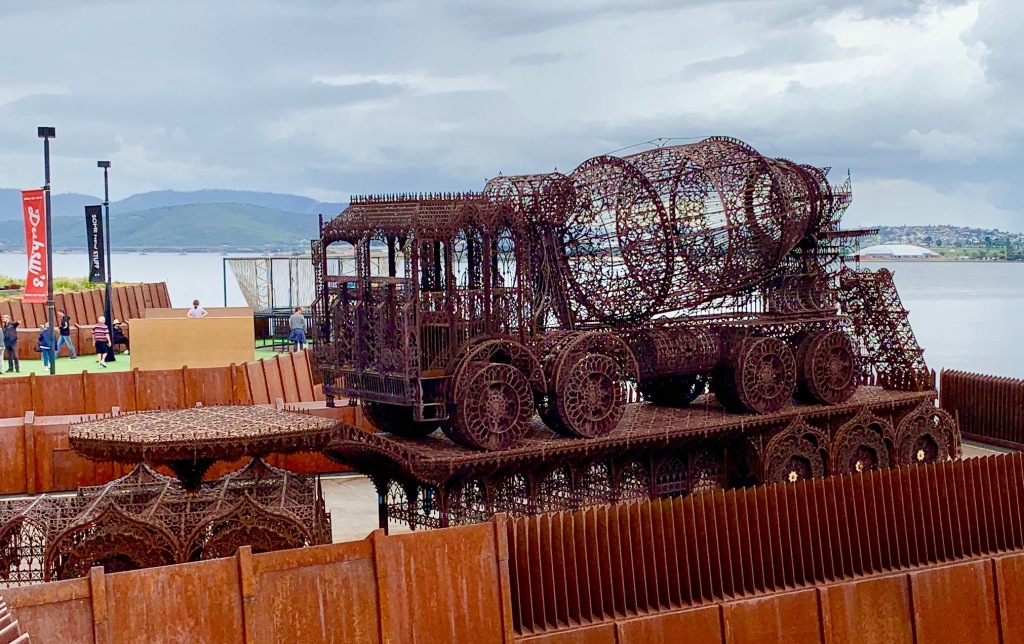
and on top of it all, standing on the rock just outside the entrance, he’s installed another wim delvoye classic; a concrete mixer fabricated from intricately patterned laser-cut steel.
so there it is, folks. a concrete mixer on the rocks. i think i’ll have a double.































































 not that heinlein
