being married to a twitcher (hardcore birdwatcher) is like, um, well, hmmm, um… well… in a bird paradise like australia, it’s a first-class ticket off the beaten path to some of the most exotic places on the planet.
since arriving in oz, we’ve tried to combine business trips with side excursions to “megaspots” where bird life is varied and plentiful, or where rare species hang out. this month pernille had business in brisbane and sydney, the capitals of queensland and new south wales, respectively. instead of flying, we drove, with a few detours along the way. round trip, nearly 3,000 km.
the first day’s drive traversed 800 km (500 miles) to coffs harbour, a seaside community along new south wales’ north coast known for surfing and bananas (one banana so big you can walk through it).
the big banana is a family fun water park built in a banana plantation
accommodation for the night was a funky motel just off the beach, near a surf shop bumping noses with a skin cancer clinic. a coincidence?
skin cancer clinic/surf shop collide
surfer dive
after a morning hanging out with beach bums and seagulls at coffs harbour (elev. 3 meters), we set the GPS straight east and upward to o’reilly’s rainforest retreat, nearly a thousand meters higher.
o’reilly’s is the centerpiece of lamington national park, a world heritage area straddling the new south wales-queensland border.
the villas at o’reilly’s retreat
we arrived a few minutes late for a killer sunset
lamington is for the birds, sure, but it’s more. it is vistas limited only by the curvature of the earth, hikes down mountain tracks to tropical rain forest waterfalls, and live trees so big you could hold a family reunion inside their hollow trunks.
the wishing tree
bored stiff
seven distant mountain ranges are visible
the nearby volcano is called “mt. warning”
o’reilly’s is ranked among australia’s top 10 romantic hotels, though the last 12 miles (20km) of road is a white-knuckle affair with more than a few “lover’s leap” opportunities (ideal for newlyweds experiencing “buyer’s remorse”.)
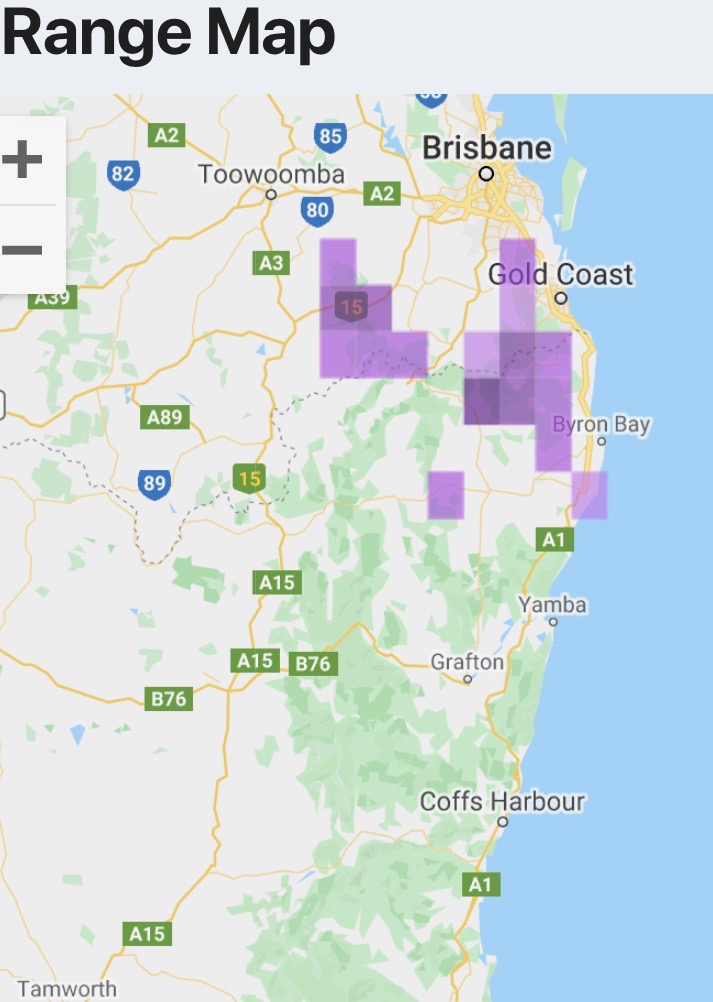
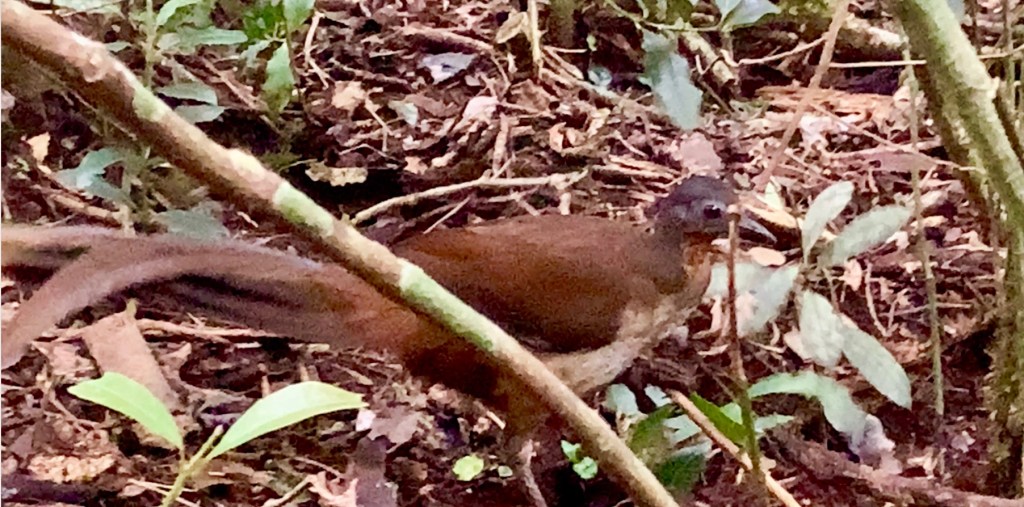
for birders, it’s home to several rare species, including a twitcher’s dream, the albert’s lyrebird. this long tailed bird only exists in a small area of eastern australia, marked in purple on the map.
albert’s lyre bird
we spent the better part of half an hour ogling a pair of these rare birds foraging in the forest undergrowth, unperturbed by our presence.
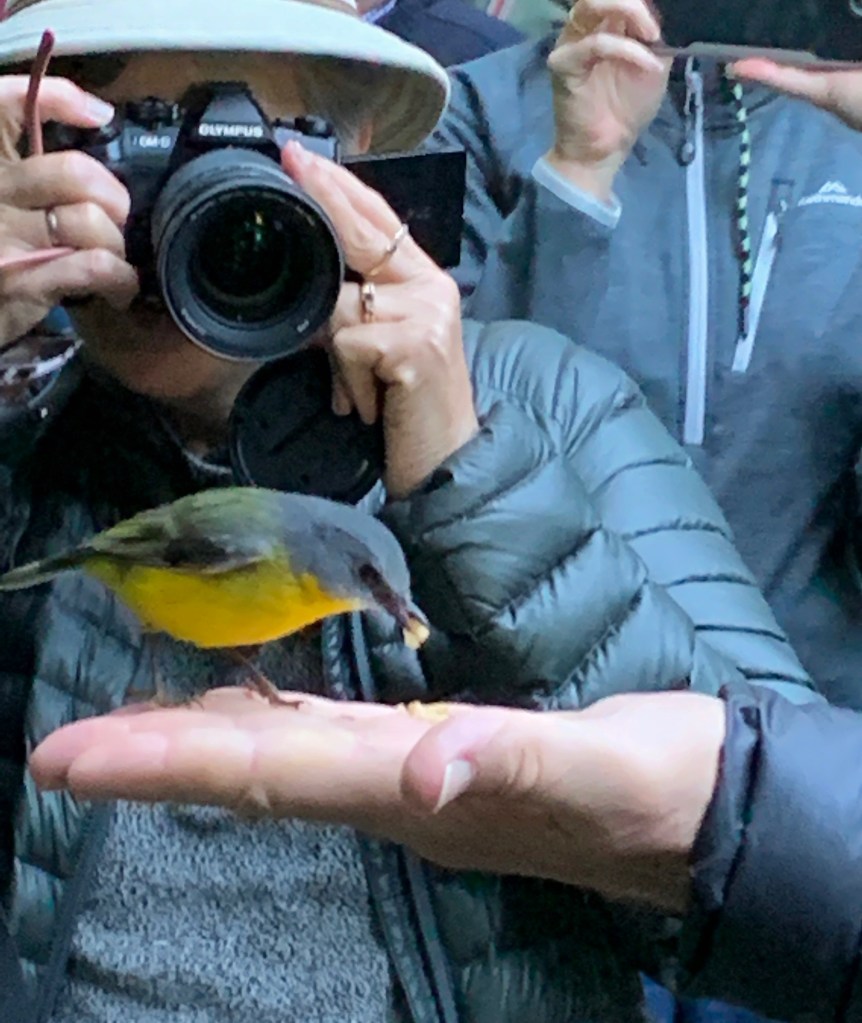
lamington is a bit of twitcher sensory overload, though. first thing each morning a crowd gathers at o’reilly’s for a bird-feeding walk. every participant is given a handful of crushed nuts. holding out your hand is considered an invitation for the feathery natives to zoom in for a nibble.
yes, a bird in the hand beats two in the bush, but they’re in and out so fast it’s hard to get a good photo. it’s even harder when you’re holding one hand out and taking pictures with the other.
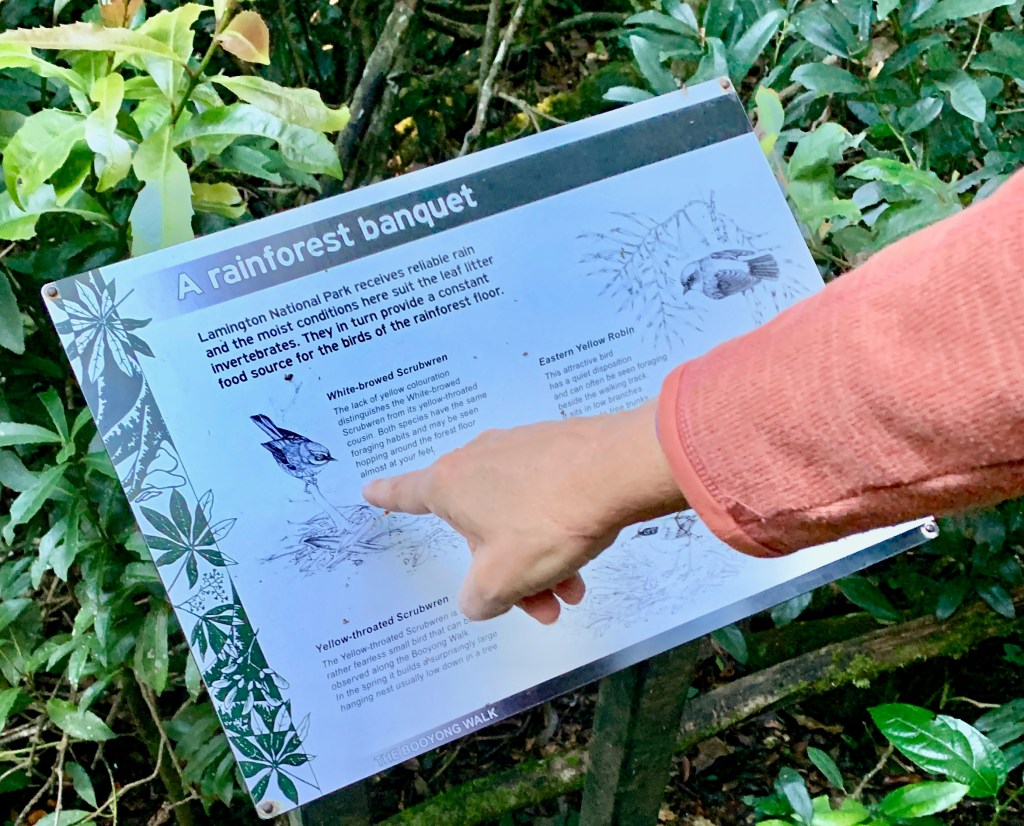
white-browed scrub wren
crimson rosella
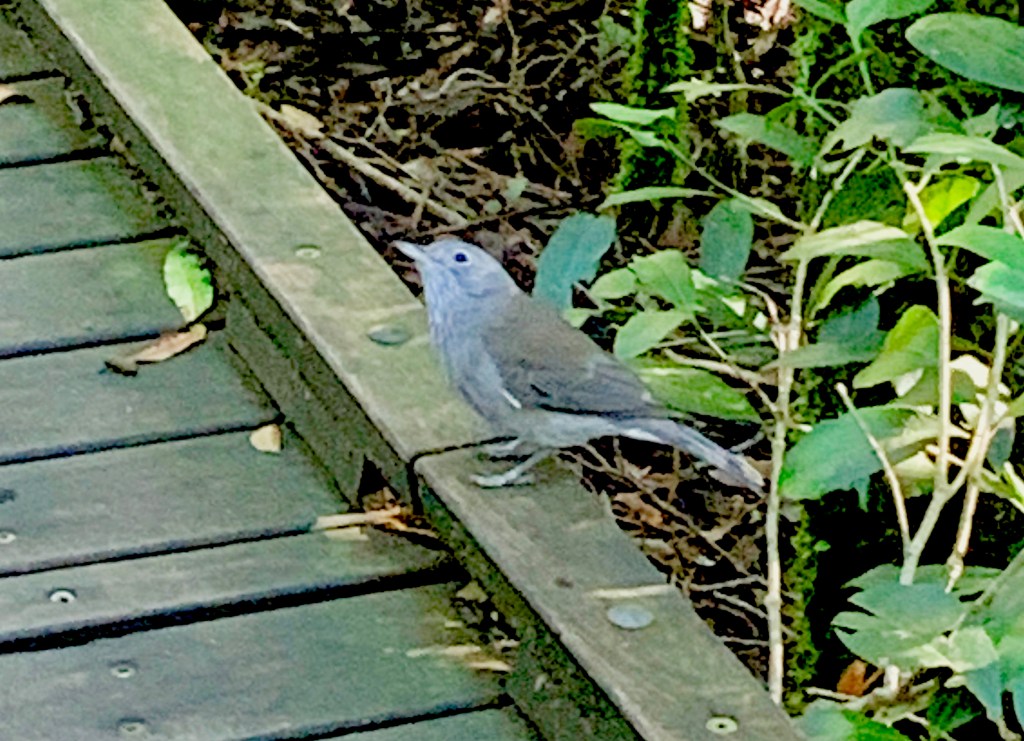
gray shrike-thrush
eastern yellow robin
pernille’s pointer
eastern whipbird
inviting birds to eat out your hand is said to be a no-no in the u.s it’s ok in oz.
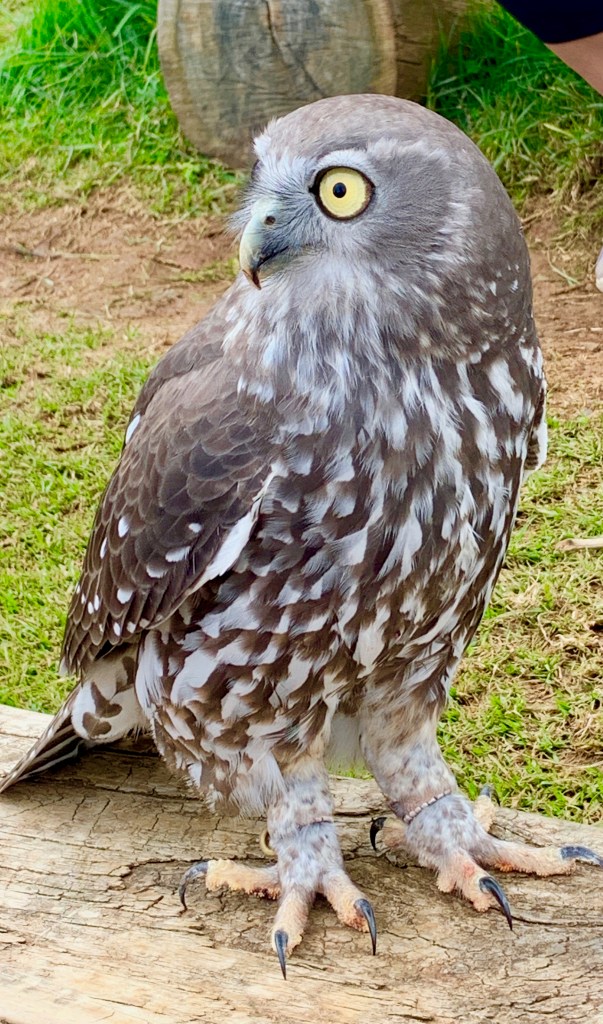
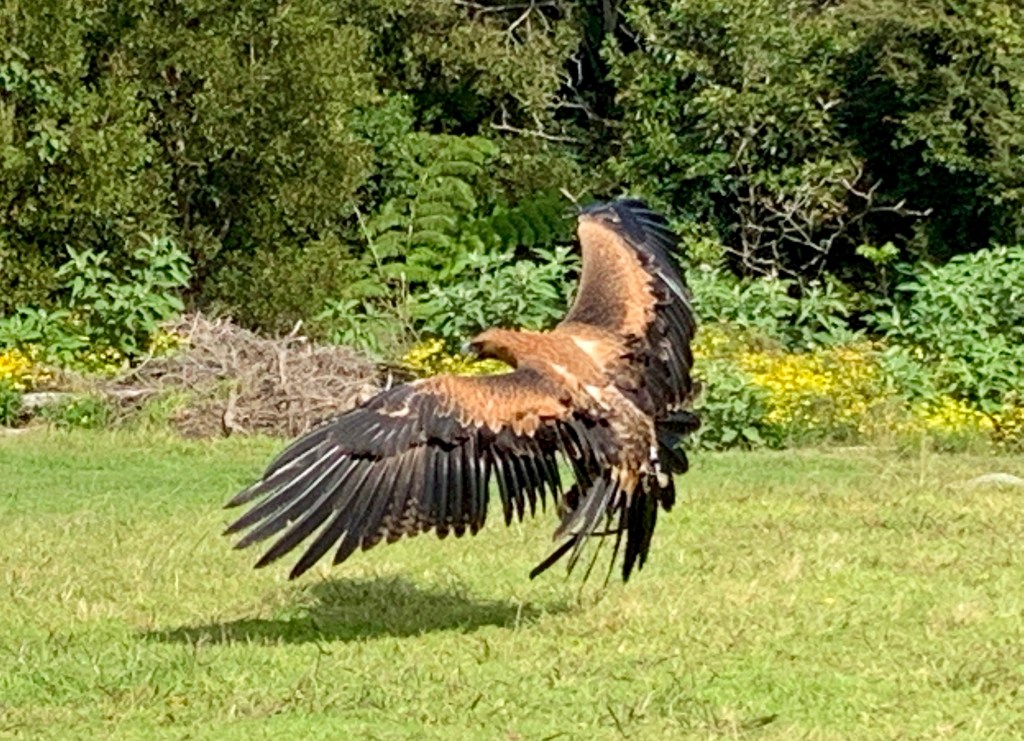
pernille refuses to count captive birds among the nearly 200 species she’s seen since our arrival in australia, but we couldn’t resist the lure of the daily “birds of prey” show at o’reilly’s. many of these are “rescue birds”. the owls are adorable.
barking owl
wedgetail eagle
barn owl
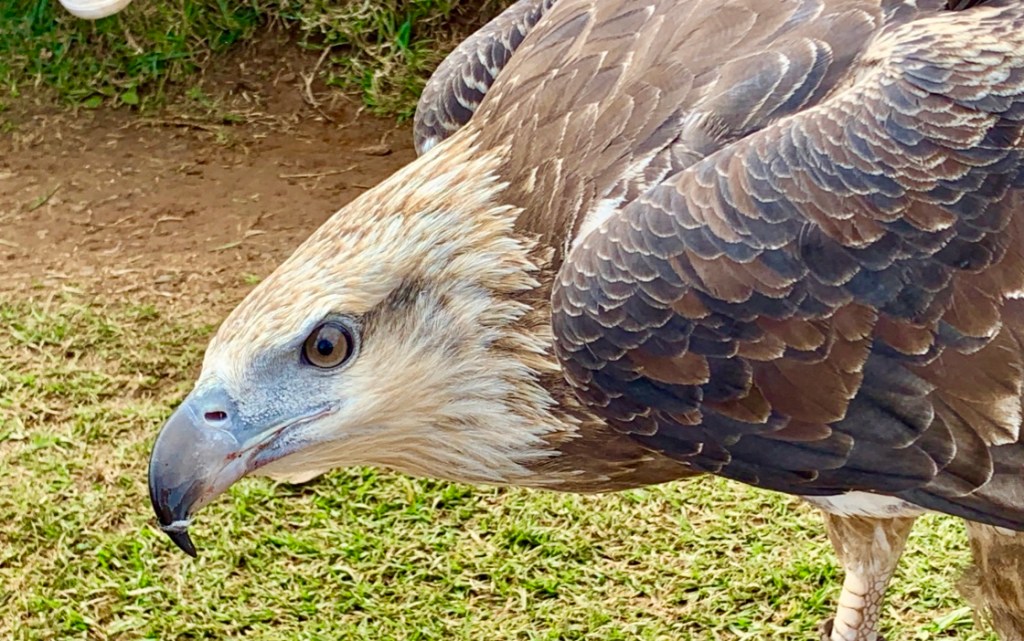
juvenile white-bellied sea eagle
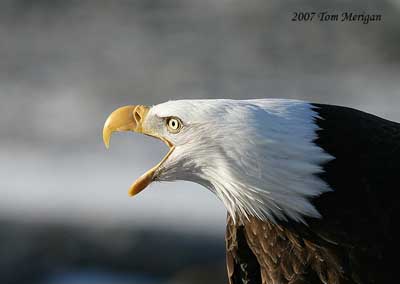
american bald eagle
the young sea eagle above is of the same genus as the american bald eagle. they look similar now, but this “ugly duckling” will mature into a swan.
from o’reilly’s we went “rolling down the mountain” going not so fast, toward brisbane, for a one night stand in australia’s third largest city. business, you know. that was followed by another day’s drive toward sydney, with an intermediate stop on the outskirts of newcastle (#7 in population, a coal town just like its UK namesake)* for a quick peek at the hunter wetlands.
“wetlands” it turns out, is just a fancy term for swamp, and a chunk of the hunter wetland conservation area was once the newcastle city dump.
later it was converted to a football field, but the surface kept flooding. eventually it was returned to what it originally was, a swamp. a bird conspiracy, perhaps?
“cacatua galerita”, painting by sharon o’hearn
the hunter wetlands visitor center hosts regular ornithological art exhibits, this one featuring the bane of our canberra existence, the sulfur crested cockatoo. they’re handsome devils, usually pure white with that hand-of-bananas plumage shooting out of their heads. but their screech makes neighbors want to call the police with a public nuisance complaint.
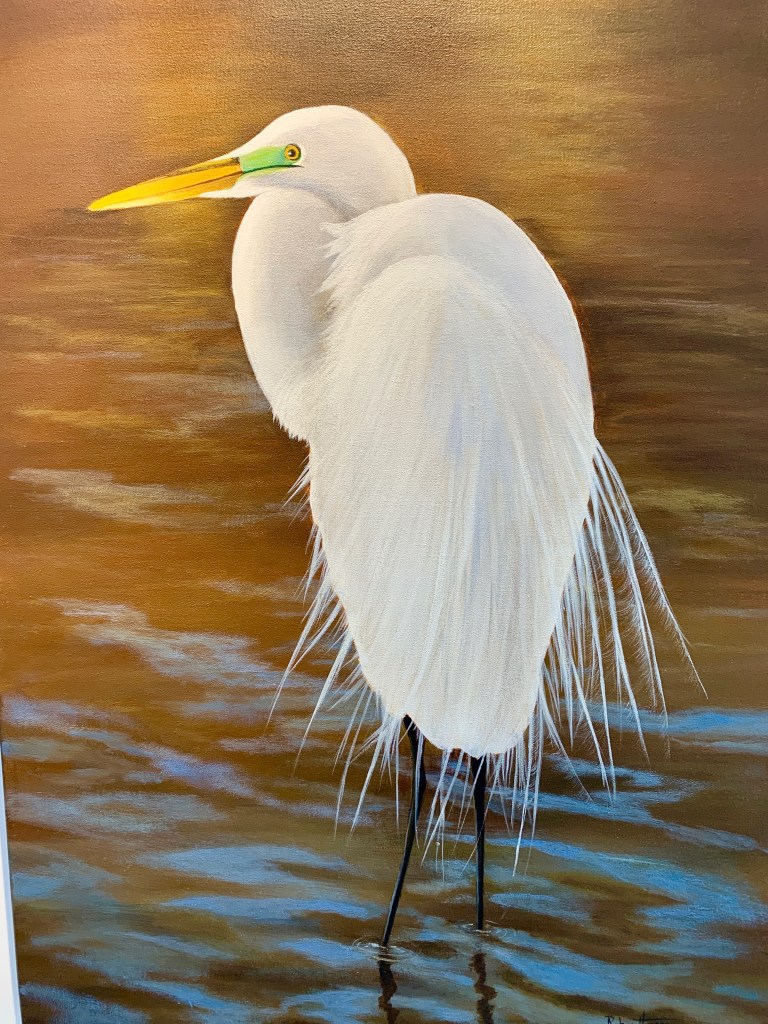
less noisy and maybe more regal is this egret portrait. her mate (right) is roosting on a log just outside the exhibition hall, probably waiting for closing time.
“egret (white lace)” by robin harper
real egret
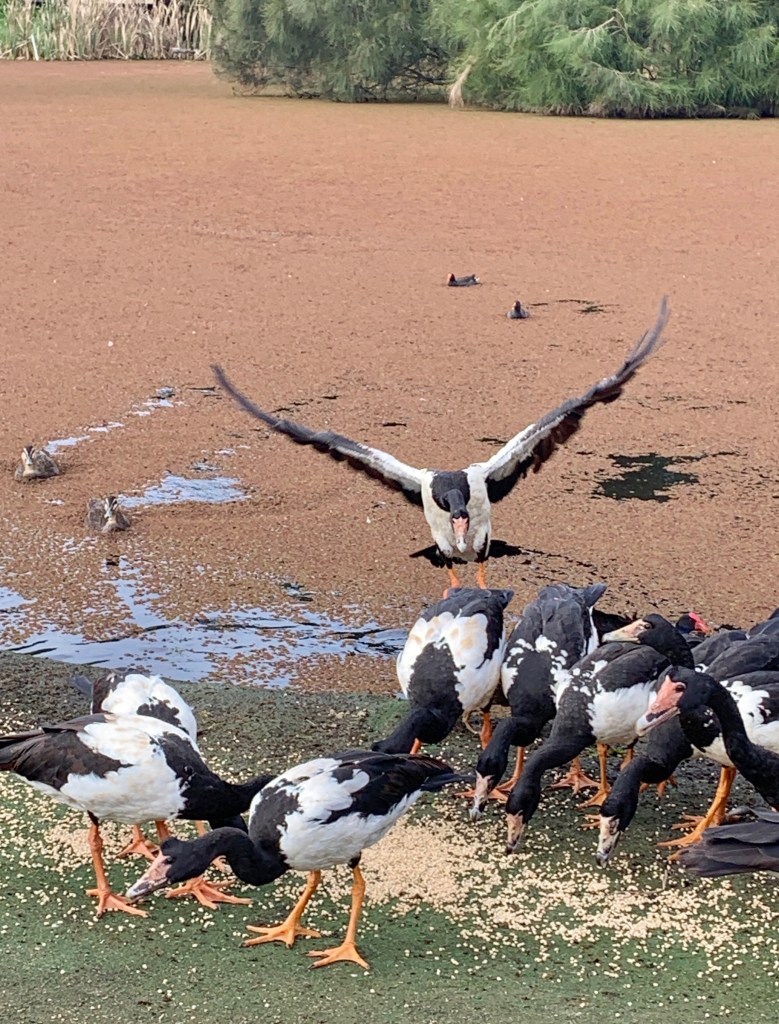
we arrived early enough to witness the invasion of the magpie geese, which takes place at an appointed time every morning, when an attendant dumps a bucket of grain at the edge of the swamp. the attendant says the birds know exactly when to fly in, except twice a year when daylight savings time gives them a headache.
the goofy geese are a daily attraction
another hunter wetlands specialty is a dinosaur. yep, a pre-duck duck that preceded modern day waterfowl in the evolutionary chain. they’re freckled.
these rare freckled fellows sleep all day, so they appear here in their preferred sleeping position, head buried between wings.
before exiting the swamp, we were treated to one more visual feast, mom and dad black swan and their three white ducklings paddling single-file across the algae covered pond.
there’s a lot to learn from our web footed friends. be kind. listen. (click the link).
so what is it like being hitched to a twitcher? to borrow a phrase from owlspeak — it’s a hoot.
*according to wikipedia, the australian port of newcastle is the world’s largest coal exporting harbour.
the strength of a nation rests on the ties that bind; a common language, a common heritage, a common purpose; the experience of fighting, even dying, for shared values.
there’s probably no way for a newcomer to grasp the depth of emotions aroused in the aussie soul by a single name: gallipoli. for more than a century, the shared grief elicited by that military disaster has done more than perhaps anything else to galvanize the nation’s identity.
each april 25th, the day in 1915 when australian and new zealand troops stormed the turkish beach at gallipoli, both nations stop to honor their war dead, on what is known as anzac day.
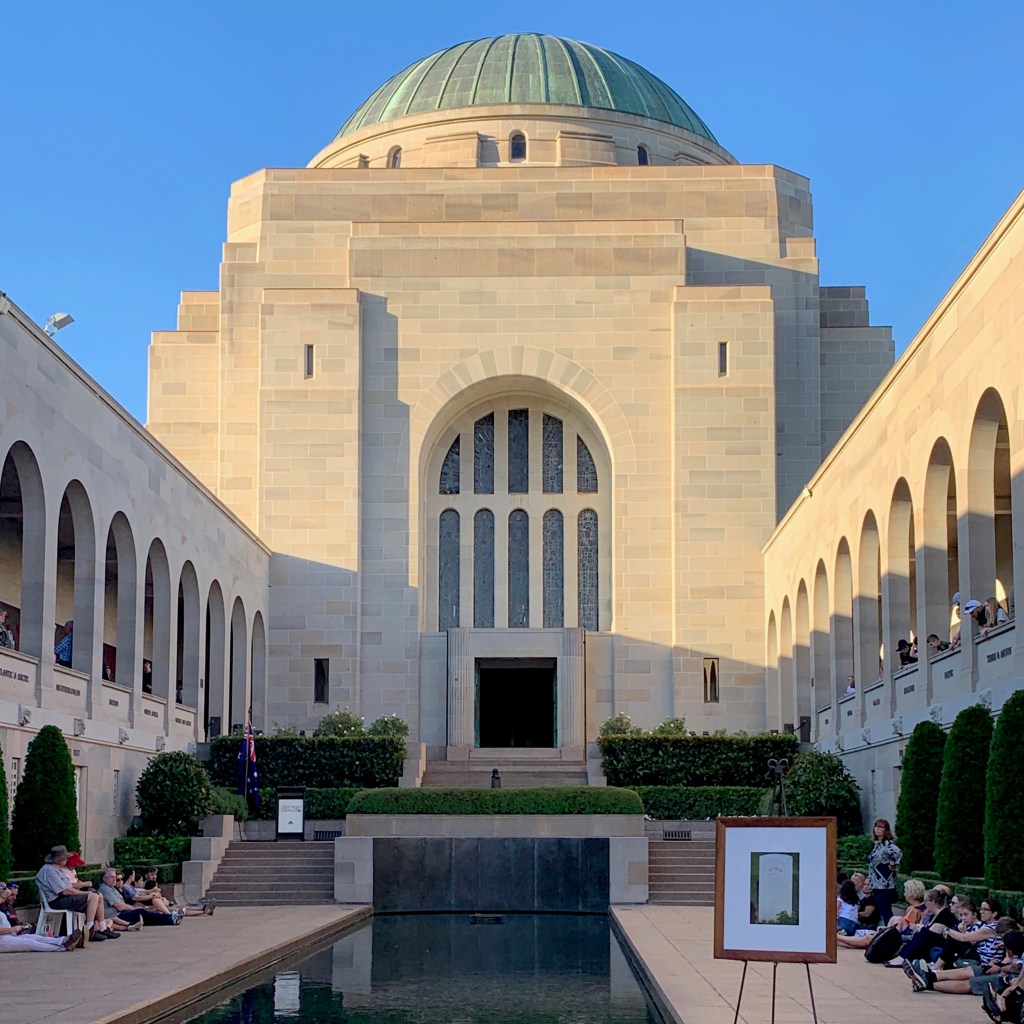
as shadows fall over australia’s national war memorial, crowds gather for the daily “last post” ceremony
the national war memorial is canberra’s #1 tourist attraction.
museum director matt anderson points to the wall where the names of 102,000 australians are engraved. of those, he tells us, 62,000 were lost in four years of world war one, including 8700 in the bloodbath at gallipoli.
memories fade, and the last world war one veterans have long passed. still, anzac day observances are held all over australia each april 25th. that first war left an indelible scar on a young nation’s psyche. almost no one was spared the loss of a loved one. on well-manicured lawns in village squares across the hinterlands of oz, the names of would-have-been husbands and fathers, wives and mothers, are chiseled in stone.
except in the tiny tassie town of legerwood (pop. 193). its boys are memorialized in trees.
legerwood wasn’t even an official town until 1936, but in october, 1918, residents gathered along the main road to plant saplings in memory of each of the seven local boys lost in the fighting.
for the rest of the century the trees stood as a silent reminder of the stolen promise of a generation. by 2001, the trees had become a hazard and had to be lopped. the local folk were having none of it, however. they commissioned chainsaw artist eddie freeman to carve the tree stumps into likenesses of the fallen soldiers.
private alan andrews is shown with his dog, waving goodbye to family and friends.
pernille and i might have missed the modest collection of houses that calls itself legerwood as we drove along tassie’s back roads, except for the roadside sculpture garden that commanded our attention. we stopped for a closer look.
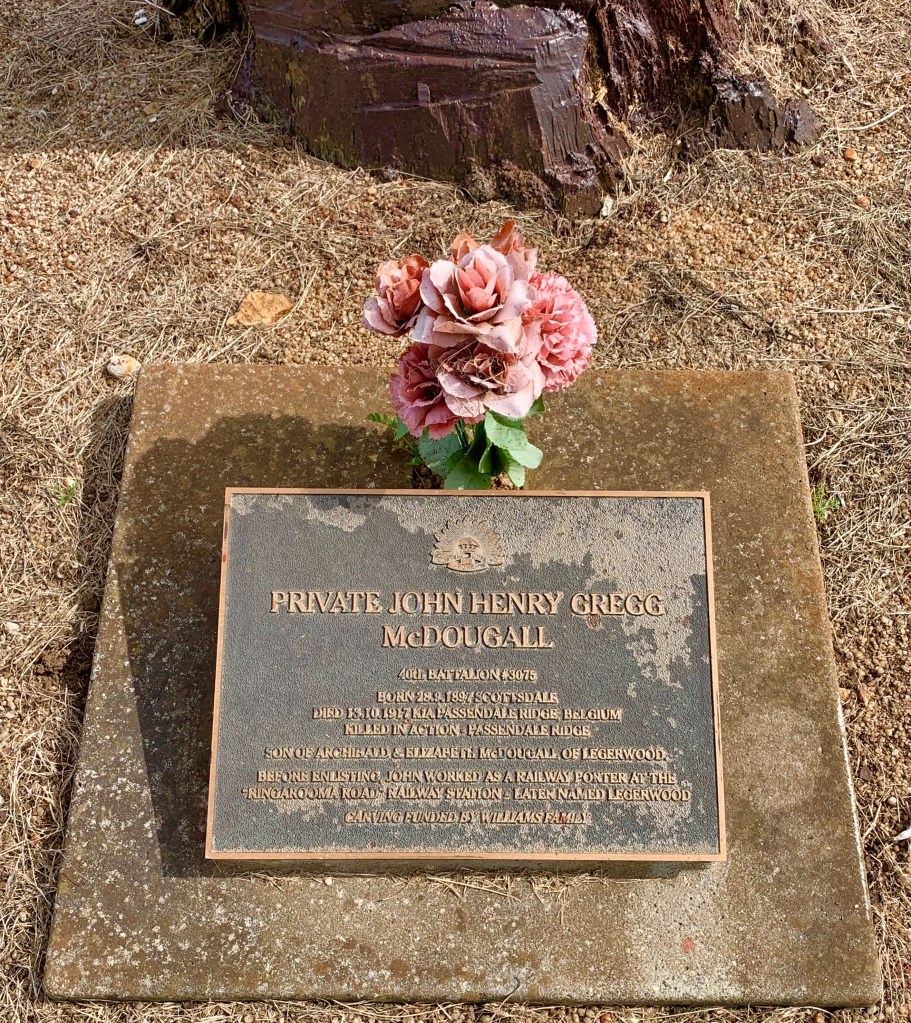
private john henry gregg mcdougall is depicted holding signaling flags. he was a railway station porter before enlisting
what we found was a window into seven war-shortened lives.
corporal john charles ernest riseley is shown in his soldier uniform
thomas edwards was the oldest of the legerwood volunteers. he and his wife of six years, florence, are shown in a goodbye embrace at the center of a carving that depicts the townspeople’s grief.
interestingly, none of the legerwood boys actually died at gallipoli. they all were killed on the western front in belgium and france toward war’s end.
if anzac day and the legerwood memorial weren’t enough, australia’s military legacy was underscored weeks earlier as the royal australian air force celebrated its 100th birthday.
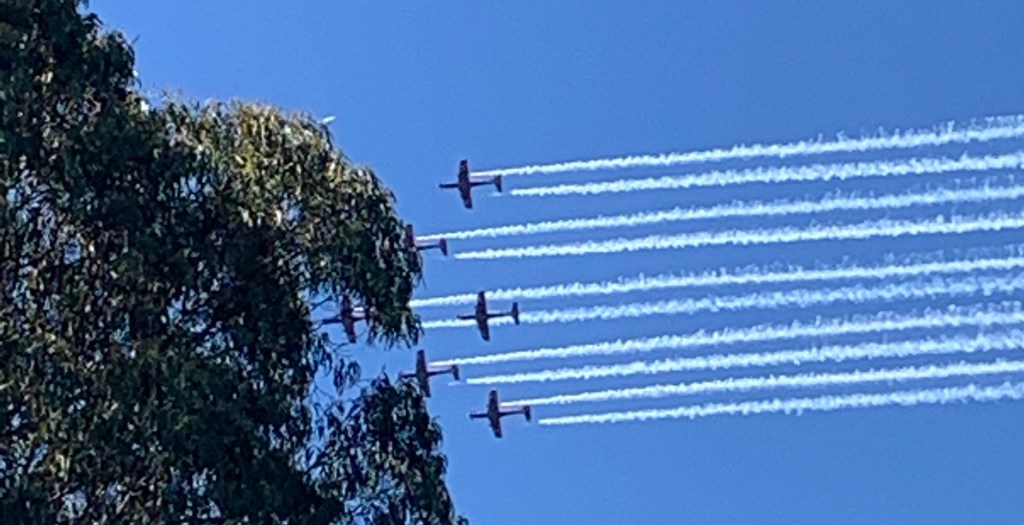
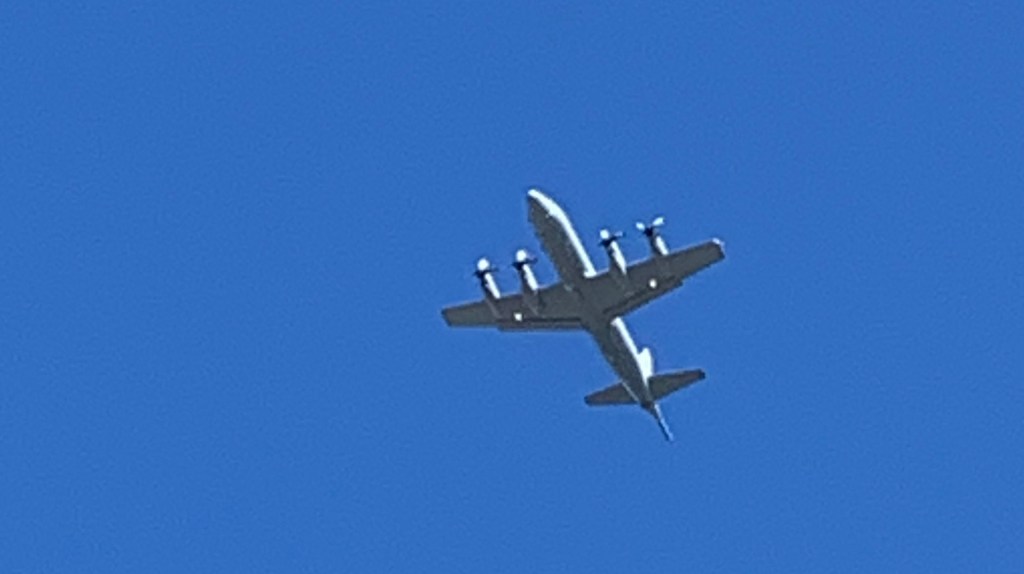
the r.a.a.f marked the milestone with a nationally-televised aerial spectacular in the skies over canberra’s lake burley griffin. (which incidentally didn’t exist then, either). imagine what might have been if the boys storming gallipoli had been able to call in air support.
the roulettes acrobatic team put on a show for canberrans and a live nationwide TV audience
canberrans poured out of their homes and offices on a picture perfect day to witness the flyover. they came by bus, car, bike, on foot; children in prams or on dad’s or mom’s back, with cameras and binoculars, stationing themselves on hills and bridges and along the shores of lake burley griffin, (which is named for the american architects, walter burley griffin and his wife marion mahony griffin, who won the competition to design the capital city in 1911.)
the throngs weren’t disappointed.
governor general david hurley hosted a phalanx of dignitaries for a gala event at government house at the west end of the lake to witness the display, while the band played “waltzing matilda”.
government house as seen from across the lake during the ceremonies
a bird perches along the shore of lake burley griffin to watch the flyover
it’s interesting to note that if the air force didn’t exist in 1915, neither did canberra, and this might be the time to introduce our home town.
in 1911, australia’s parliament formally set aside land for a national capital territory, but nothing much was there. it was just a mountain outpost noted for crisp alpine air and cold clear nights, a sharp contrast to the balmy coastal climate of the country’s major population centers. it wasn’t till the 1920s, after the falling out that prompted walter and marion griffin to return home to chicago, that their vision for a grand city began to materialize. canberra officially became the capital in 1927.
newcomers arriving in the city today see a fully formed metropolis, unaware that the lake, which forms the heart of the capital and seems as if it was always there, was only inaugurated in 1964. only in this century has the griffin’s vision of a grand capital (based loosely on l’enfant’s design for washington d.c.) has come into full view.
the parliament building, the national museum, the trendy kingston foreshore, and other distinctive features dotting canberra’s lakefront are less than 25 years old.
national museum of australia
parliament house
it is quite a paradox that canberra is a young city in a young nation that was still cutting its teeth when world war one broke out. and yet, canberra and australia are home to a civilization that existed in peace for tens of thousands of years before europeans arrived. there is still a reckoning to be done. lest we forget.
an escapade worthy of the elementary detective and his sidekick, watson.
kiah davey leads a double life. a penitentiary guide by day, a thespian convict by night. when the sun shines, she’ll scare the bejeezus outa ya. when the day is done, she’ll tickle yer funny bone.
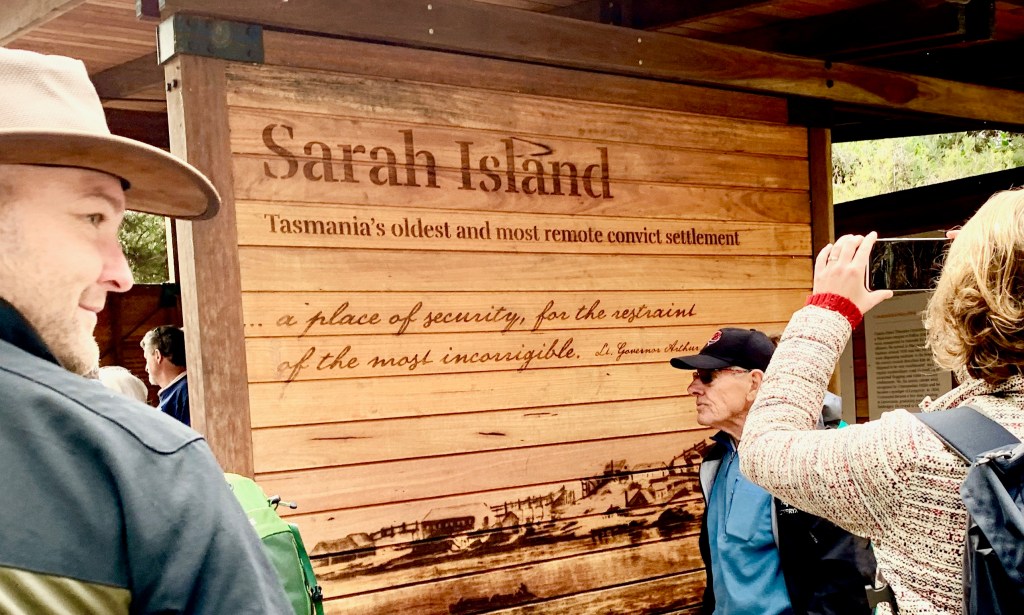
sarah island is not a place you’d want to do time. its history is darker than a wintry day in june, when antarctic gales blow fierce across the rugged rocks of macquarie harbor.
hungry sharks are known to come right up on shore in search of a tasty morsel (you!)
when i first saw this, a leg was hanging out the mouth, but by the time i got my camera out, it was gone.
sarah island wasn’t on our itinerary when we plotted our trip to tassie’s west coast. we were seeking wilderness.
maps of tassie reveal a gaping blank spot in the lower left (southwest) quadrant, an area larger than nine european countries and about the size of the u.s. state of connecticut. in some places the nearest (dirt) road is 50km away. we were intrigued, hoping to experience the “wild rivers” and pristine rainforests at the back of tassie’s beyond. (birds, maybe?)
since roads were in short supply, we located a “family-owned” company offering boat trips across the vast macquarie harbor to the “franklin-gordon wild rivers national park”. the company’s ad featured “one of the world’s last truly unique world heritage wilderness experiences”, and a “stroll through an ancient forest”.
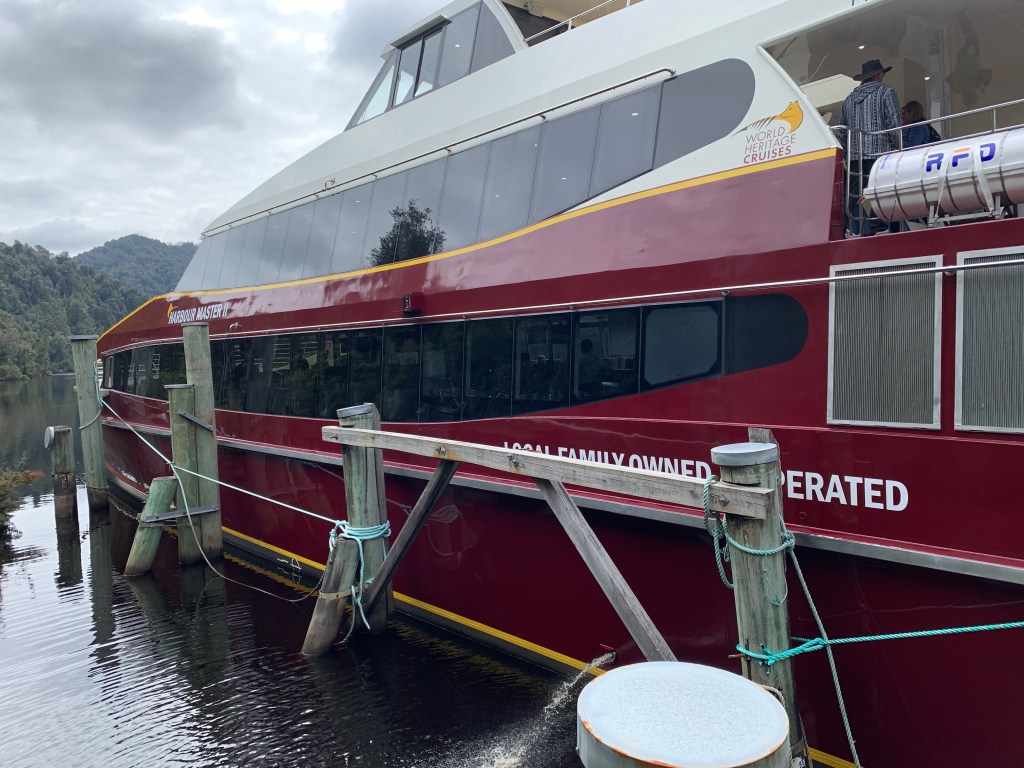
the big red boat
what we got was a five-hour trip on a spiffy red ferry boat up to a landing point where we disembarked for a walk through what could have been a disneyland wilderness theme park or a botanic garden exhibit.
so much for the vision of an aboriginal guide with a canoe gliding silently to a secret landing and clearing a path with his machete through dense underbrush to reveal previously unseen life forms. inflated expectations, ya think?
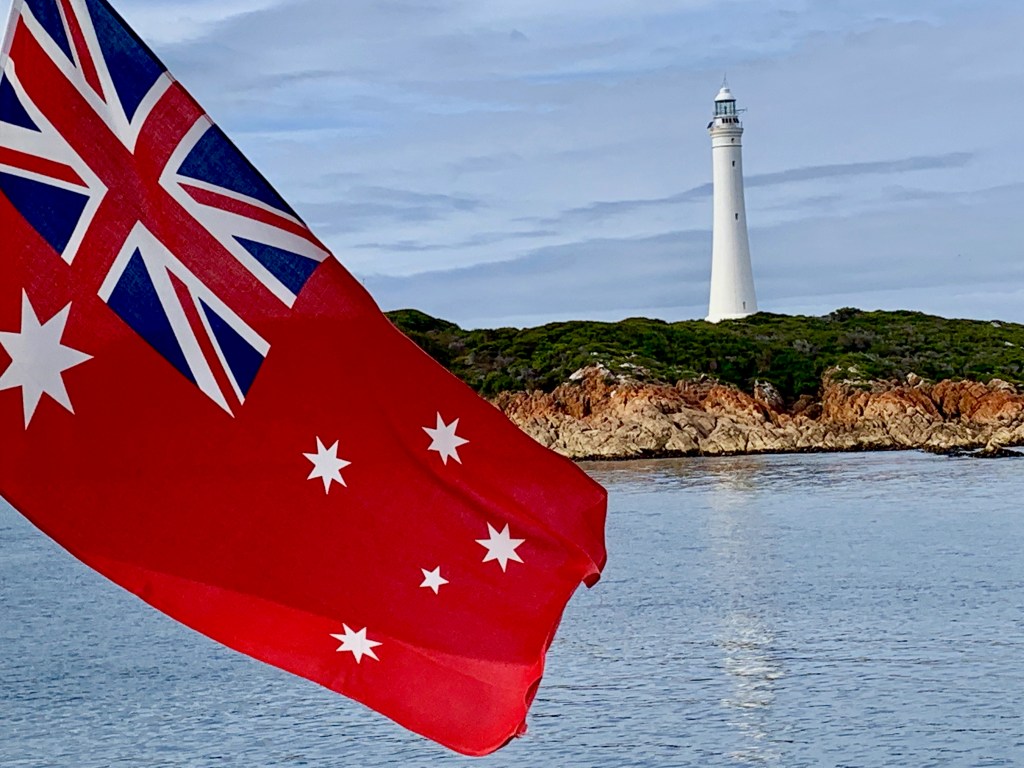
on the plus side, there are some photogenic 19th century lighthouses around hell’s gate, the treacherous entrance to macquarie harbor.
hell’s gate lighthouse warns mariners navigating the narrow passage to macquarie harbor
sorell point lighthouse is the second tallest in oz
the cruise begins at strahan, a munchkin-sized port (pop. 600) catering to the tourist trade astride hell’s gate, on a thin line between fantasy and cold, hard reality. strahan is a pale shadow of the thriving commercial hub that once exported copper and prized huon pine to the world. it’s also the gateway to sarah island, a convict settlement so miserable that….
the reality is, strahan makes a good bit of its living off sarah island’s horrid reputation.
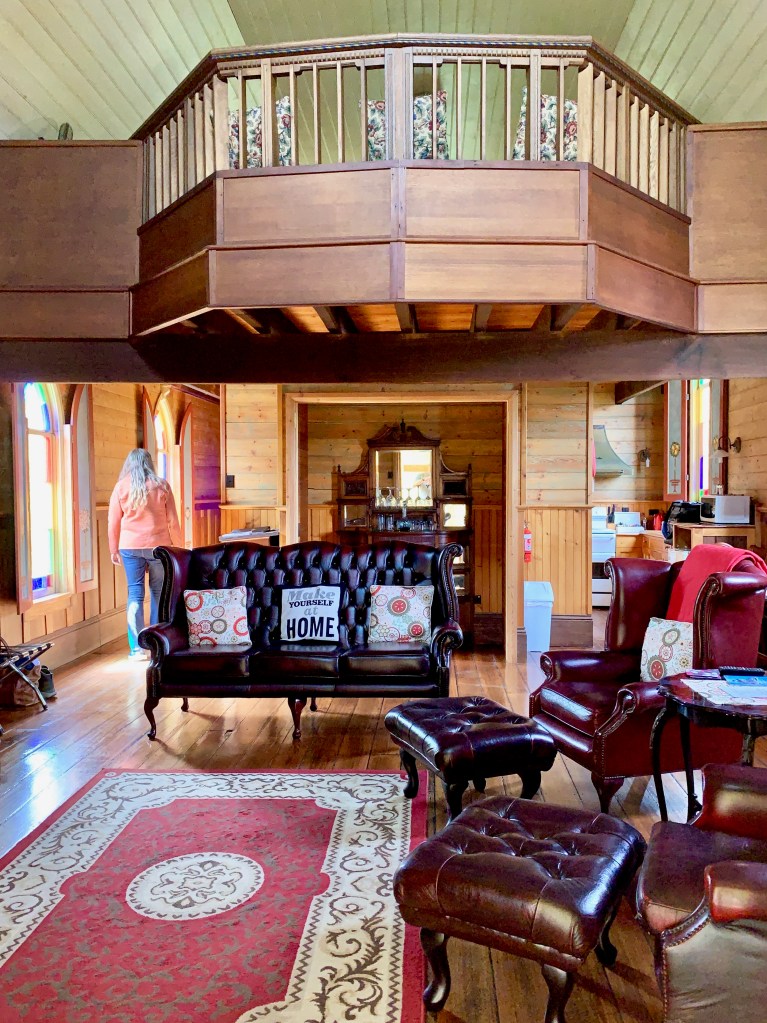
as for fantasy, pernille had booked us into a former church converted to a bed and (no) breakfast. as kids, we used to get in trouble for sleeping in church, now they have a bed above the altar and charge handsomely for the privilege.
after stashing suitcases in the choir loft, we ventured into town, wondering what other sacrifices had been made at that altar.
strahan (pronounced strawn) runs a couple blocks in either direction from the boat dock. the first thing we encountered was fantasy; a billboard for a way, way, wa-a-a-y-y off broadway dramatic production titled “the ship that never was”, advertised as australia’s longest running play. (27 years! in a town of 600 people?)
hmmm, might be worth a look, we thought. there wasn’t much on the evening’s agenda. “church tv” was on the blink. so it was off to the box office to purchase a couple tickets. “sold out”, announced the young woman in the booth. a second show had been added that evening by popular demand, because anti-social distancing rules limit the theater capacity, but….
we struck up a conversation with the box office attendant, whose name was peta. she asked if by chance we had reservations for the next day’s boat trip. we did. she suggested we might want to wait to see the show til after the cruise, because the story would be more meaningful once we’d experienced sarah island. hmmm, dr. watson. a clue.
we reserved two seats for the following night.
the next morning we boarded the boat, excited about the promise of a “wilderness experience”. the first stop, however, was sarah island, so named by the first englishman to set foot there in honor of his boss’s wife. the aboriginal name for the place is langerrarerouna.
with all due respect to the island’s indigenous peoples, we’re sticking with “sarah island”.
which is where kiah (pronounced kai-ah) davey, the storyteller, takes over.
kiah enthralls audiences with tales of the island’s sordid history
kiah is in several ways an original. she traces her ancestry back to the first convict ships that arrived in australia from england in 1788. her great great uncle tom davey served as lieutenant governor of van dieman’s land, as tassie was known then, from 1812 until he was sacked in 1815.
tom was known as a drunkard who hung with the riff-raff in the slums of hobart. he scandalized the ladies with bawdy behavior in his shirtsleeves on sunday afternoons. he was, as they might say in tassie, a “davious character”. in spite of that, or maybe because of it, tassie now boasts a port davey, a davey river, the davey amphitheater (in strahan) and many davey streets and davey drives and dives of diverse descriptions.
when the big red ship arrived at sarah island, the passengers were divided into groups and assigned guides. so it was the luck of the draw that brought us to kiah, the historian.
kiah tells a harrowing tale of australia’s first “banishment settlement”, a place meant to be so awful it would terrify convicts into behaving. “it didn’t work,” kiah observes dryly. “it never does”.
it isn’t hard to feel the hiss and crack of the cat o’nine tails ripping into human flesh as kiah recalls the year 1825, when a total of 10,000 lashes were meted out to 240 inmates (of roughly 350). the camp commandant and others witnessed the screaming pain to ensure there was no mercy. “It had to be correct,” kiah notes.
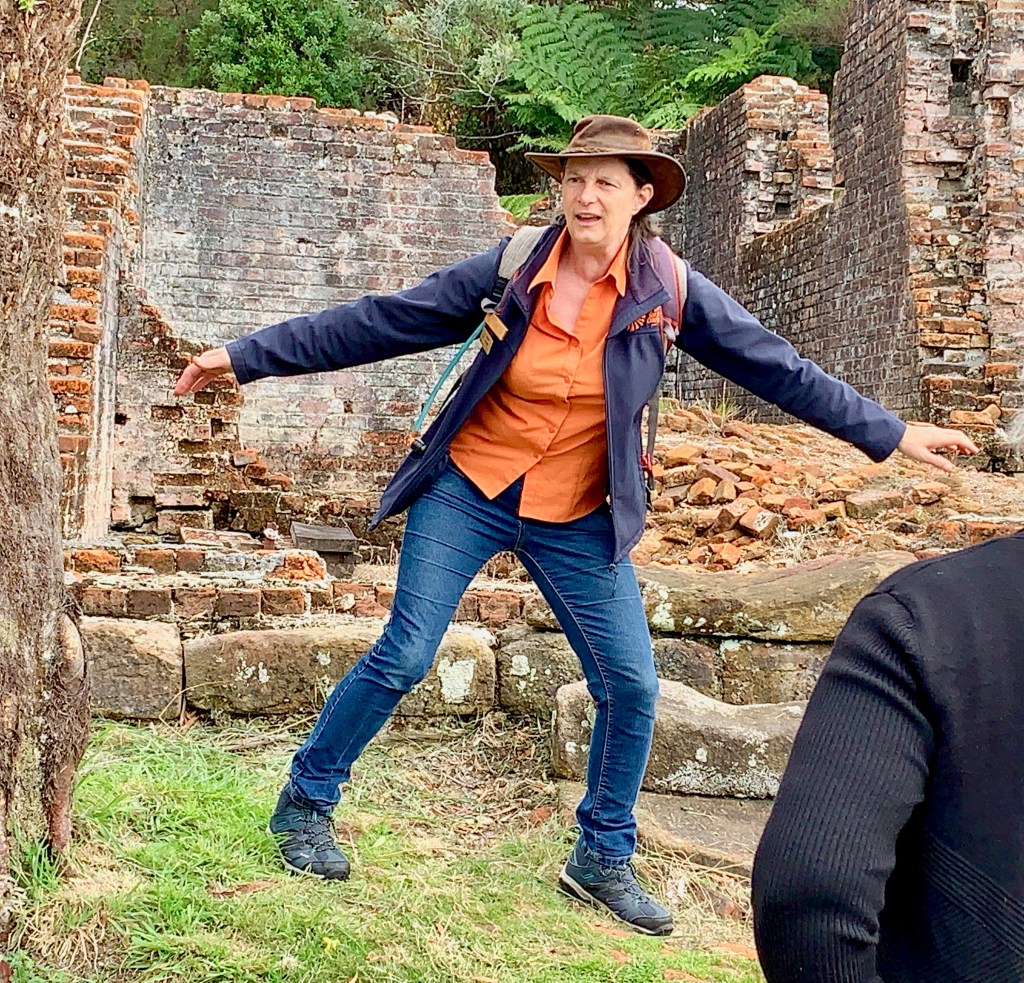
very little remains of the settlement. most of the buildings were made of wood. they’ve been lost to the ravages of time, scavengers and looters. only a few meter-thick sections of the penitentiary wall still stand, along with the baking ovens.
the establishment of the sarah island penal colony was based on two premises. first, it was so remote that it would be impossible to escape; second, it would earn enough money to pay for itself. the region’s tall, straight, flexible huon pine trees were highly prized by shipbuilders. but harvesting the logs and getting the timber to shipyards in hobart took a gruesome toll in lives, limbs and lumber. the treacherous one-way journey around the southern horn of tassie and through hell’s gate took eleven days in good weather.
sarah island around 1830, when it was a booming shipbuilding center with a population of nearly 600, including some families of staff and inmates.
it soon became obvious that it would be smarter to build the ships at sarah island. in 1827, when the shipyard opened, what had been a forlorn convict station became a boom town as skilled shipwrights were lured by lucrative offers of cash to man the yard.
from 1827 till it was shut down, sarah island was australia’s #1 producer of sailing brigs, turning out more than 100 seaworthy vessels.
the macquarie harbor penal station was finally scragged (put out of its misery) in 1833, not so much because it was a horrible place as that keeping it supplied was too difficult; even with convict slave labor, it was a money-loser. the prisoners were transferred to the newly opened convict colony at port arthur, just half a day’s journey from hobart, as opposed to eleven days of vomiting over the railing into storm-tossed seas on the sarah island express.
in the penal colony’s twelve year existence, (1822-33) at least 180 escape attempts were made from sarah island. most failed. one notable exception was the last one.
and therein lies a rollicking merry (and mostly true) tale of mischief and mayhem; a convict’s eye view of hardship and heroism, where underdogs rule.
when the play opens, four convicts are discussing ways to avoid a scragging (the hangman’s noose) for mutiny and piracy on the high seas. the four were among ten convicts who had commandeered the frederick, the last brig to be built at the sarah island shipyard.
the ten of ’em were among the last convicts on sarah island. they were putting the final touches on the frederick before it sailed to hobart, where it would be commissioned. instead, they overpowered their guards and commandeered the vessel. they then sailed all the way to south america, where they ditched the ship off the coast of chile and told the locals they had been shipwrecked.
their story worked, for a while, and the ten were allowed to live as free men in the chilean port of valdivia. six of them eventually hopped a lift on ships headed elsewhere before the authorities got wise and turned the remaining four (two) over to a passing british frigate. they were brought back to london, then returned to hobart for trial, where they were found guilty of piracy and mutiny, and sentenced for a scragging.
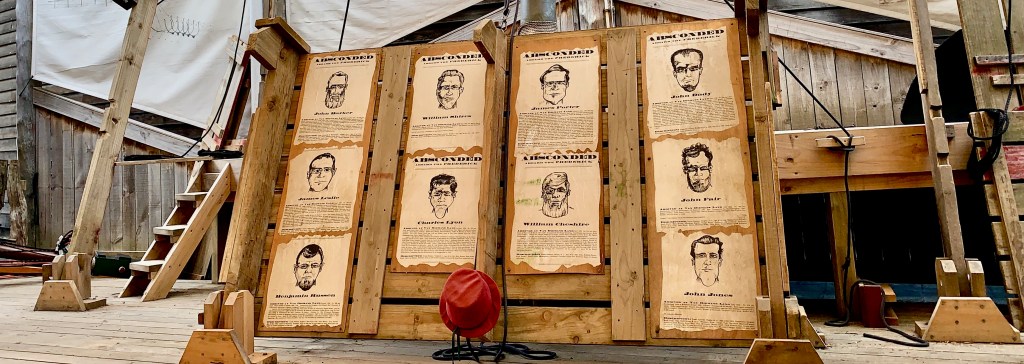
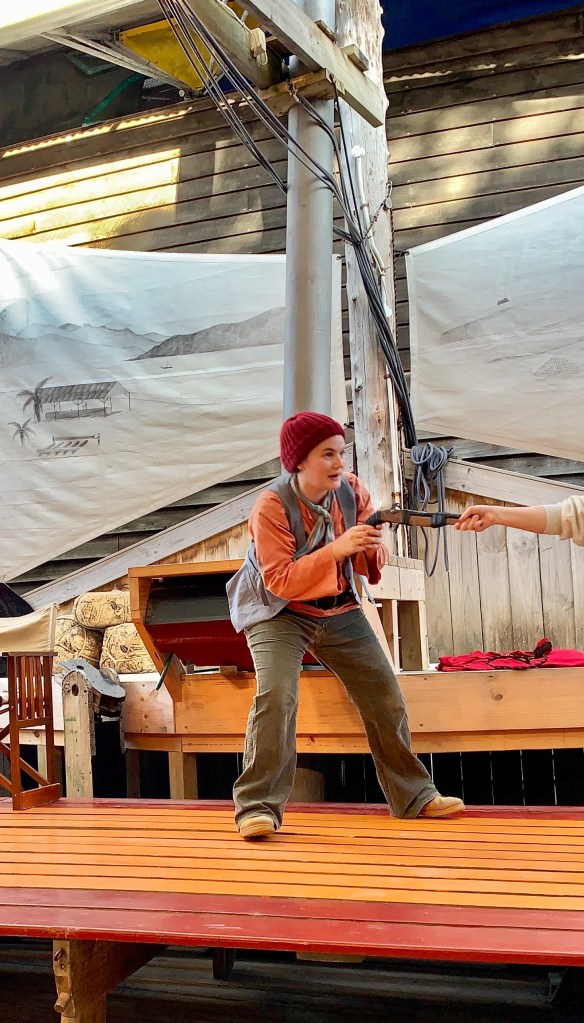
as the play begins, the four are plotting a strategy for appealing their death sentence. when they walk out on stage, who do ya think they are? it’s kiah davey, this time in convict’s garb, playing the part of the ringleader james “jimmy” porter. her partner in crime, billy shires, is our friend peta, who had been selling tickets the previous evening. that’s the cast.
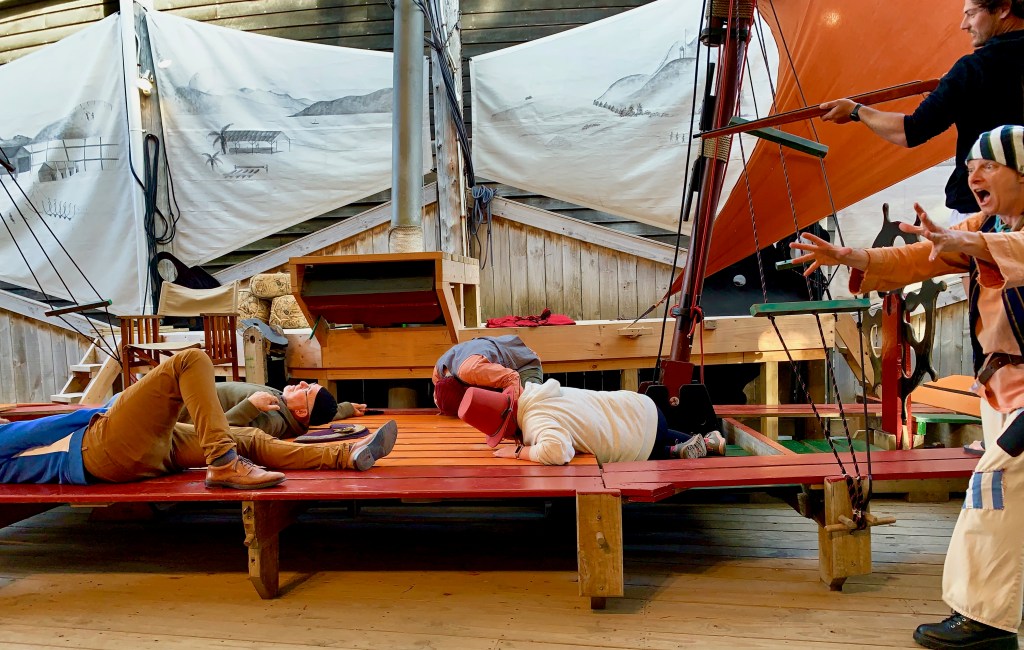
the other two co-conspirators, william cheshire and charles lyon are played by unsuspecting folks plucked from the audience. in fact, all the eight or so other players are paying customers drafted into the cast.
.
audience members play supporting roles, making every performance different
the result is a wild and hilarious audience participation free-for-all, including a re-enactment of the mutiny, complete with gunplay and axe fights, a parrot that squawks and curses incessantly, a cat, and kiah, all the while imploring the audience to give “thumbs up” or “thumbs down” to their crazy appeal to escape a scraggin’.
the argument they concocted was that the crime could not have been mutiny since the convicts weren’t actually members of the ship’s crew, and it couldn’t be piracy since the ship was not on the high seas; and, crucially, since the frederick had not yet been commissioned, it wasn’t technically a ship at all.
“It was canvas, rope, boarding and trenails, put together shipwise – yet it was not a legal ship; the seizure might have been theft, but not piracy.”[12]
so, no ship, no crime. right, sherlock?
in real life, their appeal succeeded. (thumbs up!) the judge ruled that they didn’t give a ship… or take one. so they were spared the noose.
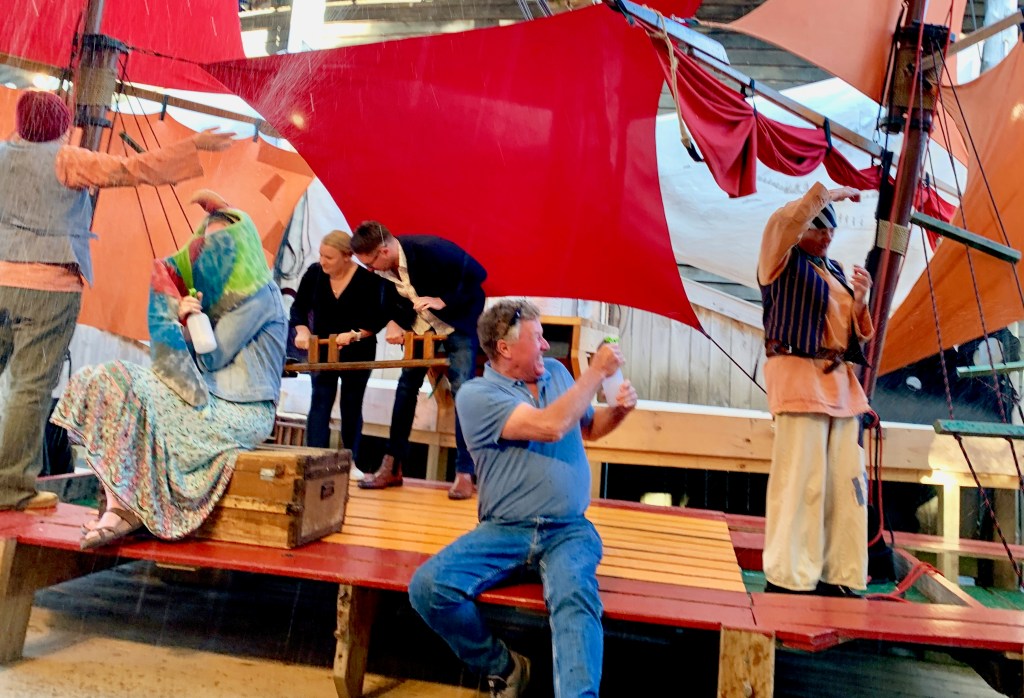
the grand finale is a sea squall that almost sank the frederick in the wind-whipped south pacific ocean. members of the audience play the part of the weather. water squirt bottles are handed out all around, and on cue, everyone starts spraying water at perfect strangers and creating a mist in a real squirt gun rainstorm.
it’s a riot.
interestingly, jimmy porter happened to have been an educated man, and he wrote two books about the convict experience. the first was published in serial form in a hobart newspaper, and was said to have been instrumental in turning public opinion against the brutality of the penal system.
instead of hanging, the four got off with’ life in prison. a few years later, porter had his sentence reduced after saving several officers from drowning after their boat capsized. he eventually escaped again and is still absconding. posters have been printed offering a reward for information leading to his recapture.
“the ship that never was” was among 70 plays written by richard davey, kiah’s father, and co-founder of the round earth theater company, along with his wife kathi. richard played the role of jimmy porter for most of the first seven thousand or so performances. sadly, he fell ill and succumbed to cancer ten years ago, so kiah has taken up the role of jimmy as well as the role as c.e.o. of the round earth company, keeping the family tradition alive.
the story is told seven nights a week, from september to may, at the richard davey amphitheatre in strahan. if yer doin’ time in oz, it’s worth the trip.
i had just completed a gruelling run over a rocky, ragged bush trail in the ferocious australian sun at mulligans flat, a vast nature preserve on the northern outskirts of canberra. i was spent. gasping for breath (i gasp easily) and drenched in sweat, i found a shady spot to recover, when i was approached by a young woman.
“are you here for the aboriginal tour?” she asked politely. My first thought was, do i look like a tourist? but instead i asked what the tour was about. and as quick as that, i was off on a journey into the deep history of australia’s (presumably) first peoples, the continent’s traditional custodians.
mulligans flat has become one of our go-to destinations as we settle in to the ACT (the australian capital territory, which encompasses canberra). it’s ideal for pernille’s bird-watching exploits because of its woodlands and wetlands, which count among its inhabitants all manner of avian species, from the rare australian spotted crake to the more common eurasian coots and cuckoos. (mostly old coots and cuckoos, it seems)
the flat, which is not flat at all, also offers a challenging jog along craggy paths that by one reckoning date back to the early 19th century, when the irish ex-convict edward mulligan received a land grant in the area after serving his sentence. or maybe it was another mulligan, cornelius. it’s disputed. research, as they say, is “ongoing”.*
what’s not in dispute is that the true pioneers of mulligans flat were probably the ngunnawal (pron: NUN-a-wall) people, who inhabited the land thousands of years before mulligan or any other europeans set foot on the australian continent. the ngunnawal were hunter-gatherers who settled in this area around the end of the last great ice age, perhaps 12,000 years ago. other tribes are believed to have roamed the continent as long as 65,000 years ago.
now, full disclosure. i didn’t know any of this until about 15 minutes ago. i was just out for a sunday morning run and, and… well, things happen.
the tour i have been enticed to join has been organized in conjunction with the annual celebration of NAIDOC week, which was postponed this year from its usual time in july to give us time to arrive in australia for the observance. (ok, it was because of COVID, but sometimes things just….happen). call it serendipity.
2020 national NAIDOC poster contest winner, Shape of Land, designed by Tyrown Waigana
NAIDOC originally stood for ‘national aborigines and islanders day observance committee’, which was once responsible for organizing national activities to recognize the culture and traditions of the continent’s first residents. over time, the acronym stuck, becoming a recognized word in the aussie language, even though the term “aborigine” is now almost a pejorative, and the “day” has evolved into an eight-day week (sunday to sunday).
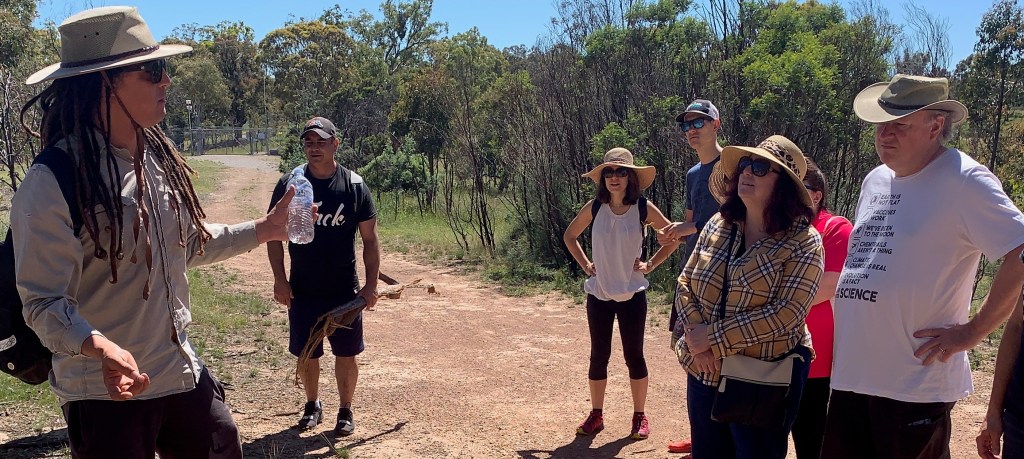
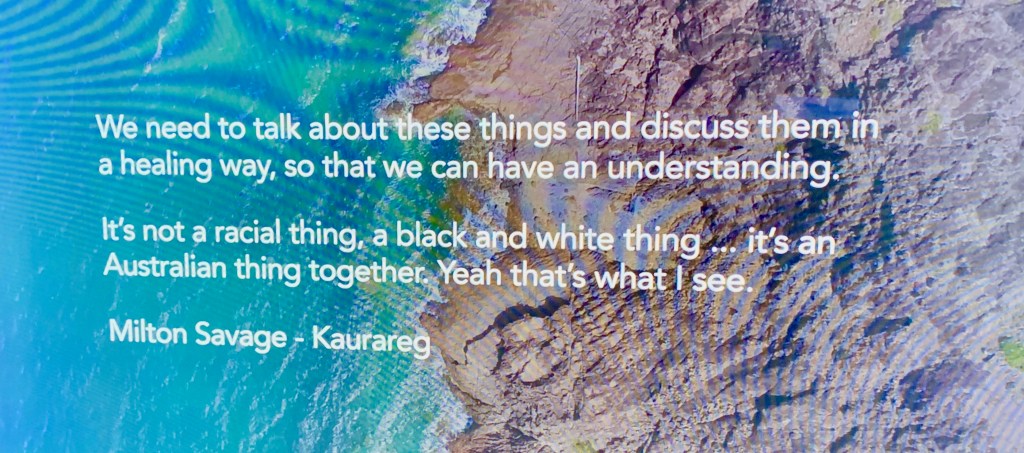
and so it came to pass that the first three representatives of australia’s indigenous community we encounter turn out to be some of the region’s most knowledgeable purveyors of inter-cultural harmony, dedicated to preserving the much maligned and almost forgotten traditions and history of their ancestors while healing the wounds still festering after centuries of ignorance and insensitivity.
from L: richie allen, richie allen III and aaron chatfield
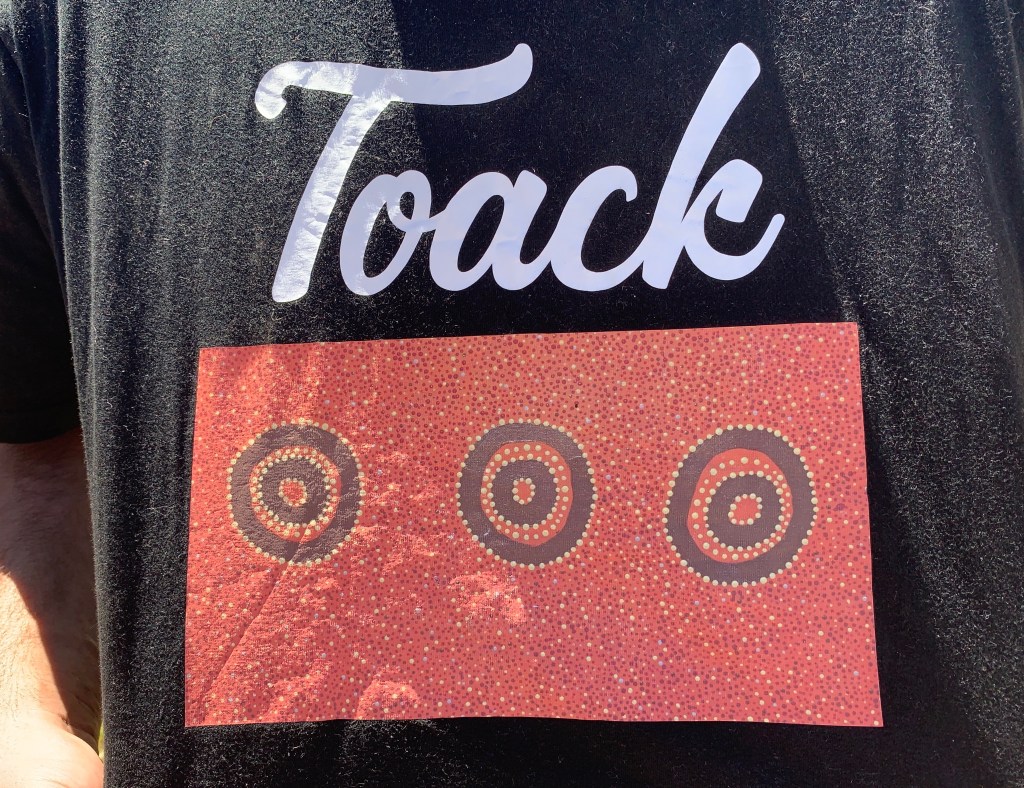
richie allan, our chief guide, showed up to our meeting with a fistful of eucalyptus bark. he is a legend in the field of cultural preservation and understanding, and is grooming his son, richie the third, to walk in his footsteps. they have a company called TOAC, or “traditional owners aboriginal corporation“, which has as its goal “to inspire and enable all australians to contribute to the reconciliation of the nation.” they’ve added a “k” to make it TOACK. the “k” stands for kinship, a reference to the holistic approach first peoples have historically taken in their relationship with mother earth, viewing land, water and culture as one, rather than as separate entities.
“our god is the earth,” explains the third member of the guide team, aaron chatfield. “we have to look out for it, so it will look out for us.”
chatfield, who wears his hair in dredlocks, (though it’s not an ancient tribal custom,) runs “dreamtime connections“, which works with local schools and community groups to preserve and promote the understanding of indigenous cuisine and agriculture. he’s renowned for his “bush tucker” gardens, where he teaches young australians about how the first peoples used the plants and trees around them to provide a tasty, healthy diet, and so much more. he seems particularly fond of wottle-seeds.
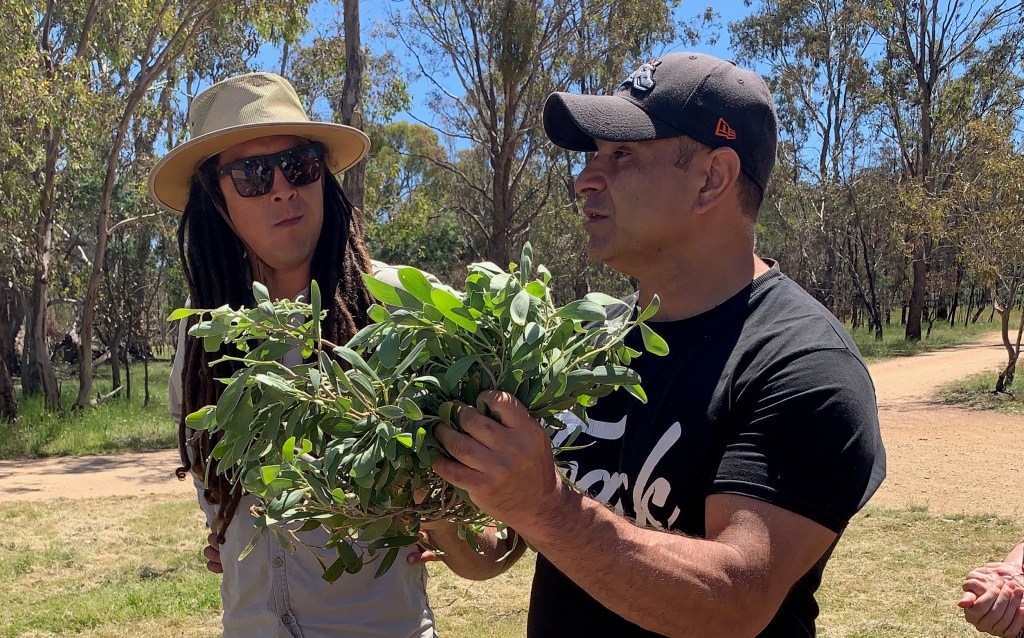
before eating, however, it’s washing up time, and aaron and richie give us a demonstration of aboriginal hygiene. from a nearby blackwood wottle tree, (acacia melanoxylon) they pull down a handful of leaves, aaron tears off a few and begins rubbing them between his palms.
richie pours water on as aaron rubs his hands together, creating soapy-suds that make an excellent hand sanitizer.
richie then demonstrates the many uses of the versatile eucalyptus bark. among many others, it’s a tasty tea, a healing medicine; it can be woven into a rope or torn into shreds to use as tinder for fires.
richie then points to some otherwise unremarkable trees and shows us what they can see but we can’t. the trunks and branches have been expertly trimmed and shaped in specific ways to provide directions for ancient nomadic travelers, literally an old school GPS system.
and the seeds from the wottle bush? aaron has made wottle-seed cookies for a snack, washed down with a eucalyptus tea.
everything these first people needed, mother earth provided. spears for hunting and fishing came from trees, as did the aerodynamically genius, not to mention lethal, boomerangs cut from the joints between trunk and branch.
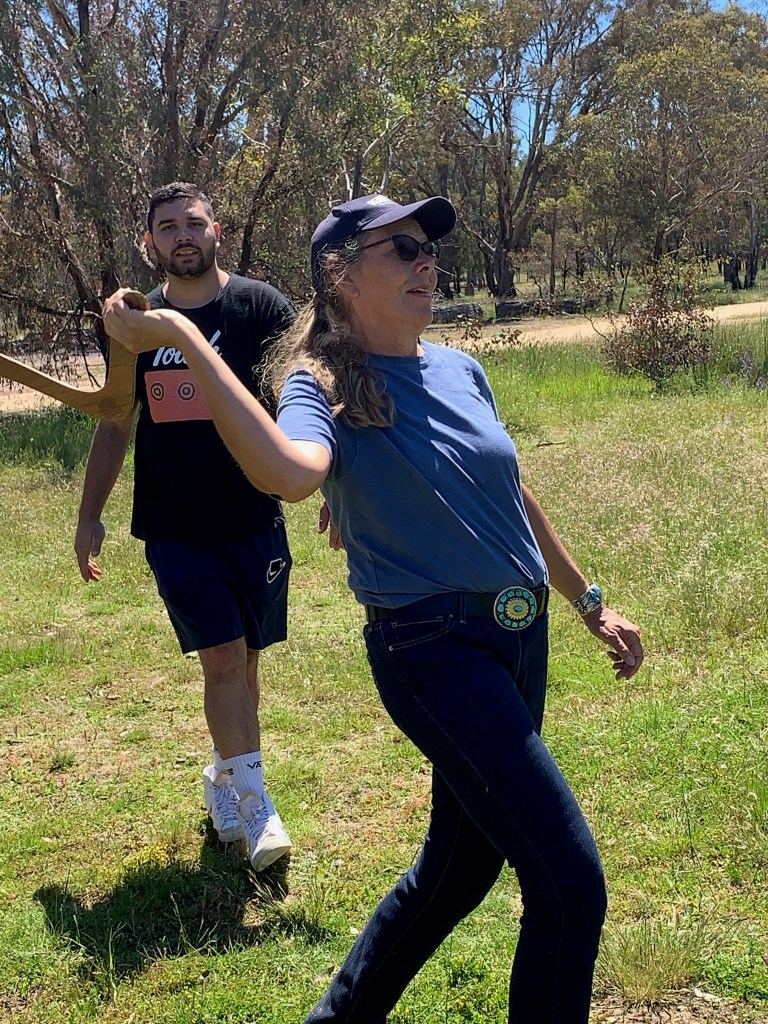
richie the younger has brought along a boomerang to give us a lesson in the deadly art.
pernille gets a boomerang lesson from richie. beware predators!
boomerangs hold a special place in aboriginal lore, known as The Dreaming, or Dreamtime.
according to the dreaming legend, a sacred ancestral being in the form of a rainbow serpent sent bats to earth for people to eat during a drought. but the bats flew high in the sky and the humans couldn’t catch them. so the snake removed one of his curved ribs and gave it to the people so they could knock the bats out of the sky for food.
richie the younger gave us all a chance to practice our boomerang fling. pernille got the knack right away. fortunately nobody died.
pernille strikes at her first victim.
our introduction to the dreamtime boomerang story was an epiphany moment, peeling back another layer in the remarkable history of australia’s first peoples, who lived for eons taking from mother nature as they needed and giving back as they could, ingeniously maintaining the delicate balance that existed until captain james cook appeared along the east coast of the country in april, 1770, ironically exactly 250 years ago, to claim the land for england.
it was eighteen years later that the europeans returned to sydney harbor to establish the first colony of convicts and ruffians that became white australia. in their defense, the 232 years since they arrived has seen the country rise to become a great and prosperous nation that is striving mightily to atone for the great sin that stains its history.
but the wounds are still fresh. the scar tissue still tender. it has been little more than 50 years since the passage of a referendum that recognized the existence of indigenous people. “until 1967, we were considered to be just flora and fauna,” aaron chatfield observes ruefully.
and it is 12 years since prime minister kevin rudd offered a public apology in parliament for the “stolen generations”, and lawmakers passed a resolution “that all australian parliaments officially acknowledge the responsibility of their predecessors for the laws, policies and practices of forcible removal.”
from the “endeavour voyage” exhibit at the australian national museum through april, 2021
nevertheless, aaron and the allans are out in mulligans flat for NAIDOC week, healing, teaching, preserving for their children and ours, and for generations to come, the beliefs of their ancestors as told in the dreaming…
…that aboriginal people have been in australia since the beginning.
at the end of our tour, the allans invite us to break bread with them. not just any bread, mind you, but fresh home-made traditional bread of the ngunnawal people.
and what to dip it in? wottle-seed sauce. such a treat!
so what do we tourists owe? the tour is free, part of NAIDOC week observances.
but we owe it to the country’s traditional owners to honor the memory of the lost generations, and to foster the spirit of inter-cultural respect that will, in the fullness of time, heal the gory gash inflicted on the soul of a great and beautiful country of many peoples.
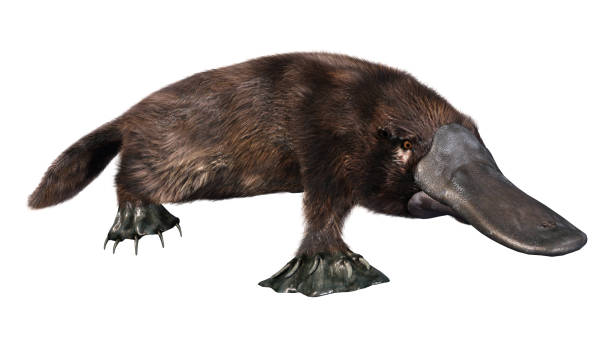
oh, and about that mystery of mulligans flat. solved. richie allan explains that mulligan is the ngunnawal word for platypus, the sweet creatures that are a common sight on nearby lakes and waterways. so much for the controversy of edward vs. cornelius.
all in all, not a bad way to start off a sunday morning.
wind and solar are contributing a significant share of south australia’s electric power supply
tuesday, october 20th, (10/20/2020) began with medium to low expectations. we are going to be driving three hours out of adelaide into the south australia countryside (and three hours back) to see a big battery that stores power from a nearby wind farm. (i’m trembling in anticipation.)
well ok, it’s a REALLY BIG battery. (yawn)
but six hours of driving? for a 90 minute tour of a battery? this had better be good, pernille.
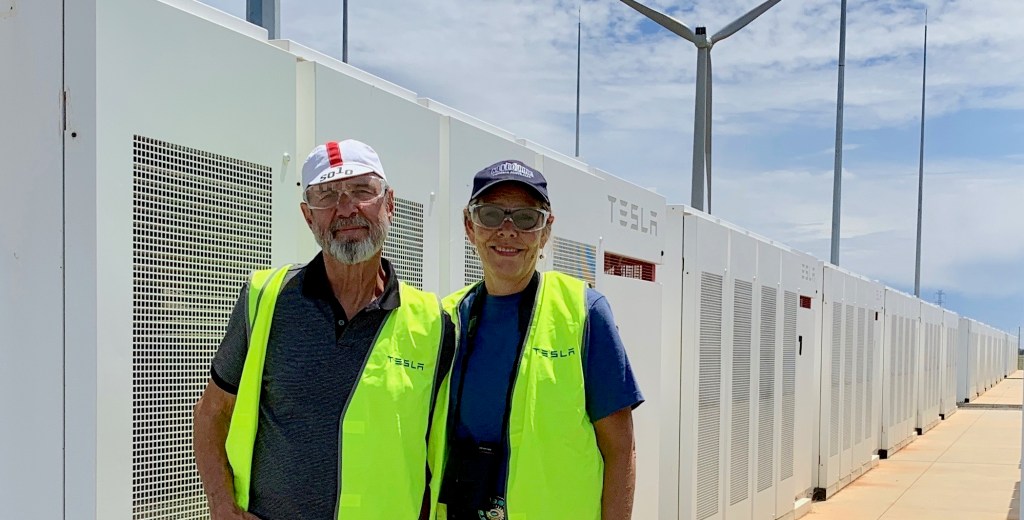
there is an interesting angle to the story, however. this was the world’s first large scale battery storage facility, and until a few months ago the world’s largest. it’s the brainchild of the inventor elon musk, a massive 150 megawatt lithium-ion tesla “power pack” that’s storing energy produced largely from a nearby 315 megawatt wind farm. according to PV magazine, it’s saved the south australia government tens of millions of dollars in grid stabilization costs and generated $50 million (AUD) more in revenue.
we had to wear protective glasses and cool day-glo tesla vests during our tour of the plant
denmark is part of the story, too. vestas, the danish firm that pioneered the wind turbine industry, has 40% of australia’s windmill market.
the story gets better, though. elon musk built the power pack complex on a bet in 2017 after a freak storm left much of south australia without electricity for several days. during an online debate about the country’s energy security (or lack thereof), musk bet an australian billionaire $50 million that he could have a 100MW tesla battery plant up and running within 100 days or the facility would be free. he won.
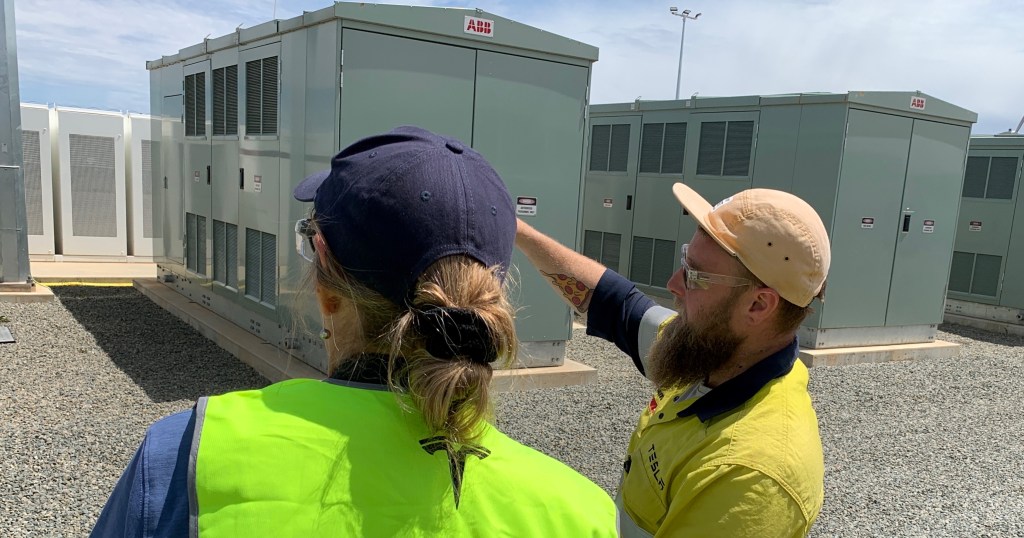
the plant’s operations manager, liam pacini, gave us the cook’s tour, even opening up the cabinets to show us the insides, though for proprietary reasons we couldn’t take pictures.
pacini foresees the day when australia can turn off all its coal-fired energy plants and produce 100% of its electricity from renewable sources.
south australia is committed to the 100% goal by 2030, and has already achieved its 2020 goal of 50% renewables. complete independence from fossil fuels is an audacious dream, but if anyone can pull it off, south australia can, with the help of elon musk and tesla’s assemblage of engineering geniuses. as of today, if another emergency were to hit like the one in 2017, the tesla power pack could provide 45,000 homes with electricity for 24 hours.
each cabinet houses thousands of AAA size lithium batteries in a temp-controlled environment
with a souvenir tesla vest in tow, we head back toward adelaide. we had driven out in the morning through picturesque wine country, so we decide to drive back along the coast road to see more of the countryside. looking at the route on our GPS we notice a little town named laura just a few kilometers down the road.
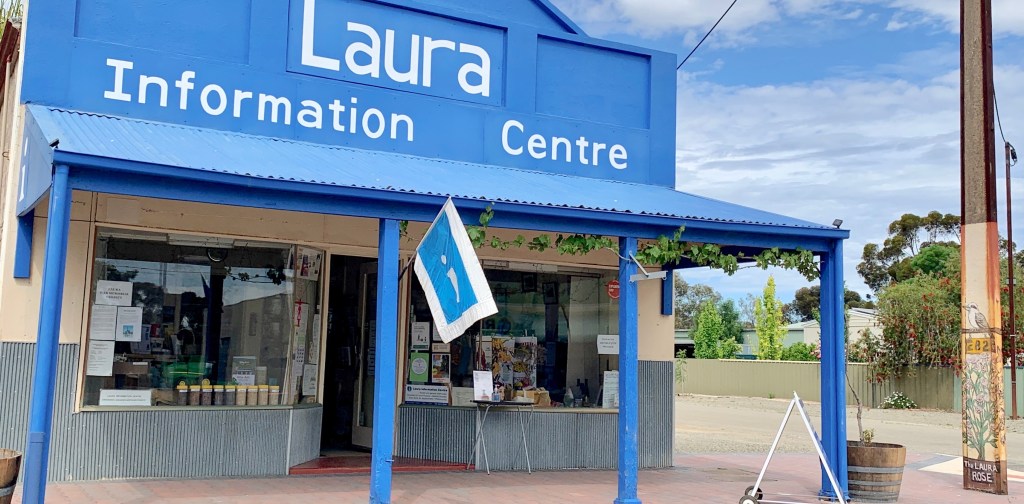
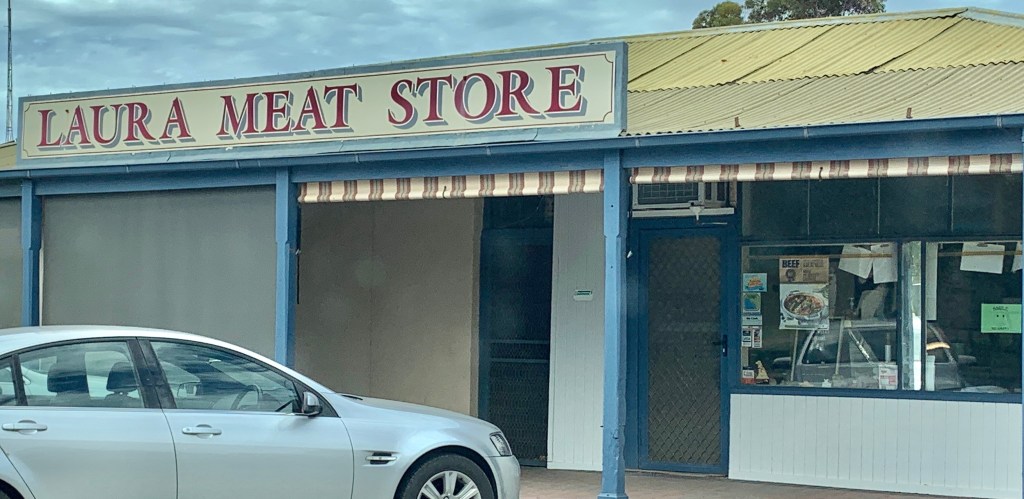
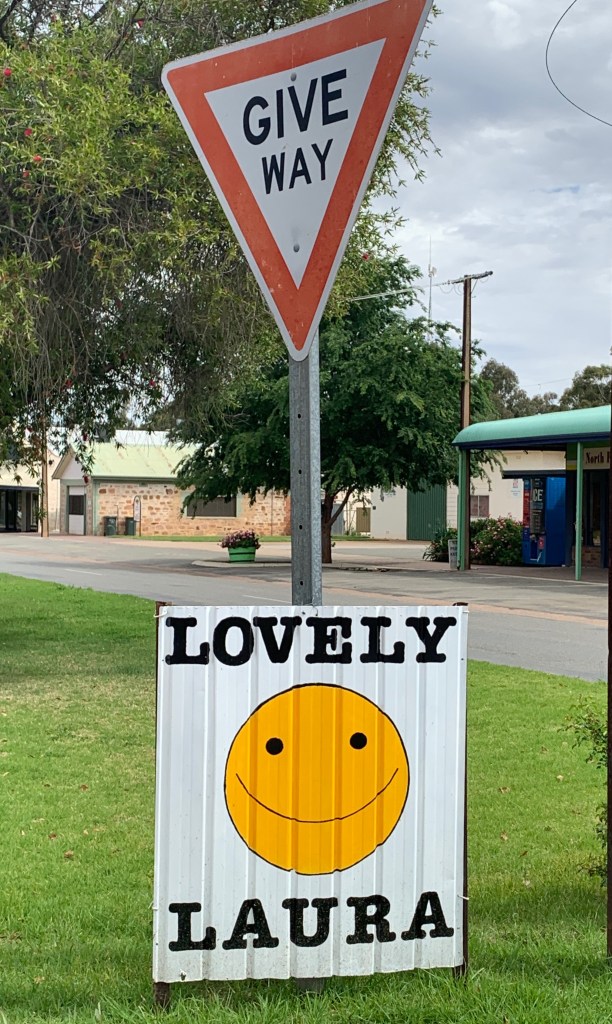
much to our delight, the town has been completely “laurified”
as many readers of this blog may know, we named our daughter laura after our dear friend laura kakko, a finnish diplomat who we came to know and love during our india days. kakko laura, as we affectionately called her, left us too soon, but not before blessing our holiday house in denmark with moomin collectibles inspired by the moomin children’s books written by the swedish-speaking finnish illustrator tove jansson.
so kakko laura was surely alongside us as we parked in front of a sign reading “coco laura”, and walked in to a wonderland of chocolates and other assorted confections created by the master chocolatier david medlow.
the maestro himself just happened to be in, and was busily creating a batch of his incomparable “peckton’s berry fruits”, (he let us sample). his secret ingredient: none other than real danish pectin. he swears it’s the best money can buy, and he had a big bag of it under his table to prove it.
the main part of the business, however, is chocolates, beautifully gift-wrapped for delivery anywhere in the world. the shelves in the shop are a bit bare, because in this time of COVID, australians are confined to their home country. as a result, they’re spending holidays exploring back roads leading to places like laura. coco laura is having trouble keeping up with customer demand. business in the time of COVID has never been better.
one thing for sure. we’re going to become regular cocolaura customers. it’s easy to order online at cocolaura.com. and cocolaura chocolates will make a perfect arrival gift when we’re invited for dinner!
by the time we leave the little town of laura, the sun is descending rapidly toward the western horizon. we “proceed to the route” along the coast road, realizing that a course correction is needed. pernille, after all, is on duty. it’s a work day. she had hoped to be back at the hotel by 6:30p.m. to use the wifi system for a scheduled zoom meeting with ministry colleagues in copenhagen. but there’s not enough time to make it.
this, however, is the age of cell phone hot spots. checking our GPS, we realize we can make it by 6:25 to the st. kilda beach bird sanctuary we had visited two days earlier.
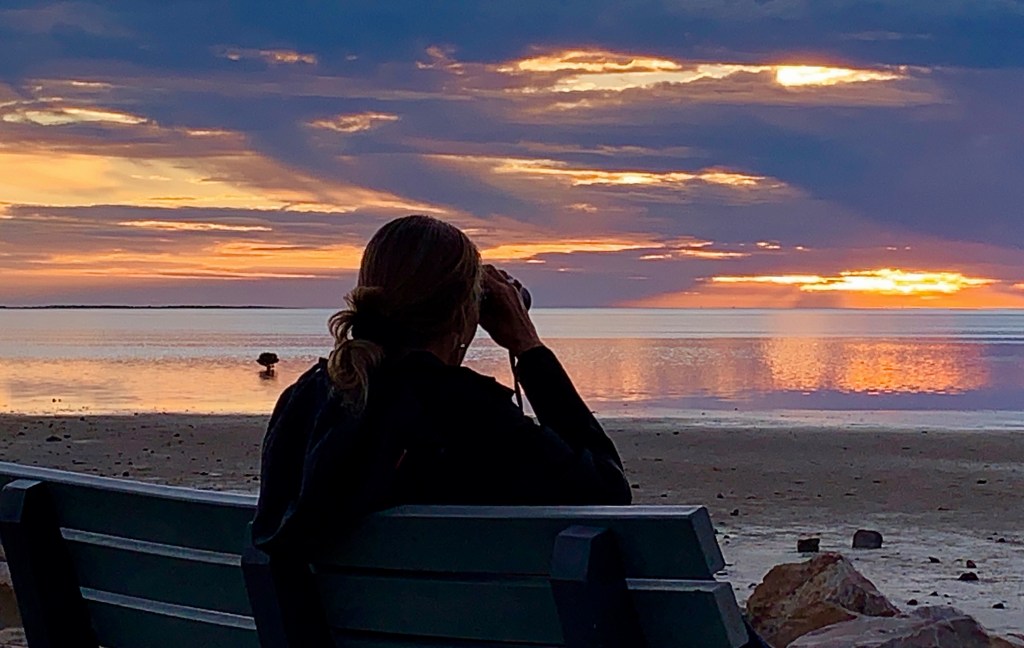
so as the sun begins to sink over the water, at precisely 6:28 p.m., pernille sits herself down on a seaside bench, binoculars in hand, and dials into the meeting on her iPad.
only one noisy seagull threatens to give her away, demanding food. but he is quickly shooed off.
for a full hour, pernille sits listening in to her colleagues back home while the setting sun plays peek-a-boo through the clouds and a melange of birds frolic in the tidewater.
but then, at the stroke of 7:30, the session is over. (these are danes, after all). the work day is done, and pernille turns to ask, “what’s for dinner?”
as it happens, there’s a beachfront restaurant just across the road, and they’re having a “schnitzel special” on this evening’s menu. as we enter the restaurant and look around, we realize immediately that most of the patrons are clearly not first timers at schnitzel night. the beer fridge is well stocked, too. you might say they offer a melange of brews.
we pass on the schnitzel and order lighter fare washed down with zero alcohol beers. (we’re driving). the food, as it turns out, is quite tasty, if not exactly low cal.
that night, back at the hotel, tucked comfortably in our bed, we assess the days’ proceedings and tick the box “exceeds expectations”. an understatement.


















































 not that heinlein