free assange- an old time ’70s protest

a few hardy australians turn out to support an imprisoned native son

the demonstration was right out of the 70s. in fact, most of the tiny crowd appeared to be in their 70s, relics of an earlier age when long-haired protestors railed against a long-ago war. and if attendance was a bit on the short (as in “almost non-existent”) side, it could have been because most of the demonstrators were long dead.

the “free assange” rally in canberra draws a small crowd

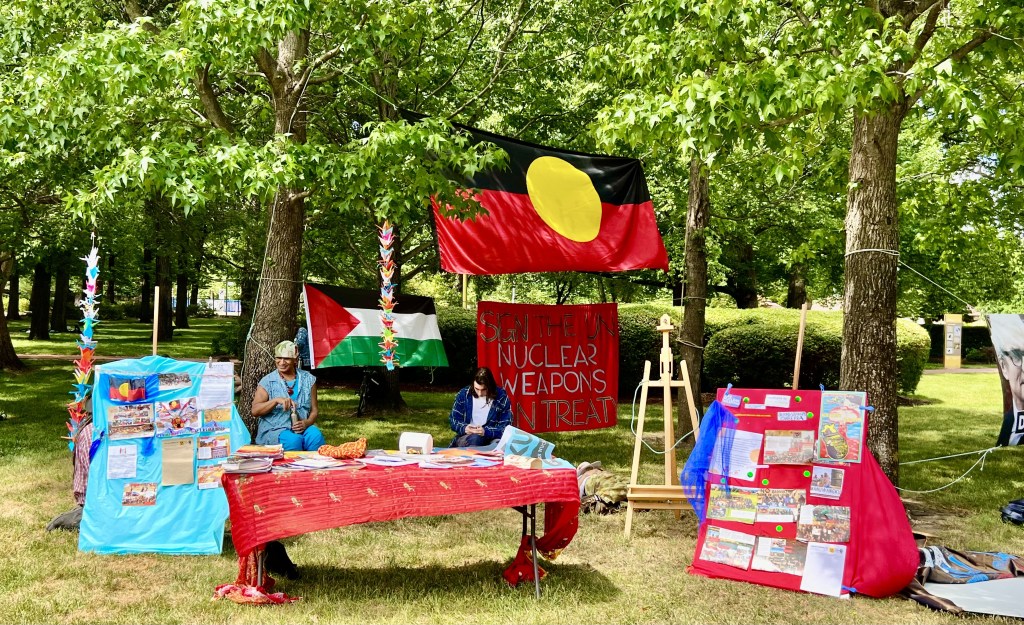
that didn’t stop the remaining faithful, all few dozen of them, from gathering at canberra’s glebe park on a gorgeous spring sunday afternoon to shout into the empty fields. kicking off the festivities, a white-haired guitarist growled the words to barry mcguire’s 1970s anti-war song “eve of distraction destruction” to an audience of four people singing along in front of a portable stage littered with protest signs. might’ve been his wife and grandkids.

what the demonstration lacked in bodies, it made up for with signs. it was like the old 1970s rock anthem.

signs, signs, everywhere signs.
blocking out the scenery,
breaking my mind.
do this! don’t do that!
can’t you read the signs?

FIVE MAN ELECTRICAL BAND–1971

there were billboards everywhere around the park, more signs than people. no nukes signs, anti-war signs, posters supporting whistleblowers and whistleblowing, misspelled signs, palestinian flags, indigenous australian flags, and “free assange” literature. but no one to read them.

an artist displsays his hand-painted portrait

being a journalist, the “free assange” theme had attracted me. assange is the the australian founder of wikileaks, a website that specialized in releasing classified documents from intelligence agencies. he’s currently in britain’s high security belmarsh prison awaiting extradition to the united states to face charges of publishing “secret” documents that revealed nefarious (read illegal) activity by the CIA.

but there were other causes vying for attention. “free david mc bride” was a popular one. mc bride, apparently a military whistleblower , was in attendance, followed around by a camera crew. mc bride was facing a court hearing the following day on charges of violating australian state secrecy laws that could carry a sentence of several years in prison. he was a bit of a folk hero among the assemblage, posing for pictures, and hugging and kissing the women. not an enviable task.

david mc bride greets a supporter

remarkably, the lack of an audience didn’t seem to deter the rally. a procession of speakers and mostly one-man bands crossed the stage, each acting as if the house were full of cheering supporters. applause even broke out a few times, though probably not enough to register on the applause meter. and when the call went out from the stage that sausages were ready on the barbeque , there was a noticeable shift of humanity toward the grill. p.s. the vegetarian sausages were mighty tasty.

the moral of the story is: if you’re going to hold an anti-government demonstration, don’t do it in a government town. the capital region was the only jurisdiction in australia to vote “yes” for the recent referendum on whether to give indigenous australians an extraconstitutional “voice” on matters of interest to them. overall, the referendum lost by a 40-60 margin, and it failed in every state. but in the capital territory it passed handily.

the assange case is now likely to move to the u.s., where it faces an uncertain future. wikileaks has never been popular in the american press, and the biden administration is bent on cracking down on whistleblowers, especially those who expose the secrets of the national security establishment. former president donald trump had promised to pardon the aussie wikileaks founder, but apparently got cold feet in the tumultuous last few days of his presidency. “free assange” may remain a rallying cry of the antiestablishment crowd for some time to come.

-30-

lest we forget

the strength of a nation rests on the ties that bind; a common language, a common heritage, a common purpose; the experience of fighting, even dying, for shared values.

there’s probably no way for a newcomer to grasp the depth of emotions aroused in the aussie soul by a single name: gallipoli. for more than a century, the shared grief elicited by that military disaster has done more than perhaps anything else to galvanize the nation’s identity.

each april 25th, the day in 1915 when australian and new zealand troops stormed the turkish beach at gallipoli, both nations stop to honor their war dead, on what is known as anzac day.

scottish-born australian eric bogle perhaps best captured a nation’s agony in his 1971 song, “and the band played waltzing matilda (click the link)

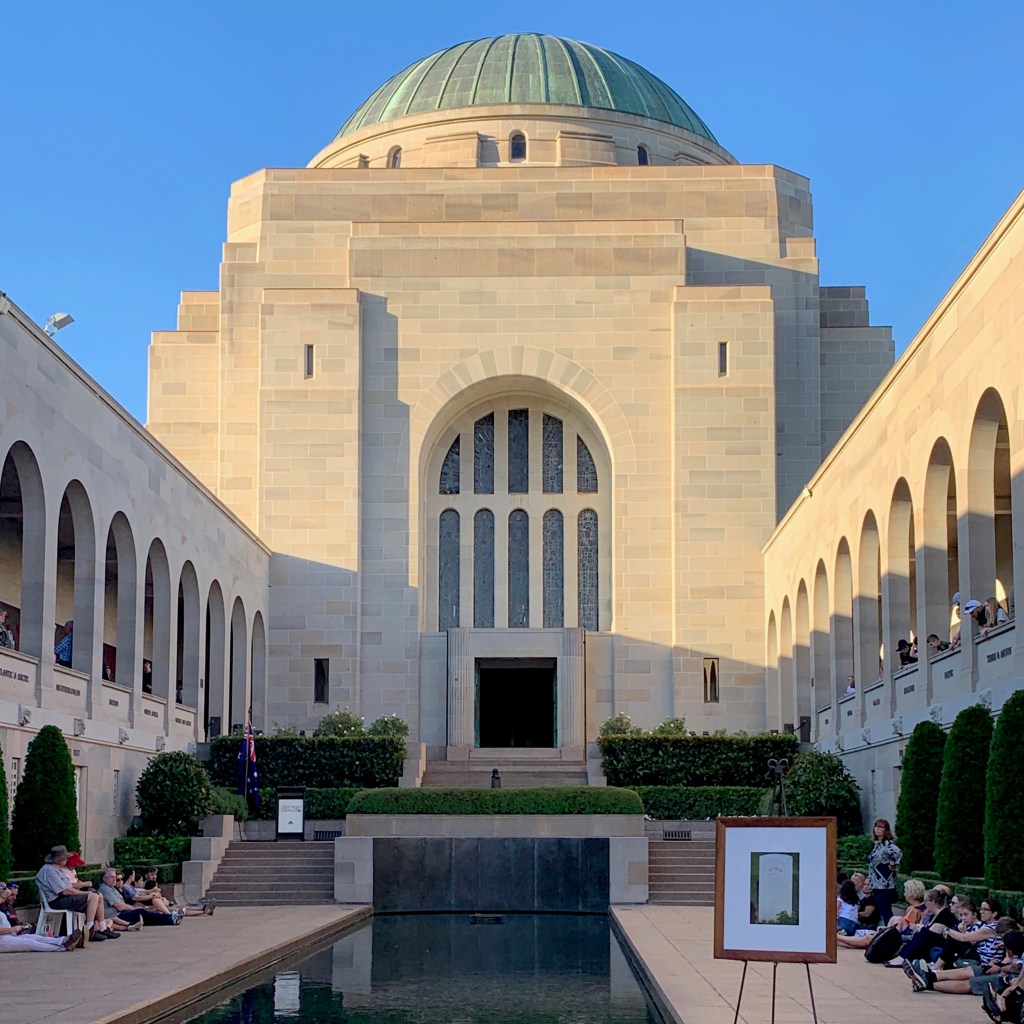
as shadows fall over australia’s national war memorial, crowds gather for the daily “last post” ceremony

the national war memorial is canberra’s #1 tourist attraction.

museum director matt anderson points to the wall where the names of 102,000 australians are engraved. of those, he tells us, 62,000 were lost in four years of world war one, including 8700 in the bloodbath at gallipoli.

memories fade, and the last world war one veterans have long passed. still, anzac day observances are held all over australia each april 25th. that first war left an indelible scar on a young nation’s psyche. almost no one was spared the loss of a loved one. on well-manicured lawns in village squares across the hinterlands of oz, the names of would-have-been husbands and fathers, wives and mothers, are chiseled in stone.

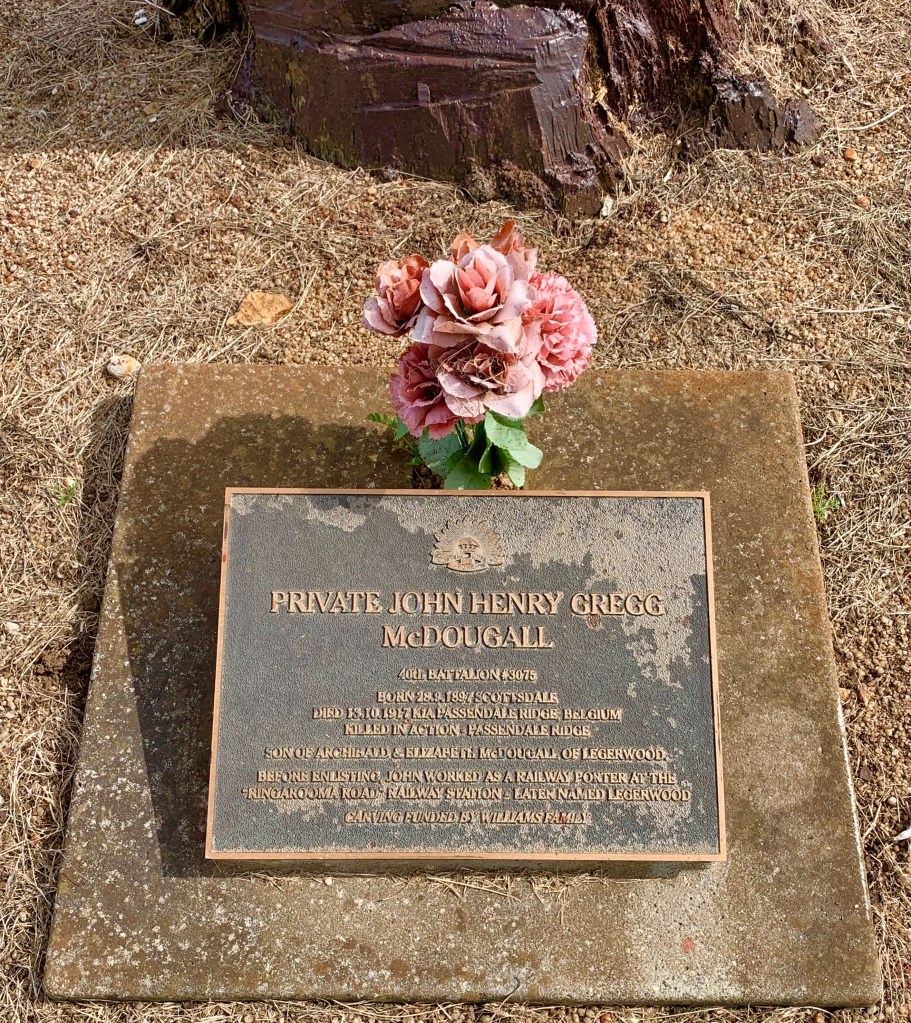
except in the tiny tassie town of legerwood (pop. 193). its boys are memorialized in trees.

legerwood wasn’t even an official town until 1936, but in october, 1918, residents gathered along the main road to plant saplings in memory of each of the seven local boys lost in the fighting.

for the rest of the century the trees stood as a silent reminder of the stolen promise of a generation. by 2001, the trees had become a hazard and had to be lopped. the local folk were having none of it, however. they commissioned chainsaw artist eddie freeman to carve the tree stumps into likenesses of the fallen soldiers.

pernille and i might have missed the modest collection of houses that calls itself legerwood as we drove along tassie’s back roads, except for the roadside sculpture garden that commanded our attention. we stopped for a closer look.

what we found was a window into seven war-shortened lives.

thomas edwards was the oldest of the legerwood volunteers. he and his wife of six years, florence, are shown in a goodbye embrace at the center of a carving that depicts the townspeople’s grief.

interestingly, none of the legerwood boys actually died at gallipoli. they all were killed on the western front in belgium and france toward war’s end.

if anzac day and the legerwood memorial weren’t enough, australia’s military legacy was underscored weeks earlier as the royal australian air force celebrated its 100th birthday.

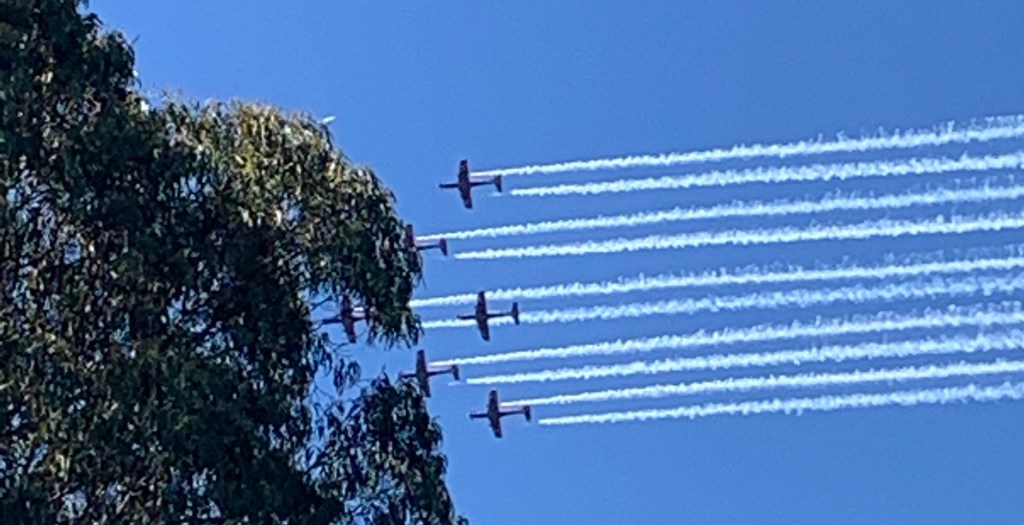
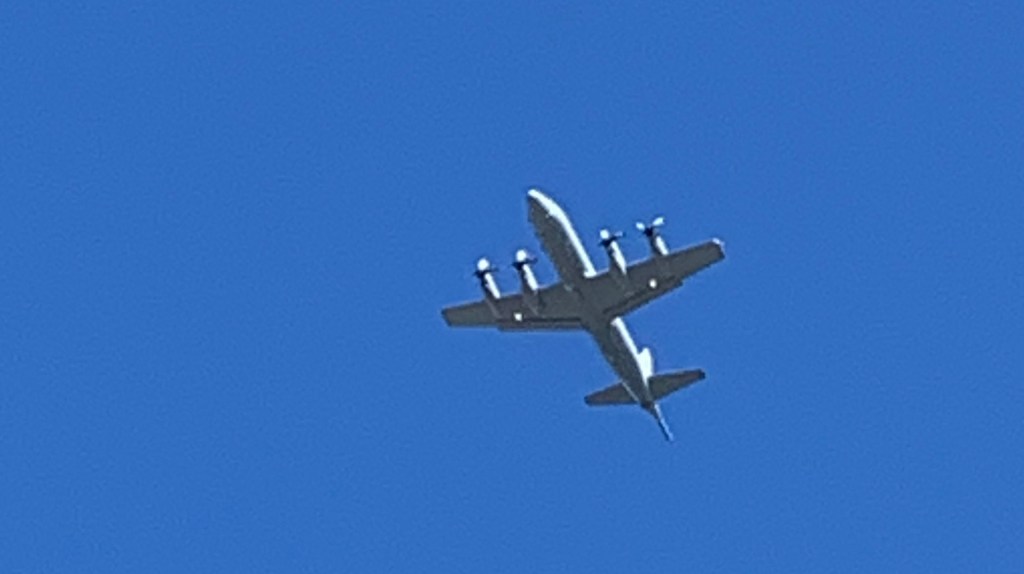
the r.a.a.f marked the milestone with a nationally-televised aerial spectacular in the skies over canberra’s lake burley griffin. (which incidentally didn’t exist then, either). imagine what might have been if the boys storming gallipoli had been able to call in air support.

the roulettes acrobatic team put on a show for canberrans and a live nationwide TV audience

canberrans poured out of their homes and offices on a picture perfect day to witness the flyover. they came by bus, car, bike, on foot; children in prams or on dad’s or mom’s back, with cameras and binoculars, stationing themselves on hills and bridges and along the shores of lake burley griffin, (which is named for the american architects, walter burley griffin and his wife marion mahony griffin, who won the competition to design the capital city in 1911.)

the throngs weren’t disappointed.

governor general david hurley hosted a phalanx of dignitaries for a gala event at government house at the west end of the lake to witness the display, while the band played “waltzing matilda”.

government house as seen from across the lake during the ceremonies

a bird perches along the shore of lake burley griffin to watch the flyover

it’s interesting to note that if the air force didn’t exist in 1915, neither did canberra, and this might be the time to introduce our home town.

in 1911, australia’s parliament formally set aside land for a national capital territory, but nothing much was there. it was just a mountain outpost noted for crisp alpine air and cold clear nights, a sharp contrast to the balmy coastal climate of the country’s major population centers. it wasn’t till the 1920s, after the falling out that prompted walter and marion griffin to return home to chicago, that their vision for a grand city began to materialize. canberra officially became the capital in 1927.

newcomers arriving in the city today see a fully formed metropolis, unaware that the lake, which forms the heart of the capital and seems as if it was always there, was only inaugurated in 1964. only in this century has the griffin’s vision of a grand capital (based loosely on l’enfant’s design for washington d.c.) has come into full view.

the parliament building, the national museum, the trendy kingston foreshore, and other distinctive features dotting canberra’s lakefront are less than 25 years old.

it is quite a paradox that canberra is a young city in a young nation that was still cutting its teeth when world war one broke out. and yet, canberra and australia are home to a civilization that existed in peace for tens of thousands of years before europeans arrived. there is still a reckoning to be done. lest we forget.