
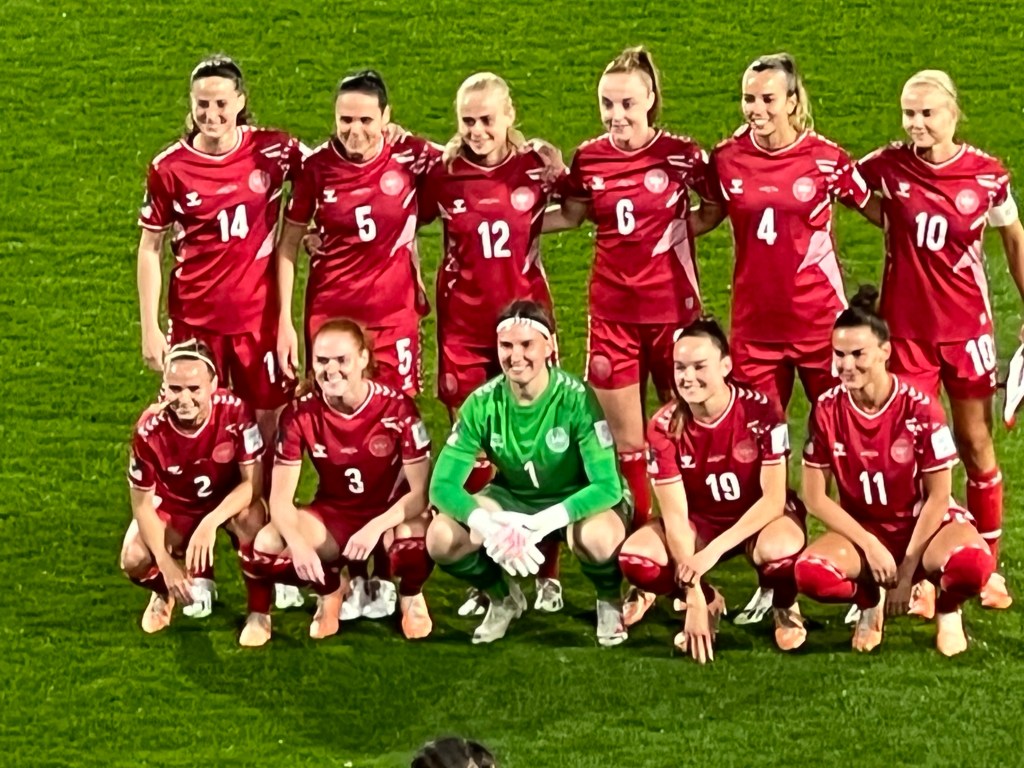
chasing “women in red” across the continent
they say the world cup competition is for losers. thirty-two teams compete, 31 lose. one–spain in this case– takes the cup and goes home for four years. the 2023 pageant was held “down undah”, in australia and new zealand. it’s the first time the competition has been co-hosted by two countries. too bad only one could win.
the previous two women’s world cups had been won by the u.s., as the rest of the world’s women caught up. but the catching up is done, and the americans’ moment is over. the “red, white and blue” barely survived the group stage this time, and made an unceremonious exit in the first knockout round, denying megan rapinoe and company a fond farewell from the competition they dominated for the past decade or so. now it’s the spanish womens’ turn to rule. this year the spaniards won the world’s under 18 competition, the under 21 tournament, and now the big one — the women’s world cup.
“travel soccer” is a term many moms and dads learn when their kids try out for the neighborhood team. the coach of the team then enrolls them in a league where they go to the home fields of other teams to play their matches. so parents usually wind up spending their weekends carting their beloved offspring to farflung neighborhoods to watch them chase around a soccer ball. in a country the size of australia, traveling to see your team’s world cup matches can mean splurging the family fortune on transcontinental air fares and winding up with a bad case of jet lag.
and so it was.
the danish women didn’t really have a chance to win the title in this women’s cup 2023 competition. but who cares? the object is to have some fun, root for your team and country, travel a bit (in this case, a lot!) and pay qantas (the airline) a few more bucks you didn’t have in the first place.
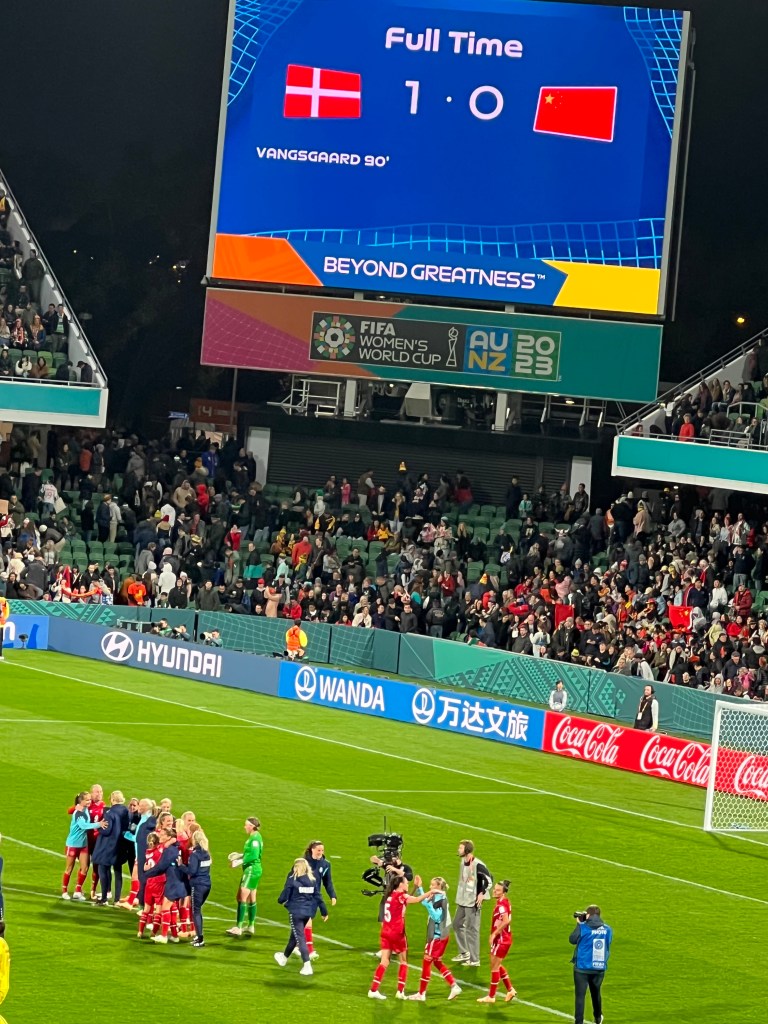
fortunately, (i suppose) denmark’s matches were all in australia, but oz is a big place, and we were following the women in red to the match sites. first perth, on australia’s southwest coast, where the danes played their opening match against china. it was a slow contest, though not nearly as time consuming as the 4 ½ hour flight from canberra to perth.
denmark finally scored a goal in the 90th (last) minute of regulation time to defeat the chinese women and secure the three points that went with it. so much for excitement.
among the highlights for us was a meeting with two danish fans who were reunited for an 81st birthday celebration, several decades after one of them relocated from denmark to australia. sadly, we don’t have “before and after” pictures showing how little they’ve changed over the years (or not).

the second “group stage” match was on the other (eastern) edge of the continent, against england, requiring another transcontinental (read five hour) flight to sydney. england was one of the ranked teams in the competition, boasting several players from the english women’s premier league. the lionesses, as the english women are known, were a class above the danes, scoring a goal early (from chelsea striker lauren james), then holding on to that for a margin that held up all night. three points for the limeys.
then the team flew back to perth again, this time to face haiti, their third group foe. it was too much for us. we watched on TV. another single goal against the haitians was enough to garner three more points, getting the danes to six (three points per victory, one for a draw). that result, coupled with a monster english victory over china, was enough to see denmark through to the round of 16, the knockout stage. three matches, two goals.
next opponent, however, was australia, in the first knockout round. facing the matildas, (from ‘waltzing matilda”, the national song), the tournament’s home team, was a daunting task under any circumstances. for the danes, playing in front of a sea of yellow shirted crazies at sydney’s 80-thousand seat olympic stadium proved an insurmountable challenge.

sydney was all decked out for the denmark match, with the (danish designed) sydney opera house dressed in australia’s green and gold for the event.
in the end, the danes total of two goals in four games was just not good enough. aussie striker caitlin foord, who plays club football for arsenal (my team) in the english premier league, scored an easy first half goal in a one-on-one matchup against denmark’s goalkeeper, and the danes were never a real threat to score. the matildas cruised, 2-0 (two-nil).

so much for travel soccer. the knockout stages are “win or go home” affairs, so it’s back to copenhagen for the red shirts, and an “end to the spend” on air fares. in the end the big fish (england & eventual winner spain) were left to battle it out for the cup. it was (extravagant) fun for us minnows in the world cup pond while it lasted, but there’s an end to every cinderella dream, and the clock has struck midnight. we’re pumpkins again.
p.s. on a sad note, it emerges that spain’s winning goal-scorer in the final, olga carmona, learned after the match that her father had passed away earlier in the day. the news had been withheld from her so as not to distract her during match preparations.





 not that heinlein